

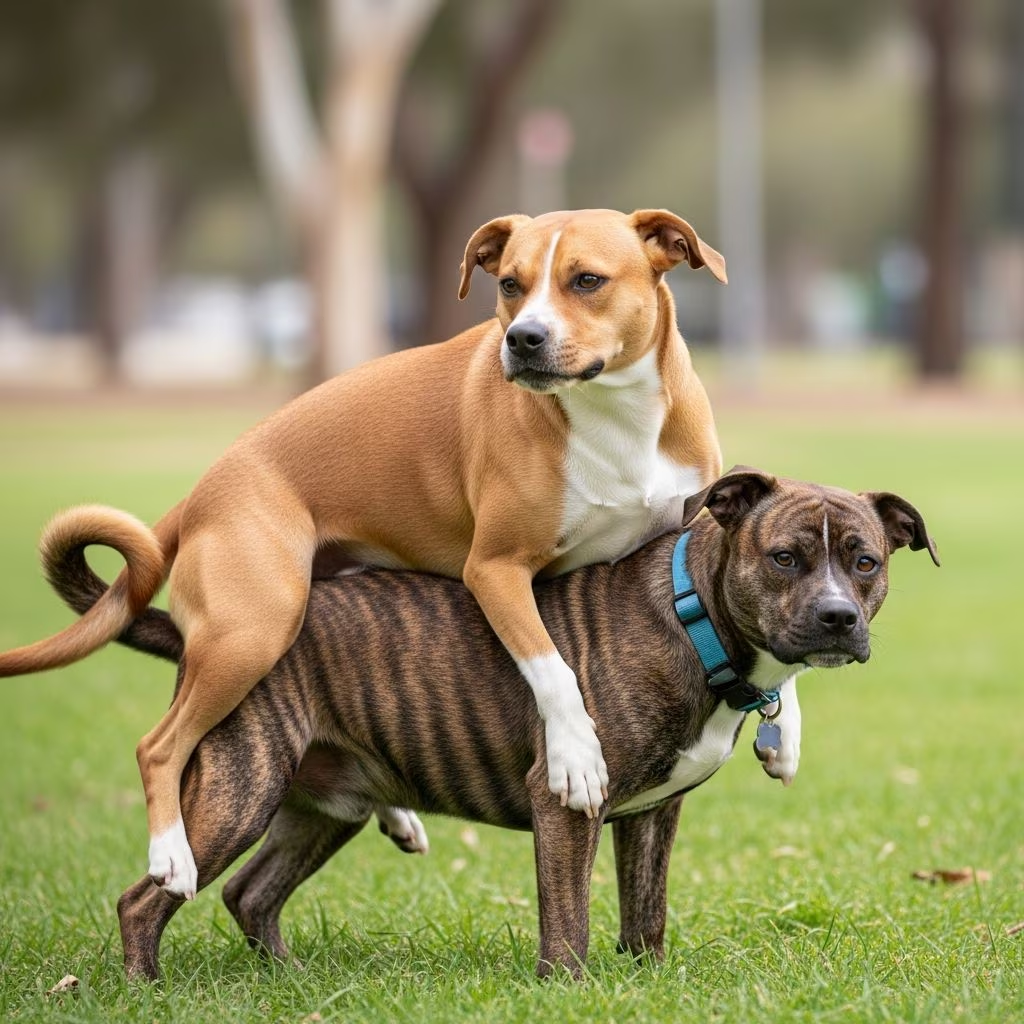
Seeing a female dog humping a person, another dog, or a pillow can be surprising and embarrassing, especially in front of guests. Many people assume this behavior is always sexual or a sign of dominance, but modern veterinary behavior research shows a more complex picture.
This guide explains why female dogs hump, how to tell when it is normal or a red flag, and practical, positive ways to respond.
Is Humping Normal for Female Dogs?
Mounting or humping—sometimes called thrusting—is a normal canine behavior seen in both male and female dogs of all ages. It can appear during play, in moments of stress, when a dog is excited, or when there are changes in hormones or health.
| Situation | Is It Usually Normal? | What You Might See |
|---|---|---|
| Play with familiar dogs | Often normal | Brief humping, play bows, loose wiggly body |
| During or near heat cycle (intact female) | Can be normal, but monitor | Mounting, increased licking, restlessness |
| When stressed or overwhelmed | Common coping response | Humping plus panting, tucked tail, avoidance |
| Sudden increase with genital licking or accidents | May signal a problem | Frequent humping, discomfort, urinary changes |
Occasional, brief mounting—especially in playful contexts—is generally not harmful. However, frequent, intense, or sudden humping can point to stress, poor social skills, or medical issues that deserve attention.
Common Reasons Female Dogs Hump
Female dogs hump for many overlapping reasons rather than one simple cause. Understanding the context—where, when, and around whom it happens—helps you respond appropriately.
1. Play and Social Excitement
Humping can be part of normal play behavior. Many dogs briefly mount during energetic games with trusted canine friends or even with familiar humans.
- Body language is typically loose, bouncy, and relaxed.
- Dogs may alternate roles—both may hump at different times.
- The behavior stops easily when one dog moves away or when you redirect.
In these situations, humping is less about sex or dominance and more about over-arousal and excitement during play.
2. Stress, Anxiety, or Overwhelm
Many humane societies and veterinary behavior departments note that humping is often a displacement behavior: an action a dog uses to cope with uncomfortable emotions such as stress, anxiety, or social conflict.
Triggers can include:
- Strangers visiting the home
- Crowded or noisy environments
- Unfamiliar dogs approaching too quickly
- Changes in household routine or family structure
Other possible signs of stress that may appear alongside humping include:
- Lip licking or yawning when not tired
- Panting with no heat or exercise
- Tucked tail, pinned ears, or cowering
- Avoiding eye contact or trying to hide
In these cases, humping is your dog’s way of saying, “I’m not sure how to handle this situation.”
3. Boredom and Under-Stimulation
Dogs that do not get enough mental and physical stimulation may develop repetitive or attention-seeking behaviors, including humping.
- Humping may start when the house is quiet and nothing is happening.
- Your dog may target pillows, blankets, or toys.
- The behavior can become a self-soothing habit if nothing changes.
Adding more enrichment, play, and problem-solving activities often reduces this type of humping.
4. Excess Energy or Being Overtired
Sometimes dogs hump when they have too much energy, and sometimes when they are overtired, especially puppies.
- After a day with limited exercise, a dog may start humping in the evening.
- Puppies may mount when they are cranky and need a nap, similar to an overtired child.
Both scenarios reflect difficulty regulating arousal, not misbehavior or spite.
5. Sexual Arousal and Hormones
Although not the most common driver, sexual arousal and hormone changes can contribute to mounting in intact female dogs.
- Females in heat may mount males, other females, or objects as part of courtship behavior.
- Early hormonal shifts around the first heat cycle can trigger new mounting behaviors.
- Residual hormones after spaying can temporarily maintain the behavior for a period of time.
Importantly, humping is not the same as mating; it does not require penetration and may appear outside of fertile periods.
6. Learned Attention-Seeking
If every time your dog humps someone, the whole room reacts—laughing, shouting, pushing her away—she may learn that mounting is a powerful way to get attention.
- Even negative attention (yelling, scolding) can reinforce the behavior.
- The dog may target people who react the most strongly.
Over time, humping becomes less about emotion and more about, “When I do this, everyone looks at me.”
7. Medical Causes: Pain, Itching, or Urinary Issues
Mounting can also be linked to medical problems that cause discomfort around the genital or abdominal area.
- Urinary tract infections (UTIs)
- Skin allergies or dermatitis around the belly or groin
- Anal gland issues
- Orthopedic pain that changes posture
- Endocrine disorders affecting hormones
Warning signs that suggest a veterinary check is needed include:
- Increased genital licking or chewing
- Frequent urination or straining to urinate
- Strong urine odor or blood in urine
- Restlessness, whining, or sensitivity when touched
Because these conditions can be painful and may worsen without treatment, a prompt veterinary exam is recommended.
Why Do Female Dogs Hump People?
Female dogs may hump their guardians or guests for several overlapping reasons:
- Stress or social uncertainty in crowded or unfamiliar situations.
- Seeking attention from the person who consistently reacts.
- Over-excitement when visitors arrive or during active play.
If your dog humps you right after you come home from work or when guests laugh and push her away, she may be combining excitement, stress, and learned attention-seeking.
Why Do Female Dogs Hump Other Dogs?
When a female mounts another dog, context matters more than which dog is “in charge.” Dominance is rarely the main explanation.
- Play humping is usually brief, with relaxed body language and frequent position changes.
- Stress or poor social skills can lead to persistent mounting of unfamiliar dogs, especially at dog parks.
- Hormonal states (like being in heat) can increase mounting toward male and female dogs.
If the other dog seems uncomfortable—freezing, growling, or trying to move away—it is important to step in and politely separate them.
Why Does My Spayed Female Dog Still Hump?
Spaying does not automatically erase mounting behavior. Several factors explain why a spayed female may continue to hump:
- Residual hormones can remain in the body for weeks to months after surgery.
- Learned habits formed before spaying can persist if they were reinforced.
- Non-sexual causes such as stress, boredom, and anxiety remain unchanged by spaying.
If mounting increases after spay surgery or appears with other signs of discomfort, consult your veterinarian to rule out pain or post-surgical complications.
How to Respond When Your Female Dog Humps
The goal is not to punish your dog, but to manage the situation, protect others’ comfort, and address underlying needs or health issues.
Step 1: Stay Calm and Avoid Punishment
Yelling, hitting, or harsh corrections can increase anxiety, damage your bond, and may even make humping more likely in the long run.
- Gently interrupt by calling your dog away or luring her with a treat or toy.
- Avoid pushing or physically wrestling her off, which can feel like play.
Step 2: Redirect to an Alternative Behavior
Teach and practice simple cues that give your dog something else to do instead of humping.
- “Leave it” or “off” to interrupt the start of mounting.
- “Come” followed by “sit” or “down” for a calmer activity.
- Offer a chew toy or sniffing game to redirect energy.
Reward your dog generously when she responds and chooses the calmer behavior.
Step 3: Increase Exercise and Enrichment
Many dogs hump less when their daily needs for activity and mental challenge are met.
- Provide regular walks suited to your dog’s age and health.
- Include training games, food puzzles, and scent games.
- Rotate toys to keep them interesting.
An enriched routine reduces boredom and helps your dog regulate arousal.
Step 4: Manage Stressful Situations
If your dog tends to hump when overwhelmed, focus on creating more predictable, low-stress experiences.
- Give your dog a safe, quiet space when guests visit.
- Supervise dog-dog play and step in when arousal gets too high.
- Gradually introduce new people and dogs at a pace your dog can handle.
Step 5: Consult Professionals When Needed
In some cases, you will need expert help to address frequent or intense mounting:
- Veterinarian: To check for medical causes such as UTIs, skin disease, or pain and to discuss spay timing and hormone-related questions.
- Certified trainer or veterinary behaviorist: To design a behavior plan if humping is driven by anxiety, fear, or poor social skills.
Myths About Female Dog Humping
Several persistent myths can make owners feel ashamed or confused. Research-based guidance helps put this behavior in perspective.
- Myth: Humping always means a dog wants to mate.
Reality: Mounting more often reflects stress, excitement, or social confusion than a simple mating drive, especially in spayed females. - Myth: Only male dogs hump.
Reality: Female dogs also mount, including during play, heat cycles, and stressful situations. - Myth: Humping proves a dog is dominant.
Reality: Modern behavioral science views dominance as a description of a relationship, not a personality trait, and mounting is rarely a reliable indicator of rank. - Myth: You must punish humping to stop it.
Reality: Positive redirection, stress reduction, and addressing medical issues are more effective and safer in the long term.
Frequently Asked Questions (FAQs)
Q: Should I be worried if my female dog humps occasionally?
A: Occasional, brief humping during play or excitement is usually normal, especially if your dog is otherwise relaxed, healthy, and easy to redirect. Monitor for changes in frequency, intensity, or signs of discomfort and consult your veterinarian if anything seems off.
Q: When is female dog humping a problem?
A: Humping becomes a concern when it is sudden, frequent, difficult to interrupt, causes conflict with other dogs, or appears alongside signs of pain, genital licking, urinary changes, or significant anxiety. In those cases, a veterinary exam and behavior consultation are recommended.
Q: Will spaying my female dog stop her from humping?
A: Spaying can reduce hormone-driven mounting but does not eliminate non-sexual causes like stress, boredom, or learned attention-seeking. Some dogs continue to hump after spaying due to residual hormones or habit. Training, enrichment, and stress management are still important.
Q: How can I politely handle it when my dog humps a guest?
A: Calmly call your dog away, reward her for coming, and give her a simple task like sit or lie on a mat. Avoid scolding or letting guests push her away roughly. If it is a recurring issue, manage by using a leash, baby gate, or crate when guests arrive and work on training in low-distraction settings first.
Q: Can medical issues really cause a female dog to hump?
A: Yes. Conditions such as urinary tract infections, skin allergies, and pain can cause irritation or discomfort that leads to increased licking and mounting. If your dog’s humping is new, intense, or paired with other physical symptoms, a veterinary exam is important to rule out medical causes.
References
- Why Do Female Dogs Hump Things? — Purina Pet Expert Team. 2025-06-05. https://www.purina.com/articles/dog/behavior/understanding-dogs/why-do-female-dogs-hump
- 9 Reasons Female Dogs Hump And How To Handle It — Rover.com. 2023-08-10. https://www.rover.com/blog/female-dog-humping/
- Why Do Female Dogs Hump Things? — Hill’s Pet Nutrition. 2022-03-15. https://www.hillspet.com/dog-care/behavior-appearance/why-do-female-dogs-hump-things
- Mounting and Masturbation — American Society for the Prevention of Cruelty to Animals (ASPCA). 2019-11-01. https://www.aspca.org/pet-care/dog-care/common-dog-behavior-issues/mounting-and-masturbation
- Humping/Mounting — Wisconsin Humane Society. 2020-05-20. https://www.wihumane.org/humping-mounting
- Inappropriate Mounting in Dogs — UC Davis School of Veterinary Medicine. 2018-04-01. https://www.vetmed.ucdavis.edu/sites/g/files/dgvnsk491/files/inline-files/Inappropriate_Mounting_in_Dogs.pdf



