FeLV and FIV Testing in Kittens: A Complete Guide
Essential blood testing guide for detecting FeLV and FIV in kittens to ensure their health.
FeLV and FIV Testing in Kittens: Why Every Kitten Needs Screening
A simple blood test is recommended for all kittens to screen for two potentially dangerous viral diseases unique to cats: feline leukemia virus (FeLV) and feline immunodeficiency virus (FIV). These viruses can have serious consequences for your kitten’s health and longevity, making early detection through proper testing essential for every cat owner. Understanding these diseases and the testing process helps ensure your kitten receives the best possible care and protection.
Understanding FeLV vs. FIV: Key Differences
While both FeLV and FIV are serious viral diseases affecting cats, they differ significantly in transmission, detection, health impacts, and prognosis. Understanding these differences helps cat owners make informed decisions about their kitten’s health care and lifestyle management.
| Characteristic | FeLV (Feline Leukemia Virus) | FIV (Feline Immunodeficiency Virus) |
|---|---|---|
| Transmission Method | Through bodily fluids such as saliva during mutual grooming and across the placenta in pregnant cats | Usually through bites from other cats, though may cross the placenta or be sexually transmitted |
| Testing Method | Simple blood test performed in-house using ELISA test kits | Simple blood test performed in-house using ELISA test kits, confirmable with IFA or Western blot |
| What Test Detects | Antigens, or active virus in the blood | Antibodies, either passed to kitten by mother or from exposure to the virus |
| Recommended Testing | Yes, should be performed | Yes, should be performed |
| Health Effects | Suppression of the immune system, anemias and cancers, including leukemias and lymphomas | Suppression of the immune system, causing inflammation in the mouth (gingivitis/stomatitis), conjunctivitis, secondary infections, cancers |
| Long-term Prognosis | 80% to 90% of diagnosed cats will die within 3 to 4 years of diagnosis | Varies significantly, many cats live normal life spans |
| Contagiousness Level | Not highly contagious, generally requires prolonged close contact | Easily passed through bites, but otherwise low transmission risk |
| Available Treatment | No specific treatment available | No specific treatment available |
| Prevention Methods | Vaccination, keep cat indoors, spay/neuter your cat | Keep cat indoors, spay/neuter your cat |
| Vaccine Available | No | No |
When Should Your Kitten Be Tested for FeLV and FIV?
We recommend testing kittens as soon as possible or by 3 months of age for multiple important reasons. Early detection allows you to make informed decisions about your kitten’s healthcare and household management.
Critical Reasons for Early Testing:
FeLV is easily passed through mutual grooming. A FeLV-positive kitten poses a significant risk to other cats in the household. Without knowing their status, you could inadvertently expose other pets to this serious virus.
Vaccine Effectiveness Depends on Status. If your kitten has tested positive for FeLV, they won’t benefit from the FeLV vaccine. Vaccinating an already infected cat provides no protective benefit and doesn’t alter the disease’s natural progression.
Positive Results Require Lifestyle Adjustments. If your kitten has tested positive for FeLV or FIV, they should be kept indoors to protect other cats in the community. This prevents transmission to neighborhood felines and stray populations.
FIV Requires Confirmation Testing. If your kitten has tested positive for FIV, be cautious about letting them interact with other cats until another test to confirm FIV is performed at 6 months of age. This is crucial because false positives are common in young kittens.
Understanding False Positive FIV Test Results
It’s not uncommon for kittens under 6 months of age to have a false positive test result for FIV. This occurs due to maternal antibodies that provide important protection during early life. Your kitten gets antibodies from their mother through nursing. If the mother has antibodies against FIV, she may pass these antibodies to the kitten, potentially causing a false positive result on screening tests.
The presence of maternally derived antibodies is a normal part of kitten development and doesn’t indicate actual infection. When these maternal antibodies are present, initial FIV screening tests may show a positive result even though the kitten is not actually infected with the virus.
If your kitten tests positive for FIV during their initial screening, it’s recommended to get them retested when they’re 6 months of age. By this time, any maternal antibodies will have completely disappeared, and a second positive result would indicate actual FIV infection rather than passive immunity from the mother.
The Testing Process Explained
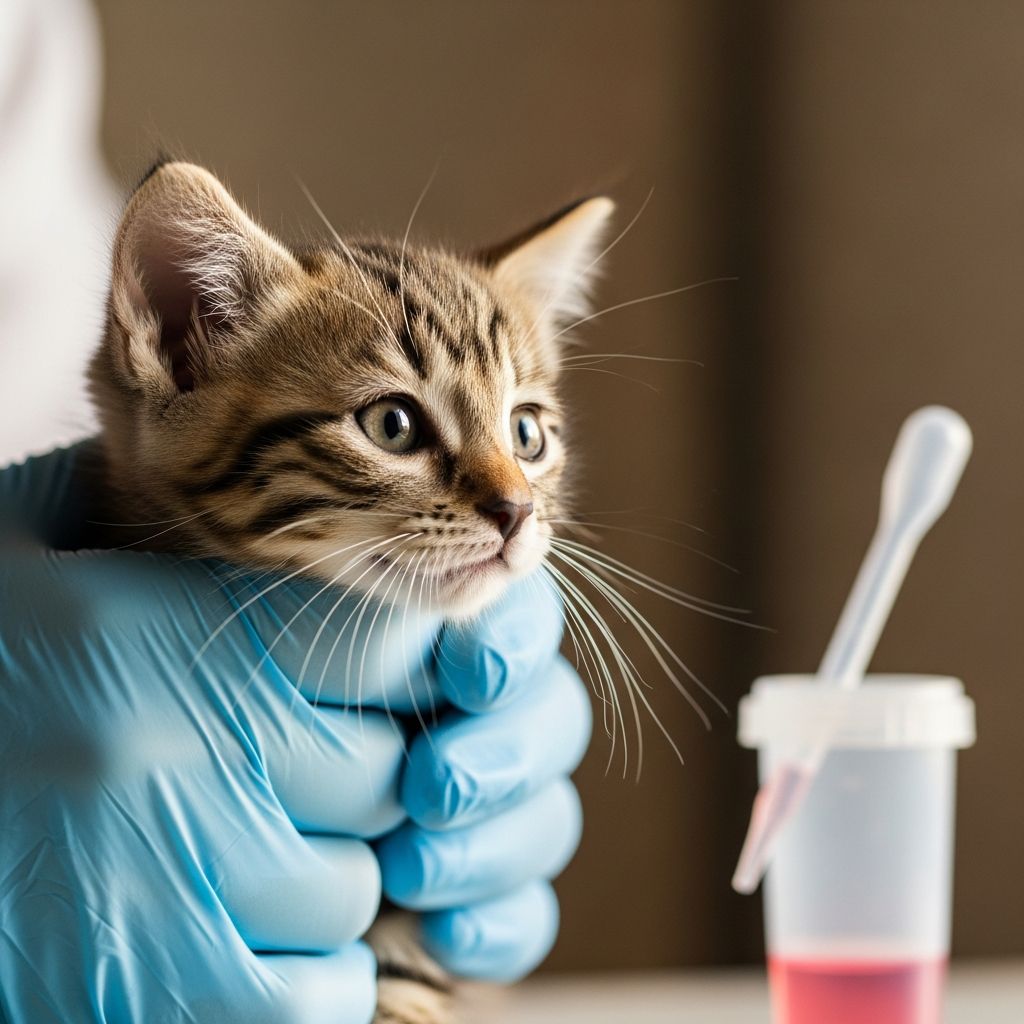
Both FeLV and FIV tests are simple blood tests that can be performed in your veterinarian’s office. These quick, in-house screening tests use ELISA (enzyme-linked immunosorbent assay) test kits that detect either viral antigens (for FeLV) or viral antibodies (for FIV). The blood sample is placed on a test kit that changes color when the targeted virus markers are present in the blood sample.
While these screening tests are convenient and provide rapid results, they’re not 100% accurate. If your kitten receives a positive result, especially at a young age or with no symptoms, your veterinarian may recommend confirmatory testing. For FIV, confirmatory tests include more specific IFA (immunofluorescence assay) tests or Western blot/PCR (polymerase chain reaction) tests performed at outside laboratories.
Managing a FeLV or FIV Positive Diagnosis
If your cat is confirmed positive for either FeLV or FIV, you should discuss with your veterinarian whether more frequent wellness exams are necessary to catch issues early. Cats with these infections require closer monitoring to quickly identify and address any secondary health problems that develop as their immune system becomes compromised.
You should also respond promptly to any signs of illness, such as inflammation of the gums, discharge from the eyes or nose, or vomiting. These symptoms may indicate secondary infections or complications that require immediate veterinary attention. Reach out to your veterinary care team to help support you and your kitten through these challenging situations. Many resources and treatment options are available to manage secondary conditions and maximize your cat’s quality of life.
Prevention and Protection Strategies
Prevention remains the best approach to protecting your kitten from FeLV and FIV. For FeLV, vaccination is available and highly recommended for kittens, especially those with outdoor access. The FeLV vaccine is included in most standard kitten vaccination protocols.
For both diseases, keeping your cat indoors significantly reduces exposure risk. Indoor cats have minimal contact with other cats and are protected from the primary transmission routes. Additionally, spaying or neutering your kitten reduces hormone-driven roaming behaviors that increase disease exposure.
If you have multiple cats, test all new additions before bringing them into your household. This prevents introduction of these viruses to your existing cat population. Practice good hygiene, including separate food and water dishes, litter boxes, and bedding for infected cats if you have a multi-cat household.
Why Testing Before Vaccination Matters
Testing for FeLV and FIV prior to vaccination is particularly important because vaccination of an already infected cat with a FeLV vaccine will not have any beneficial impact on, or alter the natural course of disease progression. A kitten infected with FeLV cannot be protected by the vaccine, and administering it would be unnecessary and ineffective.
This is why veterinarians strongly recommend FeLV and FIV testing before beginning your kitten’s vaccination protocol. This ensures your kitten receives only the vaccines that will actually provide protection and benefit their health.
Comprehensive Kitten Health Care with Testing Included
Protecting your kitten’s health goes beyond testing. Many veterinary clinics offer CareClub memberships or preventive health care plans that include annual exams, rechecks, and sick appointments along with the vaccines and yearly preventive services your pet needs to support their best health.
These comprehensive plans may include rabies vaccination, feline distemper (Panleukopenia) vaccine, feline respiratory virus vaccines (Rhino, Calici), and feline leukemia (FeLV) vaccine. Lab work can check for issues like diabetes, liver and kidney disease, parasites, and general infections. Regular wellness exams combined with appropriate testing create a strong foundation for your kitten’s lifelong health.
Frequently Asked Questions About FeLV and FIV Testing
Q: At what age should my kitten be tested for FeLV and FIV?
A: Testing should be performed as soon as possible or by 3 months of age. Early detection allows you to make informed decisions about your kitten’s care and household management.
Q: Can a positive FIV test in a young kitten be wrong?
A: Yes, false positives are common in kittens under 6 months of age due to maternal antibodies. If your kitten tests positive, retest at 6 months of age to confirm the result.
Q: Is there a cure for FeLV or FIV?
A: No, there is no cure for either virus once a cat is infected. However, secondary illnesses can be treated to maintain quality of life and manage symptoms.
Q: What should I do if my kitten tests positive for FeLV or FIV?
A: Keep your kitten indoors to prevent transmission to other cats, schedule more frequent veterinary checkups, watch for signs of illness, and work with your veterinarian to manage any secondary conditions.
Q: Can FeLV or FIV be transmitted to humans?
A: No, both FeLV and FIV are species-specific viruses that only affect cats. They cannot be transmitted to humans or other species.
Q: How long can cats live with FeLV or FIV?
A: With FeLV, 80-90% of diagnosed cats die within 3-4 years. With FIV, outcomes vary greatly, and many cats live normal life spans with proper care and management.
Q: Is the FeLV vaccine effective if my kitten is FeLV-positive?
A: No, the vaccine provides no benefit to infected cats. Testing before vaccination ensures your kitten receives only protective vaccines.
References
- FeLV and FIV Testing in Kittens — VCA Animal Hospitals. 2025. https://vcahospitals.com/pediatric/kitten/health-wellness/felv-fiv-testing
- Feline Immunodeficiency Virus (FIV) Infection — VCA Animal Hospitals. 2025. https://vcahospitals.com/know-your-pet/feline-immunodeficiency-virus-infection
- Viral Disease Testing in Cats — VCA Animal Hospitals. 2025. https://vcahospitals.com/know-your-pet/viral-disease-testing-in-cats
- Feline Leukemia Virus Disease Complex — VCA Animal Hospitals. 2025. https://vcahospitals.com/know-your-pet/feline-leukemia-virus-disease-complex
- FIV, FIP, & FeLV: A Primer for the Common Cat Lover — Ferndale Cat Shelter. 2025. https://ferndalecatshelter.org/blog/fiv-fip-felv-primer-common-cat-lover
- Viral Disease Testing in Cats – Prevaccination — VCA Animal Hospitals. 2025. https://vcahospitals.com/know-your-pet/viral-disease-testing-in-cats—prevaccination
Similar Articles







Read full bio of Sneha Tete