

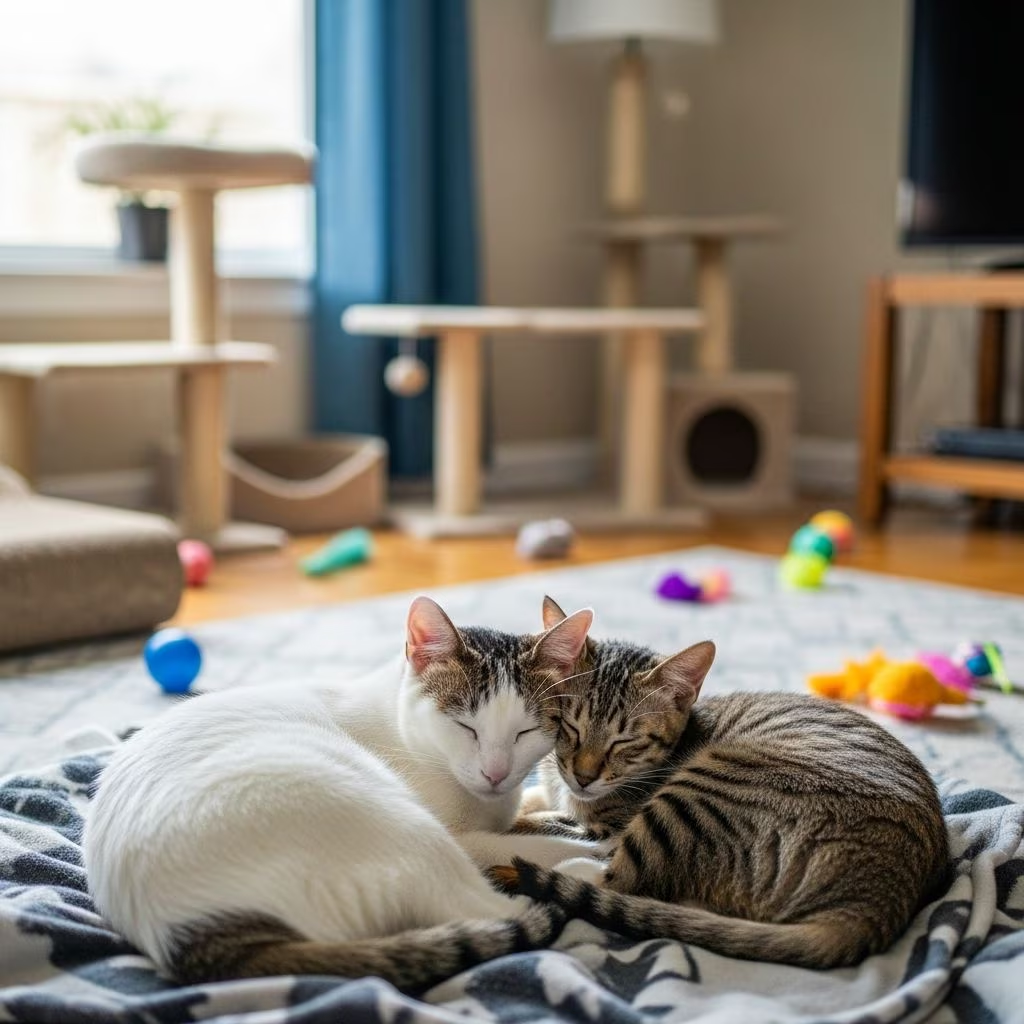
Feline leukemia virus (FeLV) poses significant challenges for cat owners in multi-pet households, as it spreads easily through close contact but requires careful management rather than outright separation in all cases.
Understanding Feline Leukemia Virus Basics
FeLV is a retrovirus that exclusively targets cats, weakening their immune systems and increasing vulnerability to secondary infections, anemia, and cancers like lymphoma. Unlike bacterial infections, this virus integrates into the cat’s DNA, making it persistent in many cases. Globally, it affects domestic cats and some wild felids, with prevalence varying by region and lifestyle—outdoor or stray cats face higher exposure rates.
The virus exists in subtypes, primarily FeLV-A, which is the most common and transmissible form. Subtypes B, C, and T emerge through mutations in infected cats, exacerbating disease severity, such as FeLV-C’s link to severe anemia by interfering with blood cell production.
Primary Transmission Routes in Cat Households
FeLV spreads cat-to-cat via direct exchange of bodily fluids, mainly saliva during mutual grooming, bite wounds from fights, or shared food and water bowls. Nasal secretions, urine, feces, and milk also carry the virus, though less efficiently. The pathogen survives only hours outside the host, minimizing fomite-based spread but emphasizing close interactions as the key risk.
- Grooming and social bonding: Cats licking each other transfers high viral loads from progressively infected individuals.
- Aggressive encounters: Bites introduce blood and saliva deep into wounds.
- Shared resources: Bowls and litter boxes pose lower but cumulative risks with prolonged use.
- Vertical transmission: Queens pass FeLV to kittens in utero, at birth, or via nursing milk, often leading to early infection or litter loss.
Healthy-appearing carriers shed virus intermittently, making visual health unreliable for safety assessments.
Types of FeLV Infections and Contagion Levels
Infections fall into three categories based on immune response:
| Infection Type | Viral Presence | Contagiousness | Prognosis |
|---|---|---|---|
| Abortive | Cleared quickly | None | Excellent; immunity develops |
| Regressive | Latent in bone marrow/organs | Low (unless reactivated) | Good; longer survival |
| Progressive | Persistent in blood/tissues | High | Poor; disease signs appear |
Progressive cases shed virus continuously, posing the greatest household threat, while regressive infections rarely transmit but can reactivate under stress or immunosuppression. About 30-40% of exposures result in regressive states, with many cats living asymptomatically.
Diagnostic Approaches for FeLV Status
Veterinarians use antigen tests (ELISA) to detect viral proteins in blood, saliva, or tears, ideal for initial screening. Positive results demand confirmatory PCR for proviral DNA, distinguishing progressive from regressive infections. Kittens under six months may yield false positives from maternal antibodies, requiring retesting at 30 days and six months.
In multi-cat homes, test all residents before introductions. Retest positives after 30-90 days to confirm persistence.
Can FeLV-Positive Cats Cohabitate with Negatives?
Standard veterinary consensus advises against housing FeLV-positive cats with negatives due to transmission risks, especially in close quarters. Progressive infections demand strict isolation to prevent outbreaks, as even casual contact like shared spaces can lead to spread over time.
Exceptions may apply for regressive infections with negative antigen tests and low viral loads, but ongoing monitoring is essential. FeLV-positive cats fare best with compatible positives, reducing quarantine stress. Outdoor access amplifies risks, so indoor-only policies are critical.
- Separate living areas with individual litter, food, and bedding.
- Disinfect surfaces daily; virus dies quickly but vigilance prevents indirect spread.
- Avoid playdates or fostering untested cats.
Vaccination: A Key Defense Strategy
FeLV vaccines target the A subtype, offering 2-3 year protection for at-risk cats like kittens, outdoor roamers, or new household additions. Administer after negative testing, starting at 8-12 weeks with boosters. While not 100% effective, vaccination cuts infection odds significantly and may lessen disease severity in breakthroughs.
Unvaccinated cats in high-prevalence areas (e.g., shelters) face elevated dangers; consult vets for tailored schedules.
Daily Care and Support for FeLV-Positive Cats
Focus on quality of life through nutrition, parasite control, and routine checkups. Feed high-quality, immune-boosting diets rich in antioxidants. Annual bloodwork monitors for anemia, lymph issues, or organ strain. Dental care prevents secondary infections, as FeLV compromises gum health.
Stress reduction via environmental enrichment—scratching posts, perches, pheromone diffusers—helps maintain regressive states. Some respond to antivirals or interferons experimentally, but supportive therapy remains standard.
FAQs on FeLV in Shared Homes
Is FeLV contagious to humans or dogs? No, it’s feline-specific and poses no risk to people, canines, or other species.
How long can FeLV-positive cats live? Varies: progressive cases average 2-3 years post-diagnosis; regressive can exceed a decade with care.
Can I adopt an FeLV+ cat with FeLV- residents? Not recommended; opt for single-cat homes or FeLV+ only groups.
What’s the false positive rate for FeLV tests? Low in adults (<5%), higher in kittens; always confirm.
Does spaying/neutering reduce FeLV spread? Indirectly yes, by curbing roaming and fights.
Preventive Measures for Multi-Cat Safety
Proactive steps safeguard herds:
- Test new cats twice, 4-6 weeks apart.
- Vaccinate susceptibles annually.
- Maintain hygiene: separate resources, frequent cleaning.
- Limit outdoor time; supervise interactions.
- Monitor for symptoms like lethargy, weight loss, pale gums.
Shelters often segregate by status, modeling home strategies. Early detection via wellness exams catches carriers before spread.
Emotional and Practical Realities
FeLV diagnoses evoke grief, but many positives thrive years with dedication. Support networks like rescues specializing in positives offer adoption matches. Euthanasia decisions hinge on quality of life, not status alone—discuss with vets compassionately.
In summary, while FeLV+ cats enrich lives, household integration demands separation from negatives to avert tragedy. Knowledge empowers informed choices.
References
- Facts About Feline Leukemia Virus — WebMD. 2023. https://www.webmd.com/pets/cats/facts-about-feline-leukemia-virus
- Feline Leukemia Virus (FeLV) — PetMD. 2024. https://www.petmd.com/cat/conditions/infectious-parasitic/feline-leukemia-virus-felv
- Feline leukemia virus — Wikipedia (references primary sources). 2025. https://en.wikipedia.org/wiki/Feline_leukemia_virus
- Feline Leukemia Virus (FeLV): What Every Cat Owner Should Know — Aurora Veterinary Clinic. 2024. https://www.auroravet.com/services/cats/blog/feline-leukemia-virus-felv-what-every-cat-owner-should-know
- Feline Leukemia Virus (FeLV) – Cat Owners — Merck Veterinary Manual. 2025. https://www.merckvetmanual.com/cat-owners/disorders-affecting-multiple-body-systems-of-cats/feline-leukemia-virus-felv
- GUIDELINE for Feline Leukaemia Virus Infection — ABCD cats & vets (European Advisory Board on Cat Diseases). 2024. https://www.abcdcatsvets.org/guideline-for-feline-leukaemia-virus-infection/
- Feline Leukemia Virus Disease Complex — VCA Animal Hospitals. 2024. https://vcahospitals.com/know-your-pet/feline-leukemia-virus-disease-complex



