

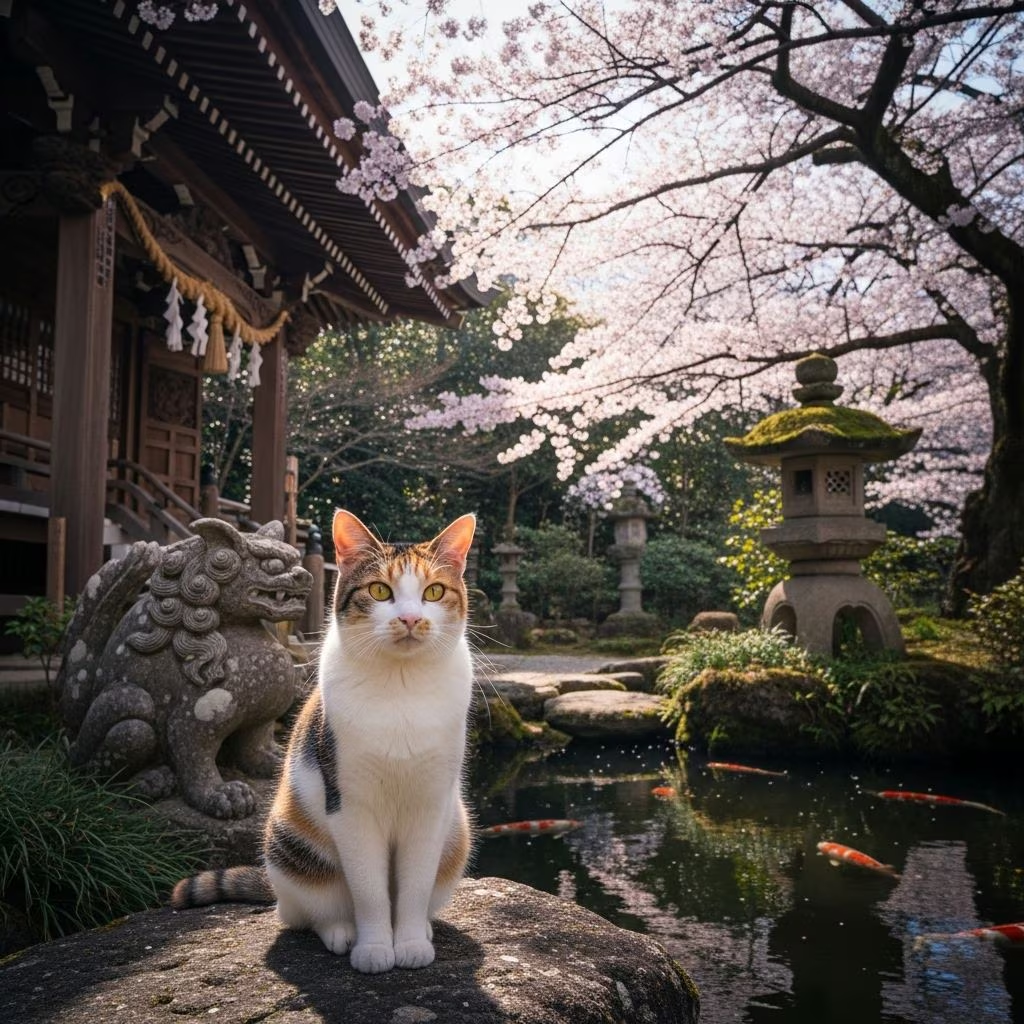
The relationship between Japan and its feline inhabitants stretches back over a millennium, weaving cats into the very fabric of Japanese cultural identity. These creatures have transitioned from protective guardians of sacred texts to beloved companions and powerful cultural symbols, leaving an indelible mark on art, folklore, spirituality, and daily life. Understanding the journey of cats in Japan provides fascinating insights into how animals become intertwined with a nation’s values, beliefs, and traditions.
The Arrival and Early Integration of Cats in Japan
The precise timeline of when domestic cats first arrived in Japan remains somewhat mysterious, though historical evidence and archaeological findings offer compelling clues. The most widely accepted theory suggests cats reached Japan between 538 and 552 CE, coinciding remarkably with the introduction of Buddhism to the archipelago. This timing was far from coincidental. Buddhist monks traveling from China brought these feline companions aboard their vessels, specifically to protect sacred Buddhist scriptures from the destructive nibbling of rodents during long maritime journeys.
An alternative historical narrative points to the Nara Period (710-784 CE) as a possible timeline for feline introduction, a time when Buddhism flourished throughout Japan. Some historians suggest that cats were exchanged as luxury gifts between emperors and regional lords, indicating their status as valuable possessions rather than common animals. Archaeological discoveries have added another dimension to this narrative. In 2011, excavations at the Yayoi period Karakami ruins on Iki Island in Nagasaki Prefecture uncovered bones identified as belonging to a domestic cat, potentially pushing the feline timeline back to between 300 BCE and 300 CE.
Genetic research corroborates the Asian origin theory, indicating that Japanese domestic cats likely descended from Indian felines that traveled through China. The first definitive written record of a cat in Japan comes from Emperor Uda’s diary, where he documented receiving a black cat from China in 884 CE. This entry reveals not merely the cat’s arrival but the deep fascination its owner harbored, demonstrating that even at this early stage, cats captivated the imagination of Japan’s highest-ranking officials.
Cats and the Imperial Court: From Exotic Treasures to Treasured Companions
During the Heian Period (794-1185 CE), cats underwent a remarkable transformation in Japanese society. What began as functional rodent controllers evolved into symbols of prestige and luxury. Cats became possessions reserved exclusively for nobility and imperial circles, treated with formality and reverence that reflected their elevated status. Wealthy aristocrats competed to own the finest specimens, and ownership of a prized feline became a marker of social standing.
Historical records document extraordinary measures taken to protect these valuable animals. Cats during the Heian period were often kept on leashes to prevent their escape, much as modern societies might restrain expensive or beloved pets. This practice persisted even after cats became more widespread, as they remained expensive and cherished possessions. The Imperial Palace maintained cats with special designations and assigned attendants to their care. One legendary feline named Myobu no Otodo, meaning “Chief Lady-in-Waiting of the Inner Palace,” received an aristocratic rank from Emperor Ichijo. Court records describe this elite cat wearing a red collar with a white tag, enjoying luxuries befitting an imperial retainer.
Emperor Uda’s detailed diary entry about his black cat reveals the emotional dimensions of these relationships. The emperor compared the cat’s vocalizations to “the cries of a black dragon,” and he meticulously noted behavioral details such as how the animal curled into a circle when resting and its hunting techniques. Such documentation demonstrates that cats had captured not just the practical appreciation of their human companions but their emotional and imaginative interest as well.
The Transition from Exotic to Commonplace
By the conclusion of the 12th century, cats had multiplied sufficiently throughout Japan to shed their status as exotic rarities. Both emperors and peasants now kept feline companions, marking a democratization of cat ownership across social classes. This widespread distribution corresponded with the emergence of supernatural cat legends in Japanese folklore, tales that would profoundly influence artistic expression throughout the following centuries.
The Edo Period (1603-1867) represented a distinctive chapter in feline history. Japan’s self-imposed isolation during much of this era meant that nearly all cats present in the country were native-born rather than imported. Genetic isolation, combined with potential inbreeding, produced surprising mutations. Around 1700, short-tailed cats began appearing with increasing frequency, eventually becoming so prevalent that Japanese people began associating stubby tails with indigenous Japanese cats and longer tails with foreign ancestry.
During this period, cats transitioned from practical tools for pest control to cherished companions and cultural symbols. A significant shift occurred in the early 1600s when authorities recognized cats’ crucial role in protecting silkworm populations from rodent damage. Silk farming represented a vital economic enterprise, and rats posed an existential threat to production. The Edo period witnessed regulations surrounding cat freedom and restrictions. In 1602, an imperial representative in Kyoto issued a decree demanding that cats be allowed to roam freely, recognizing their importance to pest control. However, concerned owners continued binding their cats, fearing theft of these valuable animals.
A transformative moment arrived in 1685 when Tokugawa Shōgun Tsunayoshi issued a decree of compassion toward living creatures, specifically prohibiting the practice of tying up cats and dogs. This legislation liberated cats from leashes, fundamentally changing their relationship with human society and allowing them to fulfill their roles more effectively.
Supernatural Dimensions: Folklore and Mythological Cats
Japanese folklore weaves an complex narrative around felines, depicting them not merely as animals but as beings capable of transcending the mundane world. Supernatural cats, known as kaibyo, have featured in Japanese folklore since the 12th century. These creatures range from mischievous tricksters to genuinely dangerous entities, reflecting cultural anxieties and fascinations with feline nature.
The nekomata, described as a massive, man-eating, two-tailed cat, allegedly stalked the woods of what is now Nara Prefecture. These creatures occupied a liminal space between animal and demon in the Japanese imagination. Other supernatural cat entities included the neko musume, believed to be cat-human hybrids born from a cat’s curse. According to legend, shamisen makers who became excessively greedy would be punished with neko musume daughters—cats in human form who lacked human speech, ate rats, and engaged in destructive scratching.
These folklore narratives served multiple functions within Japanese culture. They encoded moral lessons about proper behavior, warned against excessive ambition, and acknowledged the mysterious nature of animals that inhabited the human environment. Traditional artists rendered these supernatural beings in paintings and sculptures during the 17th century, cementing their place in Japan’s artistic heritage.
The Maneki-neko: From Folklore to Global Icon
Among Japan’s most recognizable cultural exports stands the maneki-neko, the beckoning cat figurine symbolizing good fortune and prosperity. This iconic image emerged during the Edo Period, initially serving a practical purpose before evolving into a profound cultural symbol. The origins of the maneki-neko are intertwined with Japanese folklore and the economic realities of silk production.
During the Edo Period, when real cats remained scarce and expensive, some people made their living producing and selling cat paintings to silk farmers as talismans against rats. Silk farmers regarded cats almost as guardian spirits, understanding their crucial role in protecting silkworm colonies. From this practical tradition emerged the maneki-neko concept. One enduring legend describes a poor temple priest and his beloved cat. During a severe storm, a passing nobleman observed the cat raising its paw as if inviting him inside the temple. The lord accepted the invitation, and moments later, a lightning strike hit the very spot where he had been standing. Grateful for his narrow escape, the nobleman became the temple’s benefactor, and the image of the beckoning cat was born and immortalized.
The maneki-neko transformed from a spiritual and practical symbol into a universal emblem of good luck and commercial success, eventually spreading far beyond Japan’s borders to become instantly recognizable worldwide.
Cats in Art, Literature, and Spiritual Traditions
Japanese artistic traditions have long celebrated feline subjects. Supernatural cat depictions became particularly prominent in traditional art during the 17th century, helping establish cats as powerful cultural symbols with both protective and potentially dangerous qualities. These artistic representations reflected deeper spiritual understandings of felines.
Within Shinto and Buddhist traditions, cats occupy significant spiritual roles. They are considered both protective entities and spiritual beings capable of bridging the mundane and supernatural realms. This spiritual dimension extends beyond folklore into practical religious spaces. The Gotokuji Temple, for instance, became famous for its association with the maneki-neko tradition, attracting visitors seeking blessings and good fortune. Such sacred connections transformed cats from mere domestic animals into participants in Japan’s spiritual landscape.
Classical Japanese literature and historical texts frequently referenced cats, documenting their behavior, personalities, and relationships with humans. The detailed observations recorded by Emperor Uda and other court officials contributed to an evolving literary tradition that acknowledged cats as worthy subjects of serious attention and affectionate description.
The Cultural Significance of Felines in Modern Japan
The historical reverence for cats in Japan established patterns of cultural engagement that persist into contemporary times. Understanding how cats became embedded in Japanese spirituality, artistic expression, and daily life illuminates broader questions about human-animal relationships and how cultures assign meaning to creatures they encounter.
Several key themes emerge from Japan’s feline history:
- Functional Integration: Cats arrived serving practical purposes—protecting sacred texts and managing rodent populations—roles that gradually transformed into cultural significance
- Social Stratification: Cat ownership initially reflected social status, with possession restricted to elites before democratization over centuries
- Spiritual Recognition: Japanese religious traditions incorporated cats as spiritual entities capable of supernatural influence
- Artistic Expression: Cats inspired distinctive artistic traditions, from folklore illustrations to contemporary design
- Regulatory Framework: Government decrees recognized the importance of cats to economic prosperity and animal welfare
- Global Influence: Japanese cat symbolism, particularly the maneki-neko, became internationally recognized cultural ambassadors
FAQ Section: Understanding Cats in Japanese Culture
Frequently Asked Questions
When exactly did cats arrive in Japan?
While the exact date remains uncertain, historical evidence suggests cats arrived between 538 and 552 CE, coinciding with Buddhism’s introduction. Archaeological discoveries on Iki Island suggest even earlier presence, potentially dating to the Yayoi period.
Why did cats become so important in Japanese culture?
Cats initially served practical purposes protecting Buddhist scriptures and managing rodent populations. Over time, their association with protection, combined with their mysterious nature, led to spiritual significance and cultural symbolism that evolved through centuries of folklore and artistic expression.
What is the maneki-neko, and what does it represent?
The maneki-neko is a beckoning cat figurine that emerged during the Edo Period as a symbol of good fortune and prosperity. It originated from folklore about a temple cat and has become Japan’s most recognizable cat-related cultural export.
Were Japanese cats different from other cats?
During the Edo Period, genetic isolation produced distinctive mutations, most notably short tails. Japanese people began associating short-tailed cats with indigenous Japanese breeds and longer-tailed cats with foreign ancestry.
How did supernatural cats feature in Japanese folklore?
Supernatural cats, known as kaibyo, appeared in Japanese folklore from the 12th century onward. These included creatures like the two-tailed nekomata and cat-human hybrids called neko musume, which served various narrative and moral functions within the culture.
Conclusion: The Enduring Legacy of Japanese Cat Culture
The history of cats in Japan represents far more than a simple record of animal domestication. It traces the evolution of how cultures absorb external influences, transform practical relationships into spiritual significance, and create lasting symbols that resonate across centuries and continents. From their arrival as protectors of sacred knowledge to their current status as beloved companions and cultural ambassadors, cats have participated in Japan’s cultural narrative in profound and multifaceted ways.
The legacy of Japanese cat culture demonstrates how animals become woven into the identity of societies, how practical necessity can evolve into spiritual meaning, and how cultural symbols can transcend their origins to achieve global recognition and resonance. For anyone seeking to understand Japanese culture more deeply, the story of cats provides an illuminating and delightful pathway into the nation’s values, beliefs, and aesthetic sensibilities.
References
- The Cat’s Meow: Why Japan Adores Its Feline Friends — Bokksu. Accessed January 2026. https://bokksu.com/blogs/news/the-cats-meow-why-japan-adores-its-feline-friends
- Cats in Japan: Symbols, Stories, and Cultural Icons — Dokusha. Accessed January 2026. https://dokusha.substack.com/p/cats-in-japan-symbols-stories-and
- Cat in Japan — NIPPONIA, Web Japan. Accessed January 2026. https://web-japan.org/nipponia/nipponia26/en/animal/animal01.html
- Purr-fectly Curated: 8 Intriguing Insights About Cats in Japan — Musubikiln. Accessed January 2026. https://musubikiln.com/blogs/journal/purr-fectly-curated-8-intriguing-insights-about-cats-in-japan
- Waneko Studies: A Journey into Japan’s Cat Lore — Nippon.com. Accessed January 2026. https://www.nippon.com/en/japan-topics/g01054/
- The Curious Case of the Japanese Lucky Cat (Maneki-neko) — Plato Pet Treats. Accessed January 2026. https://platopettreats.com/blogs/blog/the-curious-case-of-the-japanese-lucky-cat-maneki-neko-history-meaning-and-why-cat-lovers-are-obsessed
- Pet Culture in Japan — Wikipedia. Accessed January 2026. https://en.wikipedia.org/wiki/Pet_culture_in_Japan
- Japan’s Love-Hate Relationship With Cats — Smithsonian Magazine. Accessed January 2026. https://www.smithsonianmag.com/arts-culture/japans-love-hate-relationship-with-cats-180975764/



