

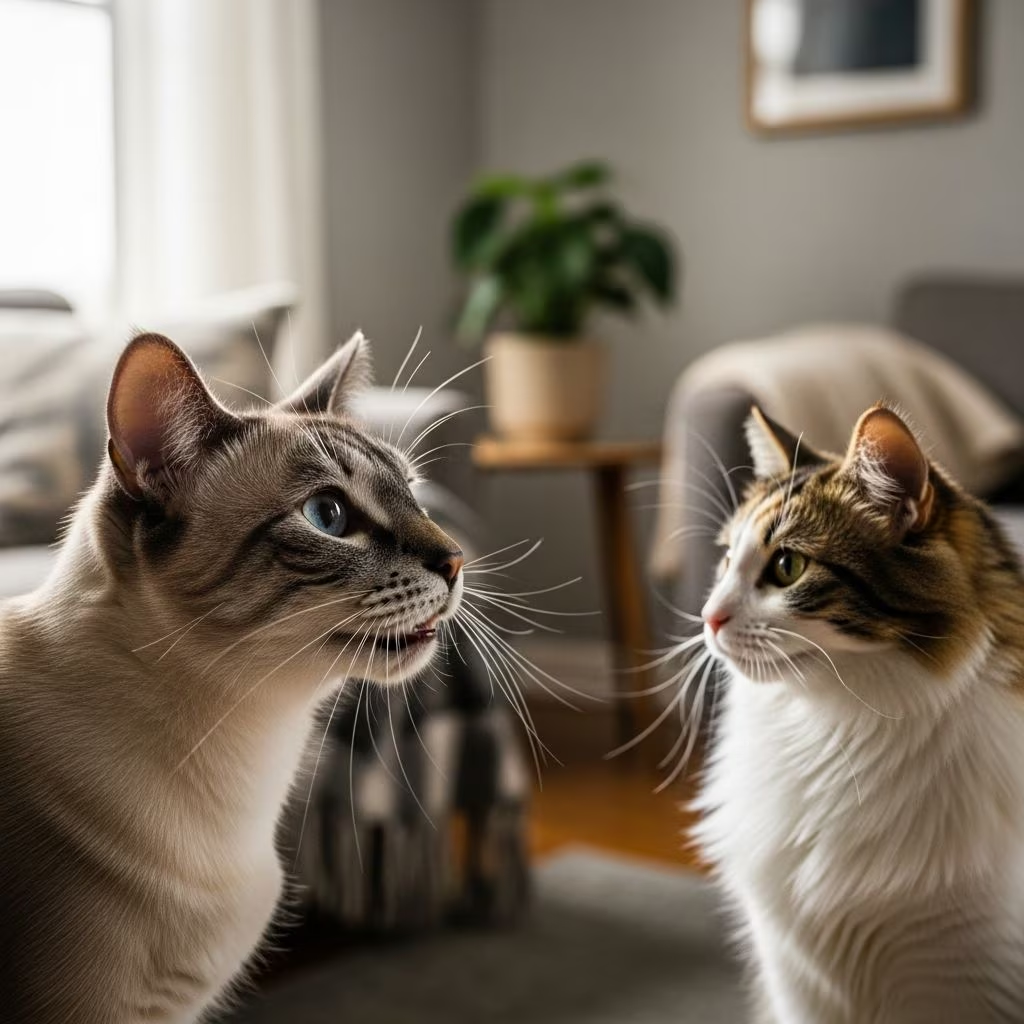
Bringing a new feline companion into a household with existing cats represents one of the most challenging transitions pet owners face. The sounds that emerge during these early encounters—particularly hissing—often alarm new cat parents who fear aggression or danger. However, the acoustic landscape of feline introductions tells a more nuanced story than many realize. Understanding what these vocalizations signify and recognizing normal patterns from problematic ones can transform your approach to cat integration from anxiety-ridden to informed and strategic.
The Nature of Feline Hissing as Communication
Cats employ hissing as a sophisticated communication tool rather than an automatic aggression signal. When a cat produces a hiss, it mimics the sound of a snake—a deliberate acoustic choice that conveys a message of defense and boundary-setting. This vocalization represents a cat’s attempt to resolve conflict without physical escalation, making it actually a desirable outcome compared to silent stalking or immediate combat.
The hissing sound originates from a cat’s larynx and is produced by forcing air through a partially closed mouth. This distinctive noise carries evolutionary significance; by sounding like a dangerous predator, cats use acoustic mimicry to discourage threats without requiring physical confrontation. In the context of introducing cats, this means that hissing often indicates a cat is attempting communication before resorting to more dangerous physical interactions.
Distinguishing Normal Vocal Responses from Warning Signs
Not all hissing during cat introductions warrants concern. Recognizing the distinction between defensive vocalization and genuine aggression determines whether your intervention is necessary or counterproductive.
Normal Introduction Vocalizations Include:
- Isolated hisses or brief vocalizations when cats first encounter each other
- Hissing that gradually decreases in frequency over days or weeks
- Vocalizations paired with retreat behavior, indicating the cat is creating distance
- Sounds that occur during specific moments of proximity but fade when cats separate
- Occasional growling or meowing alongside hissing as exploratory communication
Warning Indicators Requiring Intervention:
- Aggressive posturing including arched backs, puffed tails, and flattened ears accompanying hisses
- Continuous hissing without breaks or periods of calm
- Physical aggression including swatting, biting, or wrestling that escalates
- One cat consistently pursuing another despite clear avoidance signals
- Signs of extreme stress in either cat, such as loss of appetite or excessive grooming
- Territorial marking through urine spraying or strategic blocking of resources
Why Cats Vocalize During Territory Transitions
Establishing Dominance Hierarchy
Cats are inherently territorial animals, and introducing a new feline disrupts the established social order. Resident cats have likely inhabited the home for an extended period, viewing the space as exclusively theirs. When a newcomer arrives, existing cats may use vocalizations to reinforce their position within the household hierarchy. Hissing serves as a relatively non-violent mechanism for asserting dominance and clarifying territorial boundaries without causing injury.
Processing Environmental Disruption
Cats thrive on predictability and routine. The sudden introduction of an unfamiliar feline represents a significant disruption to established patterns. Resident cats may experience stress, anxiety, and confusion when their carefully maintained territory is invaded. This emotional turmoil frequently manifests through vocalizations as cats attempt to process the unexpected change and reassert control over their environment.
Responding to Novel Scents and Presence
New cats bring unfamiliar scents into the household, triggering investigative and defensive responses. When cats encounter unfamiliar olfactory signatures, they often vocalize as part of their assessment process. This represents a cat’s way of communicating “I notice you, and I’m establishing my response to your presence.”
Space Encroachment and Resource Competition
Cats perceive their home as a collection of resources including sleeping spots, food locations, litter boxes, and interactive spaces. A new cat’s presence immediately creates perceived competition for these valued resources. Existing cats may use hissing to communicate that certain areas remain their exclusive domain and that the newcomer should maintain appropriate distance.
Duration and Normalization Patterns
The timeline for hissing reduction varies significantly among feline personalities and situations. Some cats require several weeks of regular hissing before comfort develops, while others show rapid improvement. Research and expert observation suggest that occasional hissing may continue for several weeks as cats establish new territorial agreements and social structures.
Positive indicators that integration is progressing include a measurable decrease in vocalization frequency, increased curiosity replacing aggressive displays, and cats observing each other from distance without reactive responses. When cats transition from constant hissing to sporadic vocalizations, and those vocalizations become less intense, the introduction process is moving successfully forward.
Some households report that cats maintain occasional hisses indefinitely—particularly when cats must pass closely or negotiate shared spaces. This low-level vocalization may represent an accepted communication pattern rather than evidence of failed integration. Many multi-cat households stabilize with minimal daily hissing, demonstrating that cats have established an acceptable coexistence arrangement.
Strategic Management of Vocal Interactions
The Observation Approach
When hissing occurs without accompanying aggression, often the most effective response is patient observation. Constant human intervention can actually complicate feline communication by interrupting their natural conflict resolution processes. Cats possess sophisticated abilities to negotiate boundaries without human mediation. If hissing remains isolated and doesn’t escalate into physical confrontation, allowing the interaction to proceed—while remaining alert for warning signs—often produces better outcomes than immediate separation.
Strategic Separation When Necessary
When hissing continues unabated for extended periods or accompanies aggressive body language, strategic separation becomes appropriate. This doesn’t mean permanent isolation, but rather moving cats to different areas for a calming period. Separation allows heightened stress levels to normalize and prevents confrontation from escalating into injury.
Importantly, separation should not follow immediately after hissing occurs. Separating a cat during or immediately after vocalization may inadvertently reward hissing as an effective strategy for achieving isolation. Instead, allow a few minutes of calm behavior before creating distance, reinforcing that peaceful coexistence, not hissing, results in continued proximity.
Environmental Optimization
Beyond managing vocalizations directly, creating an environment that reduces stress decreases hissing frequency. Multiple litter boxes, varied feeding locations, climbing structures at different heights, and numerous hiding spaces reduce resource competition and allow cats to maintain preferred distance. When cats have options for avoiding each other, confrontational situations decrease.
Gradual Exposure and Pacing
Introducing cats too rapidly creates sustained stress that perpetuates hissing. Using physical barriers like baby gates covered with blankets allows cats to experience each other’s presence and scent without face-to-face confrontation. This graduated exposure over days or weeks substantially reduces vocal intensity when cats eventually meet directly. Forcing premature direct contact often results in more pronounced and sustained hissing than gradually paced introductions.
Recognizing Progress in Integration
| Integration Stage | Typical Vocalization Pattern | Body Language Indicators | Next Steps |
|---|---|---|---|
| Initial Contact | Frequent hissing and growling | Raised fur, pinned ears, stiff posture | Maintain separation; allow scent exchange |
| Early Familiarity | Hissing decreases; may still vocalize at proximity | Occasional stiffness; more observation than reaction | Increase supervised interaction time gradually |
| Developing Coexistence | Minimal hissing; sporadic during space conflicts | Relaxed posture during distances; tenseness during proximity | Allow extended unsupervised time in shared spaces |
| Established Relationship | Occasional hissing only during resource competition | Comfortable body language; minimal defensive responses | Maintain current management; monitor for regression |
When Professional Guidance Becomes Necessary
While most hissing represents normal feline communication, certain patterns warrant professional consultation. If hissing continues unabated for multiple weeks without any reduction in frequency or intensity, or if it consistently accompanies physical aggression, a veterinary behaviorist or certified animal behavior consultant can provide personalized intervention strategies.
Additionally, if either cat displays signs of extreme stress—including loss of appetite, excessive grooming, elimination outside litter boxes, or complete withdrawal—professional intervention helps identify whether the introduction pace requires adjustment or whether other environmental factors are contributing to distress.
Frequently Asked Questions
How long should I expect hissing to continue?
Hissing frequency typically decreases noticeably within two to three weeks, though sporadic vocalizations may continue for several weeks or longer. The exact timeline depends on individual cat personalities, previous socialization experiences, and introduction pacing. Some cats reach comfortable coexistence with minimal hissing within weeks, while others require several months to fully adjust.
Is it dangerous to let cats hiss at each other?
Hissing without physical aggression represents safe communication. The danger threshold occurs when hissing accompanies active aggression, escalating body language, or physical contact. Pure hissing, even if frequent, indicates cats are attempting to resolve conflict through warning signals rather than combat.
Should I separate cats every time they hiss?
Immediate separation following every hiss can actually complicate integration by interrupting natural communication. Separate cats only when hissing continues intensely for several minutes without breaks, accompanies aggressive posturing, or escalates toward physical confrontation. Brief hissing during proximity typically resolves naturally when cats establish temporary distance.
What if one cat never stops hissing?
Persistent hissing without improvement over weeks suggests the introduction pace may be too rapid or that individual personalities present genuine compatibility challenges. Returning to earlier introduction stages—complete separation with scent exchange—and progressing more slowly often succeeds where faster approaches failed. If hissing remains relentless despite methodical progression, professional behavioral consultation helps determine whether cats require permanent separation or whether specific environmental modifications could facilitate acceptance.
Moving Forward with Confidence
Hissing during cat introductions represents a normal, healthy communication mechanism rather than a failure of the integration process. Understanding that your cats are engaging in sophisticated boundary negotiation—rather than pure aggression—transforms anxiety into informed management. By recognizing normal vocalization patterns, distinguishing them from genuine warning signs, and implementing patient, strategic approaches, most cat households successfully navigate the introduction phase.
The ultimate goal extends beyond eliminating hissing entirely to establishing a stable coexistence where cats maintain acceptable distance, predictable interaction patterns, and mutual respect for territorial boundaries. Some hissing may persist indefinitely as part of this arrangement, and that represents success, not failure. With time, patience, and strategic environmental management, even initially contentious introductions often evolve into peaceful multi-cat households where former adversaries coexist comfortably.
References
- Why Do Cats Hiss? 6 Reasons Behind the Behaviour — Purina UK. https://www.purina.co.uk/articles/cats/behaviour/understanding-cats/why-do-cats-hiss
- Signs Your Cat is Accepting the New Kitten — No More Hissing! — DVM Central. https://www.dvmcentral.com/blogs/signs-your-cat-is-accepting-the-new-kitten
- Cat Introductions 101: It’s All About Patience! — Feline Behavior Solutions. https://felinebehaviorsolutions.com/cat-introductions-101-patience/
- 10 Serious Warning Signs When Introducing Cats — Cats.com. https://cats.com/warning-signs-when-introducing-cats



