

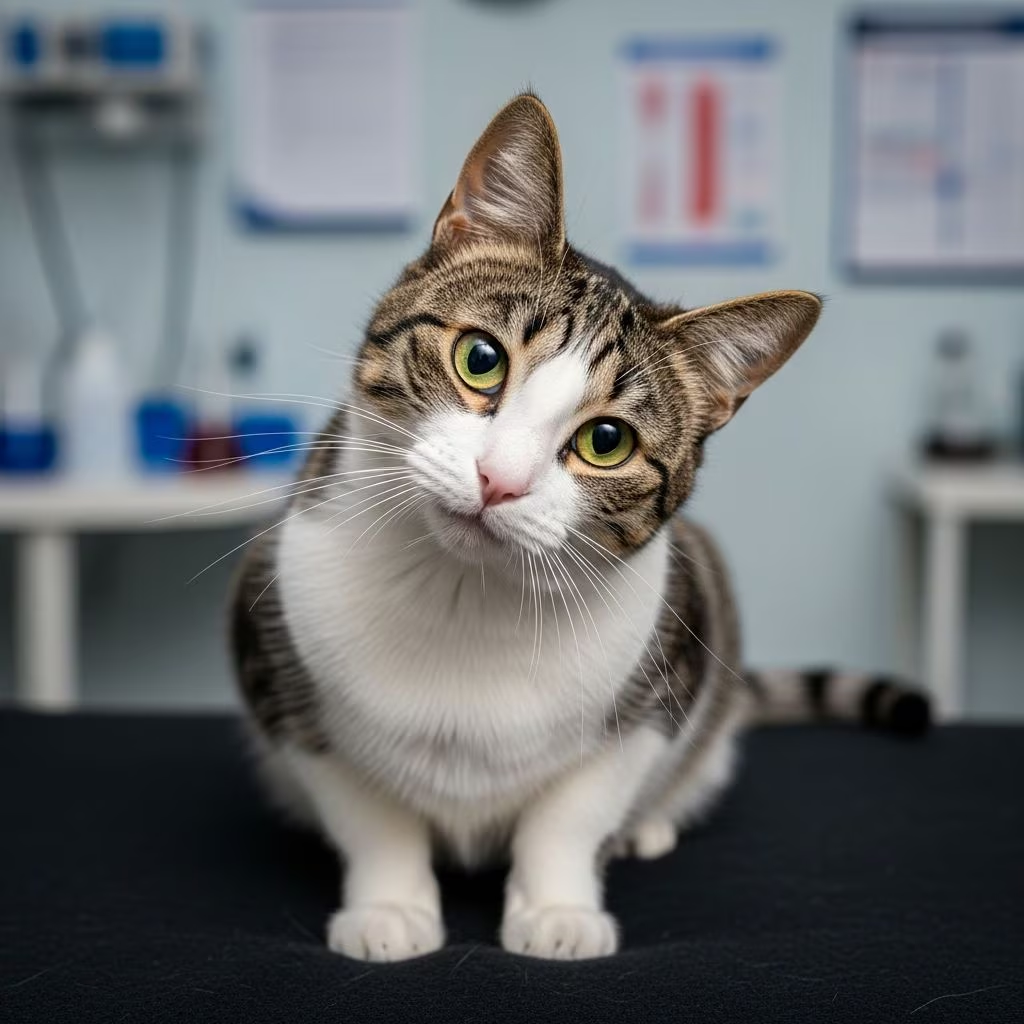
Understanding Feline Vestibular Disease
Vestibular disease in cats is a condition that affects the vestibular system, which is responsible for maintaining balance and coordinating eye and head movements. This system includes both the inner ear (peripheral vestibular system) and parts of the brain (central vestibular system). When the vestibular system malfunctions, cats experience disorientation, loss of balance, and involuntary eye movements that can be distressing for both the cat and its owner. The condition can develop suddenly and typically causes dramatic symptoms that appear within hours.
The vestibular system works by sending signals to the brain about the body’s position in space. When this system is disrupted, cats lose their sense of spatial orientation, leading to the characteristic symptoms associated with vestibular disease. Understanding this condition is crucial for cat owners, as prompt recognition and treatment can significantly improve outcomes and reduce suffering.
Types of Vestibular Disease
Veterinarians classify vestibular disease into two primary categories based on where the problem occurs in the vestibular system:
Peripheral Vestibular Disease
Peripheral vestibular disease affects the inner ear and the vestibular structures located outside the brain. This is the more common form of vestibular disease in cats. The peripheral vestibular system includes the inner ear, which contains specialized sensory organs that detect movement and changes in head position. When this part of the system is affected, cats typically experience head tilt, loss of coordination, rapid eye movements (nystagmus), and nausea. Peripheral causes are often more treatable because they frequently result from infections or inflammation that respond well to medical intervention.
Central Vestibular Disease
Central vestibular disease involves the brainstem or cerebellum—parts of the brain that process balance and coordination information. This form results from neurological problems affecting the central nervous system. Central vestibular disease can be caused by infections, tumors, or trauma to the brain. Symptoms may include head tilt, loss of balance, circling, and abnormal eye movements, but central disease often presents with additional neurological signs. Central vestibular disease tends to be more serious and may have a less favorable prognosis than peripheral disease.
Common Causes of Feline Vestibular Disease
Idiopathic Vestibular Disease
The most common diagnosis in cats is idiopathic vestibular disease, meaning the exact cause cannot be identified. Despite extensive testing, no underlying disease is found. Fortunately, idiopathic vestibular disease has an excellent prognosis, with most cats recovering completely within two to four weeks without specific medical intervention.
Ear Infections
Middle or inner ear infections represent the most common identifiable cause of vestibular disease in cats. These infections can result from bacteria, fungi, or other pathogens that ascend into the ear canal. Inner ear infections (otitis interna) and middle ear infections (otitis media) are particularly likely to cause vestibular signs because of their proximity to the vestibular structures. When infections are diagnosed early and treated with appropriate antibiotics or antifungal medications, cats typically recover within days to weeks.
Congenital and Inherited Forms
Certain cat breeds, particularly Siamese and Burmese cats, can develop inherited or congenital forms of vestibular disease. These cats may be born with developmental abnormalities of the vestibular system or predispositions to vestibular dysfunction. Owners of these breeds should be aware of this increased risk.
Drug Toxicity
Some medications are ototoxic, meaning they can damage the vestibular and auditory receptors in the inner ear, leading to vestibular dysfunction. Ototoxicity can result from oral, parenteral (injected), or topical drug therapy. The damage is usually permanent, though early recognition and cessation of the offending medication can prevent further deterioration. In the southeastern United States, cats may develop acute peripheral vestibular disease from ingesting five-lined skink tails, which can cause similar toxicity-related symptoms.
Central Nervous System Disorders
In cats, central vestibular disease can result from various conditions including:
- Feline Infectious Peritonitis (FIP), particularly the dry form
- Brain tumors, cysts, or polyps, especially in senior cats
- Intracranial empyema (brain abscess)
- Trauma or head injury resulting in fractures of the temporal bone
- Meningoencephalitis or other inflammatory brain conditions
- Thiamine (vitamin B1) deficiency
Ear Polyps
Nasopharyngeal polyps can grow into regions near the inner ear and vestibular system, causing vestibular signs along with other symptoms such as dysphagia, voice changes, and respiratory issues. These polyps require surgical removal through ventral bulla osteotomy, and the prognosis following surgery is generally excellent, though polyps may recur.
Recognizing the Symptoms
The clinical signs of feline vestibular disease are typically dramatic and appear suddenly. Most cats develop symptoms that are most severe during the first 24 to 48 hours, with many showing significant improvement within 72 hours of onset.
Primary Symptoms
The hallmark signs of vestibular disease include:
- Head tilt: A characteristic tilting of the head to one side, often permanent in some cases
- Loss of balance and coordination: Ataxia and inability to walk normally
- Circling: Cats may walk in circles, often to the same side as the head tilt
- Falling or rolling: Severe cases cause cats to fall over to one side
- Nystagmus: Involuntary, rapid eye movements that the猫 cannot control
- Nausea and vomiting: Secondary to the disorientation and balance disruption
Secondary Symptoms
As a result of the primary symptoms, cats may also experience:
- Decreased appetite or difficulty eating
- Reluctance to move or activity avoidance
- Disorientation and confusion
- Anxiety or fear due to loss of balance control
Diagnostic Approach
Diagnosing vestibular disease requires a systematic approach to determine whether the disease is peripheral or central and to identify any underlying causes. The prognosis and treatment depend heavily on accurate localization of the disease.
Physical and Neurological Examination
Your veterinarian will perform a complete physical examination and a detailed neurological assessment. The examination includes testing your cat’s reflexes, coordination, and eye movements to determine whether the vestibular problem is peripheral or central.
Otoscopic Examination
Direct examination of the ear canal and tympanum (eardrum) using an otoscope can reveal signs of infection, inflammation, or discharge that suggest middle or inner ear disease. This simple procedure can identify obvious external ear infections or debris in the ear canal.
Imaging Studies
Depending on the suspected cause, your veterinarian may recommend:
- Skull radiographs: Basic X-rays to evaluate bone structure and detect obvious abnormalities
- CT (Computed Tomography): Provides detailed cross-sectional images of the inner ear and temporal bone, excellent for evaluating ear infections and trauma
- MRI (Magnetic Resonance Imaging): Offers superior soft tissue detail and is the gold standard for evaluating brain lesions, tumors, and inflammatory conditions
Additional Diagnostic Tests
Depending on clinical findings, your veterinarian may recommend:
- BAEP testing: Brainstem auditory evoked potentials can assess inner ear and auditory nerve function
- Cerebrospinal fluid (CSF) analysis: Obtained through spinal tap, helpful for diagnosing infections and inflammatory conditions affecting the brain
- Bacterial culture and sensitivity: For suspected infections to guide appropriate antibiotic selection
- Blood work and serology: To screen for systemic infections like FIP or toxoplasmosis
Treatment Options
Supportive Care
Regardless of the underlying cause, supportive care is the foundation of vestibular disease management. This includes:
- Safe confinement: Keeping the cat in a small, safe space to prevent injury from falling or wandering
- Assisted feeding and hydration: Providing food and water at mouth level; hand-feeding or syringe-feeding if necessary
- Intravenous fluids: If the cat is vomiting, unable to eat, or dehydrated
- Anti-nausea medication: To control vomiting and improve comfort
- Physical support: Assisting the cat to walk and preventing injury during recovery
Idiopathic Vestibular Disease Treatment
When no underlying cause is identified, treatment focuses purely on supportive care. Most cats show dramatic improvement within two to three days and complete resolution within four weeks. In some cases, mild ataxia or head tilt may persist, but cats typically adapt well.
Infection-Specific Treatment
When ear infections are diagnosed, appropriate antimicrobial therapy is essential. Long-term oral antibiotic therapy based on culture and sensitivity testing typically continues for at least 6 weeks. Prognosis is generally good when treatment is initiated promptly. In more chronic or resistant cases, surgical drainage of the tympanic cavity through lateral or ventral bulla osteotomy may be necessary.
Medication-Induced Toxicity Treatment
When ototoxic drugs are suspected, the offending medication must be discontinued immediately, and supportive care initiated. Prognosis for recovery is generally good when the cause is recognized early, though some permanent deficits or deafness may remain.
Central Disease Treatment
Treatment of central vestibular disease depends on the underlying cause:
- Brain tumors: Surgical removal when feasible, with glucocorticoids to reduce brain swelling. Chemotherapy or radiotherapy may be considered.
- Infections/inflammation: Antiprotozoal treatment such as clindamycin or trimethoprim/sulfonamide initially, pending CSF analysis results. Once infectious diseases are ruled out, corticosteroids or immunomodulatory drugs are started.
- Polyps: Surgical removal via ventral bulla osteotomy, with excellent prognosis, though recurrence is possible.
- Trauma: Supportive care and broad-spectrum antibiotics to prevent secondary infection.
Expected Recovery and Prognosis
The prognosis for feline vestibular disease varies significantly depending on the underlying cause. Idiopathic vestibular disease carries an excellent prognosis, with most cats recovering completely and never experiencing relapse. Clinical signs typically improve within two to three days and resolve within four weeks, though this may take slightly longer in cats compared to dogs.
Recovery from infection-induced vestibular disease is also generally favorable when caught early and treated appropriately. However, the specific timeframe depends on the severity of infection and the cat’s response to treatment. Drug-induced ototoxicity has a good prognosis for recovery from vestibular dysfunction when recognized early, though some permanent deficits may persist.
Central vestibular disease resulting from serious conditions like brain tumors or severe infections carries a more guarded prognosis and depends on the specific diagnosis and stage of disease.
Frequently Asked Questions
Q: How quickly will my cat recover from vestibular disease?
A: In most cases, symptoms improve dramatically within 24-72 hours and fully resolve within 2-4 weeks. However, recovery time depends on the underlying cause and severity of symptoms.
Q: Can vestibular disease in cats be fatal?
A: Most cases of vestibular disease are not fatal, especially idiopathic vestibular disease. However, severe cases resulting from brain tumors or serious infections may have more serious outcomes.
Q: Will my cat have permanent symptoms?
A: In many cases, cats recover completely. Some cats may experience mild, persistent head tilt or slight coordination issues, but they typically adapt well to any remaining deficits.
Q: Is vestibular disease contagious?
A: Vestibular disease itself is not contagious. However, if the underlying cause is an infection like FIP, that may be transmissible between cats in some circumstances.
Q: What should I do if I think my cat has vestibular disease?
A: Contact your veterinarian immediately. Early diagnosis and treatment, or appropriate supportive care, can significantly improve outcomes and reduce your cat’s suffering.
Q: Can vestibular disease recur?
A: Idiopathic vestibular disease typically resolves and does not recur. However, if the underlying cause is an ongoing condition, symptoms may return if that condition is not properly managed.
References
- Diagnosis and Treatment of Vestibular Syndrome — Veterinary Practice. 2024. https://www.veterinary-practice.com/article/diagnosis-treatment-vestibular-syndrome
- Feline Vestibular Diseases—New Developments — PMC National Center for Biotechnology Information. 2024. https://pmc.ncbi.nlm.nih.gov/articles/PMC10822217/
- Vestibular Disease in Cats — PetMD (Dr. Melissa Boldan). 2024. https://www.petmd.com/cat/conditions/urinary/vestibular-disease-cats
- Vestibular Disease in Cats: Symptoms & Treatments — Ventura Vets. 2024. https://www.vmsg.com/site/blog/2024/08/15/vestibular-disease-cats
- Vestibular Syndrome — Cornell Feline Health Center, Cornell University College of Veterinary Medicine. https://www.vet.cornell.edu/departments-centers-and-institutes/cornell-feline-health-center/health-information/feline-health-topics/vestibular-syndrome



