

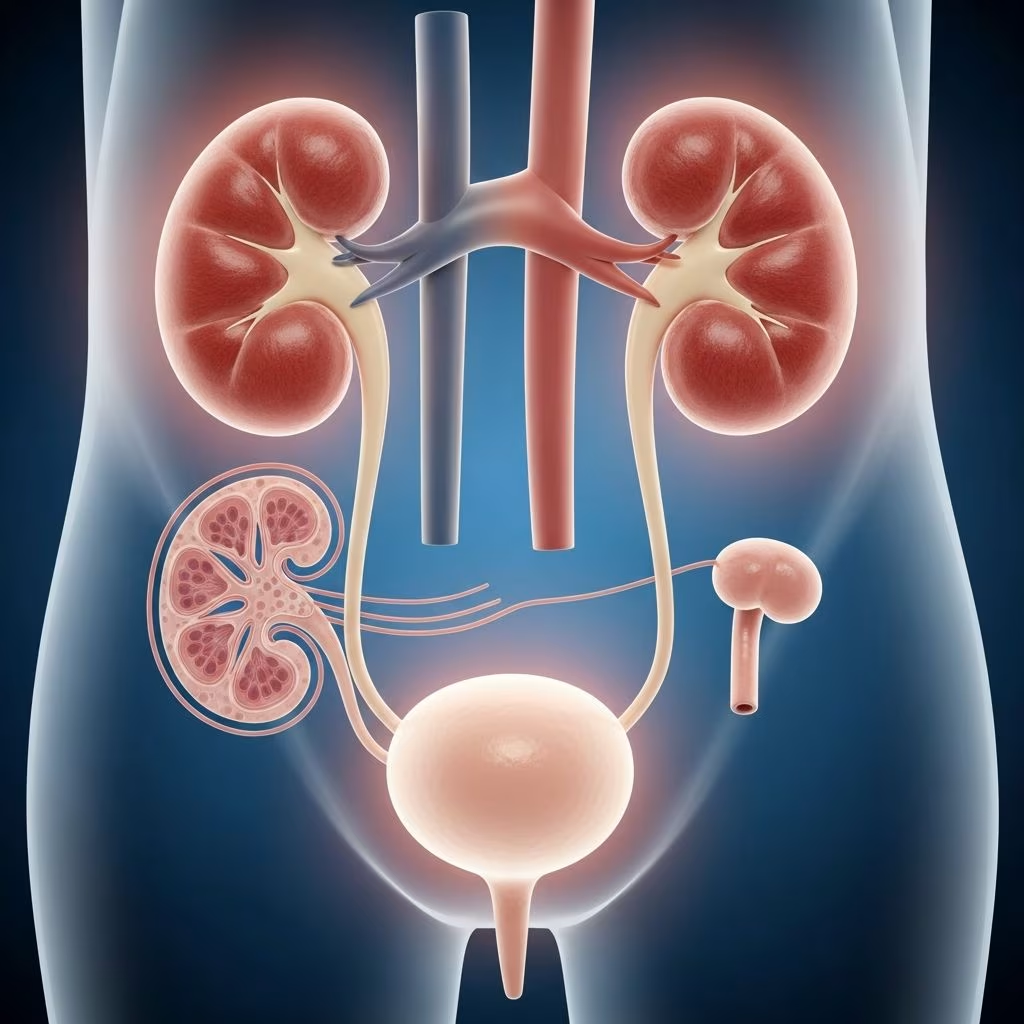
The urinary system represents one of the most critical bodily functions in cats, responsible for filtering metabolic waste from the bloodstream and maintaining crucial physiological balance. Unlike humans, cats have unique anatomical features that both protect and occasionally complicate their urinary health. Understanding how this system operates can help cat owners recognize warning signs of disease and take preventive measures to ensure their pets live long, healthy lives.
Anatomical Overview of the Feline Urinary Tract
The feline urinary system comprises four primary organs that work in concert to produce, transport, store, and eliminate urine from the body. Each component plays a distinct yet interconnected role in maintaining overall health and homeostasis.
- Kidneys: Two bean-shaped organs positioned within the abdominal cavity alongside the spine, near where the last rib meets the vertebral column. These organs perform the initial filtering work.
- Ureters: Narrow tubular structures that transport urine from the kidneys toward the bladder. In cats, these tubes are remarkably small, measuring only approximately 0.4 millimeters in diameter.
- Urinary bladder: A muscular, expandable organ resembling a balloon that temporarily collects urine until elimination is appropriate.
- Urethra: The terminal tube that conveys urine from the bladder to outside the body. In male cats, this structure is longer and narrower than in females.
This network of interconnected organs works continuously to filter waste products, regulate body chemistry, and maintain appropriate fluid balance that keeps cats healthy and functioning optimally.
How Kidneys Filter and Process Waste
The kidneys represent the foundation of urinary system function. These remarkable organs contain hundreds of microscopic filtering units called nephrons, each independently capable of producing urine. Every nephron consists of two critical components working together: a glomerulus (a ball-shaped cluster of tiny blood vessels) and a renal tubule (a small channel through which filtered fluid passes).
The filtration process begins as blood flows through the glomerulus, where waste products including urea, excess water, and other metabolic byproducts are separated from essential substances like glucose and needed salts. This filtered waste combines with water to form urine, which travels into the renal pelvis—a collection chamber within the kidney’s central region.
Beyond simple waste elimination, the kidneys perform several additional vital functions that extend far beyond filtration:
- Regulating blood pressure through hormone and enzyme production
- Maintaining electrolyte balance by controlling sodium and potassium levels
- Promoting red blood cell production through erythropoietin hormone release
- Metabolizing vitamin D into its most active form
- Preserving appropriate body water levels to prevent dehydration
The Journey Through Ureters and into the Bladder
Once urine forms within the kidney, it moves into the renal pelvis before traveling through the ureter toward the bladder. The ureters contain muscular walls that contract in coordinated waves called peristaltic motion, propelling urine forward in small spurts rather than continuous flow.
The extremely narrow diameter of feline ureters—less than half a millimeter—creates a significant anatomical consideration. While this narrowness helps prevent urine reflux back into the kidneys through an oblique passage design, it also makes cats particularly vulnerable to urinary obstructions from mineral deposits and kidney stones.
When urine reaches the bladder, it enters through ureteral openings positioned at the trigone region, an area where specialized musculature helps maintain proper urine direction and prevents backflow. The bladder wall contains longitudinal muscular fibers that create additional barriers to reflux, protecting the upper urinary system from contamination.
Bladder Storage and Sensory Communication
The urinary bladder functions as an expandable storage vessel, accommodating increasing volumes of urine as it accumulates. This muscular organ remains held in position by ligaments connecting it to surrounding structures and the pelvic bones, preventing unwanted movement or displacement.
Specialized sensory nerve cells within the bladder wall continuously monitor filling levels. When the bladder reaches appropriate distention, these nerves send signals to the brain indicating that elimination is necessary. This sophisticated communication system allows cats to maintain continence while awake and alert, preventing uncontrolled urine leakage throughout the day.
A circular muscle called the sphincter acts as a valve controlling the bladder outlet. In normal circumstances, this sphincter remains contracted, creating a seal that prevents urine from escaping. When a cat determines that elimination is appropriate, the animal voluntarily relaxes this muscle, allowing urine to exit into the urethra.
Urethral Differences Between Male and Female Cats
The urethra exhibits significant structural differences between male and female cats, differences that have important health implications. Female cats possess relatively short, wide urethras that offer less anatomical resistance to urine flow. Conversely, male cats have long, narrow urethras that create greater resistance and increased susceptibility to blockage from mineral accumulation.
This anatomical distinction explains why male cats experience urinary blockages more frequently than females. The prolonged, narrow pathway in males provides multiple sites where mineral deposits, crystals, or other debris can lodge, potentially obstructing complete urine flow. Female cats, with their shorter and wider urethral passages, can typically pass problematic material more readily, though they remain susceptible to other urinary conditions including infection and inflammation.
Nervous System Control of Urination
Urinary function requires sophisticated nervous system coordination involving multiple neural pathways. The pelvic plexus delivers both sympathetic and parasympathetic nerve signals to urinary tract structures, enabling proper coordination between storage and elimination phases.
Three distinct muscular components work together to control continence and voiding:
- Detrusor muscle: Contracts during voiding to expel urine from the bladder
- Internal urethral sphincter: Composed of smooth muscle that generates consistent resistance, maintaining continence automatically
- External urethral sphincter: Made of striated muscle allowing voluntary control over urination timing
The vesical neck, where the bladder transitions to the urethra, functions as a specialized region combining characteristics of both the bladder and urethra. During urination, detrusor muscle contractions pull this region open, facilitating urine passage while maintaining sphincter coordination.
Common Urinary Health Challenges in Cats
Several health conditions can compromise feline urinary system function, ranging from infectious processes to structural complications. Understanding these conditions helps owners recognize concerning symptoms requiring veterinary attention.
Urinary Tract Stones and Mineral Accumulation
Mineral deposits sometimes accumulate within the urinary tract, forming calculi or stones. These deposits most commonly develop within the bladder but can occur anywhere along the urinary pathway. Stone formation may result from chronic infections, dietary factors, or inherited metabolic abnormalities affecting salt and mineral excretion.
Cats with bladder stones often exhibit signs similar to feline lower urinary tract disease, including frequent urination attempts, straining in the litter box, and blood-tinged urine. Stones within the kidneys or ureters pose greater risks, potentially causing severe organ damage, ureteral rupture, and progressive kidney failure if left untreated.
Cystitis and Bladder Inflammation
Inflammation of the urinary bladder, known as cystitis, causes cats to strain during urination, produce only small urine amounts, and sometimes eliminate outside the litter box. Blood may appear in the urine, and affected cats may display signs resembling constipation due to excessive straining efforts.
Traumatic Injuries
External trauma from accidents, falls, or attacks can severely damage urinary structures. Pelvic fractures may disrupt both the urethra and bladder, while spinal and tail injuries can result in bladder paralysis. Additionally, abdominal trauma can cause internal bleeding or rupture of the kidneys, ureters, or bladder, creating life-threatening emergencies requiring immediate intervention.
Maintaining Optimal Urinary Health
Preventing urinary system disease requires attention to multiple factors that support healthy kidney function and appropriate urine production. Adequate hydration stands as perhaps the most important preventive measure, as proper water intake helps dilute urine and prevent mineral concentration that leads to stone formation.
Dietary considerations also influence urinary health. Appropriate mineral balance, adequate moisture content in food, and appropriate caloric intake all contribute to maintaining healthy urine composition and preventing crystalline deposits.
Regular veterinary examinations allow early detection of urinary problems before they progress to serious disease. Any changes in litter box habits, increased water consumption, or behavioral alterations warrant professional evaluation to identify potential underlying urinary tract issues.
Frequently Asked Questions
How often should cats urinate daily?
Healthy cats typically urinate one to three times daily, though frequency varies based on water intake and individual metabolism. Significant changes in urination frequency warrant veterinary investigation.
What does normal cat urine look like?
Normal feline urine appears pale to dark yellow depending on hydration status. The presence of blood, cloudiness, or unusual odors suggests potential health problems requiring professional assessment.
Can cats recover from kidney disease?
Early-stage kidney disease can sometimes be managed to slow progression, though complete recovery from permanent kidney damage is not possible. Early detection and appropriate treatment maximize quality of life.
Why do male cats experience more urinary blockages?
Male cats possess longer, narrower urethras that provide multiple sites where mineral deposits can accumulate and obstruct urine flow, while female cats’ shorter, wider urethral passages allow easier passage of problematic material.
What emergency signs require immediate veterinary care?
Complete urinary blockage, inability to urinate, severe abdominal pain, vomiting, and lethargy constitute medical emergencies requiring immediate professional intervention to prevent kidney failure and death.
References
- Structure and Function of the Urinary Tract in Cats — PetPlace.com. https://www.petplace.com/article/cats/pet-health/structure-and-function-of-the-urinary-tract-in-cats
- Female Urogenital – Feline — Willamette Veterinary Hospital. https://wilvet.com/interactive-animal/feline/female-urogenital/
- The Canine and Feline Urinary System — Radiokop Animal Clinic. https://radiokopvet.co.za/the-canine-and-feline-urinary-system/
- Applied Anatomy and Physiology of the Feline Lower Urinary Tract — PubMed Central. https://pubmed.ncbi.nlm.nih.gov/8711856/
- The Urinary System — Wiley Online Library. https://onlinelibrary.wiley.com/doi/pdf/10.1002/9781118269305.ch14



