

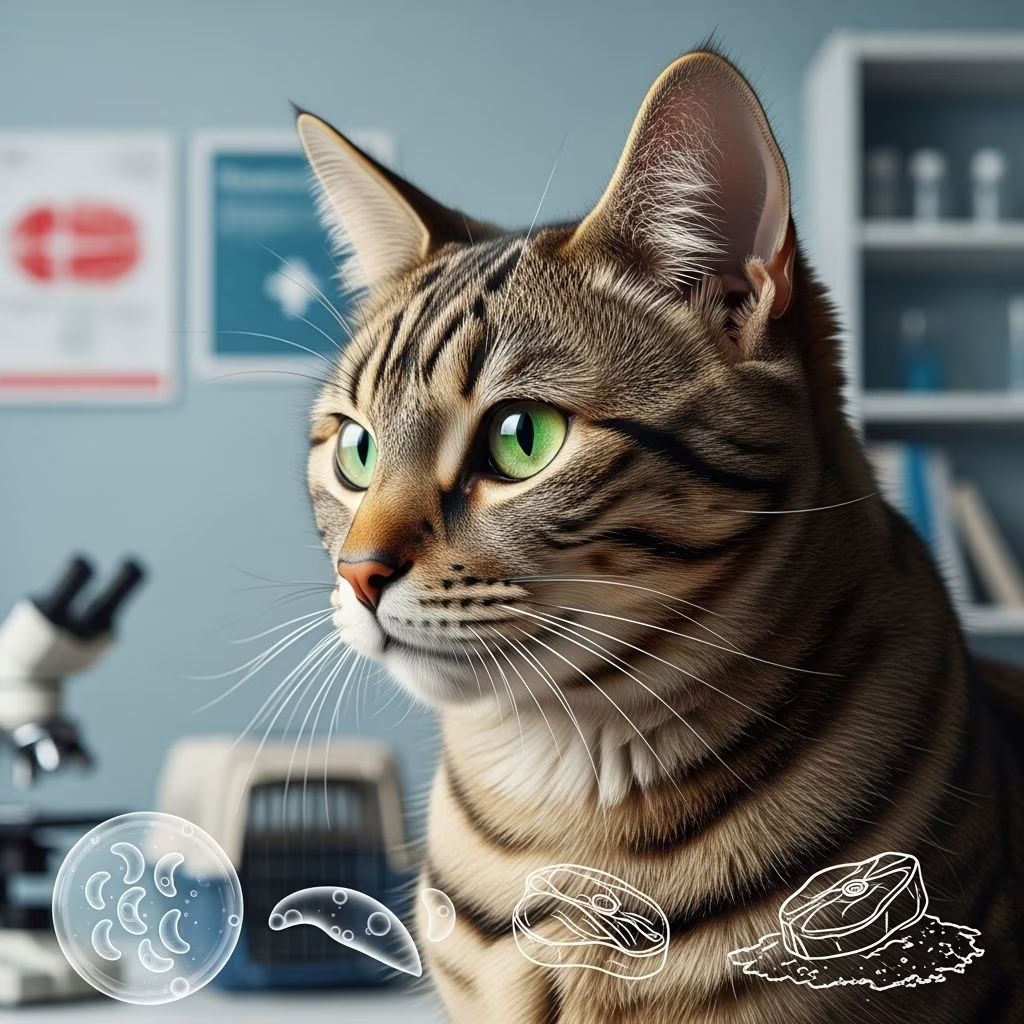
What Is Toxoplasmosis and Why It Matters for Cat Owners
Toxoplasmosis is a parasitic infection caused by the organism Toxoplasma gondii, representing one of the most prevalent parasitic diseases affecting feline populations worldwide. While many infected cats remain asymptomatic, the disease can develop into serious clinical illness in certain circumstances, particularly when a cat’s immune system is compromised. Understanding this condition is essential for cat owners who want to maintain their pets’ health and protect household members from potential transmission.
Cats occupy a unique position in the transmission cycle of this parasite, as they are the only known animals capable of shedding the infectious form of the organism into the environment. This characteristic makes feline behavior and management critical factors in controlling the spread of toxoplasmosis.
The Life Cycle and Infection Mechanisms
The parasite exists in multiple forms throughout its life cycle, each with distinct characteristics and transmission potential. Understanding these stages illuminates how infection occurs and why certain preventive measures prove effective.
Three Developmental Stages of the Parasite
The organism progresses through three primary forms during its existence:
- Bradyzoites: These are slow-growing forms contained within tissue cysts found in infected intermediate hosts such as rodents, birds, and other small animals. When a cat consumes infected prey, digestive enzymes dissolve the cyst walls, releasing bradyzoites into the gastrointestinal tract.
- Tachyzoites: Following cyst dissolution, bradyzoites transform into fast-multiplying tachyzoites, which represent the form responsible for causing clinical disease. These forms penetrate the intestinal wall and disseminate throughout the body via the bloodstream.
- Oocysts: These are the environmental spore-like structures that cats shed in their feces following initial infection. These hardy infectious units can persist in the environment for extended periods and represent the primary transmission pathway to other animals and humans.
How Cats Become Infected
Cats acquire infection through several distinct pathways. The most common route involves consuming infected prey animals containing tissue cysts, particularly rodents. For indoor cats, consuming raw or undercooked meat—including pork, lamb, or venison—presents a significant risk factor. Less commonly, cats may ingest oocysts from contaminated environmental sources such as soil or water that has come into contact with feces from infected cats.
Additionally, kittens can acquire infection through transplacental transmission from infected mothers or through nursing from infected dams, resulting in congenital toxoplasmosis. Congenital infections typically produce more severe clinical manifestations than infections acquired during adulthood.
The Timeline of Oocyst Shedding
Following infection through consumption of tissue cysts, cats typically begin excreting oocysts within three to ten days. The shedding period generally lasts from one to three weeks, during which millions of oocysts are released into feces. Notably, cats typically shed oocysts only once during their lifetime following initial infection, as they develop immunity to the organism.
Once shed into the environment, oocysts undergo a maturation process called sporulation, becoming fully infectious within one to five days depending on environmental conditions such as temperature and aeration. Once sporulated, these oocysts remain viable in the environment for months to years, creating a persistent transmission risk.
Clinical Manifestations and Disease Severity
Why Most Infected Cats Show No Symptoms
The majority of cats infected with Toxoplasma gondii experience no clinical illness whatsoever. The infection remains subclinical because an intact immune system effectively controls the multiplication and dissemination of the parasite. In these asymptomatic cats, the infection typically consists of dormant tissue cysts that do not cause inflammation or tissue damage.
Importantly, cats with clinical toxoplasmosis are unlikely to be actively shedding oocysts in their feces, as the disease develops from extraintestinal proliferation of asexual forms rather than intestinal replication. This means that clinically ill cats generally do not represent a significant source of environmental contamination.
Conditions Favoring Disease Development
Clinical toxoplasmosis typically emerges when the cat’s immune response cannot adequately suppress parasite multiplication and dissemination. This most commonly occurs in cats with compromised immune systems, including:
- Young kittens with immature immune systems
- Cats infected with feline leukemia virus (FeLV)
- Cats infected with feline immunodeficiency virus (FIV)
- Elderly cats with declining immune function
- Cats receiving immunosuppressive medications
In immunocompromised cats, dormant tissue cysts may reactivate, allowing rapid replication and dissemination of tachyzoites throughout the body.
Systemic Signs of Active Disease
When clinical toxoplasmosis develops, affected cats typically exhibit nonspecific symptoms including fever, loss of appetite, weight loss, and lethargy. These general signs reflect systemic inflammation and may provide the initial indication that investigation is needed.
More severe presentations involve specific organ system involvement. Respiratory involvement manifests as dyspnea and pneumonia, while neurological signs may include encephalitis, meningitis, and resulting behavioral changes or coordination problems. Ocular disease presents as uveitis with potential vision impairment. Hepatic involvement produces signs of liver dysfunction, including abdominal swelling from fluid accumulation (ascites).
Severity in Congenitally Infected Kittens
Kittens infected through transplacental or lactogenic transmission experience substantially more severe disease compared to cats infected after birth. These congenitally infected kittens frequently develop hepatitis, pneumonia, and encephalitis, presenting with severe lethargy, difficulty breathing, and abdominal distension. The prognosis for congenitally infected neonates is poor, with many succumbing to disease before reaching eight weeks of age.
Diagnostic Approaches for Toxoplasmosis
Antibody Testing and Interpretation
Diagnosis of toxoplasmosis relies primarily on serological testing that measures two distinct antibody types against Toxoplasma gondii. These antibodies provide different clinical insights:
IgG antibodies indicate previous exposure and infection, demonstrating that the cat’s immune system has encountered the organism. High IgG levels in a healthy cat suggest prior infection and probable immunity, meaning the cat is no longer excreting oocysts and poses minimal transmission risk.
IgM antibodies indicate active or recent infection and suggest ongoing parasite activity. Elevated IgM levels combined with compatible clinical signs support a diagnosis of active toxoplasmosis requiring treatment intervention.
The complete absence of both antibody types in a healthy cat indicates susceptibility to future infection, with such cats capable of shedding oocysts for up to two weeks following any exposure.
Diagnostic Context and Clinical Correlation
Diagnosis should not rely on serology alone but must incorporate the cat’s clinical history, physical examination findings, and laboratory abnormalities. Imaging studies such as radiography or ultrasound may reveal evidence of organ involvement, including lymph node enlargement, hepatomegaly, or pulmonary infiltrates.
Prevention Strategies for Cat Owners
Dietary Management
Implementing appropriate feeding practices represents the foundation of toxoplasmosis prevention. Cats should be fed exclusively on commercially prepared food that has undergone proper cooking to inactivate any parasitic cysts. This restriction applies to all forms of commercial diet, including dry kibble and canned formulations, both of which are processed at temperatures sufficient to eliminate infectious stages.
Raw or undercooked meat diets should be avoided entirely, as these products may harbor tissue cysts. This includes feeding practices involving raw or lightly cooked pork, lamb, venison, or other game meats.
Prey Hunting Prevention
For outdoor cats, the most common infection source involves hunting and consuming infected prey animals. Cats should be denied access to hunting grounds or kept indoors to eliminate this transmission route. When outdoor access is necessary, supervised outdoor enclosures can provide enrichment while preventing unsupervised hunting.
Environmental Contamination Control
Litter box management plays a crucial role in preventing oocyst contamination of the household environment. Litter boxes should be emptied daily to remove fresh feces before oocysts have time to sporulate and become infectious. This daily maintenance significantly reduces infection risk for other household members.
Gloves should be worn during litter box cleaning, and hands should be thoroughly washed afterward. Pregnant women should ideally avoid litter box duties, as transplacental transmission to the fetus represents a potential complication of maternal infection, though this risk applies to human infections rather than feline ones.
Cats should be denied access to facilities housing food-producing livestock and food storage areas, as these environments may harbor infected prey species or contain infected meat products.
Infection Risk Assessment by Lifestyle
Indoor cats maintained exclusively on commercial diets face minimal infection risk. In contrast, outdoor cats encounter substantially higher infection pressure from exposure to infected prey and environmental oocysts. Cats consuming raw diets significantly elevate their risk regardless of indoor versus outdoor status.
Treatment Considerations
Currently, no approved pharmaceutical treatment exists specifically for feline toxoplasmosis. However, various medications and treatment regimens have demonstrated clinical success in managing active infections. Veterinary consultation is essential for developing individualized treatment plans for clinically affected cats, as treatment decisions must account for the cat’s immune status, organ involvement, and overall health condition.
Frequently Asked Questions
Can my indoor cat get toxoplasmosis?
Indoor cats can contract toxoplasmosis if fed raw or undercooked meat, though the risk remains substantially lower compared to outdoor cats. Indoor cats fed exclusively commercial diets face minimal infection risk.
Will my infected cat always develop clinical disease?
No. The majority of infected cats remain asymptomatic throughout their lives, with clinical disease developing primarily in immunocompromised cats.
How long does a cat shed oocysts?
Cats typically shed oocysts for one to three weeks following initial infection and generally shed only once in their lifetime.
Is my pregnant woman household member at risk from my cat?
Daily litter box cleaning and basic hygiene practices substantially minimize transmission risk, though pregnant women should preferably avoid litter box duties as a precaution.
Summary and Key Takeaways
Toxoplasmosis remains a significant parasitic infection affecting feline populations worldwide, though clinical disease develops in only a minority of infected cats. Cats serve as the only definitive host, shedding infectious oocysts that can persist in the environment for extended periods. Infection typically occurs through consumption of infected prey or raw meat, with congenital transmission representing an additional pathway.
Most infected cats develop protective immunity without experiencing clinical signs, while disease emerges when immune suppression permits parasite dissemination. Serological testing distinguishing IgG and IgM antibodies provides diagnostic guidance when clinical illness develops. Prevention through appropriate dietary management, prey hunting prevention, and litter box hygiene offers highly effective risk reduction for cat-owning households.
References
- Toxoplasmosis in Cats — Cornell University College of Veterinary Medicine. Accessed February 2026. https://www.vet.cornell.edu/departments-centers-and-institutes/cornell-feline-health-center/health-information/feline-health-topics/toxoplasmosis-cats
- Toxoplasmosis in Animals — Merck Veterinary Manual. Accessed February 2026. https://www.merckvetmanual.com/generalized-conditions/toxoplasmosis/toxoplasmosis-in-animals
- Guideline for Toxoplasma gondii Infection — ABCD Cats & Vets. Accessed February 2026. https://www.abcdcatsvets.org/guideline-for-toxoplasma-gondii-infection/
- Clinical Toxoplasmosis in Dogs and Cats: An Update — PMC/NIH. 2019. https://pmc.ncbi.nlm.nih.gov/articles/PMC6399377/
- Toxoplasmosis in Cats: Everything You Need to Know — Tuft and Paw. Accessed February 2026. https://www.tuftandpaw.com/blogs/cat-guides/toxoplasmosis-in-cats-everything-you-need-to-know
- Toxoplasma gondii — Companion Animal Parasite Council. Accessed February 2026. https://capcvet.org/guidelines/toxoplasma-gondii/
- Toxoplasmosis: An Important Message for Cat Owners — Centers for Disease Control and Prevention (CDC). https://www.cdc.gov/parasites/toxoplasmosis/resources/printresources/catowners.pdf



