

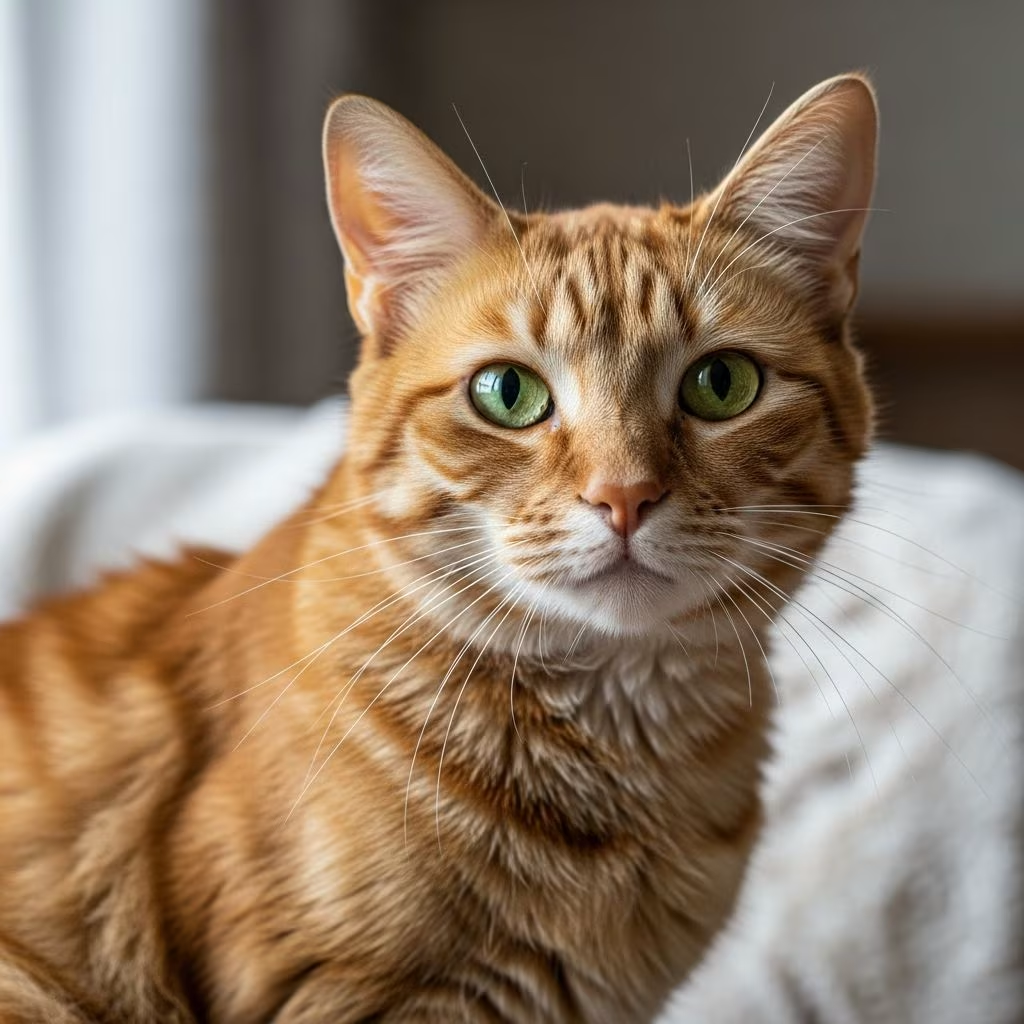
The thyroid gland plays a pivotal role in regulating a cat’s metabolism, energy levels, and overall bodily functions. When this small gland in the neck malfunctions, it can lead to significant health challenges for felines. Thyroid disorders in cats primarily manifest as **hyperthyroidism**, an overproduction of hormones, or the rarer **hypothyroidism**, an underproduction. These conditions disproportionately affect older cats, with hyperthyroidism being one of the most prevalent endocrine diseases in senior felines, impacting up to 10% of cats over age 10.
Understanding the Thyroid’s Role in Cats
Located near the windpipe, the thyroid produces hormones T3 (triiodothyronine) and T4 (thyroxine), which influence heart rate, digestion, body temperature, and muscle function. In healthy cats, these hormones maintain balance. Disruptions occur when benign tumors (adenomas) or, rarely, malignant ones (adenocarcinomas) develop, causing excessive hormone release in hyperthyroidism. Hypothyroidism stems from gland destruction or treatment aftermath, slowing metabolic processes.
Environmental factors like chemical exposures or dietary imbalances may contribute, though exact causes remain unclear. Early detection is crucial as untreated issues strain organs like the heart and kidneys.
Recognizing Hyperthyroidism: Key Warning Signs
**Hyperthyroidism** accelerates metabolism, leading to dramatic changes. Owners often notice:
- Weight loss despite voracious hunger (polyphagia), as the body burns calories rapidly.
- Increased thirst (polydipsia) and urination (polyuria), straining kidneys.
- Hyperactivity, restlessness, or aggression, with cats pacing or vocalizing excessively, especially at night.
- Gastrointestinal upset including vomiting, diarrhea, or constipation from heightened gut motility.
- Unkempt, greasy coat due to neglect in grooming amid constant activity.
- Cardiac abnormalities like rapid heart rate, murmurs, or high blood pressure.
These symptoms progress subtly at first but intensify, potentially causing secondary issues like heart disease or kidney failure if ignored.
Hypothyroidism in Cats: The Less Common Counterpart
Unlike hyperthyroidism, **hypothyroidism** is rare in cats, often iatrogenic—resulting from overzealous hyperthyroidism treatments like surgery or radioactive iodine. Congenital forms appear in kittens via genetic flaws, while secondary cases link to pituitary issues.
Symptoms include:
- Weight gain or obesity from sluggish metabolism, even with reduced appetite.
- Lethargy, excessive sleeping, and disinterest in play.
- Dull, dry coat with hair loss or flakiness.
- Constipation and slowed digestion.
- Cold intolerance and mental dullness.
Hypothyroid cats risk azotemia (elevated blood waste), shortening lifespan post-treatment.
How Vets Diagnose Thyroid Problems
Diagnosis starts with a thorough exam: vets palpate the neck for enlarged glands, auscultate the heart, and measure blood pressure. Blood tests measure T4 and T3 levels; elevated T4 confirms hyperthyroidism in most cases. Borderline results prompt T3 checks or thyroid scans.
Full panels assess kidney, liver, and heart function via chemistry, urinalysis, and possibly ECGs or ultrasounds. Differentials include diabetes, kidney disease, or cancer. For hypothyroidism, low T4 with clinical signs and ruling out other causes suffices.
| Test | Purpose | Hyperthyroidism Indicator | Hypothyroidism Indicator |
|---|---|---|---|
| Total T4 | Measures thyroid hormone | Elevated | Low |
| Blood Chemistry Panel | Organ function | Elevated enzymes, azotemia | High cholesterol |
| Urinalysis | Kidney health | Dilute urine | Concentrated urine |
| Thyroid Scan | Gland visualization | Enlarged, hyperactive | Atrophied |
| Echocardiogram | Heart evaluation | Hypertrophy | Normal/slow |
Treatment Pathways for Hyperthyroidism
Multiple options exist, tailored to cat’s age, health, and owner preferences. No one-size-fits-all.
Radioactive Iodine Therapy (I-131)
The gold standard: a single injection destroys overactive cells. 95% success rate, often curative, with minimal side effects. Requires hospitalization; not everywhere available. Post-treatment monitoring prevents hypothyroidism.
Anti-Thyroid Medications
Methimazole (oral or transdermal) blocks hormone production. Effective lifelong management, but twice-daily dosing and side effects like vomiting or liver issues necessitate bloodwork.
Surgical Thyroidectomy
Removes enlarged glands. Risks include parathyroid damage causing low calcium or voice changes. Best for younger cats or unilateral disease.
Iodine-Deficient Diet
Prescription foods limit iodine, starving hormone production. Works if strictly fed, but not for multi-cat homes or picky eaters.
| Treatment | Pros | Cons | Success Rate |
|———-|——|——|————–|
| I-131 | Curative, one-time | Costly, isolation | 95% |
| Methimazole | Non-invasive | Daily meds, monitoring | 80-90% |
| Surgery | Permanent | Anesthesia risks | 80-90% |
| Diet | Easy start | Compliance issues | 70-80% |
Managing Hypothyroidism
Lifelong levothyroxine supplements restore levels. Regular T4 checks adjust dosing. Monitor for over-supplementation mimicking hyperthyroidism.
Long-Term Care and Monitoring
Post-treatment, quarterly bloodwork tracks hormones and organ health. Hyperthyroid cats need cardiac/kidney checks; hypothyroid ones, weight management. Diet, hydration, and stress reduction aid recovery. Prognosis excels with early intervention—many cats enjoy years of normalcy.
Preventive Measures and Home Care Tips
While unpreventable directly, annual senior cat exams catch issues early. Limit toxin exposure, feed balanced diets. Watch for symptom clusters in cats over 8.
- Track weight/appetite weekly.
- Ensure fresh water access.
- Groom to monitor coat/skin.
- Report behavioral shifts promptly.
Frequently Asked Questions (FAQs)
Can hyperthyroidism be cured?
Yes, I-131 or surgery often cures it permanently.
Is hypothyroidism common in cats?
No, it’s rare and usually treatment-induced.
What if my cat refuses methimazole?
Transdermal gels or alternatives like diet/surgery.
How much does treatment cost?
Varies: meds $50/month, I-131 $1,500-3,000.
Can diet alone fix hyperthyroidism?
Only if exclusively fed; not curative.
References
- Hyperthyroidism in Cats — Cornell University College of Veterinary Medicine. 2023. https://www.vet.cornell.edu/departments-centers-and-institutes/cornell-feline-health-center/health-information/feline-health-topics/hyperthyroidism-cats
- Cat Thyroid Issues: Understanding Hyperthyroidism and Hypothyroidism — Aurora Veterinary Clinic. 2024. https://www.auroravet.com/services/cats/blog/cat-thyroid-issues-understanding-hyperthyroidism-and-hypothyroidism
- Understanding Thyroid Disorders in Pets — Boca Midtown Animal Hospital. 2023. https://bocamidtownevet.com/understanding-thyroid-disorders-in-pets-a-comprehensive-guide-for-caring-owners/
- Hyperthyroidism in Cats: Symptoms and Treatment — PetMD. 2025-02-10. https://www.petmd.com/cat/conditions/endocrine/c_ct_hyperthyroidism
- Understanding Thyroid Health: A Pet Owner’s Guide — The Homestead Animal Hospital. 2024. https://thehomesteadanimalhospital.com/understanding-thyroid-health-a-pet-owners-guide-to-hypothyroidism-and-hyperthyroidism/
- Diagnosis and management of feline hyperthyroidism — PMC – NIH. 2020-06-24. https://pmc.ncbi.nlm.nih.gov/articles/PMC7337209/
- The veterinary nurse’s guide to thyroid disorders — Veterinary Internal Medicine Nursing. 2024. https://www.veterinaryinternalmedicinenursing.com/blog/thyroid-disorders



