

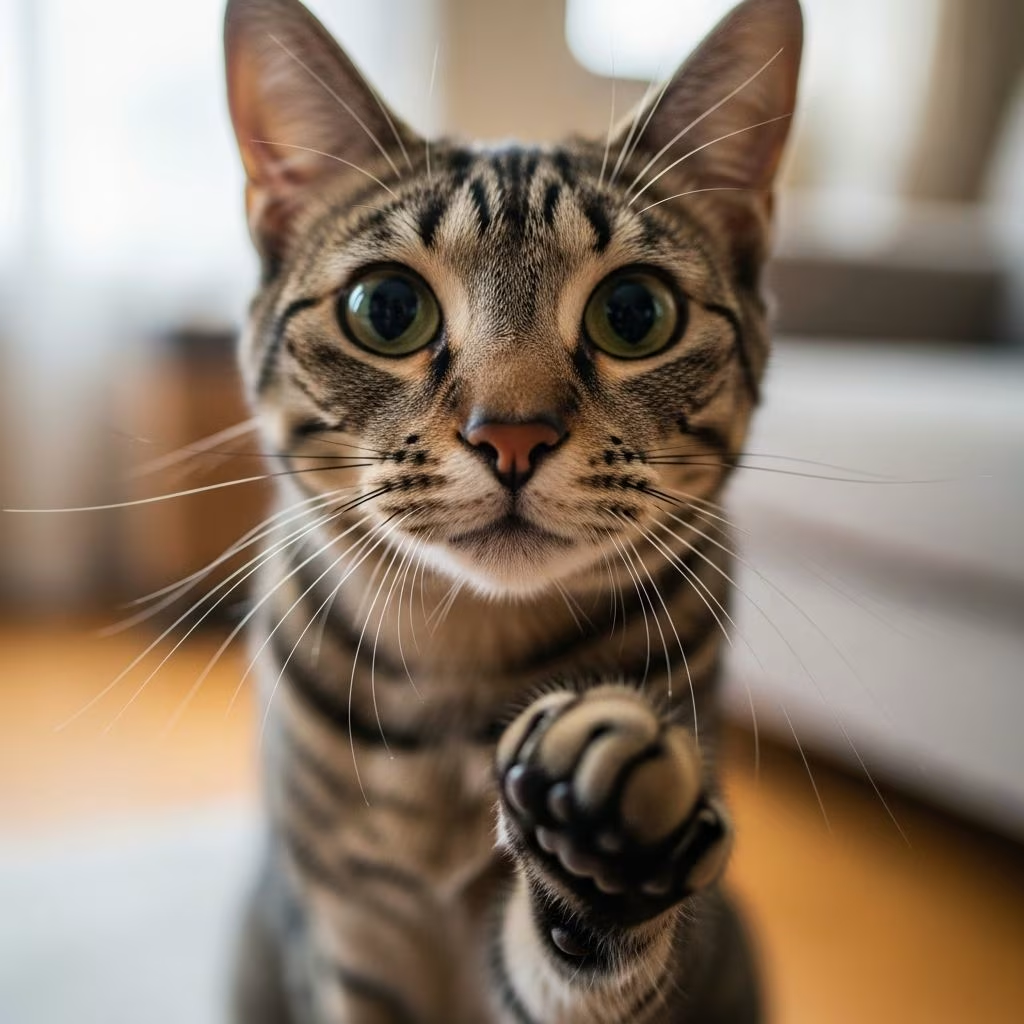
When summer heat arrives, many cat owners wonder how their feline companions manage to stay comfortable and cool. Unlike humans who visibly perspire when temperatures rise, cats employ a fundamentally different approach to temperature regulation. The question of whether cats sweat has a more nuanced answer than a simple yes or no, and understanding feline cooling mechanisms is essential for responsible pet ownership.
The Anatomy of Cat Sweat Glands
Cats do possess sweat glands, but their distribution and functionality differ significantly from human physiology. While humans have sweat glands distributed across their entire body, cats have a much more limited system. These glands are concentrated in specific hairless regions, making sweating a relatively minor component of their overall temperature regulation strategy.
The primary sweat glands in cats are called eccrine glands, which work by releasing moisture to facilitate cooling through evaporation. These glands are strategically located in areas with minimal or no fur coverage, allowing the sweat to make direct contact with the environment rather than being absorbed by dense coat hair.
Where Cat Sweat Glands Are Located
The distribution of sweat glands in cats is quite selective. The main areas include:
- Paw pads and between the toes
- Lips and chin region
- Nose area
- Areas around the anus
Of these locations, the paw pads contain the highest concentration of sweat glands. This is why observant cat owners sometimes notice damp footprints left by their cats during hot weather or stressful situations. These telltale marks provide visible evidence of feline perspiration, though the amount is minimal compared to human sweating.
How Feline Sweating Works
When a cat’s body temperature rises above its normal range of 100.5°F to 102.5°F, the brain triggers the eccrine glands to release moisture. This process is straightforward in theory but limited in practice. As the sweat evaporates from the hairless areas, it provides a slight cooling effect to the skin and the bloodstream beneath.
However, because sweat glands cover such a small surface area on a cat’s body, this cooling mechanism is far less efficient than in humans. Most of a cat’s body remains insulated by fur, which actually retains heat rather than allowing for effective evaporative cooling. This anatomical reality means that cats cannot rely primarily on sweating to manage elevated temperatures.
Beyond thermal stress, cats may also sweat in response to emotional factors. Anxiety, fear, or stress—such as during veterinary visits—can trigger the same sweating response. Cats experiencing nervousness may leave damp paw prints on examination tables, a physical manifestation of their psychological state.
The Chemistry of Cat Sweat
Interestingly, feline sweat differs chemically from human perspiration. While humans produce slightly acidic sweat, research has demonstrated that cats produce alkaline sweat. This compositional difference reflects the distinct evolutionary paths of feline and human temperature regulation systems and may play a role in how effectively cat sweat functions.
Why Sweating Alone Isn’t Sufficient
The limited sweat gland system explains why cats have developed multiple cooling strategies. Relying on sweating alone would leave cats vulnerable during hot weather, particularly in enclosed spaces or high-humidity environments. The fur that provides insulation in cold months becomes a liability during thermal stress, trapping body heat rather than facilitating its release.
Additionally, excessive sweating through paw pads could interfere with a cat’s ability to grip surfaces effectively, creating a potential safety hazard. Evolution favored a system where sweating plays a supplementary role rather than a primary cooling function.
Alternative Cooling Methods Cats Use
To compensate for their limited sweating capacity, cats have evolved and learned multiple behaviors that effectively manage body temperature. These methods are often more effective than sweating and represent the primary ways cats stay comfortable in warm conditions.
Self-Grooming and Saliva Evaporation
One of the most important cooling mechanisms is self-grooming. When cats lick themselves, the saliva coating their fur evaporates and cools the skin beneath. Cat owners often observe their pets grooming more frequently during hot weather—this is an intentional thermoregulatory behavior rather than merely a hygiene practice. The sensation has been compared to how humans might feel when taking a lukewarm bath or swimming on a hot day.
Environmental Positioning
Cats naturally seek cooler environments to maintain comfortable body temperatures. Rather than fighting the heat through internal mechanisms, cats employ behavioral adaptations:
- Resting on cool surfaces like tile floors, ceramic tubs, or stone
- Spreading their bodies flat to maximize contact with cool surfaces
- Moving to shaded areas and avoiding direct sunlight
- Seeking locations with better air circulation
This instinctive behavior is remarkably effective, which is why outdoor cats often disappear to shadowed or underground locations during peak heat hours. They understand intuitively that environmental management is more efficient than relying on body cooling mechanisms.
Panting as a Cooling Mechanism
Unlike most mammals, cats don’t typically pant as a primary cooling strategy, but they are capable of doing so when necessary. Panting allows heat from the inner thorax to escape through moisture in the mouth, tongue, and throat membranes. If a cat is visibly panting, it may indicate that body temperature is rising beyond comfortable levels and other cooling interventions should be provided immediately.
Increased Activity Avoidance
During hot periods, cats naturally reduce their activity levels. This behavioral modification decreases metabolic heat production, helping conserve energy and minimize temperature elevation. You may notice your cat sleeping more during summer months—this is a healthy adaptation to thermal stress.
Hydration and Water Consumption
Cats increase their water intake during hot weather, which supports overall thermoregulation. Adequate hydration maintains blood volume and circulation efficiency, both essential for temperature management.
Recognizing Signs of Overheating in Cats
Despite their various cooling strategies, cats can experience dangerous overheating, particularly in environments where multiple cooling methods are unavailable. If body temperature rises to 105°F or higher, immediate veterinary attention is necessary.
Warning signs that a cat is overheating include:
| Early Warning Signs | Severe Overheating Signs |
|---|---|
| Restlessness and agitation | Vomiting or diarrhea |
| Increased panting or labored breathing | Muscle tremors or seizures |
| Excessive drooling | Loss of consciousness or collapse |
| Lethargy or reduced activity | Bright red tongue and gums |
| Stumbling or incoordination | Sunburn on exposed skin areas |
Certain cats are at higher risk for heat-related complications. Senior cats, kittens, overweight cats, and those with respiratory conditions or heart disease are particularly vulnerable. Indoor cats who aren’t accustomed to outdoor temperatures can also struggle more than acclimated felines.
Does Cat Sweat Produce Odor?
One common question concerns whether cat sweat creates noticeable odors. The answer is generally no. Because cats produce such minimal amounts of sweat through their limited gland system, the moisture rarely accumulates to levels that would generate an odor. Cats do possess numerous scent glands throughout their bodies that release pheromones and other scent compounds for communication purposes, but these function independently from their sweat glands.
How to Help Cats Stay Cool
Understanding feline thermoregulation allows owners to provide appropriate environmental management:
- Maintain indoor temperatures between 68°F and optimal comfort zones
- Ensure access to shaded areas and well-ventilated spaces
- Provide multiple water bowls throughout the home to encourage hydration
- Avoid leaving cats in vehicles or enclosed spaces without ventilation
- Consider cooling mats or ice packs wrapped in towels for resting areas
- Maintain grooming to prevent excess fur buildup during shedding seasons
- Create air circulation using fans in strategic locations
- Avoid outdoor exposure during peak heat hours (typically 10 AM to 4 PM)
Frequently Asked Questions
Do cats sweat through their paws?
Yes, cats have sweat glands concentrated in their paw pads and between their toes. During hot weather or stressful situations, you may observe damp footprints left by your cat, indicating perspiration from these areas.
Why don’t cats sweat more efficiently?
Cats’ fur coverage limits the effectiveness of sweating as a primary cooling mechanism. Fur retains heat and prevents sweat from evaporating efficiently across the body. Evolution favored behavioral cooling strategies over dependence on perspiration.
Can I tell if my cat is overheating?
Observable signs include excessive panting, drooling, restlessness, vomiting, and in severe cases, collapse or disorientation. If you notice these symptoms, move your cat to a cool area and contact a veterinarian immediately.
Should I give my cat ice water to cool down?
While increased water consumption is beneficial, ice water may cause gastrointestinal discomfort. Room temperature or slightly cool water is preferable. Focus on environmental cooling strategies rather than forcing fluid consumption.
Is panting in cats normal?
Occasional panting during activity or heat exposure is normal, but prolonged or heavy panting may indicate overheating or underlying health issues. Monitor your cat’s behavior and consult a veterinarian if panting persists.
Understanding Feline Physiology and Heat Management
The answer to whether cats sweat is more accurately framed as: cats do sweat, but sweating is a minor component of their overall temperature regulation system. Their bodies have evolved to rely primarily on behavioral and environmental adaptations rather than physiological perspiration. This distinction is crucial for cat owners attempting to keep their pets comfortable and safe during warm weather.
By recognizing the limitations of feline sweating and understanding the alternative cooling mechanisms cats employ, owners can create environments that support optimal thermoregulation. This knowledge, combined with awareness of overheating warning signs, ensures that cats remain healthy and comfortable throughout the year.
References
- Do Cats Sweat? How They Keep Cool — Cats.com. https://cats.com/do-cats-sweat
- Do Cats Sweat? How to Cool Down Your Overheated Kitty — Rover. https://www.rover.com/blog/do-cats-sweat/
- Do Cats Sweat? Tips for Keeping Cats Cool — Purina US. https://www.purina.com/articles/cat/health/skin-fur-ears/do-cats-sweat
- Do Dogs & Cats Sweat? — Petcube. https://petcube.com/blog/do-pets-sweat/
- Is Your Cat Sweating? Here Could Be the Reasons — PetCareRx. https://www.petcarerx.com/article/is-your-cat-sweating-here-could-be-the-reasons/3405
- Do Cats Sweat or Pant? — Hill’s Pet Nutrition. https://www.hillspet.com/cat-care/behavior-appearance/cats-sweating-and-panting



