

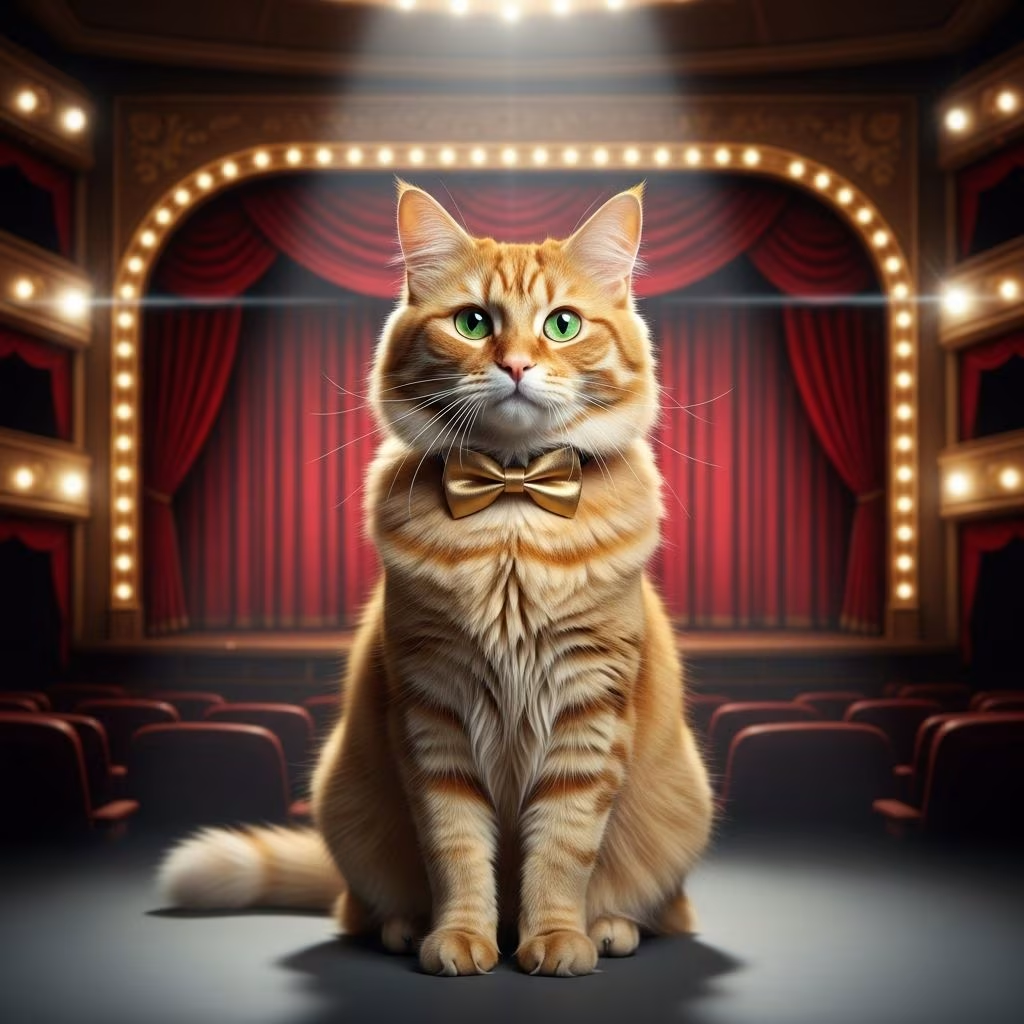
Cats have long held a special place in popular culture, and their appeal extends well into the world of commercial advertising. Throughout television history, creative marketers have leveraged the charm, humor, and unpredictable nature of felines to craft advertisements that resonate with audiences and leave lasting impressions. From the early days of broadcast marketing to the digital age of viral content, cat-featured commercials have consistently demonstrated their ability to capture attention and drive brand recognition. This exploration examines the evolution of these campaigns, their impact on consumer behavior, and the creative genius behind some of the most celebrated feline performances in advertising history.
The Golden Era of Pet-Focused Marketing
The foundation of successful cat advertising was laid in the 1970s, when brands first recognized the universal appeal of musical jingles paired with feline imagery. This era established the template for engaging pet-centered commercials that would influence marketing strategies for decades to come. The creative approach combined auditory and visual elements to create memorable brand associations that stuck with viewers long after the advertisement aired.
During this period, advertisers discovered that certain elements consistently enhanced commercial effectiveness. A catchy musical component provided immediate recall value, while visual shots of cats engaged audiences emotionally. The inclusion of unexpected or surprising moments—elements that made viewers pause and reexamine what they witnessed—added an additional layer of memorability. These foundational principles shaped how brands approached cat-centered marketing well into subsequent generations.
Legendary Feline Spokescats and Brand Ambassadors
One of the most iconic feline characters in advertising history emerged from a deliberate creative vision. Morris, the finicky orange tabby, became synonymous with a major cat food brand during the late 1960s and 1970s. The character was developed by a renowned advertising agency as a sophisticated, discerning cat who represented the preferences of particular pet owners. Morris appeared in 58 separate television commercials throughout this period, becoming one of the most recognized animal characters in marketing history.
The success of Morris demonstrated that creating a distinct personality for an animal character could elevate a brand above competitors. Rather than simply showing cats eating food, the campaign presented a character with opinions, preferences, and expectations. This anthropomorphic approach allowed viewers to identify with the character and transfer those associations to the product itself.
The Transition to Humorous and Creative Approaches
As the advertising landscape evolved, marketers began experimenting with more elaborate and comedic concepts. The transition from straightforward product demonstrations to narrative-driven storytelling marked a significant shift in how brands approached cat-centered advertising.
Conceptual Advertising and Wordplay
One particularly successful campaign for a mortgage services company played on cultural stereotypes and household dynamics. The advertisement featured a woman feeding neighborhood cats at the expense of her neighbors, cleverly incorporating cat-related humor into financial services marketing. This approach demonstrated that cat appeal could extend beyond pet food companies to virtually any consumer product or service.
Another financial institution created a commercial that explored the perennial debate between cat lovers and dog enthusiasts. The scenario depicted a cat lover receiving a fraudulent dog-themed scam text, with her beloved cat serving as silent judge and jury. The commercial’s humor lay in the implied betrayal and the cat’s unforgiving attitude, creating a relatable moment for pet owners while promoting security features.
Super Bowl Spectaculars and Large-Scale Productions
The Super Bowl became a prime stage for ambitious cat-centered advertising campaigns. These high-budget productions required extensive planning, coordination, and creative risk-taking.
The Cattle Herding Campaign
One groundbreaking Super Bowl commercial featured the concept of literal cat herding as a metaphor for complex business management. The production required authentic cowboys recruited through a nationwide casting call across multiple western states. Many of the cowboys featured had never acted professionally, lending genuine authenticity to the production. The commercial cleverly brought the idiom “it’s like herding cats” to life, combining humor with strategic messaging about business complexity.
The production values and creative ambition of this campaign set new standards for Super Bowl advertising. The use of real cowboys, extensive location filming, and the combination of practical effects with animation demonstrated the level of investment major corporations were willing to commit to memorable advertising moments.
Pop Culture Collaborations
A television provider’s campaign featured one of the world’s most recognizable music artists alongside her own pet cats. The commercial humorously depicted the artist’s cats expressing displeasure after being left in a dressing room during a performance. The campaign benefited from both celebrity recognition and the genuine appeal of the featured cats, creating a multi-layered appeal to viewers.
Creative Concepts and Unexpected Twists
Innovation in cat advertising often came from exploring unusual scenarios or pushing creative boundaries.
Surreal and Fantastical Scenarios
A milk brand’s commercial posed a whimsical question: what would cats do if they possessed opposable thumbs? The answer presented in the advertisement was both humorous and absurd—cats would apparently organize themselves into armies and coordinate mass theft of milk products. This imaginative approach transformed a simple product into a vehicle for creative storytelling, demonstrating that cat-featured advertising could embrace surrealism and fantasy.
Another brand created a commercial featuring cats displaying canine behaviors. The scenario showed felines swimming, chasing automobiles, and leaping for flying discs—activities stereotypically associated with dogs. The juxtaposition of familiar cat imagery with dog-like behavior created cognitive surprise, a proven technique for enhancing advertisement recall and engagement.
Unexpected Talent and Personality
A truck manufacturer’s campaign introduced a cattle-herding, stick-retrieving feline character that subverted all expectations about feline behavior and capability. The humor derived from the stark contrast between typical cat behavior and the depicted character’s enthusiastic participation in ranch work. The character’s increasing popularity suggested that audiences appreciated both the humor and the implicit commentary on unexpected talent and capability.
Evolution of Advertising Technology and Scope
The production techniques available to advertisers expanded dramatically over the decades, enabling increasingly sophisticated cat-centered campaigns.
| Era | Production Characteristics | Key Examples |
|---|---|---|
| 1970s–1980s | Simple jingles, limited animation, direct product focus | Finicky cat character campaigns |
| 1990s–2000s | Increased storytelling, practical effects, humor-driven narratives | Cattle herding metaphor campaign |
| 2010s–2020s | Digital integration, celebrity collaborations, multi-platform campaigns | Celebrity-featured and character-driven series |
Why Cats Remain Effective in Advertising
The sustained effectiveness of cat-featured commercials stems from several psychological and cultural factors. Cats occupy a unique position in human consciousness—simultaneously independent yet companionable, dignified yet capable of amusing themselves and observers. Their unpredictability makes them inherently interesting, as viewers cannot always anticipate feline responses or behavior. This element of surprise enhances engagement and memorability.
Additionally, the cultural phenomenon of internet cat content has significantly elevated feline appeal across demographic groups. Brands recognize that cats generate organic interest and enthusiasm among audiences who actively seek out and share cat-related media. Leveraging this existing enthusiasm provides a shortcut to audience engagement and content virality.
Investment in Production Quality
The most successful cat-centered advertisements share a commitment to production excellence. Whether through location filming, professional animal handlers, or elaborate sets, the most memorable campaigns invested significantly in execution quality. This commitment signaled to audiences that the advertiser valued their attention and attempted to provide entertainment alongside commercial messaging.
Professional animal handlers became essential collaborators in major campaigns, ensuring that featured cats remained safe, comfortable, and capable of delivering the required performances. The training and coordination involved in managing multiple cats for filming purposes required specialized expertise that contributed substantially to production budgets and timelines.
Frequently Asked Questions
What makes a cat commercial memorable?
Memorable cat commercials typically combine unexpected humor, high production values, clever conceptual frameworks, and genuine feline personality. The most effective campaigns recognize that audiences appreciate both the entertainment value and the product messaging, creating a balanced experience that doesn’t feel purely promotional.
How have cat commercials influenced broader advertising trends?
Cat-featured advertisements demonstrated that brands could achieve significant engagement through entertainment-focused messaging rather than direct product promotion. This insight helped popularize narrative-driven advertising across multiple industries and product categories, influencing how companies approach consumer communication.
Why do audiences prefer some animal advertising campaigns over others?
Authenticity, creativity, and respect for animal welfare significantly influence audience reception. Campaigns that feature genuine animal personalities, avoid manipulative tactics, and prioritize animal comfort tend to receive more positive responses and generate stronger brand associations.
How has digital media changed cat advertising?
Digital platforms have enabled greater targeting precision, real-time performance measurement, and multi-channel campaign integration. Additionally, the shared nature of digital content allows successful campaigns to achieve viral status, extending reach far beyond traditional broadcast distribution.
Conclusion: The Enduring Appeal of Feline Marketing
Cat-centered advertising campaigns have evolved from simple jingles and straightforward product demonstrations into sophisticated multimedia experiences that leverage creativity, technology, and celebrity partnerships. The most successful campaigns recognize that audiences seek entertainment alongside commercial messaging, and that cats provide an ideal vehicle for delivering both. As advertising continues to evolve, the fundamental appeal of felines in marketing—their charm, unpredictability, and cultural resonance—ensures that cats will remain valuable assets in the advertiser’s toolkit. The history of cat commercials ultimately reflects broader trends in how brands communicate with audiences, adapt to technological change, and attempt to create memorable experiences that transcend traditional promotional boundaries.
References
- Morris the Cat — Wikipedia. https://en.wikipedia.org/wiki/Morris_the_Cat
- Best Cat Ads & Commercials Of All Time (Top 13) — Signature Video Group. 2022. https://www.signaturevideogroup.com/2022/04/13-best-cat-ads-and-commercials-of-all-time/
- Six Greatest Cat TV Commercials of All Time — World’s Best Cat Litter. https://www.worldsbestcatlitter.com/blog/6-best-cat-commercials-of-all-time/
- Caturday felid trifecta: Three best cat commercials — Why Evolution Is True. 2025. https://whyevolutionistrue.com/2025/02/08/caturday-felid-trifecta-three-best-cat-commercials-rescue-of-a-kitten-glued-to-the-road-vintage-cat-photos-and-langiappe/
- EDS, an HP Company ‘Cat Herders’ — YouTube. https://www.youtube.com/watch?v=m_MaJDK3VNE
- Best Cat Ads & Commercials Of All Time (Top 13) — Signature Video Group. 2022. https://www.signaturevideogroup.com/2022/04/13-best-cat-ads-and-commercials-of-all-time/
- The Top 3 Cat Car Commercials Ever Created — YouTube. https://www.youtube.com/watch?v=mpPTJdBcPyg



