

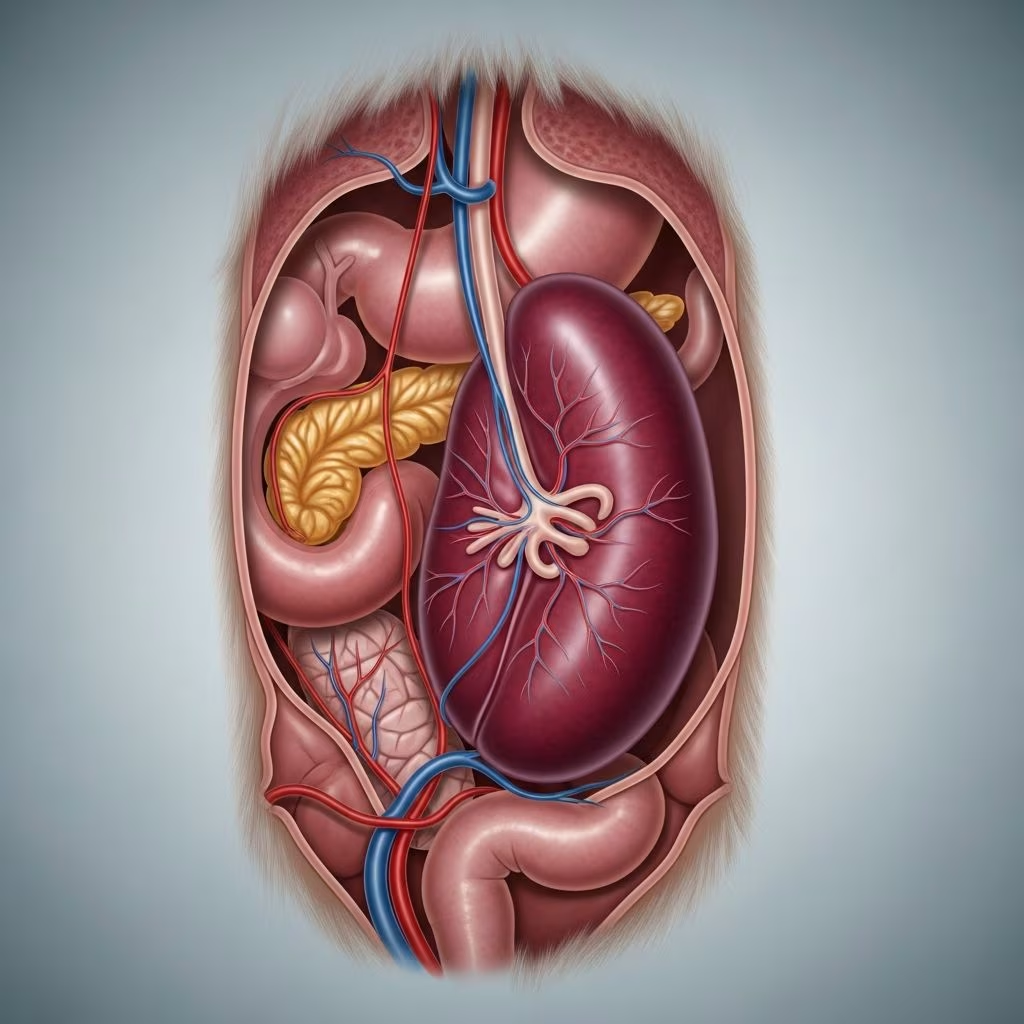
The spleen in cats is a crucial yet often overlooked organ that plays key roles in blood management and immune protection. Positioned in the abdominal cavity, it supports overall feline health by filtering blood and aiding in defense against infections.
Anatomy of the Cat Spleen
The feline spleen appears as a slender, dark red structure, typically longer than it is broad, with a slight narrowing at its center. It resides primarily on the left side of the abdomen, close to the stomach, though its precise position can shift based on factors like organ size or stomach contents.
Encased in a resilient fibrous capsule containing smooth muscle and elastic fibers, the spleen features a pedicle where blood vessels connect. Internally, it divides into red pulp for blood processing, white pulp rich in lymphocytes for immunity, and a marginal zone that bridges these areas to enhance filtration.
- Red pulp: Handles red blood cell storage, formation, and antigen capture.
- White pulp: Concentrates immune cells like lymphocytes.
- Marginal zone: Filters blood by separating pulp regions.
This nonsinusoidal design in cats allows direct arterial-venous links via open channels, differing from dogs and optimizing blood flow efficiency.
Core Functions in Feline Physiology
The spleen multitasks in blood regulation and immunity. It stores red blood cells and platelets, releasing them during stress or blood loss by contracting.
| Function | Description | Benefit to Cat |
|---|---|---|
| Hematopoiesis | Produces red blood cells outside bone marrow (extramedullary) | Boosts oxygen transport in anemia |
| Blood Storage | Reservoir for RBCs and platelets | Quick circulation surge if needed |
| Filtration | Removes old/damaged cells, debris | Maintains clean bloodstream |
| Phagocytosis | Engulfs bacteria, foreign proteins | Enhances infection resistance |
| Immune Response | Hosts lymphocytes for antibody production | Strengthens defenses |
Through phagocytosis, splenic cells devour pathogens, while iron from recycled RBCs supports new cell production. Though not vital for survival, its absence requires vigilant health management.
Recognizing Spleen Abnormalities
Splenic issues often manifest subtly in cats. Enlargement (splenomegaly) is common, linked to immune disorders, infections, anemias, or drugs.
Tumors range from benign hemangiomas to aggressive hemangiosarcomas or lymphosarcomas infiltrating the organ. Nodules or hematomas may form, and torsion—twisting—poses rupture risks.
- Lethargy or weakness from anemia.
- Abdominal distension or pain.
- Pale gums indicating blood loss.
- Appetite loss, vomiting, or weight decline.
- Collapse in severe hemorrhage cases.
Ultrasound reveals echogenic changes: hypoechoic areas signal infarction or lymphoid issues, while congestion darkens texture.
Diagnostic Approaches for Spleen Concerns
Vets start with physical exams, palpating the mobile spleen. Blood tests check for anemia, clotting issues, or infection markers.
Imaging dominates: ultrasound detects size, nodules, or torsion; radiographs outline gross changes; fine-needle aspirates sample cells for cytology. Advanced CT or MRI clarifies vascular anomalies.
Biopsies confirm malignancies, guiding prognosis—benign growths fare better than sarcomas. Early detection via routine senior cat checkups improves outcomes.
Treatment Strategies for Spleen Conditions
Therapy targets the cause. Infections or immune issues may respond to antibiotics or immunosuppressants. Supportive care includes fluids, transfusions for anemia.
Splenectomy—surgical removal—is standard for rupture, torsion, or irreparable tumors. Performed via midline incision along the linea alba for secure closure, it controls bleeding and excises the organ.
Post-op, cats adapt well as other organs compensate, though vaccination against encapsulated bacteria like Salmonella is advised due to reduced immunity. Chemotherapy follows for confirmed cancers.
Life After Splenectomy in Cats
Most cats thrive sans spleen, with minor risks of infections or clotting shifts. Owners monitor for bleeding, provide soft foods initially, and restrict activity for 10-14 days.
Long-term, annual bloodwork tracks hematology; antibiotics prevent opportunistic bugs. Prognosis excels for benign issues, varies for malignancies.
Preventive Measures and Owner Vigilance
No direct prevention exists, but wellness exams catch issues early. Maintain parasite control, vaccinations, and balanced diets supporting immunity.
Watch for symptom clusters: sudden weakness with abdominal bloating warrants immediate vet visits. Breeds like Siamese may show predispositions, though data is limited.
Frequently Asked Questions
Can cats live without a spleen?
Yes, cats generally live normal lives post-splenectomy, with other organs assuming filtration duties.
What causes spleen enlargement in cats?
Common culprits include infections, cancers, anemias, and immune diseases.
Is spleen cancer common in cats?
Lymphosarcoma and hemangiosarcoma occur, but less frequently than in dogs.
How is splenomegaly diagnosed?
Via ultrasound, blood tests, and biopsies for definitive assessment.
What are recovery tips after spleen surgery?
Rest, pain meds, monitor incisions, and follow-up blood tests.
Key Takeaways for Cat Owners
Understanding the spleen empowers proactive care. Routine vetting, symptom awareness, and swift action preserve your cat’s vitality.
References
- Structure and Function of the Spleen in Cats — PetPlace.com. Accessed 2026. https://www.petplace.com/article/cats/pet-health/structure-and-function-of-the-spleen-in-cats
- Spleen Disease in Cats: Causes, Symptoms & Treatment — Long Beach Animal Hospital. Accessed 2026. https://lbah.com/feline/spleen-disease-in-cats/
- The Cat’s Spleen: Anatomical Structure, Function, Ailments and Treatments — OurBrew. Accessed 2026. https://www.ourbrew.ph/the-cats-spleen-anatomical-structure-function-ailments-and-treatments/
- Those Amazing Organs, Part 3: The Spleen — Cats on Broadway Animal Hospital. Accessed 2026. https://www.catsonbroadwayhospital.com/amazing-organs-part-3-spleen/
- Spleen — Veterian Key. Accessed 2026. https://veteriankey.com/spleen/



