

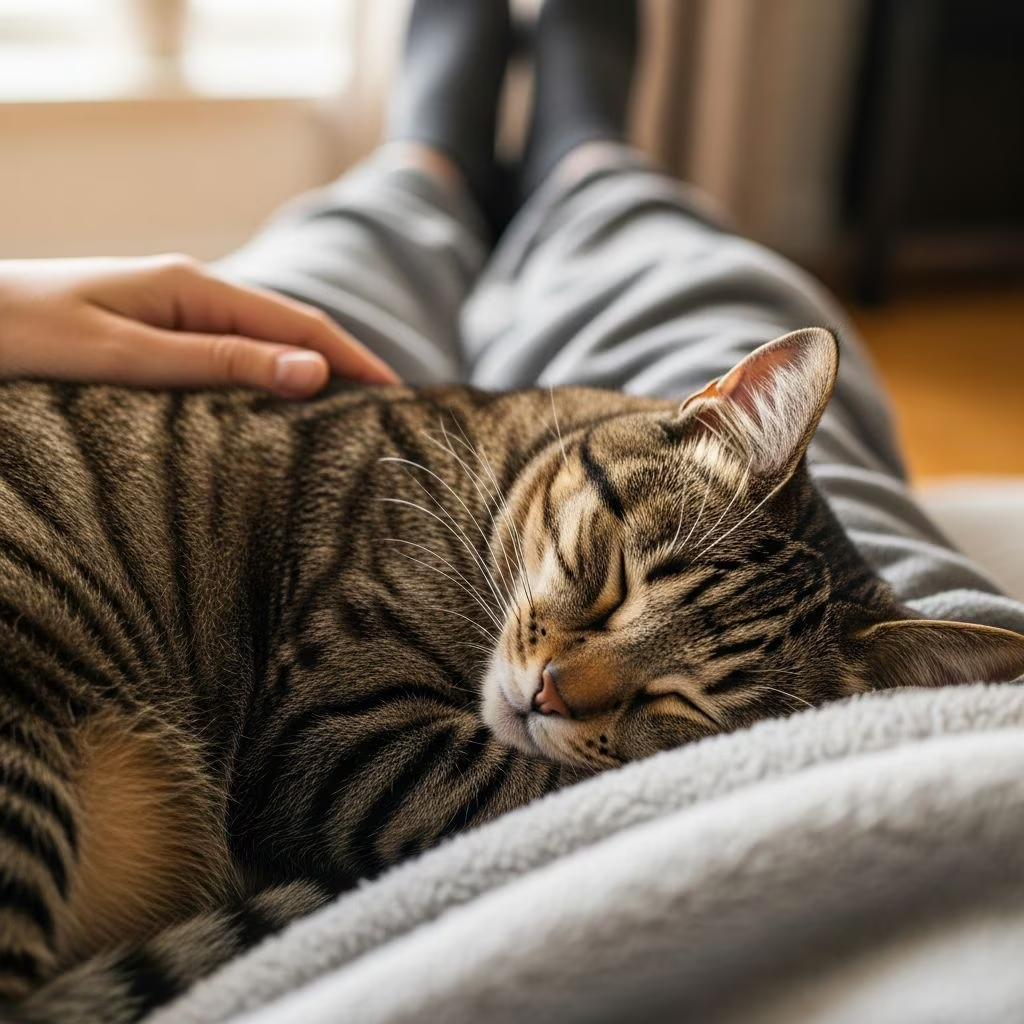
When your cat curls up on your legs for an afternoon nap or settles in for the night, they’re engaging in a behavior that reveals much about their relationship with you and their innate survival instincts. This common feline habit is far more complex than simple laziness, involving multiple interconnected factors rooted in cat physiology, psychology, and evolutionary biology. By understanding why your feline companion chooses this particular sleeping location, you’ll gain deeper insight into your pet’s needs and strengthen your mutual bond.
The Thermoregulatory Foundation: Heat and Comfort
Cats are renowned for their appreciation of warmth, and your legs serve as an efficient heat source that perfectly suits their comfort requirements. Unlike humans who maintain a relatively stable body temperature regardless of environmental conditions, cats actively seek out warm microclimates within their living spaces. Your body functions as a natural heating apparatus, and your legs—being less insulated by blankets compared to your torso—provide an ideal balance of heat without becoming overly warm.
The thermal appeal extends beyond simple temperature preference. When cats wrap themselves around your legs or nestle between them, they’re mimicking the body-huddling behavior they experienced as kittens with their littermates and mother. This replication of early comfort mechanisms triggers the same neurochemical responses that create feelings of security and well-being. Young kittens, in particular, lack the metabolic efficiency to maintain their own body temperature, making heat-seeking behavior particularly pronounced in juvenile felines. Even adult cats with full coats benefit from this supplementary warmth, especially during cooler seasons or in homes with lower ambient temperatures.
Beyond thermal considerations, your legs provide a physiologically comfortable resting surface. The muscle and tissue composition creates a naturally contoured shape that conforms to a cat’s body, offering support superior to many rigid furniture pieces. This biological comfort combines with the psychological reassurance of proximity to create an irresistible sleeping destination.
Accessibility and Ease of Contact
The positioning of your legs while you’re resting or sleeping offers unique advantages that other parts of your body cannot match. When you’re horizontal on a bed or sofa, your legs remain visible and accessible to your cat, unlike your head and torso which may be obscured by pillows, blankets, or your own arms. Your feline companion can easily identify where you are without needing to investigate your sleeping position, reducing the cognitive effort required to locate and assess your presence.
This accessibility factor becomes particularly significant when considering that cats value predictability and environmental awareness. Being able to locate you without uncertainty provides psychological comfort. Additionally, your legs offer your cat an unobstructed pathway to adjust their position or relocate if necessary, maintaining the autonomy that cats so highly value. Unlike sleeping pressed against your chest—which could feel confining—leg-sleeping permits your cat to expand, stretch, or reposition themselves while remaining in close proximity to you.
Safety Through Proximity and Trust
A cat’s decision to sleep on your legs fundamentally reflects their trust in you as a protector. Sleep represents a vulnerable state for any animal, and cats instinctively position themselves in locations where they feel maximum security. By choosing your legs as a sleep location, your cat demonstrates their assessment that you provide a safe environment where they can lower their defenses.
This trust-based behavior deepens over time as your cat accumulates positive experiences with you. Cats that feel secure in their living situation and confident in their human’s protective nature are significantly more likely to sleep in proximity to their owners. Conversely, fearful or anxious cats often avoid sleeping near humans until they’ve developed sufficient trust. If your cat has recently begun sleeping on your legs and didn’t do so previously, it often indicates that your cat’s trust level has increased.
The physical proximity of your legs also allows your cat to benefit from your presence while maintaining vigilance. Cats sleeping between or on someone’s legs can monitor their surroundings while staying alert to any disturbances, representing an evolutionary compromise between vulnerability and social connection.
Territorial Marking and Scent Communication
Cats possess an extraordinarily sophisticated olfactory sense and use scent marking as a primary communication method. When your cat sleeps on your legs, they’re engaging in a form of territorial behavior that extends beyond simple physical contact. The act of positioning themselves on your legs allows them to distribute their scent glands’ secretions across your body, effectively marking you as part of their territory and social group.
This scent-marking behavior serves multiple functions. First, it creates olfactory reassurance—your cat has claimed you as belonging to their family unit, and this olfactory claim reinforces their sense of belonging and security. Second, it communicates to other animals (including other cats in multi-pet households) that you are associated with this particular feline. Third, it allows your cat to encounter their own familiar scent when near you, which provides psychological comfort similar to how humans find comfort in familiar environments.
The legs, being easily accessible and relatively stationary compared to other body parts during sleep, provide an ideal surface for this scent-marking behavior. Your cat may knead your legs while settling down, a behavior that simultaneously releases scent from their paw pads while reinforcing their emotional attachment to the location.
Monitoring and Protective Instincts
When your cat positions themselves on your legs, they gain an elevated vantage point that enables them to monitor both you and their surrounding environment simultaneously. Cats have evolved with instincts that drive them toward vigilance, and sleeping in proximity to their human while maintaining visual access creates an optimal configuration for this surveillance behavior.
From your legs, your cat can observe your chest rising and falling with breathing, hear your heartbeat, and maintain sensory awareness of any changes in your state. This monitoring behavior often intensifies when you’re unwell or emotionally distressed. Cats can detect subtle changes in human behavior, including altered movement patterns, vocal changes, and shifts in scent chemistry associated with illness or emotional states. Your cat may increase their physical proximity and sleeping time on your legs during these periods as an expression of both comfort-seeking and monitoring behavior.
Additionally, the elevated position that leg-sleeping provides allows cats to survey the room more effectively than ground-level sleeping, aligning with their evolutionary preference for elevated resting locations that facilitate threat detection.
Emotional Support and Reciprocal Bonding
Research in feline behavior indicates that cats spend significantly more time in proximity to their owners when those owners are experiencing emotional distress or physical illness. Rather than the popular misconception that cats are indifferent to human emotional states, cats actually respond to perceived needs in their humans. When you’re feeling unwell or experiencing emotional difficulty, your cat may deliberately position themselves on your legs as a form of emotional support.
This behavior reflects complex social bonding rather than coincidence. Cats have developed nuanced abilities to interpret human emotional signals and respond appropriately by offering physical comfort. The act of settling onto your legs during a difficult time represents your cat’s way of offering support within their capabilities, creating a mutually beneficial exchange of comfort and security.
Response to Separation and Reunion Behaviors
Cats demonstrate distinct behavioral changes following periods of separation from their owners. When you’ve been away—whether for an extended vacation or even just a longer-than-usual day at work—your cat may increase their physical proximity and sleeping time on your legs as a form of reunion behavior. This pattern reflects attachment that develops through repeated positive interactions and shared time.
The specific behavior of choosing your legs for increased sleeping during reunion periods suggests that cats utilize familiar scents and comfortable contact points to re-establish their sense of security following separation. Your cat is essentially confirming that you’ve returned to your shared space and resuming their pattern of proximity-based comfort.
Individual Preferences and Personality Variations
While many cats sleep on their owners’ legs, individual variation in this behavior is substantial. Some cats prefer sleeping on legs exclusively, while others utilize multiple sleeping locations throughout the day and night. These differences reflect personality variations, previous experiences, and individual comfort preferences.
Cats with more independent temperaments may sleep on your legs less frequently than highly social or anxious cats. Environmental factors also influence leg-sleeping frequency—cats in stressful environments or experiencing anxiety may increase leg-sleeping as a coping mechanism, while cats in highly comfortable environments may distribute their sleeping across multiple locations.
Multi-Cat Household Dynamics
In homes containing multiple cats, leg-sleeping behavior can reflect social hierarchies and relationship patterns. Bonded cats may engage in group leg-sleeping as a form of enhanced social bonding, while cats with competitive relationships might compete for the favored leg-sleeping position. Observing which cat claims leg-sleeping space and how cats arrange themselves when multiple felines occupy the same sleeping location provides insight into social dynamics.
Health Considerations and Behavioral Changes
Frequently Asked Questions
- Q: Should I allow my cat to sleep on my legs?
A: Allowing your cat to sleep on your legs is generally healthy for both pet and owner, promoting bonding and providing comfort to your feline companion. However, if the behavior causes physical discomfort or sleep disruption, gentle redirection to alternative sleeping locations is appropriate. - Q: Why did my cat suddenly start sleeping on my legs?
A: Sudden behavioral changes warrant attention. Positive causes include increased trust, bonding development, or environmental changes. However, sudden increases in proximity-seeking can also indicate stress, anxiety, or health concerns, warranting veterinary evaluation. - Q: Is leg-sleeping a sign of affection?
A: Yes, choosing to sleep on your legs indicates trust and affection. The vulnerability associated with sleep combined with proximity-seeking demonstrates that your cat considers you a secure, trusted presence. - Q: Do all cats sleep on their owners’ legs?
A: No, individual variation is considerable. Personality, early socialization, environmental factors, and individual comfort preferences influence whether specific cats engage in leg-sleeping behavior. - Q: What sleeping position indicates maximum trust?
A: Cats sleeping on their sides or with belly exposed while in contact with you indicate the highest trust levels, as these positions leave them most vulnerable.
Interpreting and Responding to Leg-Sleeping Behavior
Understanding why your cat sleeps on your legs enriches your interpretation of your pet’s needs and emotional state. This behavior represents a complex convergence of physiological thermoregulation, psychological security needs, emotional bonding, and evolutionary behavioral patterns. Rather than dismissing leg-sleeping as coincidental or insignificant, recognizing it as meaningful communication strengthens your human-feline relationship.
When your cat settles onto your legs for sleep, they’re demonstrating that they’ve assessed you as trustworthy, comfortable, and deserving of their vulnerable resting time. They’ve identified your legs as optimal locations for meeting their thermoregulatory, security, and social needs. By reciprocating this trust through gentle, respectful handling and consistent care, you deepen the bond that motivates this endearing behavior.
References
- Cat Sleeping Positions and What They Mean — PetMD. Accessed January 2026. https://www.petmd.com/cat/general-health/cat-sleeping-positions-and-what-they-mean
- Where Your Cat Sleeps on Your Bed and What It Means — The Cattopia. Accessed January 2026. https://www.thecattopia.com/blog/where-your-cat-sleeps-on-your-bed-and-what-it-means
- Why Does My Cat Lay and Sleep Between My Legs? — Cats.com. Accessed January 2026. https://cats.com/why-does-my-cat-lay-and-sleep-between-my-legs
- 7 Reasons Your Cat Loves Sleeping Next to You — Kinship. Accessed January 2026. https://www.kinship.com/cat-behavior/reasons-cat-sleep-beside-you
- Why Does My Cat Sleep Between My Legs All the Time? — HowStuffWorks Animals. Accessed January 2026. https://animals.howstuffworks.com/pets/why-does-my-cat-sleep-between-my-legs.htm



