

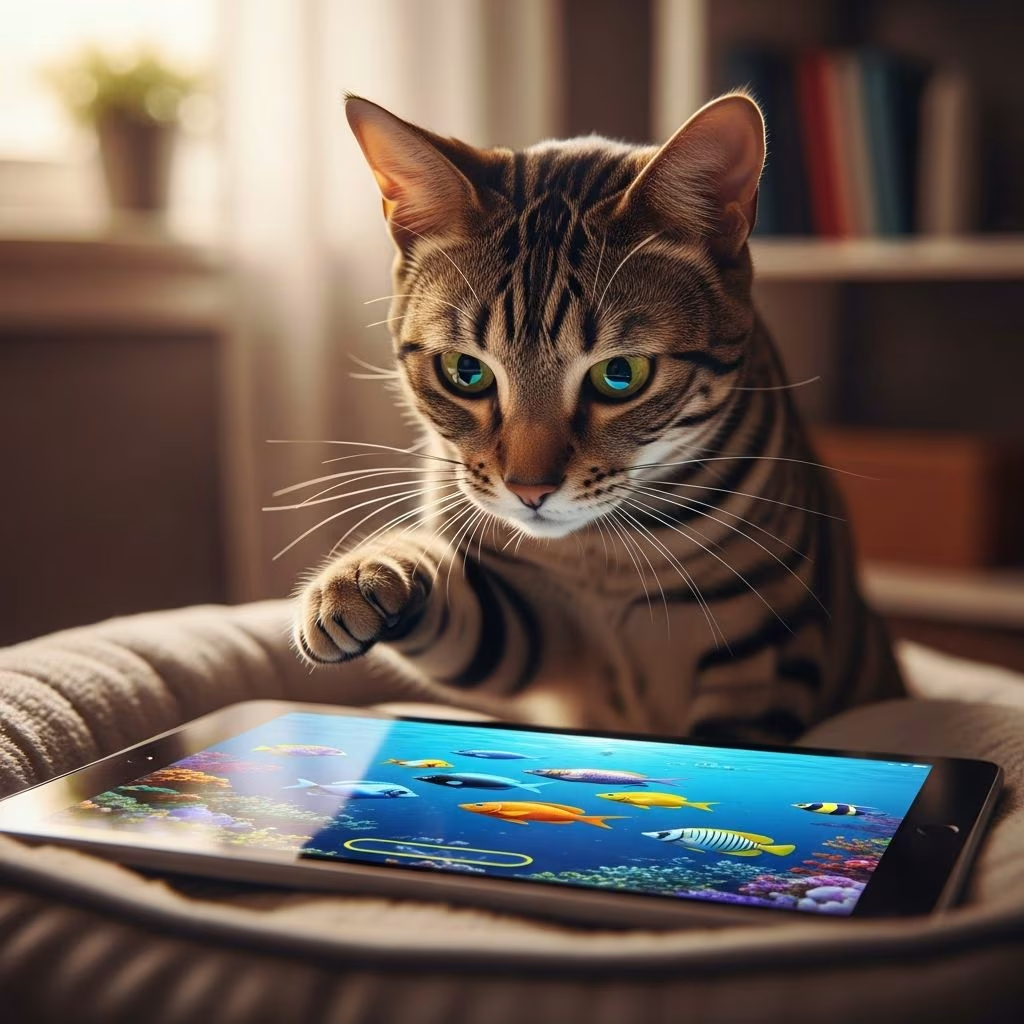
In the modern age of tablets, smartphones, and streaming services, many cat owners have noticed their pets becoming captivated by moving images on screens. This phenomenon raises an important question for feline enthusiasts: does exposing cats to digital content actually benefit their wellbeing, or is it merely a novelty that holds no real value? Understanding the intersection of modern technology and feline behavior requires examining what draws cats to screens in the first place and whether this activity serves legitimate enrichment purposes.
Understanding Feline Visual Perception and Screen Attraction
Cats possess a fundamentally different relationship with visual stimuli compared to humans. Their evolutionary history as apex hunters has wired their brains to respond intensely to movement, particularly rapid or unpredictable motion. When cats observe a screen displaying moving objects—whether birds taking flight, rodents scurrying across terrain, or fish swimming through water—they are essentially witnessing the same visual triggers that would activate their hunting responses in natural outdoor environments.
The attraction to screens isn’t accidental; rather, it taps directly into deeply ingrained predatory instincts. A cat’s vision is optimized for detecting movement in low-light conditions, and the contrast-rich, motion-filled nature of digital content creates an ideal stimulus for their visual system. Audio elements enhance this experience significantly, as the chirping of birds, squeaking of rodents, or bubbling of aquatic environments provides multisensory engagement that makes screen content particularly compelling.
Cognitive Stimulation and Mental Enrichment Benefits
One of the primary advantages of carefully selected video content lies in its capacity to provide mental enrichment, particularly for indoor cats. Domestic cats living exclusively indoors face inherent limitations in environmental stimulation. They lack the dynamic challenges and constant novelty that outdoor exploration provides. Screen-based content can partially bridge this gap by offering visual and auditory experiences that mirror aspects of the natural world.
When a cat watches footage of wildlife or prey animals, their brain engages in active problem-solving and pattern recognition. The cat must track movement across the screen, predict where prey will move next, and process the relationship between sounds and visual information. This cognitive work exercises neural pathways and provides the type of mental challenge that contributes to psychological wellbeing. For cats experiencing boredom or showing signs of behavioral problems stemming from understimulation, video content can represent a valuable enrichment tool.
Types of Content That Maximize Mental Engagement
Not all video content provides equal enrichment value. The most effective videos for cats share specific characteristics that align with feline sensory preferences:
- Wildlife Documentation: Footage of birds in natural settings, featuring realistic feather movements, flight patterns, and authentic vocalizations, creates the most naturalistic hunting experience. The variety of bird species and their distinct behaviors maintains novelty and sustained attention.
- Small Prey Videos: Rodent-focused content triggers the same predatory responses that would activate during outdoor hunting. The unpredictable scurrying movements and high-pitched sounds create particularly engaging visual stimuli.
- Aquatic Environments: Fish and aquatic creature videos provide slower-paced, rhythmic movement that can be both engaging and calming. These videos often work well for senior cats or those with lower activity levels.
- Insect Movement: Fast-moving insects and butterflies, particularly when displayed against simple backgrounds that reduce visual noise, engage cats’ tracking abilities effectively.
- Interactive Digital Games: Tablet applications specifically designed for cats allow for tactile participation, where cats can tap or swat at moving objects on the screen, creating an interactive hunting simulation.
Physical Activity and Exercise Considerations
While screen time cannot fully replace traditional play and physical exercise, it can contribute to overall activity levels in certain contexts. Some cats respond to moving images by actively engaging with the screen—jumping toward it, pawing at animals, or tracking movement with full-body rotations. This response does generate some physical movement and expends energy.
However, it’s crucial to recognize the limitations of passive screen engagement. A cat watching but not interacting with the screen burns minimal calories and provides little cardiovascular benefit. The most beneficial approach combines video viewing with active play sessions using traditional toys, wand teasers, or laser pointers. Using screen time as a springboard into interactive play—where a cat watches prey on screen then immediately engages with a toy—creates a more comprehensive enrichment experience.
Stress Reduction and Behavioral Management
Screen-based content can serve as a tool for managing stress and anxiety in certain feline populations. Cats experiencing separation anxiety or those left alone for extended periods may find comfort in the sensory stimulation and activity that video content provides. The mental engagement can help redirect anxious thoughts and provide welcome distraction during challenging periods.
Additionally, for cats displaying excessive energy or destructive behaviors stemming from boredom, well-chosen video content offers a low-impact outlet for channeling predatory instincts. Rather than redirecting hunting behaviors onto household items or family members, cats can satisfy some of these drives through screen interaction.
The Human Element: Shared Enjoyment and Bonding
Beyond direct benefits to cats, screen-based content creates unique opportunities for human-cat interaction. Owners who watch videos with their cats often report increased bonding moments. Observing a cat’s reactions—the focused attention, the hunting postures, the vocalizations—provides insight into feline psychology and can deepen owner appreciation for their pet’s natural behaviors.
Furthermore, research from Indiana University indicates that humans experience significant psychological benefits from engaging with cat-related media. Studies show that people feel more energetic and positive after viewing cat content, while simultaneously experiencing reduced negative emotions such as anxiety and sadness. This creates a mutually beneficial scenario where both cat and owner may derive wellbeing from shared screen time.
Implementation Guidelines for Safe and Effective Viewing
Successfully introducing video content into a cat’s enrichment routine requires thoughtful implementation. Not all cats respond equally to screen stimuli, and forcing engagement creates unnecessary stress. A gradual, observation-based approach yields better results.
Initial Introduction Strategy
Begin with short viewing sessions—two to three minutes—to allow cats to acclimate to the novel stimulus. Some cats immediately display interest, while others require multiple exposures before developing curiosity. Experiment with different content types to identify individual preferences. Some cats gravitate toward birds, while others prefer rodent or aquatic content. Screen size matters; larger displays typically generate stronger responses than small smartphone screens, though determined cats will watch regardless of size.
Positioning is essential for safety and effectiveness. Place screens at approximately eye level when your cat is in their normal resting position. This prevents awkward posturing and reduces strain. Ensure all devices rest on completely stable surfaces where a cat’s interaction cannot topple the equipment.
Duration and Frequency Recommendations
Limit viewing sessions to 10-15 minutes per occurrence. Extended screen time can lead to overstimulation, decreased responsiveness to real-world stimuli, or eye strain. Most cats naturally lose interest after brief periods anyway, making this timeframe both practical and appropriate for feline attention spans. Multiple short sessions throughout the day provide better enrichment than single lengthy viewing periods.
Safety Considerations and Risk Mitigation
Protect electronic devices from damage and ensure cat safety through basic precautions. If using tablets or mobile devices, employ protective cases and secure mounting systems. Never position screens where a cat could knock them onto themselves or create hazardous situations. Avoid content with excessive flashing, sudden loud noises, or startling elements that could trigger fear responses. Monitor your cat’s behavior for signs of frustration—if a cat becomes fixated on the inability to physically capture prey and shows signs of stress, reduce or eliminate that content type.
Always follow video sessions with alternative enrichment. The ideal enrichment cycle combines passive observation with active play, allowing cats to transition from watching to hunting real toys. This prevents the development of frustration that might occur if cats only experience unreachable prey.
Special Populations: Considerations for Different Life Stages
Senior cats often benefit particularly from screen-based enrichment. As mobility decreases with age, cats appreciate entertainment that requires minimal physical effort while still engaging their cognitive abilities. Aquatic videos and slower-paced content work especially well for geriatric felines. Young, highly energetic cats may find screen time insufficient without pairing it with vigorous physical play. Kittens can engage with video content, though their developing vision and excessive energy levels mean screens should never serve as a primary enrichment source.
Frequently Asked Questions About Feline Screen Time
Can cats actually see what’s on digital screens?
Yes, cats can perceive digital content, though their visual processing differs from humans. Cats see moving images on screens and respond to them as they would to real movement, triggering hunting instincts and attention mechanisms.
Is screen time addictive for cats?
While cats can develop preferences for particular videos, they don’t become physiologically addicted as humans might. However, some cats may show persistent interest in screen time, making it important to provide variety and balance with other enrichment activities.
Do all cats respond to cat videos equally?
Individual cats show vastly different levels of interest. Some cats ignore screens entirely, while others become completely absorbed. Age, personality, prior experiences, and individual visual acuity all influence responsiveness.
Should screen time replace traditional play?
Absolutely not. Screen time should supplement, not replace, interactive play with toys, human engagement, and exploration of the home environment. Traditional play remains the gold standard for feline enrichment.
Conclusion: Balanced Integration of Modern Enrichment
Screen-based content represents a legitimate, evidence-supported enrichment tool for cats when implemented thoughtfully and balanced with traditional play and environmental engagement. The key to successful integration lies in recognizing video content as one component of comprehensive enrichment rather than a primary entertainment source. By understanding individual cat preferences, maintaining appropriate viewing durations, prioritizing safety, and combining passive observation with active play, owners can leverage modern technology to enhance feline wellbeing. The intersection of technology and animal care creates opportunities for enrichment that previous generations lacked—opportunities that, when used judiciously, can meaningfully contribute to indoor cats’ quality of life and psychological wellbeing.
References
- Why Cats Love Watching Videos (And the Best Ones to Keep Them Entertained!) — Joyful Pets. 2024. https://www.joyfulpets.com/cat-videos/
- The Science Behind Loving Cute Cat Videos — Pet Health Network. 2015. https://www.pethealthnetwork.com/news-blogs/a-pets-life/science-behind-loving-cute-cat-videos
- Study: Viewing cat videos may boost energy, positive emotions — Media School, Indiana University. 2015. https://mediaschool.indiana.edu/news-events/news/item.html?n=study-viewing-cat-videos-may-boost-energy-positive-emotions



