

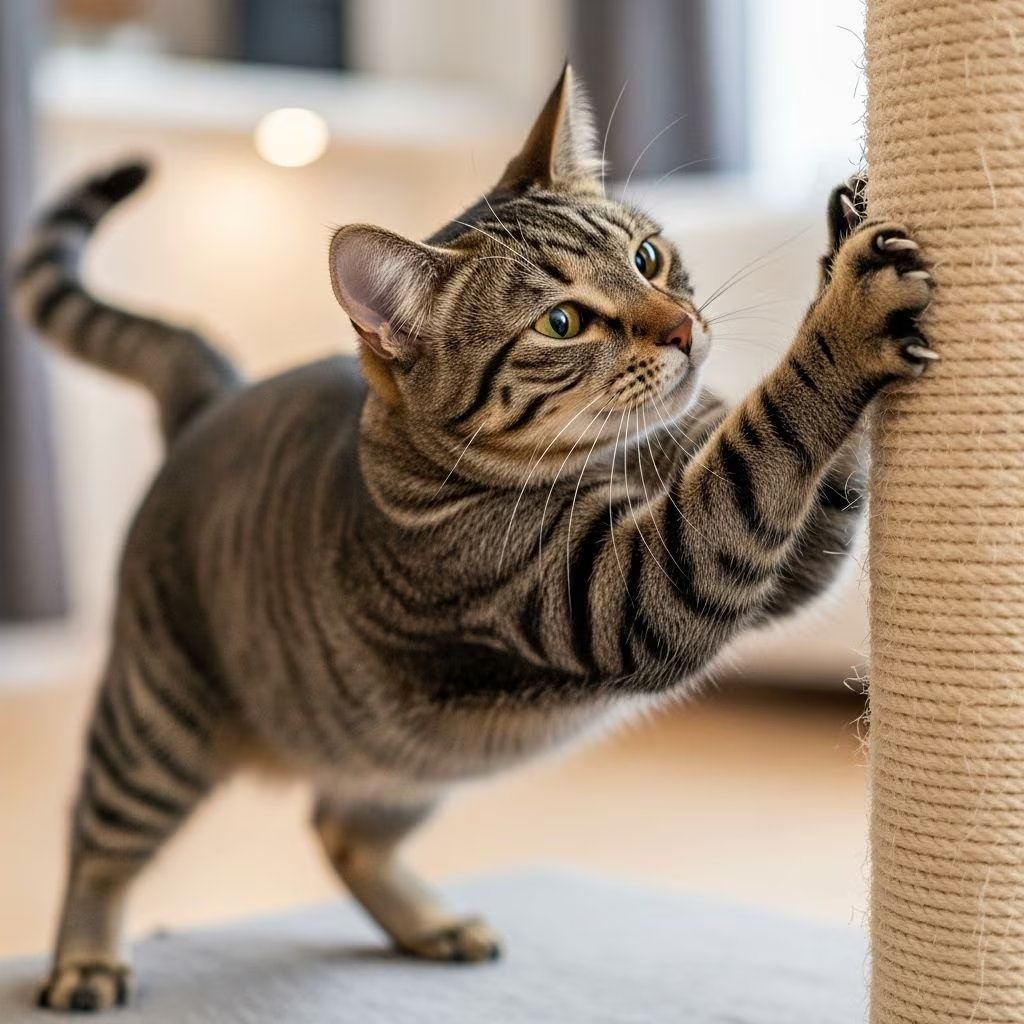
The Natural Instinct Behind Claw Maintenance
Scratching represents one of the most fundamental behaviors in a cat’s daily repertoire, yet many pet owners misunderstand its purpose and significance. When your feline companion drags their claws across surfaces, they’re engaging in far more than a destructive habit—they’re performing essential maintenance tasks that directly impact their physical health and emotional well-being.
Cats possess an intricate biological need to maintain their claws through regular scratching. Unlike human fingernails, feline claws develop outer sheaths that naturally wear away over time. By scratching, cats remove these dead sheaths, revealing sharp, healthy claws beneath. This process is comparable to how snakes shed their skin or how humans naturally exfoliate dead skin cells. Without adequate scratching opportunities, cats cannot properly maintain their claw health, which can lead to discomfort, ingrown claws, and reduced mobility.
Beyond claw maintenance, scratching provides essential muscle conditioning and flexibility. When cats stretch their bodies while scratching vertical or angled surfaces, they engage their shoulder muscles, spine, and limbs in a full-body workout. This activity strengthens the muscles necessary for climbing, pouncing, and maintaining the agility that defines feline movement. Even indoor cats, despite having no need to hunt for survival, retain these instinctive exercise requirements that keep their bodies functioning optimally.
Chemical Communication Through Scent Marking
Scratching serves as a critical communication method in a cat’s social world. Beneath the surface of your cat’s paws lie specialized scent glands that release pheromones—chemical substances that carry detailed information to other animals. When your cat scratches a surface, they’re not simply creating visual marks; they’re depositing these chemical signals that convey territory ownership, emotional state, and presence.
These pheromones function as invisible messages within your home environment. By scratching near their favorite resting spots, along pathways they frequently travel, or in areas where family members congregate, cats establish a sense of security and control over their space. This territorial marking helps indoor cats feel confident and settled in their environment, reducing anxiety and promoting psychological well-being.
The significance of this chemical communication cannot be overstated. Recent research reveals that cats most frequently scratch in areas associated with comfort, rest, and social interaction rather than in locations where they feel threatened. This finding challenges traditional assumptions about scratching being purely a stress response, suggesting instead that scratching often accompanies positive emotional states and routine behaviors.
Emotional and Psychological Benefits
Beyond the physical and communicative functions, scratching provides substantial mental and emotional benefits for cats. The act of scratching releases tension and helps cats manage stress by channeling nervous energy into a constructive behavior. When cats engage in scratching, they experience a form of stress relief similar to how humans might exercise or engage in repetitive activities when feeling anxious.
Scratching also provides mental stimulation by engaging cats’ sensory systems and offering environmental interaction. The texture of different scratching surfaces, the resistance they provide, and the visible marks left behind all contribute to cognitive engagement. This enrichment is particularly important for indoor cats who may have limited opportunities for natural behavioral expression.
Contrary to widespread belief, increased scratching doesn’t necessarily indicate anxiety or distress. Rather, cats may scratch more frequently in certain environments because those spaces provide optimal conditions for the behavior—appropriate textures, convenient locations, or associations with positive experiences. Understanding this distinction helps pet owners shift from viewing scratching as a behavioral problem requiring suppression to seeing it as a healthy activity requiring proper direction.
Why Cats Choose Certain Scratching Locations
Cats demonstrate clear preferences regarding where they scratch, and these preferences stem from practical and psychological factors. Furniture, door frames, and carpeted areas often become scratching targets not because cats are trying to destroy your belongings, but because these locations serve specific purposes in the cat’s mind.
Cats frequently scratch near their sleeping areas, establishing a sense of ownership and security in their rest spaces. They also scratch in high-traffic areas where family members gather, effectively marking these social spaces as their own. Additionally, cats may scratch near entry points, establishing territorial boundaries that create a sense of control over who or what enters their domain.
The texture and angle of surfaces significantly influence scratching behavior. Cats may prefer vertical posts for stretching their entire body, horizontal scratching surfaces for a different muscle engagement, or textured materials like rope or cardboard that provide satisfying resistance. Understanding these preferences is crucial for providing appropriate alternatives to furniture.
Providing Appropriate Scratching Outlets
The most effective approach to managing scratching involves providing attractive, accessible alternatives rather than attempting to suppress the behavior entirely. Since scratching is instinctive and essential, cats will scratch regardless—the goal is directing them toward appropriate surfaces.
Essential Scratching Post Features
- Height and Structure: Vertical posts should be tall enough for your cat to stretch fully while maintaining balance. Many cats prefer posts that allow them to dig their claws in while extending their bodies upward.
- Stability: Unstable scratching posts discourage use and may be unsafe. Posts should be sturdy enough to withstand vigorous scratching without wobbling or tipping.
- Texture Variety: Different cats prefer different materials. Some favor sisal rope, others prefer corrugated cardboard, and some like carpet or wood. Offering variety increases the likelihood your cat will use the posts regularly.
- Multiple Locations: Providing scratching posts near resting areas, social spaces, and entry points gives your cat convenient outlets throughout the home.
- Appropriate Angle: While many cats prefer vertical posts, some prefer angled or horizontal surfaces. Offering different configurations accommodates individual preferences.
Strategic Placement Considerations
Where you position scratching posts matters as much as the posts themselves. Placing posts near your cat’s favorite sleeping spots acknowledges their natural inclination to scratch upon waking and establishing territory in comfortable zones. Posts positioned in areas where family members gather recognize that cats often scratch in social spaces to mark areas they share with their family.
If your cat currently scratches unwanted furniture, placing a scratching post adjacent to that furniture can redirect the behavior by providing a more attractive alternative in the same location. Over time, as your cat consistently uses the post, you can gradually move it to your preferred location.
Redirecting Unwanted Scratching Behavior
When cats scratch inappropriate surfaces, the solution lies in understanding what attracts them to those locations and providing superior alternatives rather than punishment. Negative responses like scolding or physical punishment create fear and anxiety in cats, potentially increasing behavioral problems rather than resolving them.
Positive reinforcement proves far more effective. When you observe your cat using appropriate scratching surfaces, reward them with treats, praise, or play. This positive association encourages repeated use of the desired posts. You can also make inappropriate surfaces less attractive by covering them with materials cats dislike, such as double-sided tape or aluminum foil, while simultaneously offering more appealing alternatives.
Environmental enrichment beyond scratching posts also helps. Providing multiple forms of play, interactive toys, climbing opportunities, and varied sensory experiences reduces the likelihood that boredom or frustration will drive excessive scratching behavior. A well-enriched environment addresses the underlying needs that scratching helps fulfill.
Health Implications of Preventing Scratching
Preventing cats from scratching through declawing or other restrictive measures creates serious physical and behavioral consequences. Declawing, the surgical removal of the claw and surrounding bone, causes chronic pain, lameness, and behavioral changes in many cats. Cats deprived of their ability to scratch often develop anxiety, depression, and may resort to inappropriate elimination or aggression as alternative stress-relief outlets.
Even without surgical intervention, chronically preventing scratching leads to overgrown claws that can curve back into the paw pad, causing significant pain and infection. Cats unable to stretch properly during scratching may develop muscle tension and reduced flexibility. The psychological impact of being unable to perform a fundamental instinctive behavior cannot be underestimated—it represents a form of environmental frustration that undermines feline well-being.
Addressing Excessive Scratching Concerns
While normal scratching supports cat health, unusually intense scratching or sudden changes in scratching patterns warrant attention. If your cat begins scratching new locations, increases scratching frequency dramatically, or displays other behavioral changes simultaneously, underlying issues may need addressing.
Possible causes include dermatological problems like allergies, parasites, or infections that cause skin irritation. Other potential factors involve environmental stressors such as household changes, new pets, schedule disruptions, or conflicts between cats. Health-related scratching often appears itchy or aggressive, sometimes focusing on specific body areas rather than distributed across various surfaces.
Consulting with a veterinarian helps rule out medical causes. If medical issues are excluded, examining recent household changes and providing additional enrichment, environmental modification, or behavioral support may address the underlying cause. A holistic approach considering both physical health and environmental factors provides the most comprehensive solution.
FAQ Section
Why does my cat scratch immediately after waking up?
Cats commonly scratch upon waking because the behavior serves as a form of stretching and muscle activation after periods of rest. This post-sleep scratching helps them loosen muscles, activate circulation, and reorient themselves to their environment. It’s a natural part of their daily routine rather than a sign of distress.
How many scratching posts should I provide?
The general recommendation is to provide at least one scratching post per cat, plus one additional post. This prevents resource competition and ensures each cat has convenient access. Distributing posts throughout your home, rather than concentrating them in a single area, gives your cats multiple outlets.
Can I train my cat not to scratch?
You cannot train scratching away, as it’s a fundamental instinct. Instead, focus on redirecting the behavior toward appropriate surfaces. Training involves rewarding desired scratching locations and making undesirable surfaces less appealing. This approach works with your cat’s nature rather than against it.
What scratching post material works best?
Preference varies by individual cat. Most cats enjoy sisal rope, corrugated cardboard, or carpet materials. Observing which textures your cat naturally gravitates toward helps guide your selections. Offering multiple material types accommodates diverse preferences and increases overall usage.
Why does my cat scratch my legs or clothing?
When cats scratch your body or possessions, they’re often marking you as part of their family unit and territory, leaving their scent glands’ secretions on you. This represents affection and ownership rather than aggression. Providing appropriate scratching outlets may reduce this behavior by satisfying their marking needs elsewhere.
Creating a Scratch-Friendly Home Environment
Supporting your cat’s scratching needs creates a more harmonious living situation for both you and your feline companion. Rather than viewing scratching as a destructive behavior requiring elimination, recognizing it as an essential activity requiring proper accommodation transforms your approach to cat care.
Investing in quality scratching posts, positioning them strategically, offering texture variety, and rewarding appropriate scratching creates an environment where your cat’s natural instincts are respected and satisfied. This approach reduces conflict over damaged furniture while supporting your cat’s physical health, emotional well-being, and psychological enrichment.
Understanding that scratching represents healthy, instinctive feline behavior allows you to appreciate this fundamental aspect of cat nature rather than resenting it. By embracing your cat’s scratching needs and providing appropriate outlets, you demonstrate respect for their essential biological and behavioral requirements, ultimately strengthening your relationship with your feline companion.
References
- Rethinking Cat Scratching: What New Research Reveals About Feline Behavior — Psychology Today. 2025-05-15. https://www.psychologytoday.com/us/blog/all-dogs-go-to-heaven/202506/rethinking-cat-scratching
- Why Scratching Is Important for Your Cat’s Health — Just Cats Clinic. https://justcatsclinic.com/scratch-it-out-why-scratching-is-important-for-your-cats-health/
- Why Do Cats Scratch? — Chewy. https://www.chewy.com/education/cat/training-and-behavior/why-do-cats-scratch
- Taking the Mystery Out About Why Cats Scratch — Pasadena Humane Society. https://pasadenahumane.org/taking-the-mystery-out-about-why-cats-scratch/
- A Cat’s Gotta Scratch: Why Scratching Is So Important for Your Cat’s Wellbeing — Westerville Pets. https://westervillepets.com/why-scratching-is-so-important-for-your-cats-wellbeing/
- Cat Behavior Problems – Scratching Behavior — VCA Animal Hospitals. https://vcahospitals.com/know-your-pet/cat-behavior-problems—scratching-behavior



