

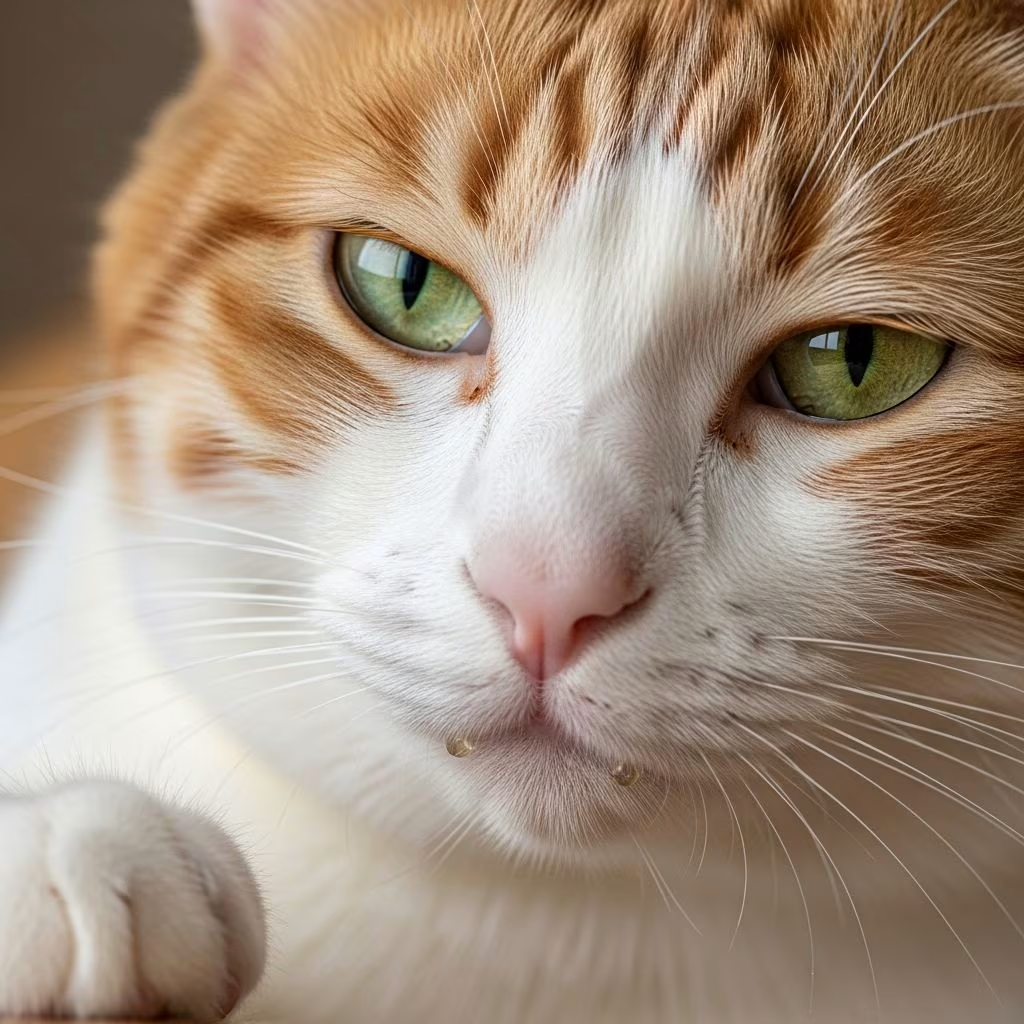
Cats possess a sophisticated network of scent glands that play a crucial role in their daily interactions and survival instincts. These specialized structures produce pheromones—chemical signals undetectable to humans but vital for feline communication, territory delineation, and social harmony.
The Role of Pheromones in Cat Society
Pheromones are species-specific chemical messengers secreted by cats to convey information about identity, mood, reproductive status, and territorial boundaries. Unlike everyday odors, these signals target the vomeronasal organ (VNO), also known as Jacobson’s organ, located in the roof of the mouth. This accessory olfactory system allows cats to “taste” scents, enhancing their ability to interpret subtle cues from conspecifics.
When a cat curls its upper lip in a grimace-like expression—often called the flehmen response—it draws air over the VNO to analyze pheromones more effectively. This behavior is common during social encounters or when investigating urine or fecal marks left by other cats.
Mapping the Body’s Scent-Producing Zones
Cat scent glands are strategically placed across the body to facilitate various marking behaviors. Understanding their locations helps owners interpret actions like rubbing, scratching, or tail wrapping.
- Facial Region: Glands cluster around the cheeks, lips, chin, and forehead. Rubbing these areas against furniture, walls, or human legs deposits pheromones, signaling ownership or affection.
- Paw Pads: Interdigital glands between the toes activate during scratching, leaving both visible claw marks and invisible scent trails on posts, carpets, or rugs.
- Tail Base: Supracaudal glands near where the tail meets the spine release scents during tail-rubbing or wrapping behaviors, often seen in greeting rituals.
- Anal Area: Paired sacs flank the anus, secreting pungent fluids that mix with feces for long-range territory advertisement.
- Urinary System: Bladder-derived pheromones in urine provide additional marking potency, sometimes augmented by anal gland secretions.
How Cats Deploy Their Scent Arsenal
Cats activate glands through purposeful actions tailored to context. Facial bunting, for instance, mixes owner scents with the cat’s own, fostering group identity in multi-cat homes or with humans. Paw scraping not only hones claws but reinforces boundaries with layered visual and olfactory cues.
Anal gland expression occurs naturally during defecation, where ducts release fluid onto stool. In healthy cats, firm feces provide the pressure needed for emptying; softer stools may lead to buildup. Tail gland scents, meanwhile, underscore close-contact greetings, blending with grooming to strengthen bonds.
| Behavior | Gland Involved | Purpose |
|---|---|---|
| Rubbing face/head | Facial/forehead | Affection, territory claim |
| Scratching surfaces | Paw pads | Boundary marking, claw maintenance |
| Tail wrapping/rubbing | Tail base | Social bonding |
| Defecation | Anal sacs | Territorial signaling |
| Urination (spraying) | Urinary/anal | Long-distance communication |
Decoding Scent Messages: What Cats “Say”
Each pheromone profile encodes unique data. Facial scents might signal “this is my human/family,” while anal marks broadcast dominance or availability. Kittens rely on maternal pheromones from mammary glands to locate milk sources and recognize their dam amid other felines.
In adult cats, reproductive pheromones guide mating via VNO detection, linking directly to brain centers governing courtship. Territorial sprays combine urine pheromones with anal scents for potent, persistent messages that endure rain or cleaning.
Health Challenges Tied to Scent Glands
While most glands function silently, disruptions can cause discomfort. Anal sacs are prone to impaction, where accumulated fluid fails to express, leading to swelling, scooting, or licking. Untreated, this progresses to infection or abscess rupture, marked by bloody discharge and pain.
Facial and tail sebaceous glands may overproduce, causing greasy fur, hair loss, or stud tail—a waxy buildup at the tail base. Rare tumors or allergies exacerbate these issues. Veterinary intervention, from manual expression to antibiotics or dietary fiber boosts for natural emptying, is key.
- Signs of Trouble: Scooting, excessive grooming, foul odors, swelling, lethargy.
- Prevention Tips: High-fiber diets, regular exercise, routine vet checks.
Safety of Feline Scents for Households
Cat pheromones pose no toxicity risk to humans, dogs, or other pets. They are biodegradable, species-specific volatiles that dissipate without residue harmful to non-cats. Synthetic analogs, like those in calming diffusers, mimic natural signals to reduce stress in shared environments.
Enhancing Cat Communication as an Owner
Recognizing scent-driven behaviors demystifies quirks. Provide ample scratching posts to redirect paw gland use, and use pheromone diffusers during transitions like new pets or moves. Avoid over-bathing, which strips natural scents and heightens anxiety.
For multi-cat homes, separate litter boxes minimize territorial disputes amplified by overlapping anal/urinary marks. Observe interactions: harmonious rubbing indicates scent familiarity, while spraying signals conflict.
FAQs
Do all cats have scent glands?
Yes, every cat is equipped with these glands from birth, though expression varies by age, health, and neuter status.
Why does my cat rub against me?
This bunting activates facial glands, commingling scents to claim you as family while gathering your odor for familiarity.
Can I express my cat’s anal glands at home?
Vets recommend professional handling to avoid injury; self-expression risks infection or incomplete emptying.
What if my cat scoots on the floor?
It often signals full anal sacs—consult a vet promptly to prevent complications.
Are synthetic pheromones safe?
Yes, products replicating facial pheromones aid calming without side effects, backed by veterinary studies.
Advanced Insights: Scent in Feline Evolution
Evolutionary biology underscores scent glands’ primacy in solitary felids like domestic cats. Unlike pack-oriented canids, cats rely on olfactory maps to navigate vast ranges with minimal visual contact. Fossil records and comparative anatomy with wild felines (e.g., lions’ perianal glands) affirm this trait’s ancient origins.
Modern domestication hasn’t diminished this; indoor cats intensify marking in confined spaces, explaining furniture obsession. Research into VNO genetics reveals cats’ 200+ pheromone receptors dwarf human counts, explaining their olfactory prowess.
Behavioral ethologists note scent’s role in stress mitigation: familiarized environments via self-marking reduce cortisol. This informs no-kill shelter protocols using synthetic pheromones to ease adoptions.
Practical Care Strategies
To support glandular health:
- Incorporate pumpkin or psyllium for stool bulk.
- Rotate scratchers to distribute paw scents evenly.
- Monitor for asymmetry in scooting, hinting at unilateral impaction.
For seniors, gland atrophy may necessitate bi-annual expressions. Breed predispositions (e.g., Persians for facial issues) warrant vigilance.
References
- Cat Scent Glands: Vet Approved Guide — Catster. 2023. https://www.catster.com/lifestyle/cat-scent-glands/
- Understanding Cat Scent Communication — Second Nature Behaviour. 2023. https://secondnature.bio/blog/felines/understanding-cat-scent-communication/
- Why Cats Sniff Rear Ends — VCA Animal Hospitals. 2024-01-15. https://vcahospitals.com/know-your-pet/why-cats-sniff-butts
- Scent Gland — Wikipedia (informational, primary refs used). 2024. https://en.wikipedia.org/wiki/Scent_gland
- Anal Glands in Cats — PetMD. 2024-05-20. https://www.petmd.com/cat/general-health/anal-glands-in-cats



