

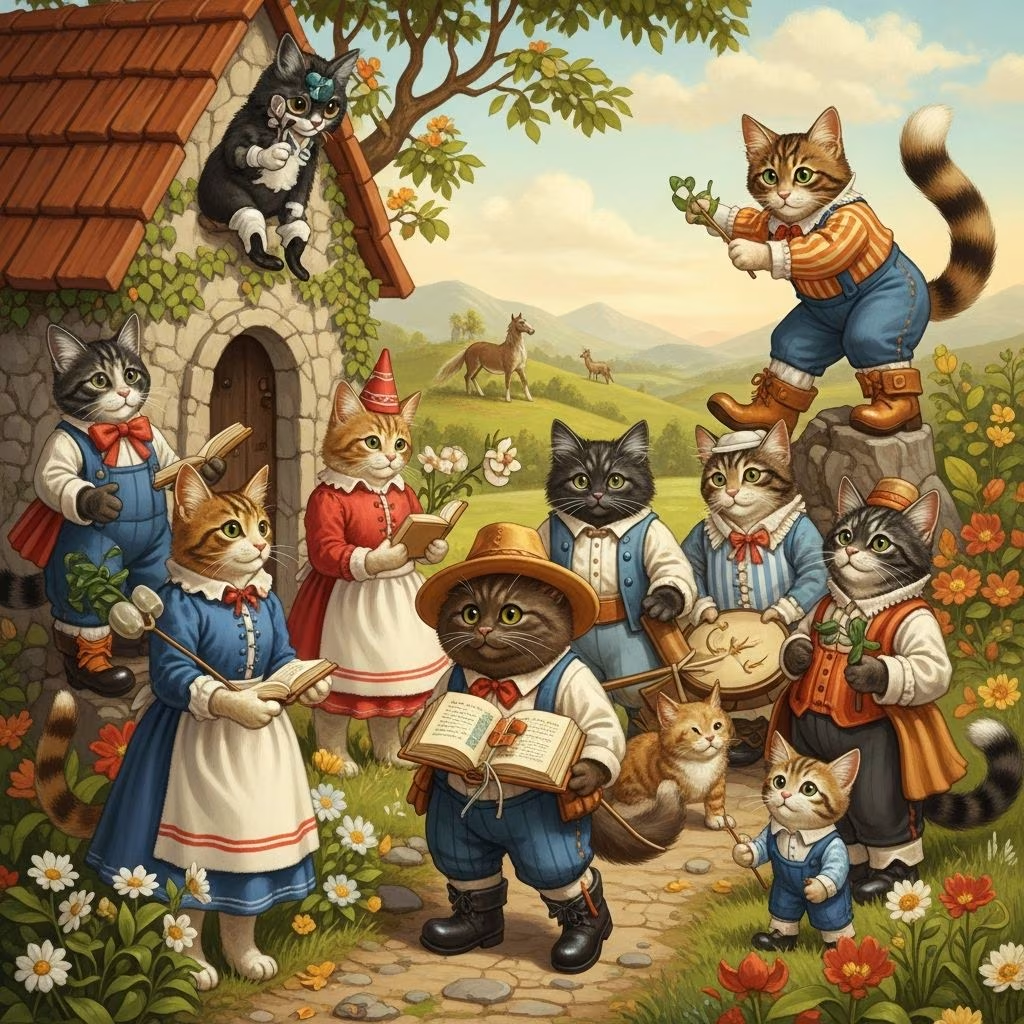
Cats have long captured human imagination with their graceful movements, mysterious gazes, and independent spirits. In the realm of children’s literature, they leap into prominence through nursery rhymes—short, rhythmic verses passed down through generations. These rhymes not only entertain but also embed cultural lessons, historical echoes, and pure whimsy. From fiddling felines jumping over moons to adventurous kittens exploring royal courts, cat-centric nursery rhymes blend nonsense with subtle narratives that spark curiosity in young minds.
The Allure of Cats in Childhood Verse
Nursery rhymes emerged centuries ago as oral traditions, evolving from folk songs, dances, and cautionary tales. Cats frequently appear as central figures, symbolizing mischief, music, and domestic life. Their presence reflects real-world feline companions in households, barns, and even palaces, making these rhymes relatable for children growing up around pets. Unlike dogs, often portrayed as loyal but simple, cats embody cleverness and enigma, adding layers of intrigue to simple melodies.
These verses serve multiple purposes: teaching rhythm and memory, introducing animal behaviors, and subtly conveying moral or historical insights. Parents and educators recite them to soothe infants or engage toddlers, fostering language development through repetition and rhyme. Today, with pet ownership rising—especially cats in urban homes—these rhymes resonate anew, bridging past traditions with modern family life.
Classic Rhymes Spotlighting Sly Cats
Several enduring rhymes feature cats in starring roles, each with lyrics that paint vivid, absurd scenes. Here’s a closer look at some favorites:
- Hey Diddle Diddle: This nonsense poem describes a cat playing a fiddle, a cow leaping over the moon, a laughing dog, and a fleeing dish and spoon. First printed in 1765, it may trace to 16th-century folk tunes.
- Pussy Cat, Pussy Cat: A feline ventures to London to glimpse the queen, only to scamper home after a mouse encounter under her chair. Documented in 1805, whispers link it to Elizabethan eras.
- Three Little Kittens: Naughty kittens lose mittens, earn pie upon finding them, then soil and wash to redeem themselves—a tale of consequences and cleverness.
- Ding Dong Bell: A grim rhyme about a cat in a well, rung by bells, possibly echoing older folk rituals or games.
These snippets, often sung with gestures, help children mimic actions like fiddling or jumping, enhancing motor skills alongside linguistic ones.
Unraveling Origins and Historical Threads
Many cat rhymes hide potential historical roots, though scholars debate their depths. Take Hey Diddle Diddle: theories abound, from Egyptian deities—cat as Bast, cow as Hathor—to Elizabethan court satire. One tale casts Queen Elizabeth I as the ‘cat,’ fiddling with ministers like mice. Another posits astronomical nods, with animals as constellations. Yet, folklorists like Iona and Peter Opie dismiss such as fanciful, favoring pure nonsense from ring-dance chants.
Pussy Cat, Pussy Cat stirs royal intrigue. Legends claim a real cat roamed Queen Elizabeth I’s palace, brushing her foot under the throne, earning free rein. The rhyme’s 1805 printing suggests earlier oral spread, possibly alluding to plague-era mobility or promiscuity metaphors via ‘pussy’ and ‘queen’—terms for female cats. While unproven, these stories enrich recitations, turning bedtime routines into history lessons.
Ding Dong Bell appears in Shakespeare’s era, with 1580 variants mentioning a cat’s ‘knell.’ It may stem from children’s games or well-dipping pranks, evolving into darker witch-hunt echoes. Three Little Kittens, from the 19th century, emphasizes hygiene and accountability, mirroring Victorian child-rearing.
Cultural Evolution and Interpretive Debates
Nursery rhymes aren’t frozen; they adapt across eras and regions. Christian lenses recast them as moral parables, while modern revisions purge perceived biases—like renaming ‘Baa Baa Black Sheep’. Cat lovers craft feline twists, swapping dogs for cats in tales like Old Mother Hubbard seeking fish.
In America, termed Mother Goose rhymes, they blend British imports with local flavors. The phrase ‘cat’s in the cradle,’ from a Dutch legend of string toys, inspired Harry Chapin’s 1974 song on absent fatherhood—though not a traditional rhyme, it nods to feline motifs in verse. Globally, translations retain cat centrality, underscoring universal pet appeal.
| Rhyme | Earliest Print | Key Theory | Modern Twist |
|---|---|---|---|
| Hey Diddle Diddle | 1765 | Elizabeth I satire | Constellation maps |
| Pussy Cat Pussy Cat | 1805 | Royal cat anecdote | Pet adventure songs |
| Ding Dong Bell | 1580 variant | Folk well game | Safety warnings |
| Three Little Kittens | 19th C. | Cautionary hygiene | Craft activities |
Why Cats Dominate These Rhymes
Cats’ prevalence stems from their ubiquity in pre-industrial homes—as mousers, companions, and superstitions’ subjects. Unlike fantastical beasts, cats were everyday enigmas: nocturnal hunters, agile acrobats, fitting rhymes’ surrealism. Literary history amplifies this; from fables to Victorian tales, anthropomorphic cats teach wit and independence.
Psychologically, cats model self-reliance, appealing to children’s budding autonomy. Rhymes humanize them—fiddling virtuosos or royal visitors—fostering empathy. In cat-owning families, personalization deepens bonds, as parents improvise lyrics mirroring their pet’s quirks.
Bringing Rhymes Alive Today
Revive these gems through songs, puppets, or apps blending animation with lyrics. Pair with cat crafts: mittens from paper, fiddles from recyclables. For education, discuss origins post-recital, sparking family talks on history and folklore.
In classrooms, rhymes build phonics; therapists use them for speech therapy. Cat cafes host rhyme sessions, merging pet therapy with literacy. Streaming platforms offer multicultural variants, exposing kids to global feline lore.
Potential Darker Undertones
Not all rhymes are lighthearted. Ding Dong Bell‘s well-trapped cat hints at cruelty or omens. Plague links surface in some, like ring-dance disease chants. Yet, context matters: these reflected harsh realities, softened for play. Modern retellings emphasize rescue, aligning with animal welfare values.
FAQs on Cat Nursery Rhymes
What is the oldest cat nursery rhyme? Variants of Ding Dong Bell trace to 1580, predating printed classics.
Are these rhymes based on real events? Some, like Pussy Cat‘s royal tale, draw from legends, but most are nonsense evolutions.
How do I teach rhymes to kids? Use gestures, videos, and pets for engagement; repeat daily for memory.
Why feature cats over other animals? Cats’ mystery and household role make them ideal for whimsical, relatable tales.
Can I adapt rhymes for my cat? Absolutely—personalization keeps traditions alive.
Conclusion: Timeless Feline Magic
Cat nursery rhymes endure for their joy, rhythm, and subtle wisdom. They weave cats into childhood’s fabric, nurturing imagination and pet love. Whether nonsense or nod to history, these verses remind us: in a complex world, a fiddling cat over the moon suffices for delight.
References
- The Role of Cats in Nursery Rhymes — Messybeast. Accessed 2026. http://messybeast.com/nursery.htm
- Pussy Cat Pussy Cat Nursery Rhyme — FirstCry Intelli Articles. Accessed 2026. https://www.firstcry.com/intelli/articles/pussy-cat-pussy-cat-nursery-rhyme/
- The Myth and History of Cats in the Cradle — Cat Wisdom 101. Accessed 2026. https://catwisdom101.com/cats-in-cradle-myth/
- The Curious Origins of Nursery Rhyme Cats — Folklore Thursday. Accessed 2026. https://folklorethursday.com/childlore/curious-origins-nursery-rhyme-cats/
- Hey Diddle Diddle: Cats and Nursery Rhymes — Grace Elliot Author Blog. 2015-10-01. http://graceelliot-author.blogspot.com/2015/10/hey-diddle-diddle-cats-and-nursery.html
- A Brief History of Literary Cats — JSTOR Daily. Accessed 2026. https://daily.jstor.org/a-brief-history-of-literary-cats/



