

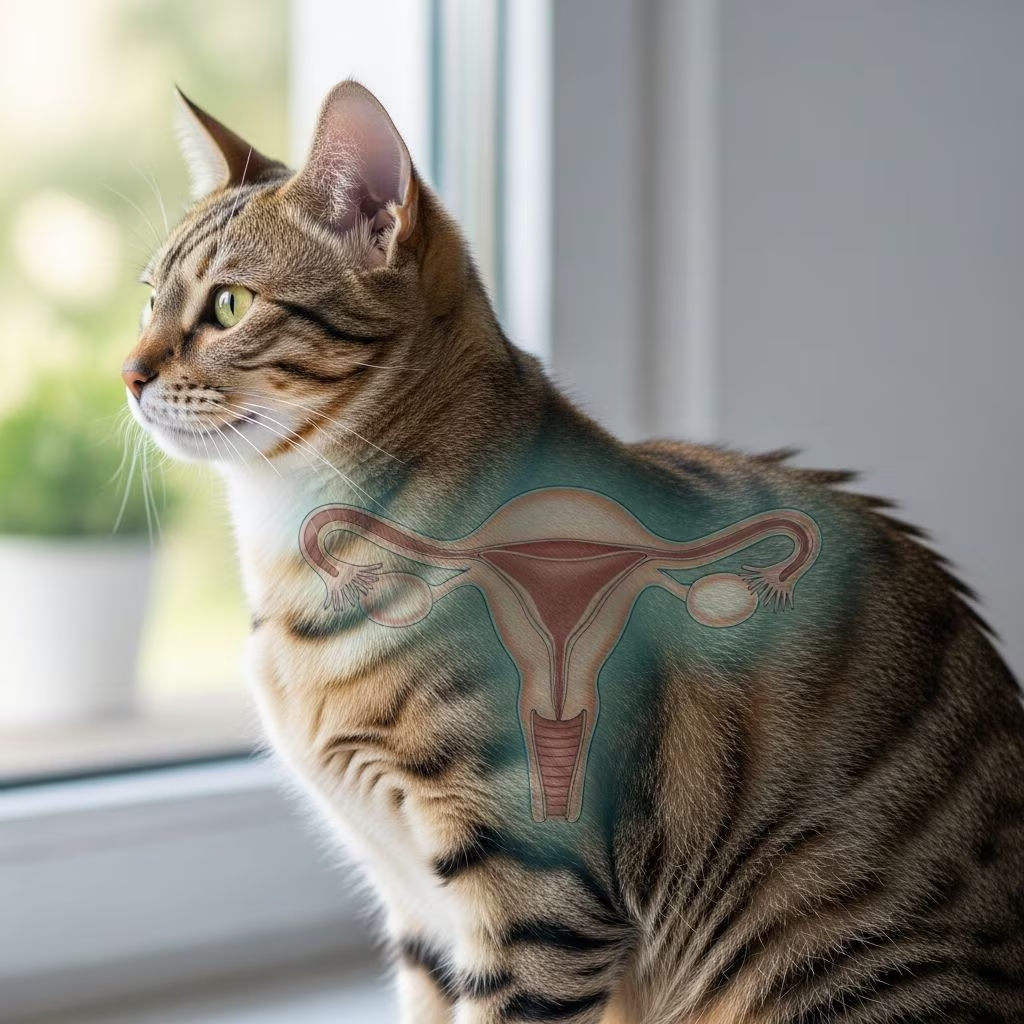
The reproductive system of domestic cats is a fascinating blend of evolutionary adaptations that ensure species survival. Cats exhibit unique traits like induced ovulation and seasonal breeding patterns influenced by daylight. Understanding these processes helps pet owners make informed decisions about spaying, neutering, and health care.
Puberty and Onset of Sexual Maturity
Female cats, known as queens, typically reach puberty between 6 and 9 months of age, though some may mature as early as 4 months. Males, or toms, achieve sexual maturity around 8 to 12 months, marked by the presence of sperm in ejaculate. These timelines can shift based on environmental factors like light exposure.
- Queens: First estrous cycle signals readiness for breeding, often at 6 months under optimal conditions.
- Toms: Puberty coincides with development of penile spines, androgen-dependent structures aiding mating.
Indoor cats under artificial lighting may cycle year-round, unlike outdoor cats limited to longer daylight periods.
The Estrous Cycle: Phases and Duration
Cats are seasonally polyestrous, meaning they experience multiple heat cycles per breeding season. Each cycle averages 3 weeks, with the receptive estrus phase lasting 4 to 7 days, though it can extend to 21 days. If unmated, queens enter a brief interestrous interval of 2 to 19 days before repeating.
| Phase | Duration | Key Characteristics |
|---|---|---|
| Proestrus | 1-2 days | Behavioral changes like increased vocalization begin. |
| Estrus (Heat) | 4-7 days avg. | Sexual receptivity; queens attract toms with yowling and rubbing. |
| Interestrous | 2-19 days | Rest period if no mating occurs. |
| Anestrus | Variable (winter) | Seasonal pause due to short days. |
Light exposure exceeding 12 hours daily triggers cycling, primarily from January to October in natural settings.
Male Reproductive Anatomy and Behavior
The tom’s reproductive system includes testes producing sperm and hormones like testosterone. Penile spines, numbering 100-200, develop post-puberty and stimulate ovulation during mating. Mature toms can mate repeatedly over 4-5 days without sperm depletion.
Breeding behavior is rapid: mounting, intromission, ejaculation (lasting 1-2 minutes), and dismount. Toms under consistent lighting show no seasonal fertility dips.
Mating Process and Induced Ovulation
Cats are induced ovulators, requiring mechanical vaginal stimulation for luteinizing hormone release and egg ovulation. Queens often need 3-4 matings within 24 hours, potentially with multiple toms, leading to multi-sired litters. Post-mating, queens exhibit the “after-reaction”: vulvar licking (92%), rolling (100%), and striking the tom (77%).
Stimulation targets the posterior vagina, not the cervix, as confirmed by research. Copulation is noisy, with queens vocalizing loudly.
Key Mating Facts
- Average 5-6 matings per cycle for reliable ovulation.
- Pregnancy rate around 74% with sufficient breedings.
- Unmated queens resume cycling quickly.
Female Reproductive Organs and Hormonal Control
Ovaries produce eggs, estrogen (for follicle growth), and progesterone (for uterine preparation). Follicle-stimulating hormone initiates cycles, while mating triggers ovulation. The genital tract includes oviducts for egg transport, uterus for implantation, cervix as infection barrier, vagina, and vulva.
Progesterone also readies mammary glands for lactation. Estrogen drives female traits and behaviors like rolling and yowling.
Pregnancy: Gestation and Development
Once fertilized, eggs implant in the uterus. Gestation lasts 64-71 days, averaging 65-66 days. Queens can re-breed days after birthing, lacking menopause, and remain fertile lifelong.
Litters average 4-6 kittens, with embryonic development supported by oviduct fluids initially.
Labor Stages and Kitten Delivery
Parturition divides into three stages:
- Stage I (12-24 hours): Uterine contractions start; queen hides, nests, may vomit or refuse food. Clear vaginal discharge appears; cervix dilates.
- Stage II: Visible abdominal pushes; kittens born every 1-2 hours (up to 24+ hours possible). Each delivery followed by placenta expulsion (Stage III).
- Stage III: Placenta passage; alternates with Stage II until complete.
Monitor for prolonged intervals (>2 hours between kittens) signaling distress.
Health Considerations in Reproduction
Unspayed queens risk pyometra, ovarian cysts, and mammary tumors. Frequent cycles strain health. Toms face testicular issues or injuries from fights. Spaying/neutering prevents these, controls populations, and curbs behaviors like spraying.
Medical estrus suppression risks uterine infection or diabetes; prefer surgery.
Responsible Breeding and Population Control
Breeding should prioritize health; screen for genetic issues. Overpopulation strains shelters—spay/neuter is key. Indoor lighting extends cycles, increasing unplanned litters.
FAQs
Can cats get pregnant on their first heat?
Yes, as early as 4 months.
How often do cats go into heat?
Every 2-3 weeks during breeding season if unmated.
Do male cats have heat cycles?
No, but they show increased mating drive seasonally.
What’s the average litter size?
4-6 kittens.
Can a cat litter have multiple fathers?
Yes, due to multi-mating and superfecundation.
References
- The Gonads and Genital Tract of Cats — MSD Veterinary Manual. 2023. https://www.msdvetmanual.com/cat-owners/reproductive-disorders-of-cats/the-gonads-and-genital-tract-of-cats
- Estrous Cycles in Cats — VCA Animal Hospitals. 2023. https://vcahospitals.com/know-your-pet/estrus-cycles-in-cats
- Feline reproduction: An overview (Proceedings) — dvm360. 2008-10-01. https://www.dvm360.com/view/feline-reproduction-overview-proceedings
- Management of Reproduction of Cats — Merck Veterinary Manual. 2023. https://www.merckvetmanual.com/cat-owners/reproductive-disorders-of-cats/management-of-reproduction-of-cats
- Cat Reproduction — whiskerDocs. 2023. https://www.whiskerdocs.com/articles/cat-reproduction



