

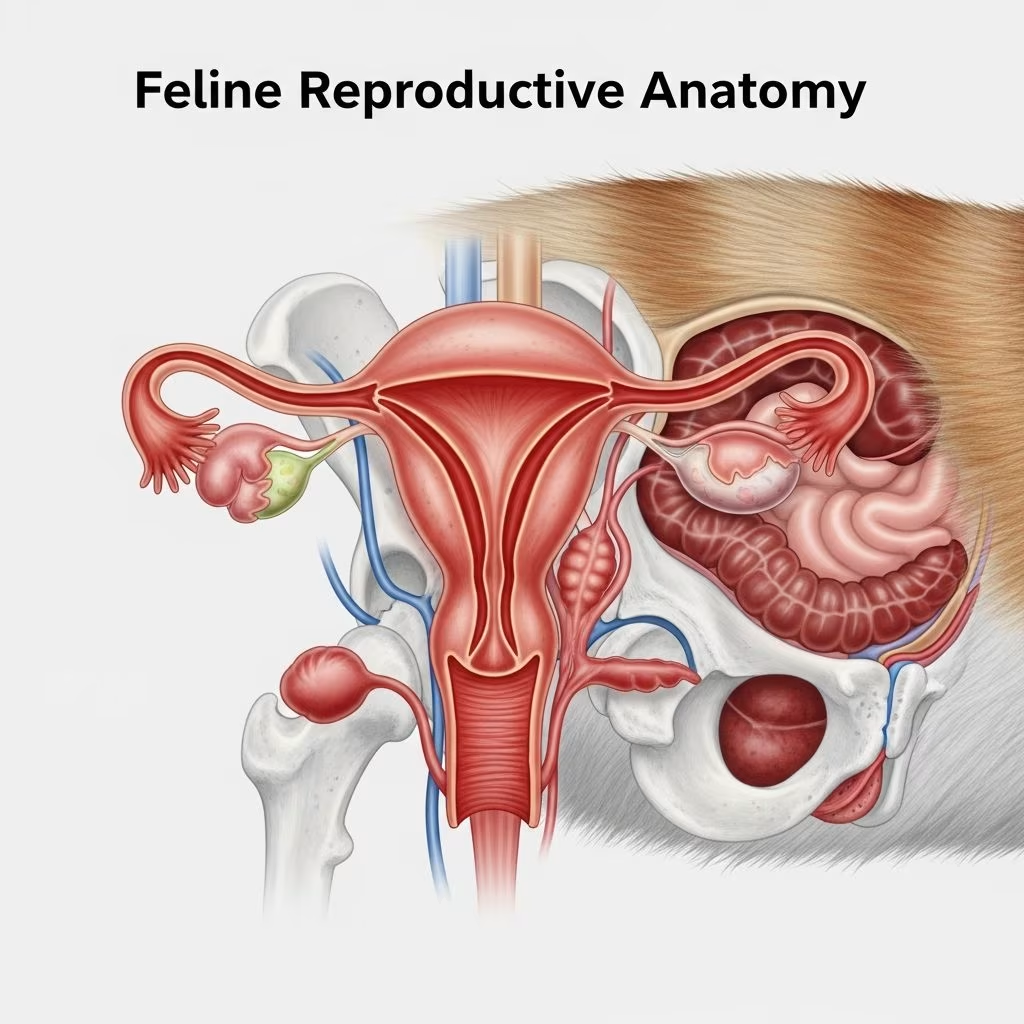
The reproductive system in cats plays a vital role in hormone production, fertility, and kitten development. Understanding its components helps cat owners make informed decisions about spaying, neutering, and health monitoring.
Overview of Female Reproductive Structures
Female cats, known as queens, possess a specialized reproductive tract designed for multiple offspring. Key organs include paired ovaries positioned near the kidneys, connected via oviducts to a distinctive Y-shaped uterus.
- Ovaries: Small, almond-shaped glands that release eggs and secrete hormones like estrogen and progesterone.
- Oviducts: Tortuous tubes, 5-9 cm long, with fimbriae that capture released eggs; fertilization typically occurs here.
- Uterus: Comprises two long horns for fetal growth and a short body leading to the cervix.
The cervix acts as a muscular gate, sealed by a mucus plug during pregnancy to prevent infections. The vagina, a flexible tube in the pelvic cavity, facilitates sperm entry and kitten delivery, while the vulva serves as the external opening.
Male Reproductive System Essentials
Male cats, or toms, have external genitalia adapted for induced ovulation in queens. The testes, housed in the scrotum, produce sperm and testosterone.
| Organ | Location | Function |
|---|---|---|
| Testes | Scrotum | Sperm and testosterone production |
| Penis | Prepuce | Features barbs to trigger ovulation; retracts post-neutering |
| Prostate | Around urethra | Semen production |
The penis contains keratinized spines that stimulate the queen during mating, ensuring ovulation. Neutering removes these features, reducing aggression and roaming.
Hormonal Regulation in Cats
Reproduction relies on a hormonal cascade. In queens, follicle-stimulating hormone (FSH) develops ovarian follicles, while luteinizing hormone (LH) triggers ovulation 48+ hours post-surge. Progesterone from the corpus luteum sustains pregnancy or pseudopregnancy.
Toms maintain steady testosterone levels for sperm viability. Seasonal breeders, cats enter estrus in spring/summer, with queens vocalizing and posturing to attract mates.
Estrous Cycle and Breeding Dynamics
Unlike continuous cycling dogs, queens are induced ovulators. The cycle includes proestrus (attraction phase), estrus (receptive, 3-21 days), and interestrus. Mating induces LH release, leading to ovulation.
- Pseudopregnancy: Occurs post-unfertilized ovulation; lasts 40-50 days with mammary changes.
- Gestation: 63-65 days; uterus horns host 1-6 kittens per horn.
Breeding success hinges on timing; multiple matings enhance fertility.
Common Reproductive Disorders in Females
Several conditions affect queen fertility and health:
- Pyometra: Uterine infection post-estrus; life-threatening pus accumulation requires emergency spay.
- Metritis: Postpartum uterine inflammation from bacterial invasion.
- OVH Complications: Ovarian remnant syndrome if tissue remains post-spay, causing hormone-driven behaviors.
Early signs include lethargy, discharge, and abdominal swelling. Diagnostics involve ultrasound and bloodwork.
Male-Specific Reproductive Issues
Toms face unique challenges:
| Condition | Symptoms | Treatment |
|---|---|---|
| Orchitis/Epididymitis | Scrotal swelling, pain | Antibiotics, neuter |
| Phimosis | Urine retention | Surgical correction |
| Hypersexuality | Excessive spraying | Neutering |
These often stem from infections or congenital defects; neutering prevents most.
Preventive Care and Surgical Interventions
Spaying (ovariohysterectomy) removes ovaries and uterus, eliminating cancers and infections. Best before first heat (4-6 months). Neutering toms curbs cancers and behaviors.
Post-op monitoring includes incision checks and activity restriction. Benefits: 90% reduction in mammary tumors if pre-first heat.
Breeding Management for Responsible Owners
For breeders, track cycles via vaginal cytology. Ensure health screenings for genetic issues. Kitten care starts with whelping preparation: quiet space, heat source.
- Monitor queen’s weight gain: 1-2 kg.
- Postpartum: Check for retained placentas.
FAQs on Cat Reproductive Health
What age should I spay my cat?
Ideally 4-6 months to prevent early pregnancies and cancers.
Do neutered cats still spray?
Most stop, but some persist; consult a vet.
How do I know if my cat is in heat?
Signs: loud calling, rolling, raised hindquarters.
Is pyometra fatal?
Yes, without prompt treatment; spay prevents it.
Can cats reproduce year-round?
Seasonally in nature, but indoors yes due to lighting.
Nutritional Support for Reproductive Health
Breeding queens need 25-50% more calories during gestation/lactation. Omega-3s aid fetal development; calcium prevents eclampsia.
Toms benefit from zinc-rich diets for sperm quality.
References
- Understanding Your Cat’s Unique Reproductive System — VetScoop. 2023. https://vetscoop.com/cat-health/understanding-your-cats-unique-reproductive-system/
- Reproductive system of the dog and cat Part 1 -the female system — BVNA. 2022-05-15. https://bvna.org.uk/blog/reproductive-system-of-the-dog-and-cat-part-1-the-female-system-by-victoria-aspinall/
- Structure and Function of the Female Feline Reproductive Tract — PetPlace. 2024. https://www.petplace.com/article/cats/pet-health/structure-and-function-of-the-female-feline-reproductive-tract
- Female cats: Normal Reproduction, and Reproductive Diseases — Veterian Key. 2023-08-10. https://veteriankey.com/female-cats-normal-reproduction-and-reproductive-diseases-and-conditions-2/
- Normal feline reproduction: The queen — PMC (NCBI). 2024-01-15. https://pmc.ncbi.nlm.nih.gov/articles/PMC10845401/
- Normal feline reproduction: The tom — SAGE Journals. 2022-04-20. https://journals.sagepub.com/doi/10.1177/1098612X221079707



