

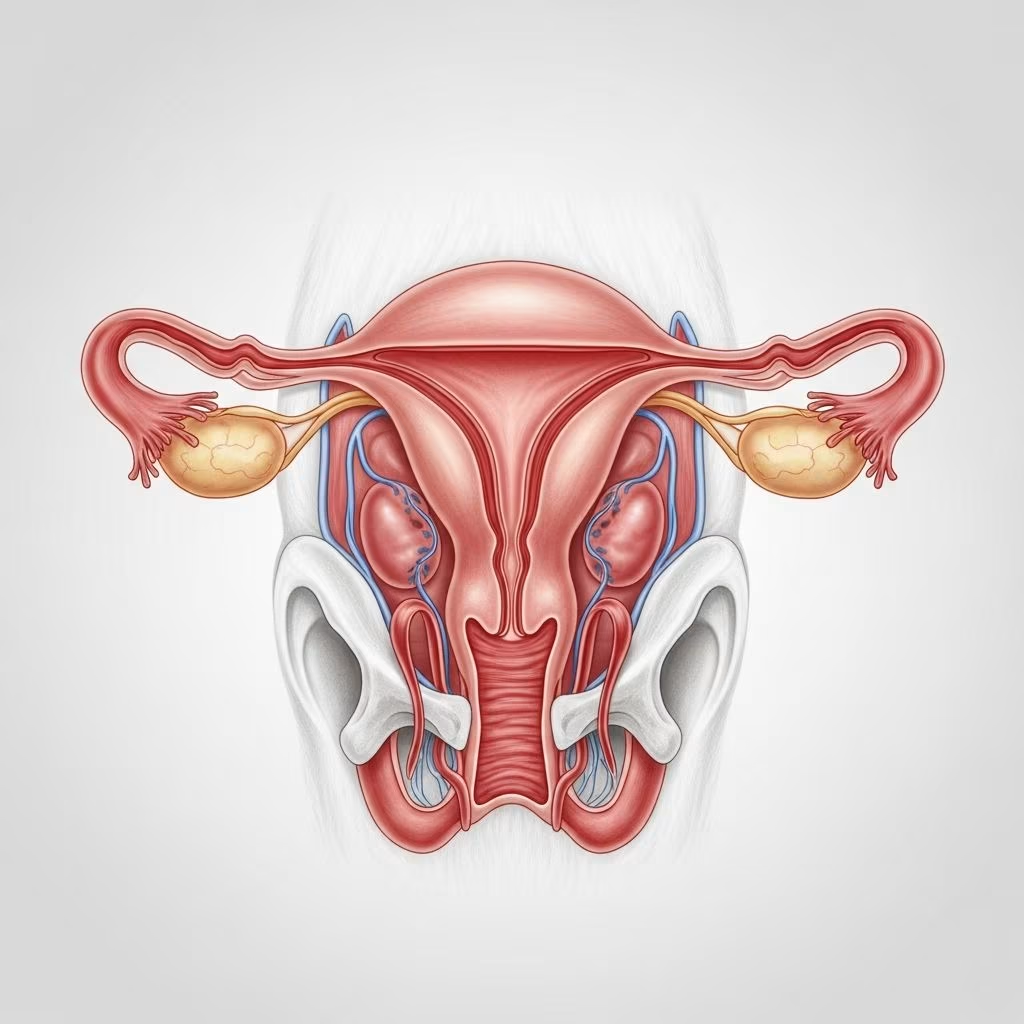
The reproductive anatomy of cats represents a fascinating blend of specialized structures designed for reproduction and urinary function. Unlike many other mammals, cats possess several distinctive anatomical features that set them apart in the animal kingdom. Understanding these structures provides valuable insight into feline health, behavior, and reproduction. This comprehensive guide explores both male and female feline genital anatomy, highlighting the key differences and functional purposes of each component.
The External Appearance of Feline Genitals
One of the most noticeable differences between male and female cats lies in the appearance of their external genitals. The genital opening in male cats presents as a circular or round opening, while female cats display a distinctly different external appearance. In females, the genital opening appears as a vertical slit or narrow opening positioned below the anus in the perineal region. This visual distinction allows veterinarians and experienced cat owners to quickly determine a cat’s sex through external observation alone.
The perineal area, located below the tail and ventral to the anus, contains these reproductive openings. The positioning and configuration of these structures reflect the different biological functions they serve in each sex. For female cats, the vertical slit represents the entrance to the vulva, while in males, the rounded opening leads to the penis sheathed within the prepuce.
Female Reproductive Tract: Structure and Components
The female feline reproductive system comprises several interconnected structures working together to facilitate reproduction and maintain female sexual function. Understanding each component provides insights into how the system operates as an integrated whole.
The Vulva and External Structures
The vulva serves as the external gateway to the female reproductive tract. This structure consists of two vertical labiae (lips) that are joined both dorsally and ventrally, creating the characteristic vertical cleft observed in female cats. Within the ventral portion of this cleft lies the clitoris, composed of erectile cavernous tissue. The clitoris is functionally equivalent to the male penis, though substantially smaller in size.
The Vaginal Canal and Vestibule
Extending inward from the vulva lies the vaginal canal, a specialized muscular tube that connects the external genitalia to the cervix. The female cat possesses a structure called the urogenital sinus, which contains the vaginal entrance and the urethral opening. Much of this area comprises the vestibule, measuring approximately 4 millimeters in internal diameter and extending 1 to 2 centimeters in length.
The vagina itself is remarkably narrow, with an internal diameter of only about 1 millimeter, and extends approximately 2 to 3 centimeters in length. This means the total distance from the external vulva to the cervix measures approximately 4 to 4.5 centimeters. The vaginal lining consists of stratified nonkeratinizing epithelium that provides protection and flexibility. Internally, the vagina features longitudinal folds that allow it to dilate substantially during parturition to facilitate the passage of kittens.
The Cervix: Gateway to the Uterus
The cervix represents a crucial anatomical structure that separates the vagina from the uterus. This specialized region functions as a protective barrier against ascending infections while simultaneously providing a conduit for sperm passage during mating. The cervix maintains its structural integrity except during estrus cycles and pregnancy, when it undergoes physiological changes to accommodate reproductive processes.
The Unique Bicornuate Uterus
Perhaps the most distinctive feature of female feline reproductive anatomy is the uterus structure. Unlike the single-chambered, pear-shaped human uterus, the feline uterus is bicornuate, meaning it possesses two distinct horns. These long uterine horns connect in a characteristic “V” shape, creating a configuration perfectly suited to feline reproduction.
The normal feline uterus consists of two uterine horns, a central uterine body, and the cervix, all suspended within the abdominal cavity by a supporting structure called the mesometrium. The surface of the feline uterus typically appears smooth and regular when the cat is not pregnant. During pregnancy, bulges develop at regular intervals along the horns as developing kittens grow within each chamber.
The bicornuate configuration offers significant reproductive advantages. The two long horns provide ample space for multiple kittens to develop simultaneously, allowing cats to produce larger litters than would be possible with a single-chambered uterus. The uterine wall consists of multiple layers: the endometrium (inner lining containing glands and supporting tissue), the myometrium (muscular layer composed of circular and longitudinal muscle fibers), and the outer serosal layer.
The Oviducts and Ovarian Structures
Connecting each ovary to the corresponding uterine horn are the oviducts, also known as Fallopian tubes. These small, delicate tubes serve a critical function in transporting mature eggs from the ovaries to the uterus following ovulation. The oviducts produce specialized secretions that create an optimal environment for egg survival, fertilization, and early embryonic development.
The structure of the feline oviduct includes several distinct regions. The infundibulum, also called the funnel, sits over the ovarian surface but does not completely surround the ovary as occurs in other species. This funnel-shaped region features a fringe of finger-like processes called fimbriae that help capture the released egg. The ampulla comprises the relatively wide portion extending from the funnel to a narrower region called the isthmus. This anatomical arrangement ensures efficient egg transport while maintaining optimal conditions for early reproductive processes.
The ovaries themselves contain the rete ovarii, structures composed of remnant tubules lined with ciliated cells. These structures possess secretory activity, though their exact physiological role remains incompletely understood. The rete ovarii consists of three regions: the intraovarian rete (within the ovary), the extraovarian rete (outside the ovary), and a connecting rete that links these regions.
Male Reproductive Tract: Architecture and Function
The male feline reproductive system demonstrates remarkable specialization for sperm production, storage, and delivery. This complex arrangement of structures works in coordinated fashion to enable successful reproduction.
The Penis and Prepuce
The male cat’s penis is protected by a specialized sheath called the prepuce. The exposed portion of the penis is called the glans, and it possesses a distinctly unique feature: the presence of 120 to 150 backward-directed penile spines. These keratinous spines develop gradually, beginning to appear around 12 weeks of age and reaching full development at puberty.
The penile spines serve important reproductive functions, though their exact mechanisms remain an active area of veterinary research. These spines are completely absent in neutered male cats, disappearing by approximately six weeks following castration. The penis itself is highly vascularized and surrounds the termination of the urethra, playing a crucial role in directing the stream of urine during elimination.
Structurally, the erectile portion of the penis comprises two corpora cavernosa and a corpus spongiosum that surrounds the urethra. This arrangement allows for tumescence (swelling and hardening) necessary for successful copulation.
The Testicles and Scrotum
The two testicles (testes) of the male cat are normally located within the scrotum, a specialized pouch that provides optimal environmental conditions for sperm production. The scrotum is divided by a thin internal partition into two separate cavities, each housing one testicle, its associated epididymis, and the tail portion of the spermatic cord.
The scrotal skin is covered with dense hair and features specialized anatomy to maintain appropriate temperature. Beneath the skin lies the dartos, a thin muscular layer composed of muscle and connective tissue. This layer can contract in response to temperature changes, helping maintain the precise conditions necessary for optimal sperm development.
The Epididymis and Sperm Maturation
Each testicle is associated with an epididymis, an enlarged, coiled tube positioned along the edge of the testicle. The epididymis represents a critical structure where sperm mature and are stored before ejaculation. This tube begins at the head (located at the front of the testicle) and extends to the tail (positioned at the back of the testicle). Within the epididymis, immature sperm from the testicle undergo a maturation process that renders them capable of fertilization.
The Ductus Deferens and Spermatic Cord
Beginning at the tail of the epididymis, the ductus deferens (also called the vas deferens) carries mature sperm toward the urethra. This thin muscular tube runs along the border of the testicle and then extends toward the rear of the abdomen, passing through the prostate gland before emptying into the urethra.
The spermatic cords are composed of the ductus deferens along with the blood vessels and nerves supplying the testicles. These cords originate at the tail of the epididymis and extend backward through the inguinal canal, supporting the testicles within the scrotum. The ductus deferens itself consists of three layers of muscle arranged in a sophisticated pattern that enables rhythmic contractions to propel sperm during ejaculation.
The Prostate and Accessory Glands
The prostate gland in male cats is notably small and relatively insignificant compared to this gland in other species. Located near the front of the pelvic rim at the rear of the abdominal cavity, the prostate surrounds the initial portion of the urethra and the termination of the ductus deferens. Multiple openings from the prostate empty into the urethra, allowing the gland to contribute fluid to semen production.
Adjacent to the urethra lie the bulbourethral glands, also known as Cowper’s glands. These accessory sex glands are positioned on either side of the urethra and contribute to the fluid portion of semen, providing nutrients and protective compounds for sperm. The combination of secretions from the prostate and bulbourethral glands creates the seminal fluid that transports and protects sperm during ejaculation.
Comparative Differences Between Males and Females
| Feature | Male Cats | Female Cats |
|---|---|---|
| External Genital Opening | Circular/round | Vertical slit |
| Primary Reproductive Organ | Testicles (sperm production) | Ovaries (egg production) |
| Uterine Structure | N/A | Bicornuate (two horns) |
| Penile Features | 120-150 penile spines | Clitoris (erectile tissue) |
| Sperm Transport | Ductus deferens | Oviducts/Fallopian tubes |
Health and Reproductive Disorders
Understanding feline reproductive anatomy becomes particularly important when addressing health concerns. Reproductive tract diseases and cancers can be diagnosed through multiple approaches including physical examination, laboratory testing, and ultrasonography. Veterinarians may also examine semen samples to identify abnormal functioning in the male reproductive tract.
Notably, reproductive tract disease in male cats remains very uncommon, though conditions affecting the female system occur more frequently. Regular veterinary examination remains essential for detecting any structural abnormalities or functional problems affecting reproductive health.
Key Takeaways About Feline Reproductive Anatomy
- Male and female cats display distinctly different external genital appearances, enabling straightforward sex determination
- The female feline uterus possesses two horns arranged in a “V” shape, allowing for multiple kittens to develop simultaneously
- Male cat penises feature unique backward-directed spines that disappear after neutering
- Female cats possess an intricate system of reproductive structures perfectly adapted for reproduction
- The male reproductive system efficiently produces, stores, and transports sperm through specialized anatomical pathways
- Both sexes possess sophisticated internal anatomy that supports their respective reproductive functions
Frequently Asked Questions
How can I determine my cat’s sex?
The most straightforward method involves examining the external genital opening. Male cats display a round, circular opening, while female cats show a narrow vertical slit. Additionally, intact males possess testicles within the scrotum below the anus.
What are the penile spines in male cats?
Male cats possess 120 to 150 backward-directed spines on the glans (tip) of the penis. These spines develop during puberty and disappear following neutering within approximately six weeks.
Why does the female cat uterus have two horns?
The bicornuate (two-horned) uterine structure provides optimal space for multiple kittens to develop within the same reproductive cycle, supporting the cat’s capacity for larger litters.
Can cats develop reproductive diseases?
Yes, though reproductive tract disease is more common in female cats than males. Conditions can be diagnosed through physical examination, laboratory tests, ultrasonography, or semen analysis.
What is the function of the oviducts in female cats?
The oviducts (Fallopian tubes) transport mature eggs from the ovaries to the uterus following ovulation and provide specialized secretions supporting egg survival and early embryonic development.
References
- The Gonads and Genital Tract of Cats – Cat Owners — MSD Veterinary Manual. https://www.msdvetmanual.com/cat-owners/reproductive-disorders-of-cats/the-gonads-and-genital-tract-of-cats
- Structure and Function of the Male Feline Reproductive Tract — PetPlace. https://www.petplace.com/article/cats/pet-health/structure-and-function-of-the-male-feline-reproductive-tract
- Normal Reproductive Tract of the Queen/female Cat — Veterinary Reproduction Pathology Database. http://vetrepropath.com/female/cat/normal_queen.html
- Reproductive system of the dog and cat Part 1: The female system — British Veterinary Nursing Association. https://bvna.org.uk/blog/reproductive-system-of-the-dog-and-cat-part-1-the-female-system-by-victoria-aspinall/
- Feline Genitalia Guide (Written By a Vet) — Cats.com. https://cats.com/feline-genitalia-guide
- Normal feline reproduction: The tom — SAGE Journals, 2022. https://journals.sagepub.com/doi/10.1177/1098612X221079707
- The Visual Guide to Feline Reproduction — University of Florida College of Veterinary Medicine. https://visgar.vetmed.ufl.edu/en_felrep/guide.html



