

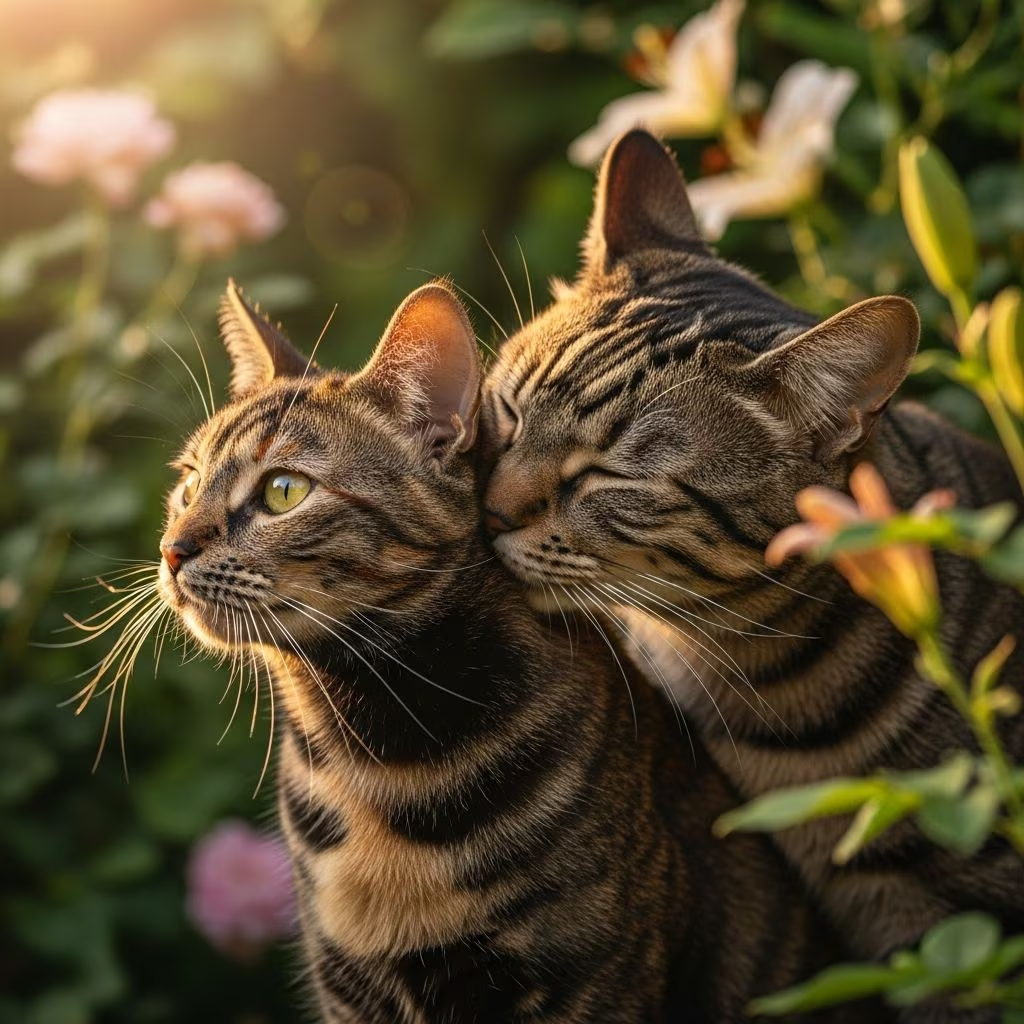
Understanding the reproductive processes in cats is crucial for pet owners aiming to manage their feline companions responsibly. Female cats, known as queens, undergo distinct estrous cycles that dictate their fertility windows, mating readiness, and potential for pregnancy. These cycles are influenced by environmental factors like daylight length and can begin as early as four months of age. This guide delves into the stages of the estrous cycle, behavioral indicators, mating dynamics, conception mechanics, pregnancy progression, and key health considerations.
The Foundations of Cat Estrous Cycles
The estrous cycle in cats, often referred to as the heat cycle, is a hormonal sequence preparing the queen for reproduction. Unlike dogs, cats are seasonally polyestrous, meaning they cycle multiple times during breeding seasons typically from spring to fall in the northern hemisphere, though indoor cats may cycle year-round due to artificial lighting.
Puberty marks the onset, with most queens experiencing their first heat between four and six months, though some as early as four months or delayed up to 12 months depending on breed and conditions. Shorthair breeds often mature faster than longhairs.
- Proestrus: Lasts 1-2 days; subtle signs like increased vocalization and rubbing, but the queen rejects males.
- Estrus: The receptive ‘heat’ phase, averaging 7 days (1-21 days); key mating period.
- Diestrus: Post-ovulation, 30-40 days; pregnancy or pseudopregnancy if fertilized.
- Interestrus: Brief 7-19 day rest before next cycle if no conception.
- Anestrus: Inactive winter period, 2-3 months without cycles.
Without mating, cycles repeat every 2-3 weeks, potentially leading to 3-5 litters annually.
Recognizing Signs Your Cat is in Heat
Behavioral changes signal estrus clearly. Queens become affectionate, rolling excessively, elevating hindquarters (lordosis), treading paws, and emitting loud yowls to attract toms. They may urine mark more, appear restless, and seek escape to mate. Appetite decreases, and they rub against objects or owners.
| Sign | Description | Duration |
|---|---|---|
| Vocalizing | Loud meowing or calling | Throughout estrus |
| Posture Changes | Raised hindquarters, tail deflection | During receptive periods |
| Affection Seeking | Rubbing, rolling on floor | Intermittent |
| Escaping Attempts | Door dashing, restlessness | Peak in estrus |
These behaviors can disrupt households, emphasizing the importance of spaying before puberty.
Mating Behaviors and the Role of Induced Ovulation
Cats are induced ovulators; breeding triggers egg release, unlike spontaneous ovulators. Mating is brief (1-2 minutes), often repeated 3-4 times in 24 hours for ovulation. Queens may mate with multiple toms, enabling superfecundation where kittens in one litter have different fathers.
Males (toms) detect pheromones, compete aggressively, and perform neck bites during copulation, causing the queen’s characteristic scream post-mating due to penile spines stimulating ovulation. Ovulation happens 24-48 hours after, with heat ending shortly after.
Factors Influencing Conception Success
Conception rates peak with proper timing during estrus. Healthy queens ovulate 4-8 eggs per cycle, potentially yielding 2-8 kittens per litter. Nutrition, age, and health impact fertility; obese or stressed cats may have lower success.
- Age: Prime breeding 1-5 years; fertility declines post-8 years.
- Environment: Longer daylight mimics breeding season, boosting cycles.
- Frequency: Multiple matings ensure ovulation and higher fertilization.
Post-ovulation, the queen enters diestrus; fertilization leads to implantation around day 12-14.
Pregnancy Timeline and Kitten Development
Gestation averages 63-65 days (60-71 range). Early signs include nipple enlargement (day 15-20), appetite increase, and nesting behavior later.
- Weeks 1-3: Embryo implantation; no visible signs.
- Weeks 4-5: Abdominal growth; ultrasound detects heartbeats ~day 25.
- Weeks 6-7: Mammary development; queen seeks seclusion.
- Weeks 8-9: Milk production; labor imminent.
Labor stages: uterine contractions (2-6 hours), delivery of kittens (minutes to hours apart), and placental expulsion. Queens typically manage unassisted.
Health Risks and Management Strategies
Unplanned litters contribute to overpopulation; spaying prevents cycles, reduces mammary/uterine cancer risks by 90%, and eliminates pyometra.
During heat, isolate from toms, provide distractions like toys. Monitor for pseudopregnancy mimicking true gestation (40-45 days).
For breeders: Ensure genetic testing, vaccinations, and vet-supervised matings. Postpartum, queens can re-enter heat weeks after birth, risking consecutive pregnancies.
Spaying: The Best Preventive Measure
Spaying before first heat optimizes health benefits. Procedure removes ovaries/uterus, halting cycles permanently. Recovery is quick (7-10 days); behavioral issues resolve.
- Prevents heat-related stress.
- Lowers obesity risk with diet adjustment.
- Extends lifespan by 1-3 years on average.
FAQs on Cat Reproduction
Q: How often do cats go into heat?
A: Every 2-3 weeks during breeding season until bred or spayed.
Q: Can a cat get pregnant on her first heat?
A: Yes, as early as 4 months old.
Q: What if my cat is in heat but not bred?
A: She’ll cycle again soon; spay to stop this.
Q: How many kittens in a litter?
A: Typically 3-5, up to 10 possible.
Q: When to spay a kitten?
A: Ideally 4-6 months, before first heat.
Breeding Responsibly: Guidelines for Owners
Intended breeders screen for health issues like HCM, ensure optimal weight, and plan via progesterone tests for peak fertility. Post-whelping care includes monitoring queen-kitten bonding and weaning at 4-8 weeks.
Adoption from shelters reduces stray populations; neutering males curbs roaming/spraying.
References
- Estrous Cycles in Cats — Arch Animal Hospital West. Accessed 2026. https://archanimalhospitalwest.com/estrous-cycles-in-cats/
- Estrous Cycles in Cats — VCA Animal Hospitals. Accessed 2026. https://vcahospitals.com/know-your-pet/estrus-cycles-in-cats
- Cats in Heat: How Long It Lasts and What To Do — PetMD. Accessed 2026. https://www.petmd.com/cat/general-health/cat-in-heat
- Becoming an Adult: Kitten Puberty and Heat Cycles Explained — Vetster. Accessed 2026. https://vetster.com/en/wellness/becoming-an-adult-kitten-puberty-and-heat-cycles-explained
- How Long Is a Cat in Heat? — Whisker (Litter-Robot). Accessed 2026. https://www.whisker.com/blog/how-long-are-cats-in-heat
- Cat Reproduction: Heat Cycles, Pregnancies, and More — Bond Vet. Accessed 2026. https://bondvet.com/blog/cat-reproduction
- Cat Reproduction — Cats Protection. Accessed 2026. https://www.cats.org.uk/help-and-advice/pregnancy-and-kitten-care/cat-reproduction



