

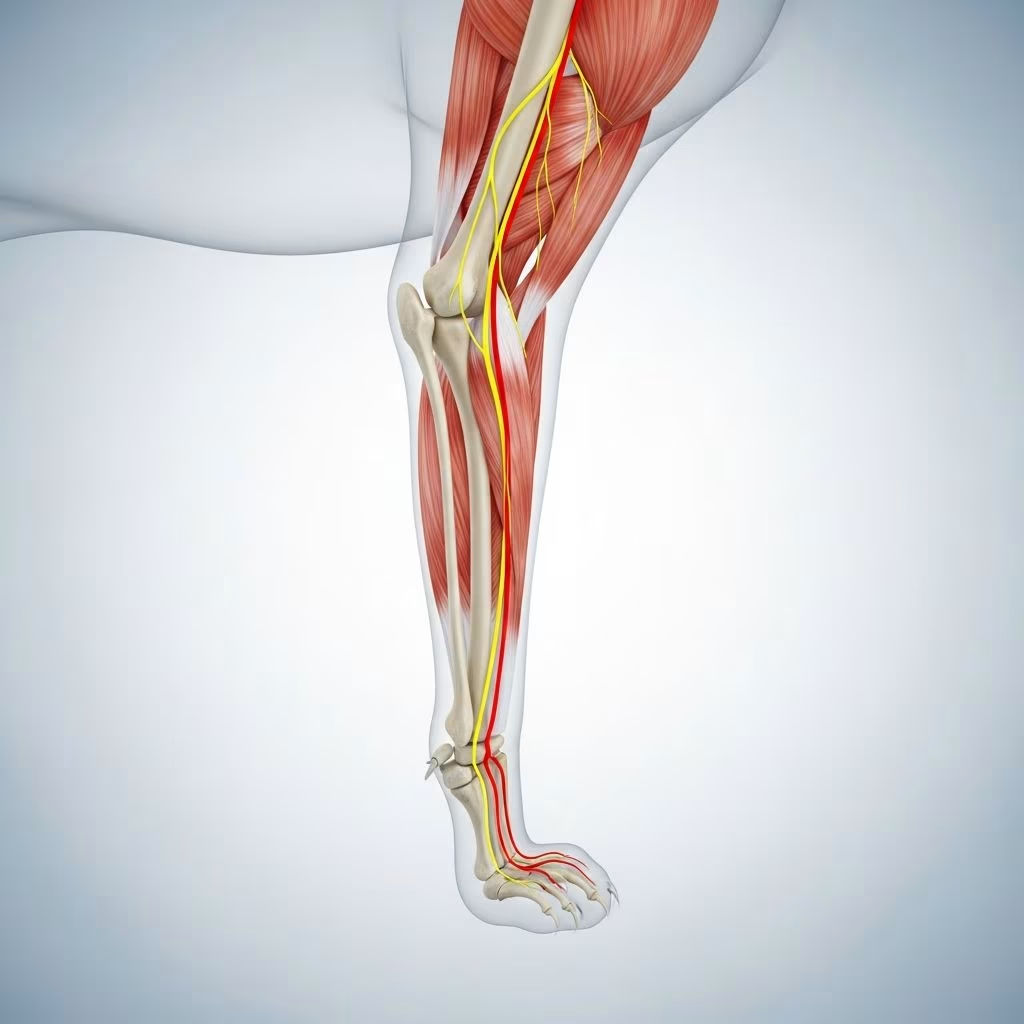
Radial nerve paralysis disrupts a cat’s front limb function, often due to trauma, leading to impaired mobility that requires prompt veterinary care and supportive therapies for potential recovery.
Understanding the Radial Nerve’s Role in Cats
The radial nerve originates from the brachial plexus in a cat’s shoulder region and extends down the front leg, innervating key extensor muscles essential for extending the elbow, wrist, and digits. This nerve enables weight-bearing, proper gait, and coordinated movement during jumping or running. Damage to it results in flaccid paralysis, where the limb loses tone and support, manifesting as an inability to extend the leg properly.
In felines, this nerve is particularly vulnerable during high-impact events because of its superficial path along the humerus and radius bones. Unlike dogs, cats experience this condition more frequently, especially strays involved in falls or vehicle strikes.
Recognizing Clinical Signs Early
Owners often first notice abnormalities in one front leg, rarely both, as the cat favors the unaffected limb. Key indicators include:
- A noticeably dropped elbow that sits lower than normal when the cat attempts to stand.
- Knuckling of the wrist or toes, causing the paw to drag and potentially leading to abrasions on the dorsal surface.
- Inability to bear weight, resulting in a flaccid, dragging limb.
- Muscle atrophy from disuse, visible as wasting in the shoulder and forearm over days to weeks.
- Possible self-inflicted wounds, swelling, or excessive vocalization if pain is present.
- Weak or absent reflexes in the affected limb during veterinary exams.
These signs typically appear acutely after trauma but can develop gradually if caused by compression from swelling or masses.
Primary Causes Behind the Condition
Trauma accounts for the majority of cases, including motor vehicle accidents, falls from heights, or fights with other animals that stretch or sever the nerve. In about 25% of feline cases, elbow involvement complicates the picture. Other etiologies include:
- Direct nerve transection or avulsion from fractures.
- Compression by tumors, hematomas, or abscesses.
- Rarely, infectious or inflammatory processes like tetanus.
Young stray cats are predisposed due to their exploratory nature and exposure to urban hazards.
Diagnostic Approaches for Confirmation
Veterinarians start with a thorough history and physical exam, noting the classic “radial posture”—a flexed elbow, wrist, and digits with no voluntary extension. Diagnostic tools escalate as needed:
| Method | Purpose | Details |
|---|---|---|
| Neurological Exam | Assess reflexes and sensation | Tests elbow extension, paw position sense; weak triceps reflex confirms radial involvement. |
| Radiographs (X-rays) | Rule out fractures | Multiple views of humerus, radius, ulna to detect bone injuries. |
| Advanced Imaging (MRI/CT) | Visualize nerve damage | Identifies swelling, severance, or masses; gold standard for soft tissue. |
| Electromyography (EMG) | Evaluate nerve conduction | Measures muscle electrical activity to grade injury severity. |
Differentiation from brachial plexus avulsion or spinal issues is crucial, as treatments vary.
Conservative Treatment Strategies
Most cases begin with non-surgical management focused on reducing inflammation, promoting nerve regeneration, and preventing secondary complications. Anti-inflammatory drugs like corticosteroids or NSAIDs alleviate swelling around the nerve, aiding recovery in stretch or compression injuries.
Strict crate rest prevents further damage—no jumping or running for weeks to months. Pain control ensures comfort, while environmental modifications like ramps reduce climbing risks.
Physiotherapy Protocols
Physical therapy is cornerstone, starting gently post-stabilization:
- Passive range-of-motion exercises: Flex and extend joints 5-10 minutes daily to maintain flexibility and circulation.
- Massage: Stimulate muscles to combat atrophy and improve blood flow.
- Supported walking: Use slings or towels to encourage weight-bearing without full strain.
Improvements often appear by 4 weeks; lack thereof prompts re-evaluation.
Adjunctive Therapies
Laser therapy (low-level light) reduces inflammation and accelerates nerve repair, with acupuncture showing promise in some practices. Tetanus cases require antibiotics and antitoxin alongside spasticity relief.
Surgical Interventions When Needed
Surgery targets severe cases like neurotmesis (complete severance), where natural healing fails. Options include:
- Nerve repair or grafting to reconnect fibers.
- Pancarpal arthrodesis: Fuses wrist bones for a stable “stilt leg,” allowing weight-bearing without extension. A modified “Dobro hrumvane” technique reports high success in 100 cases, with pain-free function and owner satisfaction.
- Amputation: Considered if no pain sensation, self-mutilation, or poor progress after 4-6 weeks. Cats adapt remarkably well indoors.
Post-op care mirrors conservative approaches, with plating for arthrodesis providing immediate stability.
Home Care Essentials for Affected Cats
Protect the limb from dragging-induced ulcers using soft boots or bandages, refreshed daily if tolerated. E-collars prevent chewing if sensation is lost, signaling amputation candidacy. Monitor for infection, and perform daily physio—owners trained by vets achieve best outcomes.
Nutrition supports healing: High-protein diets with omega-3s aid nerve repair. Indoor-only living post-recovery minimizes re-injury risks.
Prognosis Factors and Realistic Expectations
Recovery hinges on injury type:
- Neurapraxia/axonotmesis (mild-moderate): Good prognosis with 70-90% function return in 3-6 months via conservative care.
- Neurotmesis (severed): Poor without surgery; amputation often ultimate solution.
Elbow involvement worsens outlook, but arthrodesis yields functional limbs. Full recovery demands patience; persistent knuckling may persist lifelong.
Preventive Measures for Cat Owners
Minimize trauma risks: Supervise outdoor time, secure windows/ balconies, and use microchipping for strays. Regular wellness exams catch early neuropathies.
Frequently Asked Questions (FAQs)
Can radial nerve paralysis heal on its own in cats?
Yes, mild cases from stretch injuries often recover with rest and therapy in 1-6 months, but severed nerves require intervention.
How long until I see improvement?
Expect changes by 4 weeks; beyond that, discuss amputation or surgery.
Is amputation a good option for my cat?
Absolutely—most cats thrive on three legs, especially indoors, avoiding chronic pain.
What if both front legs are affected?
Rare; investigate bilateral brachial plexus or systemic issues urgently.
Does laser therapy really help?
Evidence supports reduced inflammation and faster healing in nerve injuries.
References
- Radial Nerve Paralysis in Cats: Signs, Causes & Treatment (Vet Answer) — Hepper. 2024. https://articles.hepper.com/radial-nerve-paralysis-in-cats-vet-answer/
- Radial Nerve Paralysis in Cats: Our Vet Explains Signs, Causes — Catster. 2024. https://www.catster.com/ask-the-vet/radial-nerve-paralysis-in-cats/
- A New Approach to Radial Nerve Palsy in Cats: Clinical Case Series Report — BAVOT. 2024. https://www.bavot.org/en/interesting-cases/a-new-approach-to-radial-nerve-palsy-in-cats-clinical-case-series-report-10
- Neurological Lameness in the Cat — Laurent Garosi, Journal of Feline Medicine & Surgery. 2012-01-01. https://journals.sagepub.com/doi/10.1177/1098612X11432830
- Leg Paralysis in Cats – Cat Owners — Merck Veterinary Manual. 2024. https://www.merckvetmanual.com/cat-owners/brain-spinal-cord-and-nerve-disorders-of-cats/leg-paralysis-in-cats



