

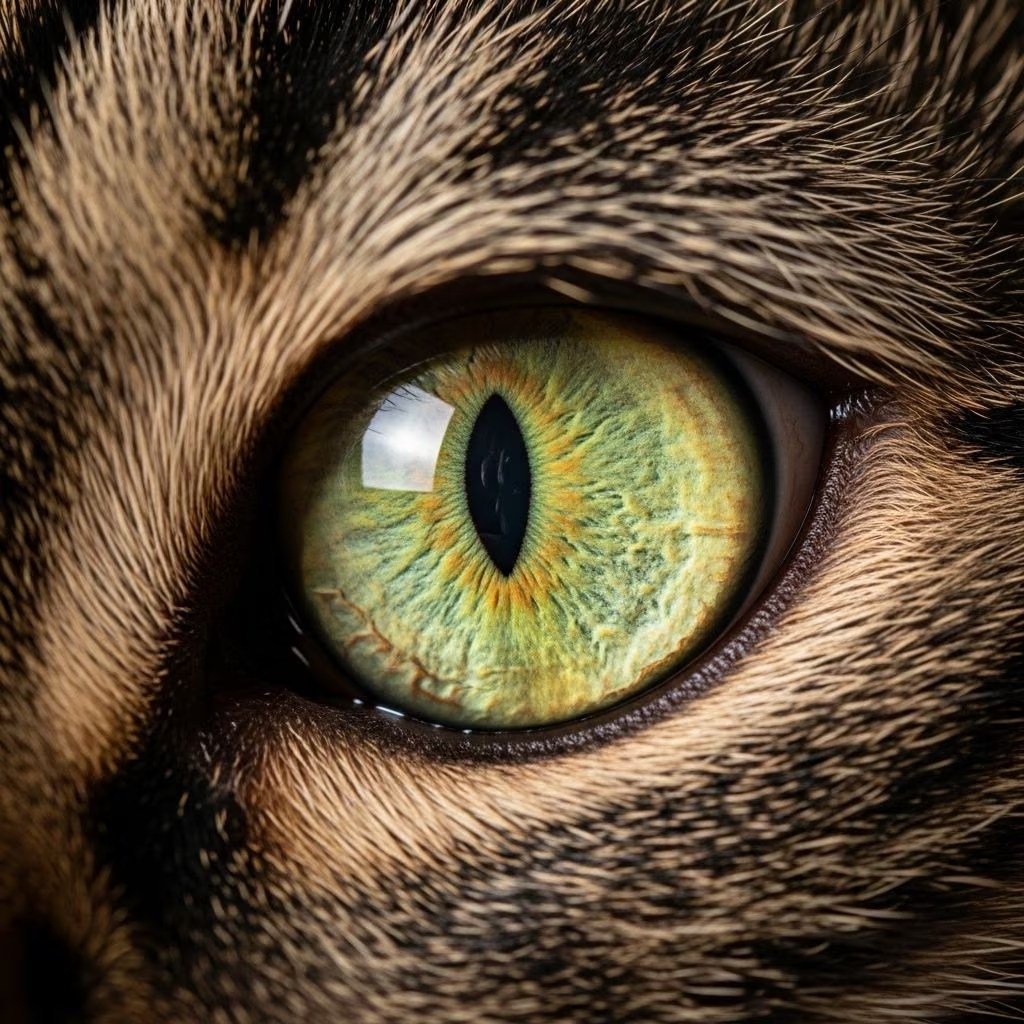
Cat pupils are among the most distinctive features of feline anatomy, and they operate quite differently from human eyes. Unlike the round pupils found in human vision, cats possess vertical slit-shaped pupils that can expand and contract with remarkable precision and speed. This specialized pupil structure represents millions of years of evolutionary adaptation, enabling cats to thrive as both hunters and survivors across diverse lighting conditions. Understanding how and why cat pupils function the way they do provides valuable insight into your cat’s health, emotional state, and sensory capabilities.
The Anatomy of Cat Pupils and Iris Structure
The pupil itself is the black opening in the center of the iris that regulates the amount of light entering the eye. In cats, this pupil is controlled by specialized circular muscles called the iris sphincter muscles, which contain skeletal muscle fibers that interlace to create a distinctive scissors-like action. This unique muscular arrangement allows feline pupils to achieve almost complete constriction, making them far more efficient at controlling light entry than round pupils.
The iris, which surrounds the pupil, is the circular colored area of the eye that contains these light-controlling muscles. When environmental conditions change, the iris automatically adjusts the pupil’s size in response. The colored portion of the iris can vary widely among individual cats, ranging from yellow and green to blue and orange, but its primary function remains light regulation regardless of color.
What makes cat pupils truly remarkable is their shape transformation. When dilated in low light or high emotional states, the pupil becomes nearly round. When constricted in bright light, it compresses into an almost imperceptible vertical slit. This dramatic shape-shifting capability gives cats extraordinary control over how much light reaches the photoreceptive structures at the back of their eyes.
How Light Influences Pupil Size and Function
The pupil’s primary responsibility is managing the quantity of light that penetrates into the eye’s interior chambers. This process, called pupillary response, is automatic and involuntary in cats just as it is in humans. When cats enter dark environments, their pupils dilate significantly to allow maximum light collection. Conversely, exposure to bright light triggers rapid pupil constriction to prevent excessive light from damaging the delicate photoreceptive cells within the retina.
The efficiency of this light-management system reflects feline evolutionary history. Cats are crepuscular animals, meaning they are most active during dawn and dusk when lighting conditions are intermediate. Over thousands of years, their visual system adapted to perform optimally during these transitional lighting periods. The vertical slit pupil design provides several advantages:
- Superior light sensitivity in dim conditions compared to round pupils
- Precise light control through rapid constriction in bright environments
- Enhanced depth perception and focus capabilities
- Better protection of the light-sensitive retina from photodamage
Additionally, cat eyes contain a special reflective layer called the tapetum lucidum, which sits behind the retina and reflects light back through the photoreceptive cells. This adaptation further enhances low-light vision, allowing cats to see effectively in conditions where humans would perceive only darkness.
Pupil Dilation Beyond Light Response
While light management represents the pupil’s primary function, cat pupils dilate and constrict for other important reasons as well. Emotional and psychological states profoundly influence pupil size, making the eyes a window into feline emotional conditions. When cats experience fear, stress, or high arousal, their pupils typically dilate substantially. This response occurs because stress hormones like adrenaline trigger changes throughout the sympathetic nervous system, including pupil enlargement.
Conversely, when cats feel content, relaxed, or sleepy, their pupils tend to constrict to smaller sizes. Observant cat owners often notice that a cat’s pupils gradually narrow as the animal drifts toward sleep, reflecting the combination of lowered alertness and decreased visual processing demands.
Pain and illness also influence pupil appearance. Cats experiencing discomfort may display abnormal pupil responses, such as pupils that remain excessively dilated despite bright lighting or pupils that fail to respond symmetrically to light changes. These abnormal responses warrant veterinary evaluation, as they may indicate underlying health issues affecting the nervous system or eye structures.
The Relationship Between Pupils and Hunting Behavior
The vertical slit pupil design offers distinct advantages for feline hunting prowess. The narrow slit configuration provides superior depth perception and enhanced ability to judge distance and speed, critical skills for a successful predator. The photoreceptor cells within the cat retina include specialized cone cells that assist in judging speed and distance, making cats exceptionally skilled at calculating the trajectory of moving prey.
During hunting sequences, cats rely heavily on pupil adjustments to maintain visual clarity as they track moving targets. The rapid pupil response allows cats to maintain appropriate light levels even as they move between sunny and shadowed areas in pursuit of prey. This constant fine-tuning of light entry enables sustained visual focus that human hunters cannot match without technological assistance.
Comparing Cat Pupils to Other Species
| Feature | Cat Pupils | Human Pupils | Dog Pupils |
|---|---|---|---|
| Shape when constricted | Vertical slit | Round | Round |
| Shape when dilated | Round to oval | Round | Round |
| Light sensitivity superiority | Excellent in dim light | Moderate | Good |
| Constriction capability | Nearly complete | Partial | Partial |
The distinctive vertical slit design makes cat pupils easily recognizable and functionally superior for their lifestyle. Cat corneas and pupils are larger proportionally compared to dog eyes, allowing even more light entry. This anatomical advantage contributes to cats’ legendary night vision capabilities and their status as superior low-light hunters.
The Role of the Retina in Processing Light
Once light passes through the pupil and lens, it must be processed by the retina, a light-sensitive tissue lining the back of the eye. The retina acts analogously to film in a camera, collecting light and information and transmitting this data to the brain through the optic nerve. The retina’s structure and composition directly influence how effectively the pupil’s light-gathering abilities translate into useful visual information.
The photoreceptor cells in the cat retina include both rod and cone varieties. Rod cells predominate in the feline retina and enable exceptional vision in low-light conditions. The cone cells, while fewer in number than in human retinas, provide color vision and superior motion detection capabilities. The most sensitive area of the cat retina is called the area centralis, which contains thousands of tightly packed photoreceptors that create sharp visual images.
Understanding Pupil Asymmetry and Health Concerns
Healthy cat pupils should respond symmetrically to light, meaning both pupils dilate and constrict at roughly the same rate and to similar degrees. When one pupil appears larger or smaller than its counterpart, or when pupils fail to respond equally to light exposure, this asymmetry may indicate neurological or ophthalmological problems requiring immediate veterinary attention.
Several health conditions can affect pupil appearance and function:
- Uveitis or other inflammatory eye conditions may cause abnormal pupil responses
- Neurological disorders can result in unequal pupil sizes
- Trauma or injury to the eye or surrounding structures may impair pupil function
- Certain medications or toxins can alter normal pupil responses
- Glaucoma may be associated with dilated, unresponsive pupils
Cat owners should monitor their pets’ pupils regularly and report any unusual changes to veterinary professionals promptly.
How Cats Use Pupil Changes to Communicate
Beyond their physiological functions, pupil changes serve as a form of nonverbal communication in feline behavior. Slowly closing and opening eyes accompanied by narrow pupils indicates feline affection and trust, often described as a “cat kiss.” Conversely, widely dilated pupils combined with a direct stare may signal aggression, fear, or high arousal depending on contextual body language.
During play sessions, hunting sequences, or competitive interactions with other cats, pupils often dilate markedly, reflecting heightened excitement and activation of the sympathetic nervous system. Observant cat owners can use pupil cues alongside ear position, tail movement, and body posture to better understand their cat’s emotional and motivational state.
Frequently Asked Questions About Cat Pupils
Why do cat pupils look like slits?
The vertical slit shape provides superior light control and enhanced hunting capabilities. This shape allows nearly complete constriction in bright light while enabling rapid dilation in dim conditions.
Do all cats have the same pupil shape?
All domestic cats share the characteristic vertical slit pupil when constricted, though individual variation exists in how wide the slits can open and how quickly the response occurs.
What do dilated pupils indicate in cats?
Dilated pupils may reflect low light conditions, emotional arousal, fear, pain, play excitement, or certain medical conditions. Context and observation of other body language help clarify the cause.
Should I be concerned about unequal pupil sizes?
Yes, significant asymmetry in pupil size or responsiveness warrants veterinary evaluation, as it may indicate neurological or ophthalmological problems.
Can cat pupils change color?
The iris color remains constant throughout a cat’s life, though it may appear to shift slightly depending on lighting conditions and the cat’s emotional state.
References
- Structure and Function of the Eyes in Cats — PetPlace.com. https://www.petplace.com/article/cats/pet-health/structure-and-function-of-the-eyes-in-cats
- Eye Structure and Function in Cats — My Lovely Feline. https://mylovelyfeline.com/blogs/content/eye-structure-and-function-in-cats
- Eye Structure and Function in Cats – Merck Veterinary Manual — Merck & Co., Inc. https://www.merckvetmanual.com/cat-owners/eye-disorders-of-cats/eye-structure-and-function-in-cats
- Feline Ophthalmology Part 1: Examination of the Eye — EyeVet.ie. https://www.eyevet.ie/wp-content/uploads/2009/02/feline-ophthalmology-part-12.pdf
- The World Through the Feline Eyes — BasePaws. https://basepaws.com/blog/the-world-through-the-feline-eyes



