
Feline Peripheral Nerve Issues: Diagnosis And Care Guide
Comprehensive guide to recognizing, diagnosing, and managing peripheral nerve disorders in cats for better feline wellness.
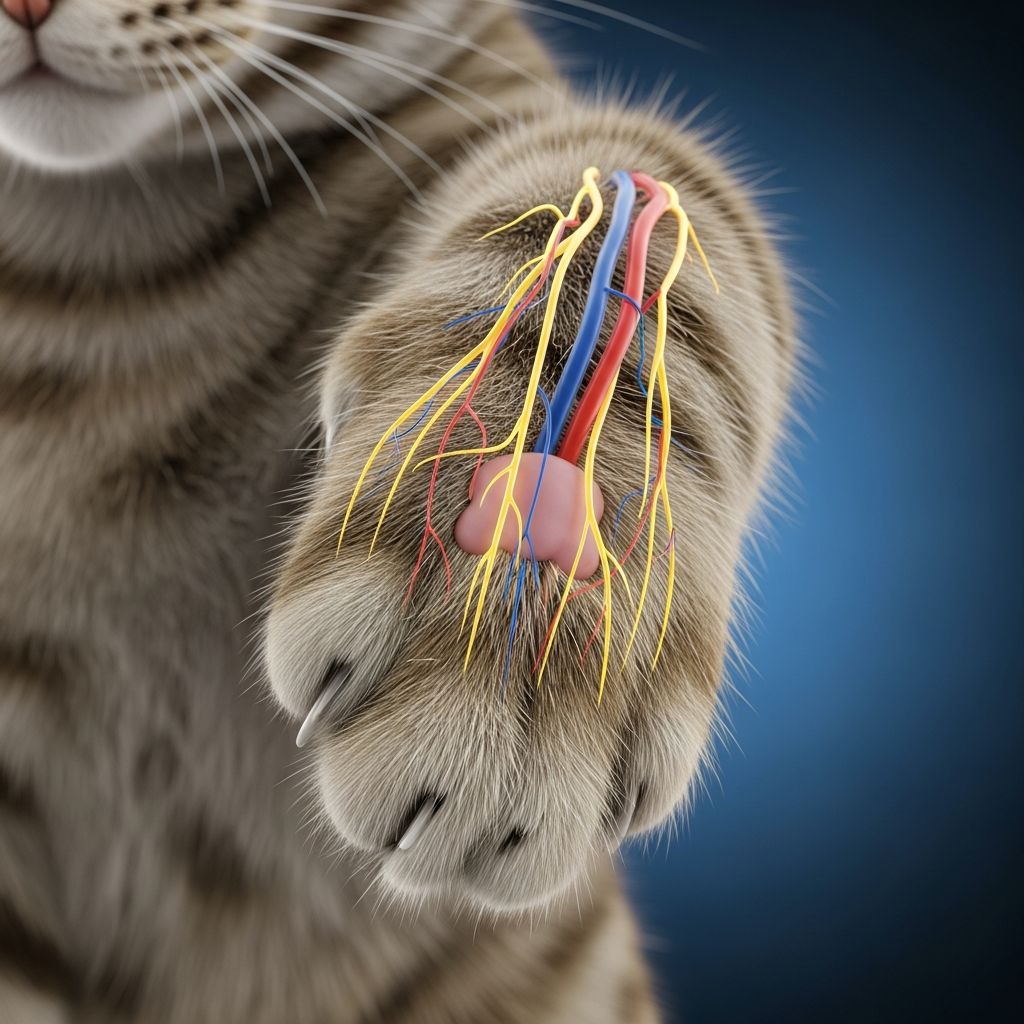
Peripheral nerve disorders in cats involve damage or dysfunction to the nerves outside the brain and spinal cord, leading to a variety of mobility and sensory challenges. These conditions can arise from inflammation, trauma, toxins, or metabolic issues, affecting a cat’s ability to walk, feel sensations, or regulate bodily functions. Early detection through observant pet ownership and veterinary intervention plays a key role in improving outcomes, often involving supportive therapies to restore function and prevent further deterioration.
Understanding the Feline Nervous System Basics
The peripheral nervous system in cats comprises nerves that connect the central nervous system to muscles, skin, and organs. It splits into somatic nerves for voluntary movements and sensory input, and autonomic nerves for involuntary processes like heart rate and digestion. When these nerves suffer damage, cats may display subtle initial signs that progress to severe impairments if untreated. Unlike central nervous system issues, peripheral problems often spare coordination but impair strength and reflexes.
Common Clinical Manifestations
Cats with peripheral nerve issues typically show lower motor neuron signs, characterized by flaccid paralysis, reduced reflexes, and muscle wasting. Owners might first notice dragging limbs, reluctance to jump, or unusual postures. Sensory changes include diminished pain response or exaggerated reactions to touch, while autonomic dysfunction manifests as dry mucous membranes or irregular heart rhythms.
- Motor deficits: Weakness starting in hind legs, progressing to all limbs; plantigrade stance where paws flatten abnormally.
- Sensory losses: Insensitivity to stimuli, leading to injuries from unnoticed trauma.
- Autonomic signs: Dry eyes causing corneal ulcers, constipation, or urinary retention.
- Muscle-related changes: Tremors, atrophy, or firm painful muscles in acute cases.
Primary Causes and Risk Factors
These disorders stem from diverse origins. Inflammatory processes, such as polyradiculoneuritis, mimic human Guillain-Barré syndrome with immune-mediated nerve root attacks. Metabolic disturbances like diabetes or hyperlipidemia contribute by impairing nerve health over time. Toxins from chemotherapy or certain plants damage nerve fibers directly. Genetic predispositions affect breeds like Burmese cats with hypokalemic myopathy, while infections or neoplasia indirectly provoke neuropathy.
| Cause Category | Examples | Common Impact |
|---|---|---|
| Inflammatory/Immune | Polyradiculoneuritis, chronic demyelinating polyneuropathy | Acute weakness, potential recovery |
| Metabolic | Diabetes, hyperchylomicronemia | Progressive sensory-motor loss |
| Traumatic/Toxic | Injury, chemotherapy | Localized or generalized deficits |
| Neoplastic/Idiopathic | Tumors, dysautonomia | Autonomic failure, poor prognosis |
Diagnostic Approaches for Accurate Identification
Veterinarians start with a detailed history and neurological exam, assessing gait, reflexes, and cranial nerves. Blood work screens for metabolic culprits like elevated glucose or lipids, while urinalysis rules out infections. Advanced imaging via MRI or CT reveals structural issues, and cerebrospinal fluid taps detect inflammation through elevated proteins. Electrodiagnostics measure nerve conduction speeds, and muscle/nerve biopsies confirm pathology like demyelination or inflammation. In myasthenia gravis cases, antibody tests or Tensilon trials provide definitive clues.
- Initial physical and neurological evaluation.
- Laboratory panels: CBC, chemistry, electrolytes.
- Imaging: Radiographs, MRI/CT for masses or inflammation.
- Specialized tests: EMG, CSF analysis, biopsies.
Treatment Strategies Tailored to the Condition
Management focuses on addressing root causes where possible, alongside symptom relief. For inflammatory neuropathies, corticosteroids reduce swelling, and immunosuppressants manage chronic cases. Metabolic disorders demand dietary tweaks, like low-fat feeds for hyperlipidemia, or insulin for diabetes. Supportive care includes hospitalization for severe autonomic instability to monitor respiration and hydration. Physiotherapy rebuilds muscle memory through targeted exercises, massages, and even acupuncture.
- Medications: Anti-inflammatories, anticonvulsants for pain, anticholinesterases for myasthenia.
- Rehabilitation: Passive range-of-motion, hydrotherapy to prevent contractures.
- Nutritional support: Enteral feeding, potassium supplements for hypokalemia.
- Surgical options: Rare, for compressive lesions or tumors.
In acute polyradiculoneuritis, many cats recover fully within weeks using supportive measures alone, though monitoring for respiratory compromise is critical. Chronic conditions may require lifelong therapy with variable success.
Long-Term Care and Home Management
Post-diagnosis, home adaptations enhance safety: ramps for furniture, padded flooring to avert injuries, and litter box modifications for mobility-challenged cats. Regular vet check-ups track progression, adjusting treatments as needed. Owners should watch for relapse signs like renewed weakness or dehydration. Breeding affected cats, especially congenital cases, is discouraged to avoid hereditary transmission. Physiotherapy at home, guided by professionals, sustains gains and boosts life quality.
Prognostic Outlook Across Conditions
Outcomes vary widely. Acute inflammatory neuropathies often resolve favorably, with over 80% of cats regaining function. Metabolic neuropathies stabilize with control of the primary disease but may persist. Dysautonomia carries a grave prognosis, with survival beyond months rare due to complications. Idiopathic cases challenge prediction, as some stabilize spontaneously while others decline. Early intervention consistently correlates with better results, emphasizing prompt veterinary consultation.
| Condition | Prognosis | Key Factors |
|---|---|---|
| Polyradiculoneuritis | Good (2-6 weeks recovery) | Supportive care, no relapse usually |
| Dysautonomia | Poor | Autonomic failure leads to complications |
| Diabetic Neuropathy | Guarded | Glucose management essential |
| Myasthenia Gravis | Fair | Medication responsive, aspiration risk |
Prevention Tips for Cat Owners
Minimize risks by maintaining ideal weight to avert diabetes, using toxin-free environments, and scheduling routine wellness exams. Vaccinations curb infections that could trigger neuropathy. For at-risk breeds, genetic screening informs breeding decisions. Prompt treatment of underlying illnesses like hyperthyroidism prevents secondary nerve damage. Educated owners spot early gait changes, facilitating timely intervention.
Frequently Asked Questions
Can peripheral nerve issues in cats be cured completely?
Some acute forms resolve fully, but many require ongoing management as nerves regenerate slowly or not at all. Success hinges on the cause and speed of treatment.
What home remedies help a cat with neuropathy?
Avoid unproven remedies; focus on vet-recommended physiotherapy, soft bedding, and assisted feeding. Never administer human medications without guidance.
Is neuropathy painful for cats?
Yes, often involving neuropathic pain; analgesics and gabapentinoids provide relief under veterinary supervision.
How do I know if my cat’s weakness is neurological?
Flaccid limbs, absent reflexes, and normal awareness distinguish it from orthopedic or central issues—consult a vet for confirmation.
Are certain cat breeds more prone?
Burmese cats face hypokalemic risks, and some lines show inherited myasthenia, but most cases are sporadic.
Emerging Research and Future Directions
Ongoing studies explore immunomodulatory therapies and nerve growth factors for regeneration. Stem cell applications show promise in animal models, potentially revolutionizing chronic cases. Genetic research identifies markers for hereditary forms, aiding prevention. Owners benefit from staying informed via reputable veterinary sources.
References
- Neuromuscular Disorders in the Cat: Clinical Approach to Weakness — PMC/NCBI. 2024. https://pmc.ncbi.nlm.nih.gov/articles/PMC10911292/
- Nerve Disorder Affecting Multiple Nerves in Cats — PetMD. 2023-01-15. https://www.petmd.com/cat/conditions/neurological/c_ct_peripheral_neuropathies
- Diagnosing Cat Neurological Disorder and Treatment Options — Yalesville Veterinary Hospital. 2024. https://yalesvillevet.com/blog/diagnosing-cat-neurological-disorder-and-treatment-options/
- Peripheral Neuropathies in Cats (Felis) — Vetlexicon. 2025. https://www.vetlexicon.com/felis/neurology/articles/peripheral-neuropathies/
- Neurological Disorders — Cornell University College of Veterinary Medicine. 2023. https://www.vet.cornell.edu/departments-centers-and-institutes/cornell-feline-health-center/health-information/feline-health-topics/neurological-disorders
Similar Articles








Read full bio of medha deb




