

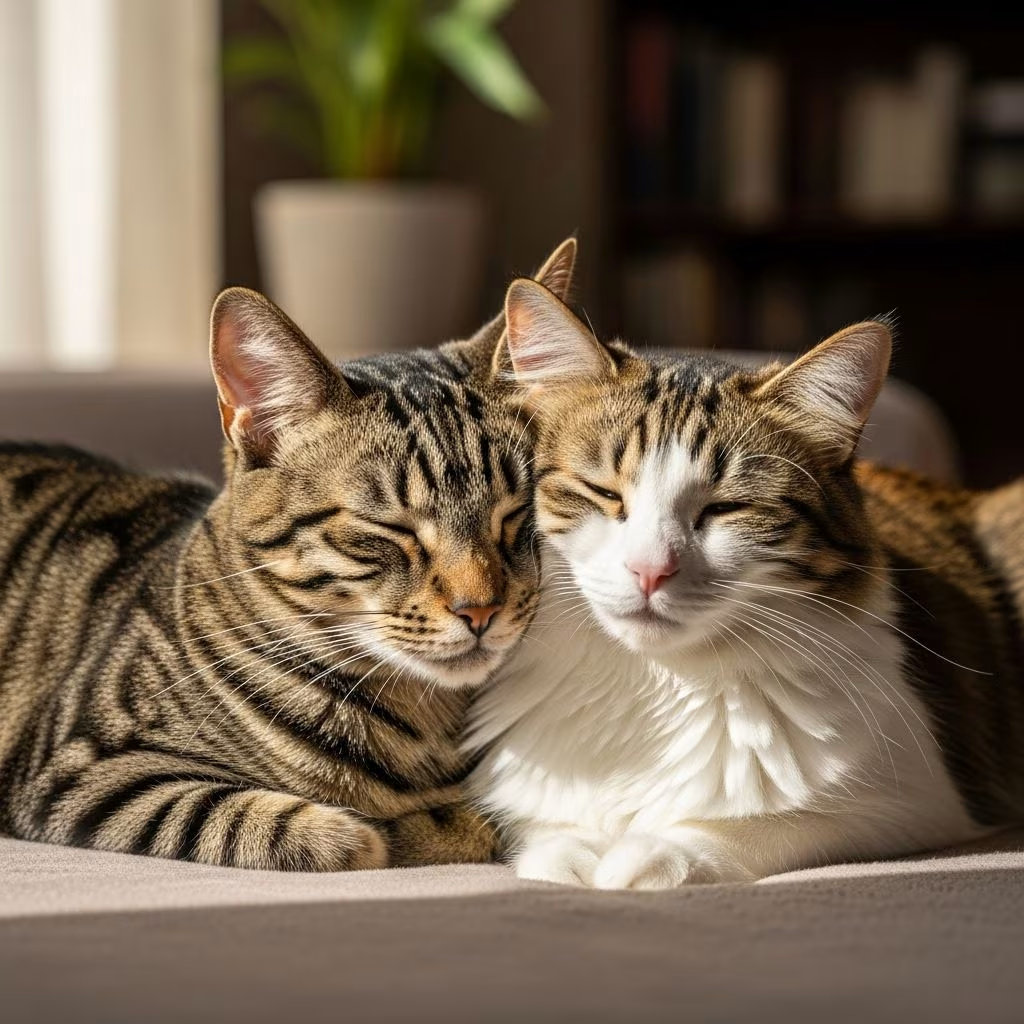
Many cat owners wonder whether their feline companions have developed a genuine emotional connection with each other or simply tolerate sharing the same living space. The distinction matters significantly for the overall wellbeing and care of your pets. Cats that form authentic bonds with one another experience measurable benefits to their mental and physical health, while those merely coexisting may have entirely different behavioral needs and social requirements.
The Nature of Feline Bonding
Feline bonding represents a meaningful emotional attachment between two cats that transcends basic cohabitation. Unlike animals that merely share territorial space without emotional investment, bonded cats develop interdependent relationships where each animal’s wellbeing directly influences the other’s state of mind and behavior.
These connections can develop through multiple pathways. Littermates who remain together from infancy frequently establish bonds that persist throughout their lives. Similarly, parent-offspring relationships sometimes endure and deepen into genuine partnerships rather than fading as the younger cat matures. Perhaps most interestingly, completely unrelated adult cats can also forge meaningful connections when circumstances allow them to interact positively over extended periods.
The timing of bonding carries important implications for cat owners. While feline bonds most commonly emerge during kittenhood when cats are still developing their social preferences, evidence suggests that adult cats retain the capacity to form attachments to one another. Some animal shelters explicitly recognize the importance of these connections by adopting bonded pairs together, understanding that separating established companions can cause emotional distress.
Physical Affection as Communication of Connection
The most observable indicators of feline bonding manifest through various forms of physical affection and interaction. These behaviors serve dual purposes: they reinforce the emotional bond while simultaneously communicating comfort and trust between the animals.
Synchronized Rest and Sleeping Arrangements
One of the most reliable indicators of genuine bonding involves how your cats approach rest periods. Cats are remarkably selective about their sleeping arrangements and sleeping partners. Sleep represents a vulnerable state for felines, leaving them exposed to potential threats. Consequently, cats only choose to sleep near those they trust completely.
When bonded cats consistently arrange themselves for rest in close proximity—whether cuddled together, intertwined, or sleeping while touching—this demonstrates profound trust and emotional security. The willingness to remain vulnerable alongside another cat signals an established sense of safety and acceptance. In contrast, cats that merely tolerate one another typically maintain physical distance during rest periods, keeping themselves in defensive postures even when sleeping.
Scent Exchange Through Physical Contact
Cats possess scent glands distributed across their bodies, including facial regions and paws. When bonded cats rub their bodies or faces against one another, they actively exchange scent information that serves multiple communication functions. This scent exchange creates a shared identity and communicates familiarity, comfort, and acceptance to the recipient cat.
Intertwining tails represents another variation of this scent-marking behavior, particularly significant because the tail contains concentrated scent glands. Bonded cats frequently engage in this tail interaction during greeting sequences or when reestablishing connection after brief separations.
Mutual Grooming and Allogrooming
The practice of cats grooming one another—technically termed allogrooming—constitutes one of the most meaningful expressions of feline bonding. This behavior extends beyond simple hygiene maintenance; it represents active caregiving and emotional attachment. Bonded cats particularly focus their grooming attention on difficult-to-reach areas such as ears, neck, and head regions where an individual cat cannot groom itself effectively.
The intimacy of grooming one another’s faces carries particular significance. This behavior occurs exclusively between cats with established trust and emotional connection, never appearing between cats that merely tolerate one another. When you observe one cat carefully licking the face and head of its feline companion, you are witnessing a profound expression of affection and bonding.
Behavioral Patterns That Reveal Emotional Attachment
Beyond physical interactions, the broader behavioral patterns of bonded cats reveal their emotional interdependence and the depth of their connection.
Separation Response and Reunion Behavior
Genuinely bonded cats exhibit observable distress when separated from their companions, even during brief separations. One cat might vocalize excessively, pace the house searching for its partner, or temporarily refuse food while the other cat is absent—such as during veterinary appointments. These behavioral responses demonstrate that the cat’s emotional state is directly tied to the presence or absence of its bonded companion.
Equally revealing is how bonded cats behave upon reunion. When separated cats are reunited, the behavioral response differs markedly from mere recognition. Bonded pairs frequently engage in immediate grooming sessions, enthusiastic play, or synchronized movement—behaviors that reinforce their connection and confirm the restoration of their partnership.
Coordinated Activity and Behavioral Synchrony
Bonded cats frequently mirror each other’s activities throughout the day, moving in coordinated patterns through shared territory. This synchronization extends beyond simple imitation; it represents genuine behavioral coordination where the presence and actions of one cat directly influence the other’s choices and timing.
These coordinated responses include synchronized responses to environmental changes, such as both cats becoming alert to the same sound or both approaching a window simultaneously. This behavioral harmony suggests integrated attention and shared interest in their environment.
Resource Sharing Without Competition
While separate feeding stations remain recommended for hygiene and individual dietary monitoring, bonded cats naturally share space around food and water resources without territorial disputes or resource guarding behaviors. This represents a marked departure from the typical feline tendency toward resource protection and territoriality.
The willingness to share space—and implicitly trust that adequate resources will be available—reflects the secure foundation established through bonding. Cats that merely tolerate one another typically maintain tense spacing around resources and may exhibit guarding behaviors even when food is abundant.
Interactive Play and Physical Engagement
The nature and character of play between bonded cats differs fundamentally from the avoidance or aggression displayed by cats that do not share emotional connections.
Bonded cats typically engage in frequent, enthusiastic play sessions characterized by chase sequences, wrestling moves, and play that involves vulnerability—such as rolling onto their backs and exposing their bellies. These positions leave them physically exposed and unable to defend themselves effectively, demonstrating the trust that underlies their bond.
The aggression level during bonded cat play remains fundamentally different from actual conflict. Play-fighting appears energetic and involves physical contact, but lacks the intent to cause harm and includes natural pauses for reconnection and grooming. True aggression between cats shows signs of fear, actual injury, or sustained attempts to separate with prolonged hissing or swatting.
Vocal Communication and Specialized Interaction Patterns
Bonded cats frequently develop unique vocalization patterns and specialized communication styles that distinguish their interaction from the typical responses cats direct toward unfamiliar or merely-tolerated companions. These vocal exchanges might include meowing back and forth in apparent conversation, chirping at one another, or other distinctive sounds that seem reserved specifically for their bonded partner.
These specialized vocalizations suggest that bonded cats have established communication frameworks specific to their relationship. The presence of reciprocal vocalizations—where one cat initiates vocal contact and the other responds—indicates active engagement and emotional attunement between companions.
Distinguishing Bonded Pairs from Cats That Merely Coexist
Understanding the distinction between genuine bonding and simple tolerance proves essential for appropriate pet care and expectations. The differences manifest across multiple behavioral dimensions:
| Behavioral Characteristic | Bonded Cats | Tolerant but Unbonded Cats |
|---|---|---|
| Sleeping Arrangement | Consistently touch or intertwine during rest | Maintain physical distance while sleeping |
| Mutual Grooming | Regular grooming focus on face and head areas | Minimal or absent mutual grooming |
| Play Interaction | Frequent, enthusiastic play with reciprocal engagement | Avoidance or minimal play interaction |
| Separation Response | Visible distress, vocalization, behavior changes | No apparent behavioral response to separation |
| Resource Sharing | Share space around food and water without tension | Maintain territorial spacing around resources |
| Scent Exchange | Frequent face rubbing and tail intertwining | Minimal or absent scent exchange behavior |
The Health and Wellness Benefits of Feline Bonding
Cats that share genuine bonds experience measurable improvements in mental and physical wellbeing. These connections reduce boredom and anxiety by providing constant companionship and interactive engagement. Bonded cats experience lower stress levels when provided with appropriate enrichment, and the presence of a trusted companion can buffer against anxiety-related behavioral issues.
The mutual grooming behavior inherent to bonded relationships also contributes to physical health maintenance, with each cat assisting the other in maintaining coat condition and cleanliness in areas difficult for individual grooming.
Frequently Asked Questions About Feline Bonding
Can adult cats form bonds with one another?
Yes, while bonds most commonly emerge during kittenhood, adult cats retain the capacity to develop meaningful attachments to one another when circumstances support positive interaction over extended periods. The process may develop more gradually than with kittens, but genuine bonding can occur at any life stage.
What should I do if my bonded cats must be separated temporarily?
Anticipate behavioral changes including vocalization, altered appetite, and pacing. Keep the separation duration as brief as possible and prepare the environment to provide comfort—such as familiar bedding or increased attention—to ease the separation stress. Reunite the cats promptly and allow them space to reestablish their connection through grooming and play.
How long does it take for cats to develop a bond?
Bonding timelines vary considerably depending on the cats’ ages, personalities, and previous social experiences. Kittens may establish bonds within weeks of consistent positive interaction, while adult cats may require months of gradual introduction and cohabitation before genuine bonding emerges.
Is it ever too late to help unbonded cats develop a connection?
While bonding becomes progressively less likely as cats age, it remains possible to facilitate positive interactions between adult cats. Gradual introduction protocols, shared positive experiences, and patient environmental management can sometimes encourage bonds even between mature cats who initially showed no connection.
What if my cats show no signs of bonding?
If your cats display no bonding indicators but coexist without aggression or conflict, they may simply be cats with independent personalities who are content sharing territory without emotional attachment. This situation is entirely normal and acceptable; some cats prefer solitary existence and do not require feline companionship for wellbeing.
References
- Are Your Cats Bonded? Here’s How to Tell — TheCatSite. Accessed January 2026. https://thecatsite.com/c/how-to-tell-if-cats-are-bonded/
- Bonded Cats Guide: Signs, Care & Wellness Tips — BestLife4Pets. Accessed January 2026. https://www.bestlife4pets.com/blogs/pet-blog-tips/bonded-cats
- How to Tell if Your Cats Are a Bonded Pair — Wired Whisker. Accessed January 2026. https://www.wiredwhisker.com/blog/how-to-tell-if-your-cats-are-a-bonded-pair



