

Pain management is a critical component of veterinary care, particularly following surgical procedures or traumatic injuries. For cats, buprenorphine has emerged as a cornerstone medication in the analgesic toolkit, offering veterinarians reliable options to ensure their feline patients experience minimal discomfort during recovery. Understanding how this medication works, its various formulations, and proper administration methods can help pet owners and veterinary professionals make informed decisions about postoperative care.
Understanding Buprenorphine: Mechanism and Classification
Buprenorphine belongs to a class of medications known as opioid partial agonists. Unlike full opioid agonists, partial agonists provide pain relief while maintaining a ceiling effect that reduces the risk of excessive respiratory depression at higher doses. The medication functions by binding to opioid receptors located throughout the central nervous system, specifically in the brain and spinal cord. By modulating these pain-signaling pathways, buprenorphine effectively diminishes a cat’s perception of pain without causing complete sedation or the severe side effects associated with stronger opioids.
As a controlled substance regulated by the FDA, buprenorphine requires careful handling and documentation. Veterinarians must maintain detailed records of its use and storage, and pet owners prescribed this medication for home use must understand their responsibility in keeping it secure and administering it precisely as directed.
FDA-Approved Formulations for Cats
The FDA has approved two primary formulations of buprenorphine specifically designed for feline pain management. Each offers distinct advantages depending on the clinical situation and veterinary preference.
Simbadol: Injectable High-Concentration Formulation
Simbadol represents a high-dose injectable buprenorphine product administered through subcutaneous injection. This formulation provides extended pain relief lasting approximately 24 hours, with the ability to administer doses once daily for up to three consecutive days. The injectable format allows for precise dosing and immediate onset of action, making it suitable for acute pain management in the immediate postoperative period. Veterinarians appreciate this option for its reliability and the reduced burden on pet owners who would otherwise need to manage multiple daily injections at home.
Zorbium: Transdermal Solution Innovation
Zorbium represents a significant advancement in feline pain management technology. This transdermal buprenorphine solution represents the first FDA-approved topical application of buprenorphine designed specifically for cats. Applied directly to the skin at the base of the neck, Zorbium is rapidly absorbed into the dermal layers and provides continuous pain relief for four days from a single application. The medication becomes effective within one to two hours of application and maintains consistent analgesia throughout the duration.
The transdermal approach offers substantial practical advantages. Because Zorbium is administered exclusively in the veterinary hospital setting by trained professionals, it eliminates the need for pet owners to handle potent opioids or manage repeat injections at home. This reduces stress for both the animal and the owner during the critical early recovery period and minimizes risks associated with medication mishandling or accidental exposure.
Off-Label Buprenorphine Formulations
Beyond FDA-approved products, veterinarians commonly prescribe buprenorphine in other formulations for feline patients, particularly for home-based pain management. These off-label uses are standard in veterinary practice and represent evidence-based approaches to pain control.
Oral and Transmucal Administration
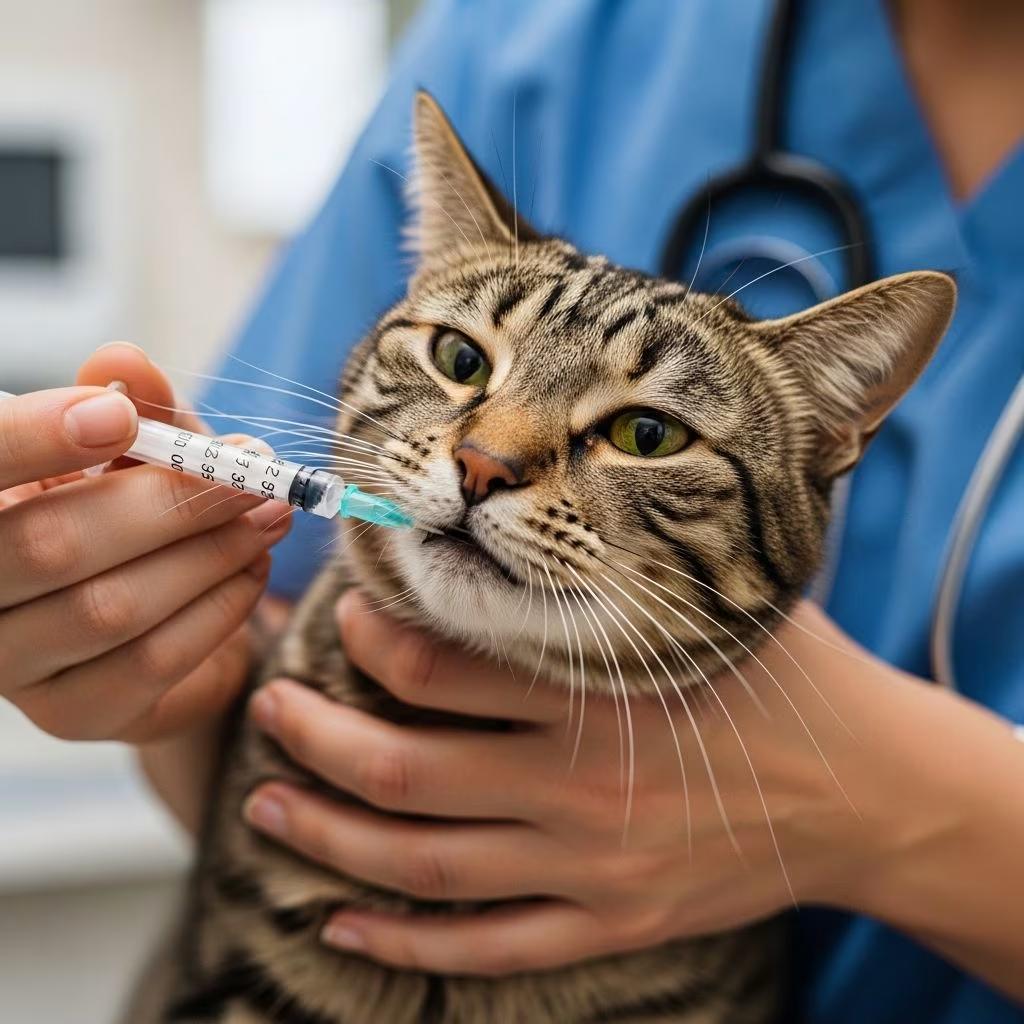
Injectable buprenorphine solutions are frequently adapted for oral administration at home, typically applied to the gums or mucous membranes inside the cheek. This transmucal or buccal route delivers the medication directly through the oral tissues, bypassing the gastrointestinal system and achieving more predictable absorption. Pet owners administer small, precisely measured doses using a syringe, placing the liquid either in the cheek pouch or under the tongue where it absorbs rapidly.
The buccal route proves particularly valuable for managing mild to moderate pain associated with infection-related inflammation, tissue trauma, muscle spasms, and other pathological conditions. Doses typically range from 0.01 to 0.04 milligrams per kilogram, administered every eight to twelve hours depending on the clinical assessment and individual patient response.
Injectable Formulations for Home Care
Standard buprenorphine injectable solutions can be prescribed for intramuscular or intravenous administration at home, though this requires owner competency and comfort with injection techniques. Doses for acute pain management typically range from 0.02 to 0.04 milligrams per kilogram, administered intramuscularly or intravenously every eight to twelve hours. Maintenance doses for ongoing pain control generally fall between 0.01 and 0.04 milligrams per kilogram using the same frequency.
Clinical Applications and Pain Management Scenarios
Buprenorphine addresses several distinct pain management needs in feline patients. The primary indications include:
- Postoperative Pain: Following elective surgical procedures, buprenorphine provides reliable analgesia during the critical early recovery period when pain is most acute and management is most important for proper healing.
- Traumatic Injury Recovery: Cats suffering from accidents, falls, or other traumatic injuries benefit from buprenorphine’s pain-relieving properties during tissue healing phases.
- Chronic Pain Conditions: Cats with ongoing pain from conditions like osteoarthritis, tissue inflammation from infection, or other chronic pathological processes may receive buprenorphine as part of long-term pain management strategies.
- Pre-Anesthetic Medication: Veterinarians often include buprenorphine in the pre-operative medication protocol, preparing the nervous system for surgery and potentially reducing the required anesthetic doses.
- Post-Traumatic Stress and Recovery: Beyond purely analgesic effects, buprenorphine may help cats remain calmer during recovery, promoting better rest and healing outcomes.
Administration Guidelines and Clinical Dosing
Proper administration of buprenorphine requires understanding each formulation’s specific route and dose parameters. Veterinarians tailor dosing based on the cat’s weight, the specific clinical situation, the formulation being used, and individual patient factors.
| Formulation | Route | Typical Dose | Duration | Setting |
|---|---|---|---|---|
| Zorbium | Transdermal | Single application | 4 days | Veterinary hospital only |
| Simbadol | Subcutaneous injection | Once daily | 24 hours per dose | Veterinary clinic |
| Injectable (standard) | Intramuscular or intravenous | 0.02–0.04 mg/kg acute; 0.01–0.04 mg/kg maintenance | 8–12 hours | Clinic or home |
| Buccal/oral solution | Applied to gums or cheek pouch | 0.01–0.04 mg/kg | 8–12 hours | Home administration |
Pet owners administering buprenorphine at home must understand the importance of precise dosing. The medication potency means that even small volume variations can affect efficacy. Veterinarians often pre-draw syringes with exact doses to eliminate measurement errors and ensure consistency. If a cat appears excessively sedated or drowsy during treatment, owners should contact their veterinarian before the next scheduled dose, as dose reduction may be appropriate for that individual patient.
Managing Side Effects and Adverse Reactions
While buprenorphine is generally well-tolerated in cats, understanding potential side effects helps owners and veterinarians monitor for adverse reactions and distinguish normal responses from concerning developments.
Common and Expected Reactions
The most frequently observed side effect following buprenorphine administration is mild sedation, which typically manifests as drowsiness or reduced activity levels. This generally resolves within hours as the medication distributes and the initial peak concentration diminishes. Some cats experience the opposite reaction, exhibiting hyperactivity, restlessness, or agitation—a phenomenon sometimes referred to as dysphoria. Interestingly, some cats become more affectionate than usual, following owners around more closely than typical.
Temperature dysregulation appears commonly, with some cats developing elevated body temperature, particularly those receiving Zorbium. Gastrointestinal effects including vomiting may occur, though this is not universal. Mild pupil dilation represents another recognized effect without necessarily indicating a problem.
Less Common but Important Side Effects
Constipation can develop, particularly with prolonged use, as opioids slow gastrointestinal motility. If a cat does not defecate normally during buprenorphine treatment, veterinarians may recommend dietary modifications or additional support. Changes in behavior, including unusual aggression or anxiety, warrant veterinary attention. In rare cases, cats may develop slowed breathing rates, a potentially serious complication requiring immediate veterinary evaluation and medication discontinuation.
Safety Considerations and Special Populations
Certain patient populations require special attention when considering buprenorphine therapy. Cats with respiratory compromise, severe liver or kidney disease, or pre-existing cardiovascular instability may face increased risks and require dose adjustments or alternative pain management strategies. Pregnant or nursing cats require special consideration, as opioids can cross placental and mammary barriers.
Controlled substance regulations mean that buprenorphine intended for home use must be stored securely, away from children and other household members. Pet owners have a legal and ethical responsibility to prevent unauthorized access and to dispose of unused medication properly according to veterinary or pharmacist guidance.
Clinical Effectiveness and Research Support
The FDA approval of Zorbium was based on clinical research demonstrating superior pain control compared to placebo in the immediate postoperative period. Studies evaluating buprenorphine’s effectiveness in diverse feline populations support its continued use as a standard analgesic agent. Multiple veterinary institutions and pain management specialists recognize buprenorphine as a cornerstone medication for feline analgesia, with decades of clinical experience supporting its safety and efficacy when appropriately administered.
Choosing the Right Buprenorphine Option
Veterinarians select among buprenorphine formulations based on clinical context, patient factors, and owner capabilities. For immediate postoperative pain in surgical patients, Zorbium offers convenience and eliminates home administration burden. For cats requiring injections, Simbadol’s once-daily dosing improves compliance. For home-based chronic pain management, buccal solutions provide a non-invasive approach that owners can master with proper instruction.
The Future of Feline Pain Management
Buprenorphine represents a significant component of modern feline pain management, with established protocols in most veterinary hospitals and practices. Ongoing research continues to refine understanding of optimal dosing, duration of therapy, and combinations with other pain medications to achieve multimodal analgesia—the current standard of care for comprehensive pain control.
References
- FDA Approves First Transdermal Buprenorphine for Use in Cats — U.S. Food and Drug Administration. 2022-01-20. https://www.fda.gov/animal-veterinary/cvm-updates/fda-approves-first-transdermal-buprenorphine-control-post-surgical-pain-cats
- Buprenorphine for Cats: Uses, Dosage, Side Effects — GoodRx Pet Health. Accessed 2026-01-29. https://www.goodrx.com/pet-health/cat/buprenorphine
- What to Know About Buprenorphine for Cats — WebMD Pets. Accessed 2026-01-29. https://www.webmd.com/pets/cats/what-to-know-buprenorphine-for-cats
- Buprenorphine (Buprenex®, Simbadol®, Zorbium®) for Dogs and Cats — PetMD. Accessed 2026-01-29. https://www.petmd.com/pet-medication/buprenorphine-buprenex-simbadol-zorbium-dogs-cats
- A Review of the Studies Using Buprenorphine in Cats — PubMed Central/NIH. Accessed 2026-01-29. https://pmc.ncbi.nlm.nih.gov/articles/PMC4895465/



