

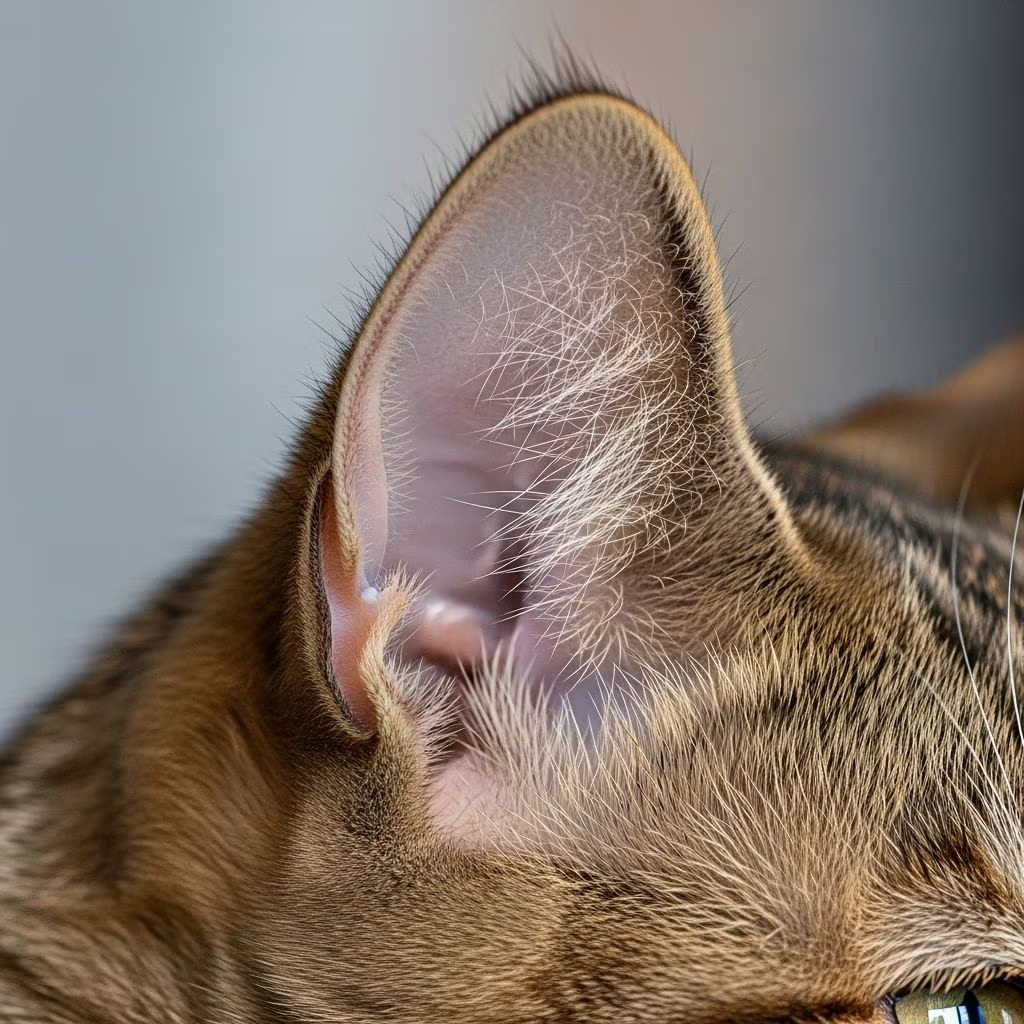
The health of your cat’s ears plays a crucial role in their overall well-being and quality of life. When the delicate tissues lining the external ear canal become compromised, cats experience discomfort and may develop various complications if left untreated. This guide explores the complexities of outer ear conditions in felines, equipping you with the knowledge to recognize problems early and work effectively with your veterinarian toward resolution.
What Happens Inside the Inflamed Ear Canal
Outer ear inflammation occurs when the cellular layer protecting the external ear canal becomes irritated and swollen. This condition can progress beyond the canal itself and extend upward into the ear flap, medically known as the pinna. The inflammation triggers a cascade of responses within the ear, leading to increased discharge production, cellular changes, and sometimes visible tissue damage. Understanding this process helps explain why prompt veterinary intervention matters so much—early treatment can prevent the inflammation from advancing into deeper ear structures and causing permanent damage.
Unlike dogs, who frequently suffer from bacterial and yeast-related ear infections, cats more commonly develop outer ear problems due to parasitic infestation or underlying systemic conditions. This distinction means that treatment approaches for cats often differ significantly from those recommended for canine patients.
Recognizing the Warning Signs
Your cat communicates discomfort through behavioral changes and physical symptoms. The most obvious indicator is behavioral—cats with ear problems engage in repetitive head shaking and frequent scratching at the affected area. Beyond these obvious signs, several other manifestations warrant veterinary attention:
- Visible redness or inflammation of the inner ear structures
- Noticeable odor emanating from the ear canal
- Observable discharge ranging from clear to brown or yellow
- Swelling or puffiness around the ear area
- Flaking or scaling of the skin inside and around the ear
- Sensitivity or pain when the ears are touched or handled
- Tilting of the head toward the affected side
- Accumulation of visible wax or debris in the ear canal opening
Some cats display more subtle signs, such as positioning their affected ear flat against their head or showing reluctance when their ears are approached. The severity and combination of symptoms can vary dramatically depending on the underlying cause and how long the condition has been present. Importantly, either one ear or both ears may be affected simultaneously.
Primary Causes vs. Secondary Complications
Veterinarians distinguish between primary causes—the initial trigger—and secondary infections that develop as complications. Understanding this distinction is essential because treatment must address the root problem rather than only managing symptoms.
Original Triggers That Initiate Problems
The foundation of most feline ear problems stems from parasitic, allergic, or anatomical issues:
- Parasitic infestation—Ear mites represent the most frequent parasitic cause in cats. These microscopic organisms burrow into the ear canal lining, triggering intense inflammation and secondary debris accumulation.
- Allergic reactions—Environmental allergens (pollen, dust, molds) and food sensitivities can provoke inflammation localized to the ears. Allergic ear disease often affects both ears symmetrically.
- Foreign body lodgment—Plant materials, food particles, or other objects occasionally become trapped in the ear canal, causing mechanical irritation and inflammation.
- Endocrine and autoimmune disorders—Systemic conditions affecting the immune system or hormonal balance can manifest with ear inflammation as a primary sign.
Secondary Infections That Complicate Recovery
Once inflammation develops, the compromised ear canal environment becomes hospitable to bacterial and fungal colonization. These secondary infections can occur independently or simultaneously with the primary condition, requiring multiple treatment strategies for complete resolution.
The Diagnostic Journey: How Veterinarians Identify the Problem
Accurate diagnosis requires a systematic approach combining physical examination with specialized diagnostic tools. Your veterinarian will begin with a comprehensive history and visual inspection but typically must proceed to more detailed investigation.
Initial Examination and Otoscopic Assessment
The otoscope—a specialized instrument with magnification and illumination—allows direct visualization of the ear canal and eardrum. This examination can reveal foreign objects lodged deep within the canal, abnormal tissue growths such as polyps, accumulated debris, parasitic presence, and whether the eardrum remains intact or has ruptured. However, many cats require sedation or anesthesia for this procedure because the ear canal is sensitive, and anxious cats resist manipulation.
Microscopic Analysis and Culture Testing
Your veterinarian will collect material from inside the ear canal using a swab or curette. Under microscopic examination (cytology), this sample reveals the presence of bacteria, yeast cells, mites, or inflammatory cells. When bacterial infection is suspected, culture and susceptibility testing identify which specific organisms are present and which antibiotics will be most effective—an especially important step in chronic or treatment-resistant cases.
Advanced Diagnostic Techniques
In complex cases, additional testing may be warranted. Allergy testing helps identify environmental or food triggers in allergic cases. Diagnostic imaging such as radiographs or CT scans can assess whether infection has progressed to the middle or inner ear structures. Biopsies become necessary when suspicious tissue growths or tumors are suspected.
Treatment Strategies: From Topical Applications to Surgical Intervention
Effective treatment depends entirely on accurately identifying the underlying cause. A one-size-fits-all approach will inevitably fail because different problems require different solutions.
Topical Medications and Ear Cleaning
Most feline ear problems respond well to topical treatments applied directly into the canal. The ideal medication coats the inflamed tissue as a thin film, delivering therapeutic agents directly to the problem area. Veterinary formulations typically combine multiple active ingredients—antibiotics for bacteria, antifungal agents for yeast, and corticosteroids to reduce inflammation simultaneously.
Before medications can work effectively, the ear canal must be thoroughly cleaned to remove accumulated wax, debris, and discharge that would otherwise block medication penetration. This cleaning process may require sedation in sensitive or painful ears.
Systemic Medications for Severe Cases
When inflammation is extensive or when it has progressed to affect the middle ear, topical treatment alone proves insufficient. Oral medications supplement topical therapy in these situations. Systemic antibiotics and antifungals penetrate deeper tissues, while oral anti-inflammatory drugs—either corticosteroids or NSAIDs—reduce pain and swelling throughout the ear structures.
Parasite-Specific Treatments
Ear mite infestations require antiparasitic medications, which may be applied topically within the ear or administered systemically. Because mites spread readily between cats, all cats in a household should receive treatment even if they show no symptoms.
Surgical Options for Severe Damage
In severe, chronic cases where the ear canal has become severely damaged or fibrosed, or when tumors or polyps cannot be removed through conservative means, surgical intervention may become necessary. Such procedures require referral to a surgical specialist and carry inherent risks, underscoring why early intervention in milder cases is so important.
Managing Treatment at Home
Once your veterinarian prescribes ear medications, you become responsible for proper administration. Cats present unique challenges as patients—they rarely appreciate ear handling and may resist medication application. Follow these practical guidelines:
- Gently lift the ear flap upward and backward to open the canal
- Carefully instill the prescribed number of drops into the canal opening
- Gently massage the base of the ear for approximately 30 seconds to work medication deeper into the canal
- Keep medication at room temperature for comfort during application
- Administer treatments at the same time each day to establish a routine
- Follow the complete course of treatment even if symptoms improve
- Monitor the ear regularly for changes in discharge, odor, or inflammation
Administering ear drops to cats requires patience and consistency. Some cats become more cooperative with gentle handling and positive reinforcement through treats or praise. If your cat proves particularly resistant, discuss alternative liquid formulations or topical medications that might work better with your veterinarian.
Recovery Timeline and Prognosis
Most cats with uncomplicated outer ear inflammation recover within 2 to 4 weeks of appropriate treatment. However, recovery timelines vary depending on the underlying cause and severity. Parasitic infections may require longer treatment periods, and chronic cases involving deep canal damage may show slower improvement.
The overall prognosis for outer ear conditions remains favorable in most cases. However, recurrence risk is notably high, particularly in cases of fungal or parasitic origin. This means that even after successful treatment, vigilant monitoring helps catch problems quickly should they return.
Preventing Future Problems
While not all ear problems can be prevented, certain practices reduce risk:
- Inspect your cat’s ears weekly for signs of redness, discharge, or odor
- Maintain a clean home environment to minimize dust and mold allergens
- Consider environmental controls if your cat has allergic ear disease
- Isolate cats with ear mites from other feline companions during treatment
- Follow your veterinarian’s recommendations for regular monitoring if your cat has chronic or recurrent ear issues
- Address any allergic or endocrine conditions that predispose to ear problems
When to Seek Immediate Veterinary Care
Contact your veterinarian if you notice persistent ear shaking, scratching, discharge, or odor. Early intervention prevents progression to more serious conditions such as middle or inner ear infection, which can affect hearing and balance. If your cat shows signs of hearing loss, balance problems, or facial weakness alongside ear symptoms, seek immediate evaluation as these suggest more advanced disease.
Understanding feline outer ear conditions empowers you to recognize problems early and work collaboratively with your veterinarian toward resolution. With prompt diagnosis and appropriate treatment, most cats recover completely and return to comfortable, happy lives.
References
- Otitis Externa in Cats — Merck Veterinary Manual. https://www.merckvetmanual.com/cat-owners/ear-disorders-of-cats/otitis-externa-in-cats
- Outer Ear Inflammation or Infection (Otitis Externa) in Cats — Vetster. https://vetster.com/en/conditions/cat/outer-ear-inflammation-or-infection-otitis-externa
- Cat Ear Infection: Symptoms, Causes, and Treatment — PetMD. https://www.petmd.com/cat/conditions/ears/cat-ear-infections
- Ear Infections in Cats (Otitis Externa) — VCA Animal Hospitals. https://vcahospitals.com/know-your-pet/ear-infections-in-cats-otitis-externa
- Feline Ear Disorders — Cornell Feline Health Center, College of Veterinary Medicine, Cornell University. https://www.vet.cornell.edu/departments-centers-and-institutes/cornell-feline-health-center/health-information/feline-health-topics/feline-ear-disorders



