
Feline Oral Cancer: Comprehensive Guide For 2025
Comprehensive insights into feline oral squamous cell carcinoma: from early detection to advanced treatments and improving your cat's quality of life.
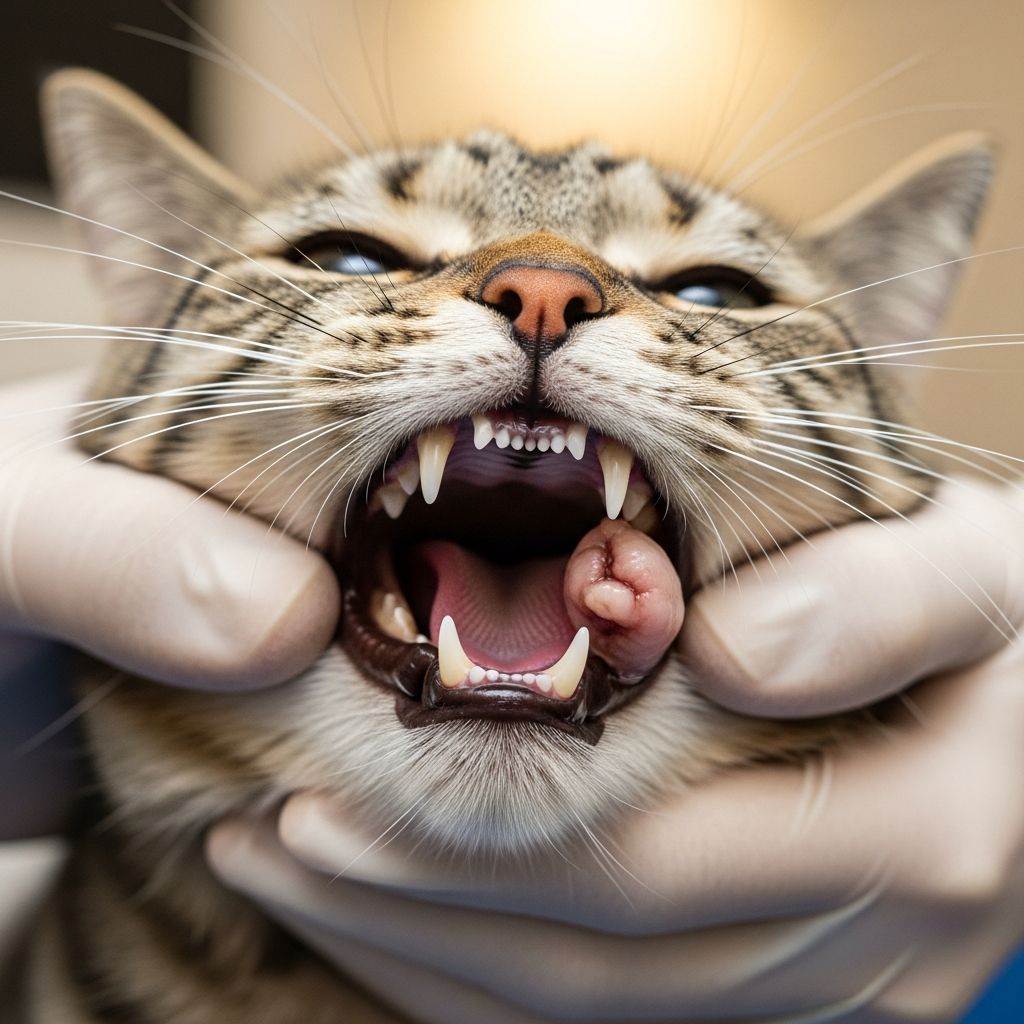
Feline oral squamous cell carcinoma (FOSCC) stands as the predominant form of oral malignancy in cats, marked by its aggressive local invasion into surrounding tissues and bone, often resulting in poor prognosis despite interventions. This condition severely impacts a cat’s ability to eat, leading to rapid weight loss and diminished quality of life, with median survival times frequently under two to three months without aggressive management.
Understanding the Nature of Feline Oral Cancer
Oral cancers in cats, particularly FOSCC, account for 15-20% of all feline malignancies, ranking as the fourth most common cancer type after lymphoma, skin, and mammary cancers. These tumors arise from the squamous epithelium lining the mouth, tongue, gums, and tonsils, exhibiting rapid growth that burrows into the jawbone, making complete surgical removal challenging. Unlike some cancers, FOSCC rarely metastasizes beyond the head and neck but causes extensive local destruction, leading to pain, ulceration, and functional impairments.
The pathology involves multifactorial etiology, including genetic mutations like TP53, potential viral influences such as feline papillomavirus (FcaPV), environmental toxins, and chronic inflammation from oral diseases or microbial dysbiosis. FIV infection may exacerbate oral bacterial imbalances, heightening cancer risk similar to patterns observed in humans. Inflammatory mediators, including cytokines and metalloproteinases, further propel tumor progression.
Recognizing Early Warning Signs
Detecting FOSCC early is crucial yet challenging, as symptoms mimic dental issues, often delaying diagnosis until tumors are advanced. Common initial signs include:
- Excessive drooling or halitosis due to oral pain and ulceration.
- Reluctance to eat hard food, progressing to complete inappetence and significant weight loss.
- Visible oral masses, loose teeth, red swollen gums, or non-healing ulcers.
- Facial or jaw swelling, pawing at the mouth, or reduced grooming.
- Tongue protrusion, bleeding, or necrosis in lingual tumors; breathing difficulties in tonsillar cases.
Owners might mistake these for periodontal disease, leading to dental cleanings that reveal the tumor under anesthesia. Maxillary tumors cause bone lysis and tooth mobility, while sublingual growths thicken the tongue, impairing movement.
Diagnostic Approaches for Accurate Identification
Veterinarians employ a multi-step process to confirm FOSCC. Initial physical and oral exams under sedation allow visualization of hidden lesions. Diagnostic tools include:
| Method | Purpose | Details |
|---|---|---|
| Biopsy | Definitive diagnosis | Histopathology confirms SCC; fine-needle aspirates for lymph nodes check metastasis. |
| Imaging (Radiographs, CT/MRI) | Assess extent | Reveals bone invasion, tumor size, and margins for surgical planning. |
| Oral Exam under Anesthesia | Full visualization | Identifies subtle lesions missed in awake cats. |
Staging evaluates local invasion and rare distant spread, guiding treatment. Bloodwork and chest radiographs rule out comorbidities.
Available Treatment Modalities
Treatment aims to extend survival and alleviate suffering, though FOSCC’s resistance to chemotherapy and radiation side effects limit options. Strategies include:
- Surgery: Mandibulectomy or maxillectomy for resectable rostral tumors; often curative if margins are clean, but extensive jaw removal is palliative for caudal lesions.
- Radiation Therapy: Definitive (daily fractions) post-surgery or palliative (weekly); controls local growth but causes mucositis.
- Chemotherapy: Agents like carboplatin or toceranib (Palladia®); stabilizes non-surgical cases but rarely shrinks tumors.
- Targeted Therapies: Emerging monoclonal antibodies and immunotherapies targeting biomarkers like TMB or checkpoints show promise.
Combination approaches, such as surgery plus radiation, offer the best outcomes where feasible.
Palliative and Supportive Care Strategies
For advanced cases, focus shifts to comfort. Key interventions:
- Pain management with buprenorphine, anti-inflammatories like piroxicam.
- Esophagostomy feeding tubes for nutrition and medication delivery.
- Appetite stimulants (mirtazapine) and soft diets.
- Antibiotics for secondary infections; oral hygiene maintenance.
Feeding tubes bypass oral pain, but persistent non-voluntary eating signals ongoing discomfort. Palliative radiation may extend comfort periods.
Prognosis and Survival Expectations
Untreated FOSCC yields median survival of 2-3 months due to starvation and pain. With surgery, survival extends to 6-12 months if clean margins achieved; radiation adds months but with side effects. Chemotherapy stabilizes for 3-6 months in responsive cases. Novel therapies may improve future outlooks. Factors influencing prognosis:
| Favorable | Unfavorable |
|---|---|
| Rostral location, small size, no bone involvement | Caudal/lingual site, bone invasion, large tumor |
| Early detection, good performance status | Metastasis, poor appetite at diagnosis |
Quality of life assessment guides euthanasia decisions.
Prevention and Risk Reduction Tips
While not fully preventable, strategies mitigate risks:
- Regular veterinary dental check-ups to address inflammation early.
- Avoid tobacco smoke and environmental toxins.
- FIV vaccination and testing for at-risk cats.
- Balanced diet supporting oral health; dental products to reduce plaque.
- Prompt treatment of gingivitis or stomatitis.
Annual exams facilitate early detection.
FAQs on Feline Oral Cancer
What is the most common type of mouth cancer in cats?
FOSCC, aggressive and locally invasive.
Can feline oral cancer be cured?
Rarely, but early surgical removal offers longest survival.
How do I know if my cat has mouth cancer?
Look for drooling, bad breath, eating difficulties, oral masses.
Is radiation effective for cat mouth tumors?
Yes, for local control, especially post-surgery.
What palliative options exist?
Pain meds, feeding tubes, appetite stimulants.
Does FIV increase oral cancer risk?
Yes, via oral microbiota changes.
Emerging Research and Future Directions
Ongoing studies explore FcaPV vaccines, immunotherapy targeting immune checkpoints, and metabolic inhibitors. Biomarkers like TP53 mutations aid personalized medicine. Clinical trials at institutions like Morris Animal Foundation test novel combinations, promising better outcomes. Owners should consult oncology specialists for trial eligibility.
Holistic monitoring post-diagnosis involves multidisciplinary teams: oncologists, surgeons, nutritionists. Home care emphasizes gentle handling, clean environments, and behavioral observation for pain cues like hiding or aggression.
In summary, while FOSCC challenges veterinary medicine, informed care enhances feline comfort. Early vigilance transforms trajectories.
References
- Feline Oral Squamous Cell Carcinoma – New Treatment — Morris Animal Foundation. 2023. https://www.morrisanimalfoundation.org/article/feline-oral-squamous-cell-carcinoma-new-treatment
- Feline oral squamous cell carcinoma: recent advances and future — PMC (NCBI). 2024-10-21. https://pmc.ncbi.nlm.nih.gov/articles/PMC12554573/
- Medical Oncology: Feline Oral Squamous Cell Carcinoma — NC State University College of Veterinary Medicine. 2025. https://hospital.cvm.ncsu.edu/services/small-animals/cancer-oncology/oncology/feline-oral-squamous-cell-carcinoma/
- Oral Cavity Tumors — Cornell University College of Veterinary Medicine. 2024. https://www.vet.cornell.edu/departments-centers-and-institutes/cornell-feline-health-center/health-information/feline-health-topics/oral-cavity-tumors
- Understanding Oral Cancer in Cats: Causes, Symptoms, and — WellPets. 2023. https://www.wellpets.com/blog/207-cat-oral-cancer-symptoms-and-causes/
- Oral Tumors in Cats – An Overview — VCA Animal Hospitals. 2024. https://vcahospitals.com/know-your-pet/oral-tumors-in-cats-an-overview
Similar Articles








Read full bio of medha deb




