

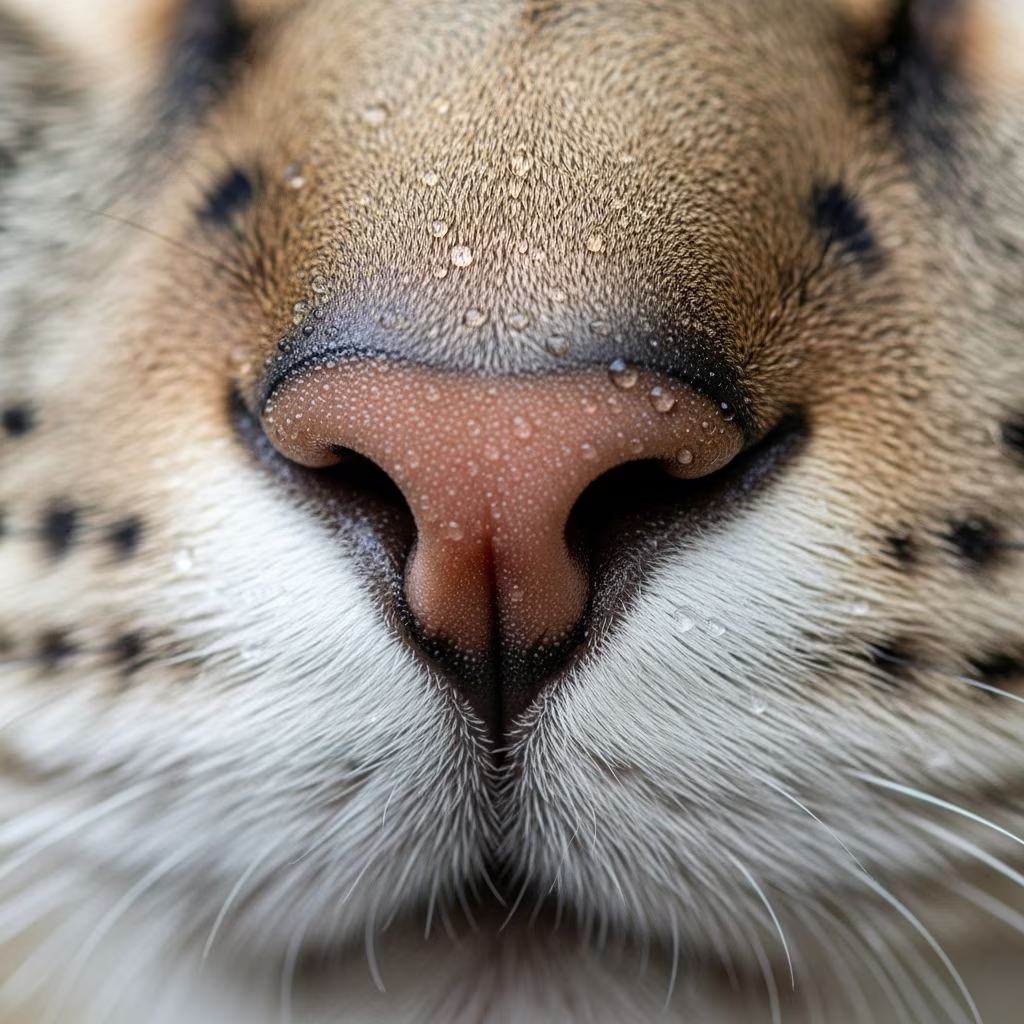
The cat nose stands as a marvel of evolutionary design, serving as a gateway to the world for these agile predators. Far beyond a simple olfactory tool, it integrates smell, touch, and even identity verification, enabling cats to thrive in diverse environments. This organ’s intricate structure supports heightened sensory input, distinguishing felines from other mammals.
The Anatomical Blueprint of a Cat’s Nose
At its core, the cat’s nasal system features a complex cavity divided by a septum into two symmetrical halves. This division, partly bony and partly cartilaginous, ensures efficient airflow and odor processing. Key components include turbinates—scroll-like bones covered in sensory epithelium—that increase surface area for air filtration and scent capture.
The nasal vestibule, the entry point, transitions from external nostrils to internal passages. Cartilaginous elements like the dorsal and ventral lateral cartilages form the nose’s framework, with species variations noted in felids. For instance, domestic cats exhibit more pronounced alar folds and basal structures compared to larger counterparts like lions or cheetahs.
Inside, dorsal, middle, and ventral conchae create meatuses—pathways for air movement. These structures humidify, warm, and cleanse incoming air while maximizing contact with olfactory receptors. The vomeronasal organ (VNO), or Jacobson’s organ, resides near the nasal floor, detecting pheromones crucial for social and reproductive behaviors.
- Dorsal concha: Flatter in big cats, more extended in domestics for finer scent discrimination.
- Ventral concha: Often doubly rooted in cats, enhancing turbulence for better particle capture.
- Nasal septum: Fuses with ethmoid bone caudally, supporting overall cavity integrity.
Imaging studies via CT and MRI reveal these details vividly, showing hypoattenuated meatuses and vascular plexuses that aid in thermoregulation.
Superior Scent Detection Capabilities
Cats possess roughly 200 million olfactory receptors, dwarfing the human count of 5 million, granting a sense of smell 14 times more acute. This prowess stems from a vast olfactory epithelium lining the nasal cavity, coupled with a robust main olfactory bulb and accessory systems like the VNO.
Odor molecules bind to receptors, triggering neural signals to the brain’s piriform cortex and amygdala—centers for smell identification and emotional response. Cats use this for hunting, territory marking, and kin recognition. Secretions from nasal glands keep the rhinarium moist, aiding solubility of airborne scents.
| Feature | Cat | Human |
|---|---|---|
| Olfactory Receptors | ~200 million | ~5 million |
| Smell Sensitivity | 14x greater | Baseline |
| VNO Presence | Functional | Rudimentary |
This table highlights sensory disparities, underscoring why cats excel at detecting subtle cues like prey pheromones or household changes.
Individual Nose Prints: Nature’s ID System
Each cat’s nose bears a unique pattern of ridges, bumps, and grooves, akin to human fingerprints. This ‘nosepoint’ forms from papillar patterns on the rhinarium, visible when wet. Veterinary and forensic applications leverage these for identification, as no two are alike—even among littermates.
The leather-like texture, toughened for environmental resilience, features pigmentation varying by breed: black in most, pinkish in breeds like Siamese. Scarring or freckling adds further uniqueness. Owners can ink-print damp noses for records, aiding lost pet recovery.
Role in Communication and Social Bonds
Nasal scents underpin feline interactions. The VNO samples pheromones via flehmen—curling the upper lip to draw air into this organ—decoding messages from urine, facial rubs, or scratches. Territorial spraying deposits lipids detectable over vast distances.
Mother-kitten bonds rely on mutual scenting; kittens nuzzle noses for reassurance. Multi-cat homes see nose-to-nose greetings confirming identities, reducing aggression. Disruptions like illness altering scents can spark conflicts.
Health Indicators and Common Conditions
A healthy cat nose is cool, moist, and slightly damp—signs of proper hydration and circulation. Changes signal issues: dryness suggests dehydration; crusting points to allergies or infections; discharge indicates upper respiratory viruses like feline calicivirus.
Upper Respiratory Infections (URIs): Common in shelters, causing sneezing, nasal congestion, and secondary bacterial issues. Nasal turbinates swell, impairing smell and appetite.
Polyps or Tumors: Rare but serious, obstructing passages; rhinoscopy diagnoses via visualization.
Breeds with brachycephalic faces (e.g., Persians) face chronic issues from compressed airways.
- Monitor for bilateral discharge (infection) vs. unilateral (foreign body).
- Vaccinate against herpesvirus and calicivirus.
- Use humidifiers for dry environments.
Daily Care and Maintenance Tips
Preventive care preserves nasal function. Ensure clean litter to avoid irritants; hypoallergenic options suit sensitive cats. Wipe rhinaria gently with damp cloths, avoiding soaps.
Nutrient-rich diets with omega-3s support mucous membranes. Annual vet checks include nasal exams. For seniors, rule out cognitive decline mimicking scent loss.
Evolutionary Adaptations Across Felids
Domestic cats inherit nasal traits from wild ancestors. Studies compare them to big cats: lions have wider meatuses for hot climates, cheetahs curved alar folds for speed-adapted breathing. Domestic variants emphasize scent over endurance hunts.
Conchal differences—thinner in lions—affect airflow dynamics, balancing olfaction with respiration.
Myths and Fun Trivia
Myth: A warm nose means illness. Reality: Temperature fluctuates with activity; moisture matters more.
Trivia: Cats’ 9+ lives proverb ties loosely to resilient noses recovering from mishaps. Nose color links to genetics—’odd-eyed’ cats often have mismatched tones.
Frequently Asked Questions (FAQs)
Why do cats have wet noses?
Moisture from glands and tears keeps scents soluble and protects tissues.
Can cats smell emotions?
Yes, via pheromones and stress odors detected by VNO.
Is nose color breed-specific?
Often; e.g., blue in Colorpoints due to temperature-sensitive pigment.
How to clean a cat’s nose safely?
Use saline wipes; consult vets for persistent issues.
Do all cats have unique nose prints?
Yes, making them reliable for microchipping alternatives.
Advanced Nasal Functions in Hunting
In predation, noses triangulate prey via stereo olfaction—each nostril independently samples air. Ground scents from urine trails guide stalks. Post-kill, sniffing confirms edibility.
Domestic cats retain this, ‘tracking’ toys or treats. Training enhances it, as in detection work.
References
- An Anatomical Study Using Computed Tomography, Magnetic Resonance Imaging, and Rhinoscopy of the Nasal Cavity in Felids — PMC/NCBI. 2024. https://pmc.ncbi.nlm.nih.gov/articles/PMC11047709/
- Cat Anatomy — Wikipedia (referencing primary anatomical sources). 2024. https://en.wikipedia.org/wiki/Cat_anatomy
- Terminology of the Cat’s Anatomy as it Applies to LOOF and TICA Breed Standards — LOOF. 2009. https://loof.asso.fr/sites/default/download/14_en_termin_anat_20090612.pdf



