

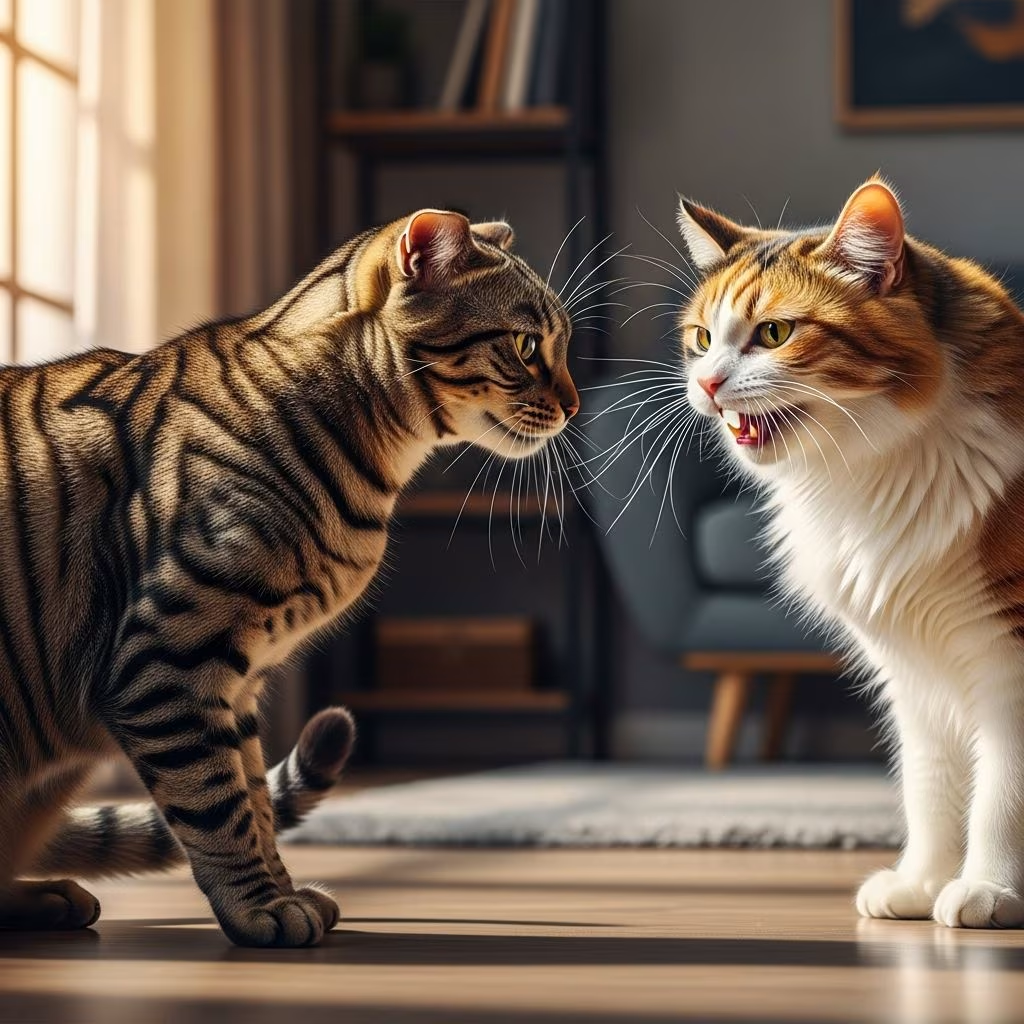
Imagine sending your beloved cat to the veterinarian for a routine checkup, only to return home and witness your previously inseparable feline companions engaged in a fierce battle. What should have been a joyful reunion transforms into a nightmare of hissing, growling, and swatting. This bewildering scenario occurs more often than many cat owners realize, and it has a name: non-recognition aggression. This behavioral phenomenon represents one of the most perplexing aspects of multi-cat household dynamics, leaving owners confused about what went wrong and desperate to restore peace between their pets.
Understanding this complex behavioral issue is essential for anyone who shares their home with multiple cats. Unlike simple territorial disputes or play-fighting, non-recognition aggression stems from a fundamental breakdown in feline communication and identification systems. The good news is that with proper knowledge and intervention strategies, cat owners can prevent this behavior or successfully manage it once it occurs.
The Science Behind Feline Identity Recognition
Cats do not navigate their world the way humans do. While we rely primarily on visual information to identify familiar people and objects, cats depend heavily on scent cues to make sense of their environment and recognize companions. This sensory preference is deeply embedded in feline neurobiology and governs how cats interact with their social groups and territorial spaces.
Each cat carries a unique chemical signature composed of various scent compounds that other cats recognize instantly. This personal scent profile acts like an identification card, allowing cats to distinguish between household companions, unfamiliar cats, and potential threats. The vomeronasal organ, a specialized sensory structure located in the roof of a cat’s mouth, processes these chemical signals with remarkable precision, enabling cats to detect subtle variations in scent that human noses would never perceive.
When a cat remains in an unchanged environment, their housemate’s scent remains consistent and recognizable. Problems arise when one cat leaves home and returns bearing completely different odors. The returning cat’s familiar scent becomes masked by an array of unfamiliar smells accumulated during their absence, effectively rendering them unrecognizable to their former companion.
What Happens During a Vet Visit: The Source of Scent Disruption
Veterinary clinics present an overwhelming sensory environment for cats. During a typical visit, a cat encounters multiple unfamiliar humans, various medical instruments, and numerous other animals—all of which leave olfactory traces on the cat’s fur and body. The scent profile of a returning cat typically includes:
- Odors from veterinary staff members who have handled multiple animals throughout the day
- Sterilizing agents and disinfectants used to clean examination tables and instruments
- Medical compounds such as alcohol, iodine, and anesthetic gases
- Scent particles from other animals present at the clinic
- Medications applied topically or administered during treatment
- Fear or stress pheromones released by the cat during the visit itself
These accumulated scents create such a dramatic alteration to the cat’s normal odor profile that the stay-at-home cat genuinely believes a stranger—or worse, an intruder—has entered their territory. The situation becomes even more complicated when a cat has been sedated or anesthetized during the visit, as these medications further alter their scent output and may affect their behavior and body language upon return home.
Beyond Veterinary Visits: Other Triggers for Non-Recognition Aggression
While trips to the veterinarian represent the most common precipitating event, non-recognition aggression can develop after any extended separation. Grooming appointments introduce their own set of unfamiliar scents, including specialized shampoos, conditioners, finishing sprays, and sterilizing solutions used on grooming equipment.
Other situations that may trigger non-recognition aggression include:
| Separation Scenario | Typical Scent Alterations | Severity of Risk |
|---|---|---|
| Boarding facilities | Multiple animals, unfamiliar staff, cleaning agents, different environment | High |
| Grooming appointments | Specialized shampoos, conditioners, equipment sterilizers | Moderate to High |
| Extended outdoor time | Wild animal scents, vegetation, unfamiliar territory odors | Moderate |
| Time at another household | Unfamiliar humans, different animals, household cleaning products | Moderate |
| Brief outdoor excursions | Neighborhood animals, plants, soil | Low to Moderate |
The severity of non-recognition aggression often correlates with the degree of scent alteration and the length of separation. A cat returning from a day-long grooming appointment may trigger mild defensive behavior, while a cat returning after surgery performed under general anesthesia might face a more intense aggressive response.
Recognizing the Warning Signs and Behavioral Indicators
Non-recognition aggression typically manifests through a recognizable progression of behaviors, beginning with uncertainty and escalating toward outright hostility if the situation is not properly managed. The at-home cat usually initiates these interactions with investigative aggression, attempting to understand what this strange-smelling creature is doing in their territory.
Common behavioral signs include:
- Intense, prolonged staring and focused sniffing
- Hissing and growling directed at the returning cat
- Puffed tail and arched back posturing
- Swatting and chasing behavior
- Blocking access to valued resources such as litter boxes, food bowls, or favorite resting spots
- Persistent stalking or following behavior
- Physical attacks ranging from brief strikes to serious fighting
- Redirected aggression toward humans attempting to intervene
The returning cat typically responds to this aggression with fear-based defensive behavior. They may crouch low, press their ears back, avoid eye contact, or attempt to escape the confrontation. In some cases, the returning cat may stand their ground and fight back, particularly if they were already stressed from their time away and feel threatened upon arrival home.
The Psychological Mechanisms: Why Cats Can’t Recognize Each Other
Understanding the psychological basis of non-recognition aggression helps explain why cats cannot simply “remember” their companions despite spending months or years together. The phenomenon operates through multiple overlapping mechanisms that work together to create genuine confusion and defensive responses.
The primary mechanism involves scent masking. When familiar scent signals become obscured by novel odors, the neurological recognition system in cats encounters an unsolvable puzzle: the visual appearance and voice of the returning cat may remain recognizable, but the olfactory information—which cats prioritize over all other senses—signals an unknown entity. This sensory mismatch triggers a defensive response rooted in territorial protection instinct.
A secondary mechanism relates to stress pheromones. Cats experiencing anxiety or fear release pheromones from anal glands and other scent-producing organs. A cat returning from a stressful vet visit may literally smell like fear, and these fear-associated pheromones can trigger a protective or aggressive response in the at-home cat. The at-home cat interprets these scent signals as warnings of danger, leading them to view the returning cat as a potential threat rather than a cherished companion.
Changes in behavior and body language also contribute to non-recognition responses. A cat recovering from anesthesia may move differently, lack normal coordination, or display unusual behavioral patterns. These atypical behaviors compound the sensory confusion created by altered scents, making the returning cat seem even more foreign to their housemate.
The Long-Term Consequences of Unmanaged Non-Recognition Aggression
One of the most troubling aspects of non-recognition aggression is its potential to create lasting damage to previously harmonious relationships between cats. While some minor incidents resolve quickly once the returning cat’s scent normalizes, more severe episodes can trigger lasting behavioral changes.
When non-recognition aggression escalates into serious fighting, both cats experience trauma. The at-home cat may become conditioned to view their former friend as a threat, maintaining elevated vigilance and defensive postures indefinitely. The returning cat, traumatized by the unexpected attack and unable to understand what provoked it, may develop fear-based anxiety or aggressive responses.
In worst-case scenarios, these incidents can establish chronic conflict between previously friendly cats. The initial aggression episode can inadvertently train both cats to maintain an adversarial relationship, with repeated skirmishes reinforcing the learned behavior on both sides. Some multi-cat households that experience severe non-recognition aggression end up requiring permanent separation of the cats, a heartbreaking outcome for owners who hoped for continued cohabitation.
Prevention Strategies: Preparing Your Cats for Separation
The most effective approach to non-recognition aggression involves prevention rather than crisis management. Cat owners can implement several strategies before scheduling veterinary visits or other planned separations to minimize the risk of problematic reintroduction.
One valuable prevention technique involves scent preparation. Some veterinary behaviorists recommend rubbing a cloth on each cat before separation to preserve their existing scent profile, then using this cloth to refresh the scent immediately upon return. While this may only partially counteract the dramatic scent changes from a vet visit, even partial familiarization can reduce the intensity of aggressive responses.
Maintaining regular grooming and bathing at home, when feasible, helps normalize the experience of scent changes for cats. Cats accustomed to occasional bathing or grooming at home may experience less dramatic scent alterations during professional grooming appointments, reducing their novelty and strangeness to housemates.
Additionally, consulting with your veterinarian about reducing stress during visits can minimize fear-based pheromone release. Some clinics offer calming medications or anxiety-reducing protocols that help keep cats calm during their visit, resulting in reduced stress pheromone production.
Reintroduction Protocols: Restoring Harmony After Separation
When non-recognition aggression does occur, implementing a systematic reintroduction protocol provides the best chance for restoring the previous relationship between cats. These protocols work by gradually reestablishing familiarity through controlled exposures and scent reintegration.
The fundamental principle involves temporary separation. Immediately upon bringing the returning cat home, resist the urge to allow full interaction. Instead, place the returning cat in a separate room where they can rest, recover, and have their scent gradually return to normal. This separation should last a minimum of several hours and ideally overnight.
During this separation period, exchange items between rooms. Rub a cloth on the returning cat and place it near the at-home cat’s favorite resting spots. Similarly, provide the returning cat with bedding or toys that smell like their housemate. This allows both cats to gradually reacquaint themselves with each other’s scents without the stress of face-to-face interaction.
After this initial period, introduce brief visual contact through a door gap or screen. Monitor both cats’ responses carefully, watching for signs of continued aggression or gradual relaxation. Reward calm behavior near the boundary with treats and praise, creating positive associations with each other’s presence.
Only after multiple sessions of calm, non-aggressive behavior should you allow direct contact. Even then, maintain close supervision and be prepared to separate them quickly if aggression resumes. The reintroduction process may take days or even weeks, but patience invested in this process significantly improves long-term outcomes.
Frequently Asked Questions About Feline Non-Recognition Aggression
Q: How long does non-recognition aggression typically last?
A: The duration varies considerably. Mild cases may resolve within hours as the returning cat’s scent normalizes. Moderate cases may require several days to a week of careful management. Severe cases, particularly those involving serious fighting or repeated episodes, can persist for weeks or months, sometimes resulting in permanent behavioral changes if not properly managed.
Q: Can non-recognition aggression transfer to humans?
A: Yes, this is possible. A highly aroused cat experiencing non-recognition aggression may redirect their aggression toward humans attempting to intervene or separate the cats. Additionally, stress and trauma from aggressive encounters can cause normally friendly cats to become temporarily defensive or irritable with their owners.
Q: Is non-recognition aggression more likely in certain cat personalities?
A: Cats with anxious, reactive, or highly territorial temperaments appear more prone to severe non-recognition aggression. Conversely, naturally calm, social cats may experience this behavior less intensely. However, even previously friendly cats can develop significant aggression if the sensory disruption is severe enough.
Q: Should I bathe my cat before bringing them home to remove vet smells?
A: This approach is generally not recommended, as bathing creates additional stress for an already-stressed cat. The additional stress may intensify fear pheromone production, potentially worsening the situation. Instead, allow the scent to normalize naturally while using the reintroduction protocol described above.
Professional Assistance and When to Seek Help
While many cases of non-recognition aggression can be managed through owner-implemented strategies, some situations require professional intervention from a feline behavior specialist or veterinary behaviorist. If cats inflict serious injuries, if aggression escalates despite management attempts, or if the situation creates dangerous stress for your household, contact a qualified professional for guidance.
Certified animal behavior consultants can develop customized reintroduction protocols, prescribe anti-anxiety medications when appropriate, and help owners modify their environment to reduce ongoing territorial conflicts. Early professional intervention can prevent the development of chronic behavioral problems that might otherwise require permanent separation.
Conclusion: Building Understanding Between Your Cats
Non-recognition aggression represents a natural feline response to sensory confusion rather than a personality conflict or permanent incompatibility between cats. By understanding the olfactory basis of feline identification and recognizing the behavioral signs of this aggression, owners can implement effective prevention and management strategies.
The key to maintaining harmonious multi-cat households involves respecting cats’ reliance on scent for identification, preparing for separations thoughtfully, and implementing patient reintroduction protocols when necessary. With knowledge and proper intervention, even severe cases of non-recognition aggression can often be resolved, allowing previously bonded cats to restore their companionship.
References
- Feline Behavior Problems: Aggression — Cornell University College of Veterinary Medicine. Accessed January 2026. https://www.vet.cornell.edu/departments-centers-and-institutes/cornell-feline-health-center/health-information/feline-health-topics/feline-behavior-problems-aggression
- Non-Recognition Aggression in Cats — IAABC Journal. Accessed January 2026. https://journal.iaabcfoundation.org/non-recognition-aggression-in-cats/
- Feline Non-Recognition Aggression – What is it and how to fix it — Rita Reimers. Accessed January 2026. https://ritareimers.com/cat-behaviors/aggression-in-cats/feline-non-recognition-aggression/
- Non-recognition aggression in cats — Cat in the Box LLC. Accessed January 2026. https://thecatisinthebox.com/blogs/kitty-contemplations/non-recognition-aggression-in-cats
- My Cat Just Got Home, Now They’re Fighting – Help! — Frisky Feline Behaviors. Accessed January 2026. https://www.friskyfelinebehaviors.com/post/my-cat-just-got-home-now-theyre-fighting-help
- Non-Recognition Aggression Syndrome In Cats — Good Pet Parent. Accessed January 2026. https://www.goodpetparent.com/2017/01/13/non-recognition-aggression-syndrome-cats/



