

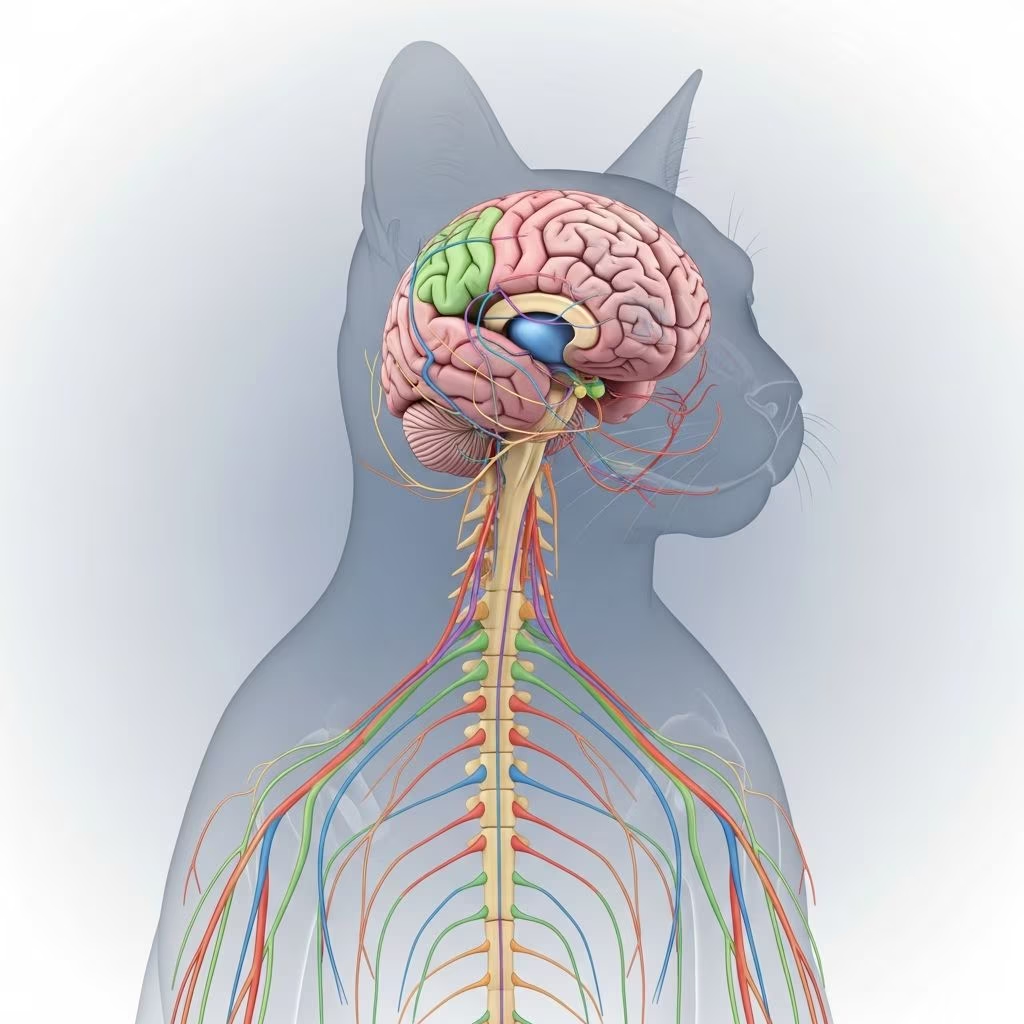
The nervous system in cats serves as the primary control center, orchestrating everything from precise movements to instinctive reactions. Comprising specialized cells and pathways, it ensures survival through rapid communication across the body.
Core Divisions of the Cat Nervous System
Cats possess a highly efficient nervous system divided into three main branches: the central nervous system (CNS), peripheral nervous system (PNS), and autonomic nervous system (ANS). Each plays a distinct role in processing information and coordinating responses.
- Central Nervous System (CNS): Acts as the command hub, including the brain and spinal cord, protected by bone, membranes, and fluid.
- Peripheral Nervous System (PNS): Links the CNS to limbs, organs, and senses via branching nerves.
- Autonomic Nervous System (ANS): Manages involuntary processes like heartbeat and digestion without conscious effort.
Brain: The Master Controller in Cats
The cat brain, compact yet powerful, processes sensory data, initiates actions, and maintains balance. Weighing about 25-30 grams, it features around 250 million neurons in the cerebral cortex, enabling sharp intelligence and agility.
Key brain regions include:
- Cerebrum: Largest section, split into right and left hemispheres connected by the corpus callosum. Divided into frontal lobe (voluntary motion), parietal (sensory interpretation), occipital (vision), and temporal (memory, behavior).
- Cerebellum: Positioned at the rear, it fine-tunes posture, coordination, and muscle tone for graceful leaps and landings.
- Brainstem: Base structure linking to the spinal cord, regulating vital functions like breathing, heart rate, and cranial nerve origins.
Protective layers such as meninges and cerebrospinal fluid cushion the brain, while the blood-brain barrier shields it from toxins, though it limits some drug treatments.
| Brain Region | Primary Functions | Cat-Specific Notes |
|---|---|---|
| Cerebrum | Decision-making, senses, memory | 3-3.5% frontal lobes vs. human 25% |
| Cerebellum | Movement coordination | Essential for hunting precision |
| Brainstem | Basic life support | Hosts cranial nerve roots |
Spinal Cord: Communication Highway for Felines
Extending from the brainstem through the vertebral column, the spinal cord relays signals between brain and body. In cats, it segments correspond to spinal regions: cervical (neck), thoracic (chest), lumbar (lower back), sacral (pelvis), and caudal (tail).
This structure houses nerve tracts for motor control and reflexes. For instance, cervical segments handle forelimbs, while lumbar ones manage hindlimbs. Advanced imaging reveals detailed anatomy, aiding veterinary diagnostics.
- Cervical: Supports head/neck mobility.
- Thoracic: Chest and abdominal control.
- Lumbar: Rear leg power for jumping.
- Sacral/Caudal: Tail and pelvic functions.
Injuries here can disrupt locomotion, emphasizing the need for spinal protection in active cats.
Peripheral Nerves: Extending Reach and Sensation
Beyond the CNS, peripheral nerves form networks reaching every tissue. They include 12 pairs of cranial nerves from the brainstem and multiple spinal nerve pairs.
Cranial nerves manage head functions:
- Olfactory: Smell detection.
- Optic: Vision processing.
- Facial: Expressions and taste.
Spinal nerves branch to limbs, e.g., radial for forepaws, femoral for hindlegs, enabling pouncing and climbing.
Neuron Fundamentals: Building Blocks of Feline Neurology
Neurons, the nervous system’s units, feature a cell body, dendrites (signal receivers), and axons (signal senders). Axons release neurotransmitters at synapses to activate muscles or other neurons.
Motor neurons form tracts in the spinal cord, crucial for voluntary actions like stalking prey. Sensory neurons feed environmental data upward.

Synaptic transmission ensures swift responses, vital for a predator like the domestic cat.
Autonomic Nervous System: Invisible Regulators
The ANS oversees unconscious operations via sympathetic (fight-or-flight: dilates pupils, accelerates heart) and parasympathetic (rest-and-digest: conserves energy) branches.
Fibers originate from brainstem/spinal cord, targeting heart, gut, and eyes. This balance keeps cats alert yet efficient.
Protective Mechanisms and Vulnerabilities
Meninges, cerebrospinal fluid, and skull/vertebrae safeguard the CNS. The blood-brain barrier filters threats but challenges brain disorder treatments.
Cats face risks like trauma from falls or fights, infections crossing barriers, or toxins. Early vet checks prevent escalation.
Diagnostic Insights from Modern Imaging
High-resolution MRI at 3 Tesla visualizes cat brain structures like auditory pathways and motor tracts, previously seen only postmortem. This advances neurology for conditions like seizures or paralysis.
Common Disorders Linked to Nervous System
Issues range from intervertebral disc disease (spinal pain) to encephalitis (brain inflammation). Symptoms include ataxia, seizures, or weakness. Vets use neuro exams to localize problems.
| Disorder Type | Symptoms | Common Causes |
|---|---|---|
| Spinal Injury | Dragging limbs, pain | Trauma, degeneration |
| Brain Inflammation | Seizures, disorientation | Infections, toxins |
| Nerve Damage | Paralysis, sensory loss | Diabetes, trauma |
FAQs on Cat Nervous System
What protects a cat’s brain and spinal cord?
Bones (skull, vertebrae), meninges, and cerebrospinal fluid provide multi-layer defense.
How many cranial nerves do cats have?
Twelve pairs, controlling head senses and movements.
Why is the autonomic system crucial for cats?
It handles stress responses and recovery, key for survival.
Can cats recover from spinal injuries?
Outcomes vary; surgery, rest, and rehab improve chances.
How does cat brain size compare to humans?
Smaller overall, with fewer frontal neurons but optimized for agility.
Daily Care Tips for Nervous System Health
- Provide safe environments to avoid falls/trauma.
- Balanced diet supports neuron health.
- Regular vet exams detect early issues.
- Minimize toxins; use flea preventives wisely.
- Encourage play for coordination maintenance.
Understanding this system empowers owners to spot anomalies like tremors or imbalance promptly.
References
- Getting On A Cat’s Nerves: A Look Into the Feline Nervous System — Animal Almanac Blog. 2016-09-07. https://animalalmanacblog.wordpress.com/2016/09/07/getting-on-a-cats-nerves/
- Parts of the Nervous System in Cats — Merck Veterinary Manual. (Accessed 2026). https://www.merckvetmanual.com/cat-owners/brain-spinal-cord-and-nerve-disorders-of-cats/parts-of-the-nervous-system-in-cats
- Neurochemical atlas of the cat spinal cord — Frontiers in Neuroanatomy. 2022. https://www.frontiersin.org/journals/neuroanatomy/articles/10.3389/fnana.2022.1034395/full
- High resolution MRI anatomy of the cat brain at 3 Tesla — PMC (NCBI). 2014. https://pmc.ncbi.nlm.nih.gov/articles/PMC4060963/
- Cat intelligence — Wikipedia (informational, primary refs used). (Accessed 2026). https://en.wikipedia.org/wiki/Cat_intelligence



