

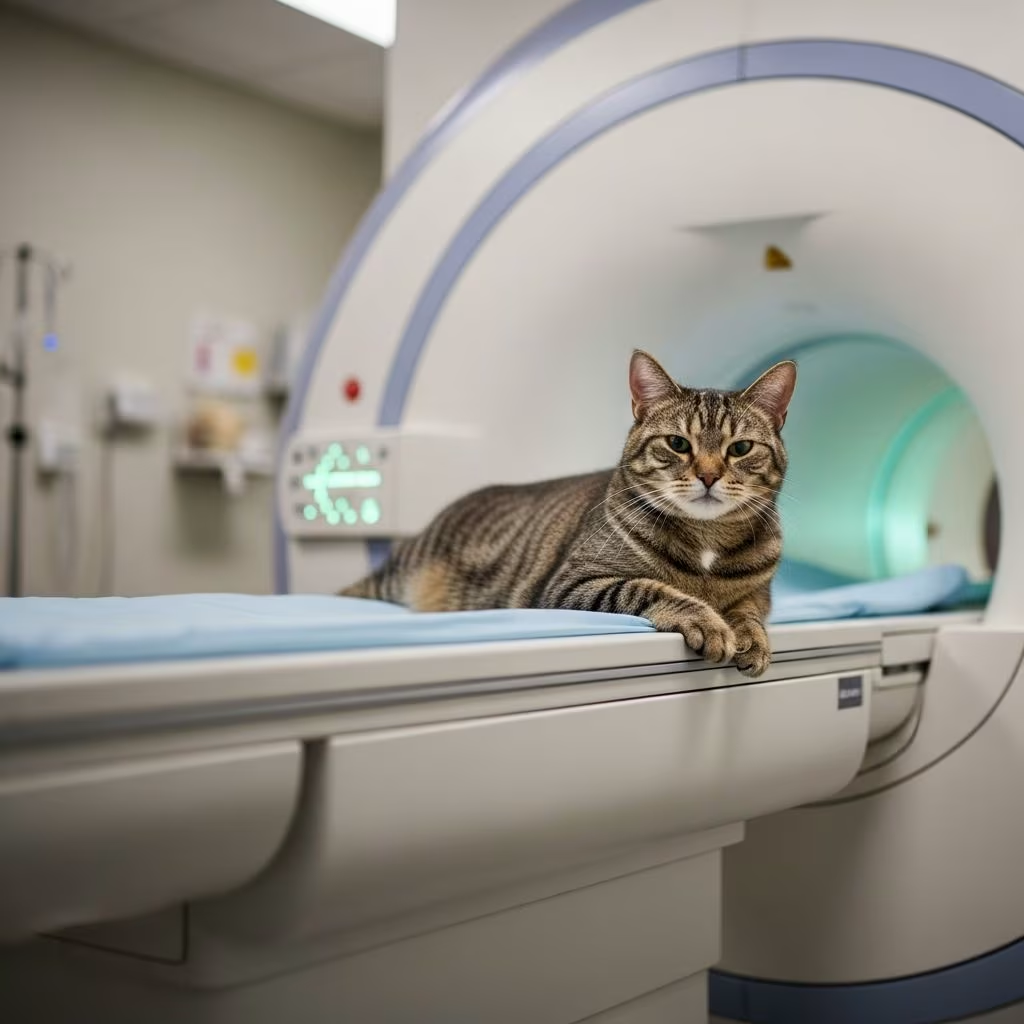
When your veterinarian mentions that your cat might need an MRI, it can feel overwhelming. This advanced imaging technology has become increasingly important in veterinary medicine, offering insights that traditional diagnostic tools cannot provide. Understanding what an MRI is, how it works, and when it’s necessary can help you make informed decisions about your cat’s health care and feel more confident throughout the process.
The Evolution of Feline Diagnostic Imaging Technology
Magnetic resonance imaging has transformed both human and animal healthcare since its introduction to veterinary medicine in recent decades. While humans have benefited from MRI technology since the early 1980s, veterinary applications have expanded significantly more recently, making advanced imaging more accessible to pet owners seeking comprehensive diagnostic solutions. Modern veterinary facilities now offer MRI as a crucial diagnostic tool alongside traditional radiographs, ultrasound, and computed tomography scans.
The development of specialized veterinary MRI equipment has allowed veterinarians to obtain exceptionally detailed images of soft tissues, providing diagnostic clarity that was previously impossible. This technological advancement represents a significant step forward in identifying and treating complex feline health conditions before they become critical.
What Sets MRI Apart From Other Imaging Methods
Several imaging technologies exist for diagnosing feline health problems, each with distinct advantages. Understanding the differences helps explain why your veterinarian might recommend MRI over other options.
Radiographs (X-rays) remain the most commonly used imaging tool in veterinary practice. They are quick, inexpensive, and excellent for identifying bone fractures and evaluating chest and abdominal structures. However, x-rays create only static, two-dimensional images and cannot provide detailed soft tissue visualization.
Ultrasound imaging uses sound waves to create real-time images of internal organs and tissues. A technician applies a probe to the cat’s body, emitting sound waves that bounce off tissues and create digital images. This method excels at evaluating abdominal organs and does not require anesthesia, making it valuable for cats with health concerns that prevent sedation.
Computed tomography (CT) scans combine x-ray technology with computer enhancement to produce detailed three-dimensional images. They excel at visualizing bone structures, the head, chest, and complex joints. Unlike MRI, CT scans use radiation and are particularly useful when bone detail is essential for diagnosis.
Magnetic resonance imaging stands apart by utilizing powerful magnetic fields and radio waves rather than radiation. This technology produces exceptionally detailed images of soft tissues, including the brain, spinal cord, ligaments, tendons, and internal organs. For neurological conditions and ligament injuries, MRI often provides superior diagnostic information compared to other modalities.
How Feline MRI Technology Actually Works
Understanding the mechanics of MRI helps demystify the procedure and explains why specific protocols must be followed. The MRI machine generates an extraordinarily powerful magnetic field that aligns hydrogen atoms within the cat’s body tissues. Radio waves are then transmitted, causing these aligned atoms to emit signals that the equipment detects and converts into detailed cross-sectional images.
The process involves several technical steps:
- A cat is placed inside a tube-shaped electromagnetic chamber after receiving general anesthesia
- The machine continuously pulses radio waves through the cat’s body, typically for 10-20 minutes of active imaging
- The cat’s body tissues respond by emitting radio frequency signals that the equipment captures
- Multiple repetitions of pulsing and signal detection occur to generate sufficient data for image interpretation
- A computer processes this data into detailed anatomical images that reveal soft tissue structure and abnormalities
The beauty of this process lies in its ability to differentiate between various tissue types based on their water and fat content, revealing pathologies that x-rays and even CT scans might miss. No radiation exposure occurs during the procedure, making it exceptionally safe from an ionizing radiation perspective.
Timeline and Duration Expectations
Cat owners often wonder how long the MRI process will take. The actual imaging portion typically lasts between 45 minutes to an hour, though some complex scans may extend to 90 minutes depending on the areas being examined. The entire appointment, including pre-procedure preparation, anesthesia induction, imaging, and recovery, generally takes several hours.
Pre-procedure preparation is essential and cannot be rushed. Veterinarians typically recommend blood work and radiographs before the MRI to ensure your cat is healthy enough to undergo general anesthesia safely. These preliminary tests may add time to the overall diagnostic timeline.
Post-procedure recovery is equally important. After imaging concludes, your cat is transferred to a warm, quiet recovery area where trained staff monitor them until they fully awaken from anesthesia. Most cats can return home the same day once they are alert and stable, though they may feel drowsy for several hours afterward.
Medical Conditions That Warrant MRI Evaluation
Your veterinarian might recommend an MRI when other diagnostic methods prove inconclusive or when specific conditions are suspected. MRI excels at diagnosing several categories of feline health problems:
| Condition Category | Specific Examples | Why MRI Is Valuable |
|---|---|---|
| Neurological Issues | Seizures, disorientation, behavioral changes, loss of coordination | Brain and spinal cord imaging with exceptional detail |
| Movement Abnormalities | Limping, lameness, paralysis, neck or back pain | Visualization of ligaments, tendons, and nerve compression |
| Joint Problems | Joint pain, swelling, reduced mobility | Detailed soft tissue evaluation around joints |
| Soft Tissue Abnormalities | Herniated discs, stenosis, inflammation | High-resolution imaging of tissues and fluid changes |
| Nasal and Ear Issues | Chronic sinusitis, nasal polyps, ear canal abnormalities | Detailed examination of nasal cavity and sinuses |
MRI is particularly valuable when a cat shows clinical signs like limping, lameness, seizures, or experiencing joint pain, neck pain, back pain, or paralysis. It can identify brain tumors, spinal cord compression, ligament tears, and inflammatory conditions that might not be visible on x-rays or ultrasound.
When Other Imaging Methods Are More Appropriate
Despite its advantages, MRI is not the ideal choice for every diagnostic situation. Some conditions are better evaluated using alternative imaging technologies. MRI may be less helpful when diagnosing internal organ abnormalities unrelated to inflammation, fractures, or head trauma in cats. When bone detail is critical, CT scans or radiographs often provide superior visualization of skeletal structures.
Your veterinarian considers the suspected diagnosis, the specific body part requiring evaluation, and the information needed before recommending MRI. In many cases, simpler, less expensive, and faster imaging methods provide the necessary diagnostic information without subjecting your cat to anesthesia.
Safety Considerations and Anesthesia Requirements
One of the most significant aspects of feline MRI is the requirement for general anesthesia. Cats cannot remain perfectly still for the 45-90 minute procedure without sedation, making anesthesia mandatory rather than optional. While MRI itself is considered extremely safe with no radiation exposure involved, the anesthesia component introduces considerations that veterinarians must carefully evaluate.
Before the procedure, your veterinarian will conduct blood work and physical examinations to assess your cat’s anesthetic risk. Some cats with serious health conditions may not be healthy enough to undergo general anesthesia, making them unsuitable candidates for MRI regardless of diagnostic need. This represents one of the primary drawbacks of MRI for veterinary diagnostics—not all cats can safely undergo the procedure.
Throughout the MRI scan, specialized monitoring equipment tracks vital signs including heart rate, breathing rate, body temperature, and oxygen levels. A veterinary technician remains present to watch these parameters continuously, ensuring immediate intervention if any concerns arise. This vigilant monitoring significantly enhances safety throughout the procedure.
The Cost Factor in Diagnostic Decision-Making
MRI represents one of the most expensive diagnostic imaging options available in veterinary medicine. The sophisticated equipment required and the specialized expertise needed to perform and interpret MRI scans contribute to higher costs compared to radiographs, ultrasound, or even CT scans. For many families, this expense represents a significant financial commitment.
This cost reality means MRI is typically reserved for situations where other diagnostic methods have been exhausted or when the suspected condition specifically requires MRI-level imaging detail. Your veterinarian often views MRI as a last resort, employed only when conventional diagnostic imaging techniques fail to provide adequate information. Before recommending MRI, most veterinarians explore more affordable alternatives first.
What to Expect on Your Cat’s MRI Day
Understanding the procedure from start to finish can reduce anxiety for both you and your cat. The day typically follows this general sequence:
- Arrive at the veterinary facility a few hours before the scheduled imaging time to allow for pre-procedure preparations
- Staff will review your cat’s medical history and confirm that pre-procedure blood work and radiographs have been completed
- Your cat will receive pre-anesthetic medications to ensure calm relaxation before general anesthesia induction
- Once fully anesthetized, your cat is positioned on a moving table and guided into the tube-shaped MRI machine
- The imaging process begins, with technicians monitoring from an adjacent control room
- After imaging concludes, your cat is transferred to the recovery area for close monitoring as anesthesia wears off
- Once your cat is alert and stable, you’ll receive discharge instructions and the preliminary findings
- A board-certified veterinary radiologist will interpret the images and provide a detailed written report to your primary veterinarian
Understanding MRI Results and Next Steps
After your cat’s MRI, the images are reviewed by a board-certified veterinary radiologist—a specialist with advanced training in interpreting diagnostic images. This radiologist generates a detailed written report that is sent to your primary veterinarian. The report typically arrives within days to a week, depending on the facility’s workflow.
Your veterinarian will discuss the findings with you, explaining what the images revealed and how this information changes the diagnostic picture. The MRI results may confirm a suspected diagnosis, reveal an entirely different condition, or sometimes provide reassurance that no serious pathology exists. This diagnostic clarity often becomes invaluable in determining the best treatment approach for your cat’s condition.
Preparing Your Cat for the MRI Experience
Before scheduling an MRI, discuss with your veterinarian whether your cat is a good candidate. Factors to consider include your cat’s overall health status, any previous anesthetic reactions, age, and ability to tolerate the procedure. Being honest about your cat’s medical history helps your veterinarian assess risks accurately.
In the days before the procedure, follow any pre-operative instructions provided by your veterinary facility. Most facilities recommend fasting for several hours before anesthesia to reduce aspiration risks. Avoid administering regular medications unless specifically instructed otherwise by your veterinarian.
FAQ Section
Is MRI painful for cats?
No, MRI is a painless procedure. The magnetic field and radio waves do not cause discomfort. The only discomfort cats might experience is related to anesthesia administration, which is typically minimal with modern techniques.
How safe is feline MRI?
MRI is considered extremely safe for cats. It uses no radiation and produces no known harmful effects from the magnetic field or radio waves. The primary safety consideration involves the general anesthesia required for the procedure.
Can all cats have an MRI?
No, cats with certain health conditions may not be candidates for MRI due to anesthesia risks. Additionally, cats with metal implants or pacemakers may not be suitable for MRI due to the powerful magnetic field.
How much does a feline MRI cost?
MRI costs vary by location and facility but typically range from several hundred to over a thousand dollars. Contact your veterinary facility for specific pricing information.
How long until we get results?
Preliminary findings may be discussed shortly after the procedure, but the detailed report from the veterinary radiologist typically arrives within several days to a week.
Will my cat need follow-up procedures?
This depends on the MRI findings. Some cats may need additional diagnostics, while others may proceed directly to treatment based on the MRI results.
References
- Feline Diagnostic Imaging: Ultrasound, MRI, X-Rays, Radiology — Georgia Veterinary Associates. https://www.mygavet.com/services/cats/feline-diagnostic-imaging
- MRI in Cats: What are they, and when would your cat need one? — Veterinary Referral Center. 2024-06-15. https://www.vetreferralcenter.com/site/blog/2024/06/15/mri-cats
- MRI in Cats: What Is It & Why Might Your Cat Need It? — VRA Veterinary Clinic. 2023-10-15. https://www.vravet.com/site/blog/2023/10/15/mri-cats
- MRI in Cats: What Is It & Why Might Your Cat Need It? — Southwest Florida Veterinary Specialists. 2023-10-30. https://www.swfvs.com/site/blog/2023/10/30/mri-cats
- MRI for Dogs and Cats – Uses, Safety, and What to Expect — MedVet. https://www.medvet.com/magnetic-resonance-imaging-mri-dogs-cats/
- Small Animal 1.5T MRI – The Complete Guide — Hallmarq. 2024-10-14. https://hallmarq.net/us/2024/10/14/guide-to-small-animal-mri-all-you-need-to-know-2/
- What to Expect: Small Animal MRI — University of Tennessee College of Veterinary Medicine. https://vetmed.tennessee.edu/wp-content/uploads/sites/4/UTCVM_WHAT-TO-EXPECT_VIS_SA-MRI.pdf



