

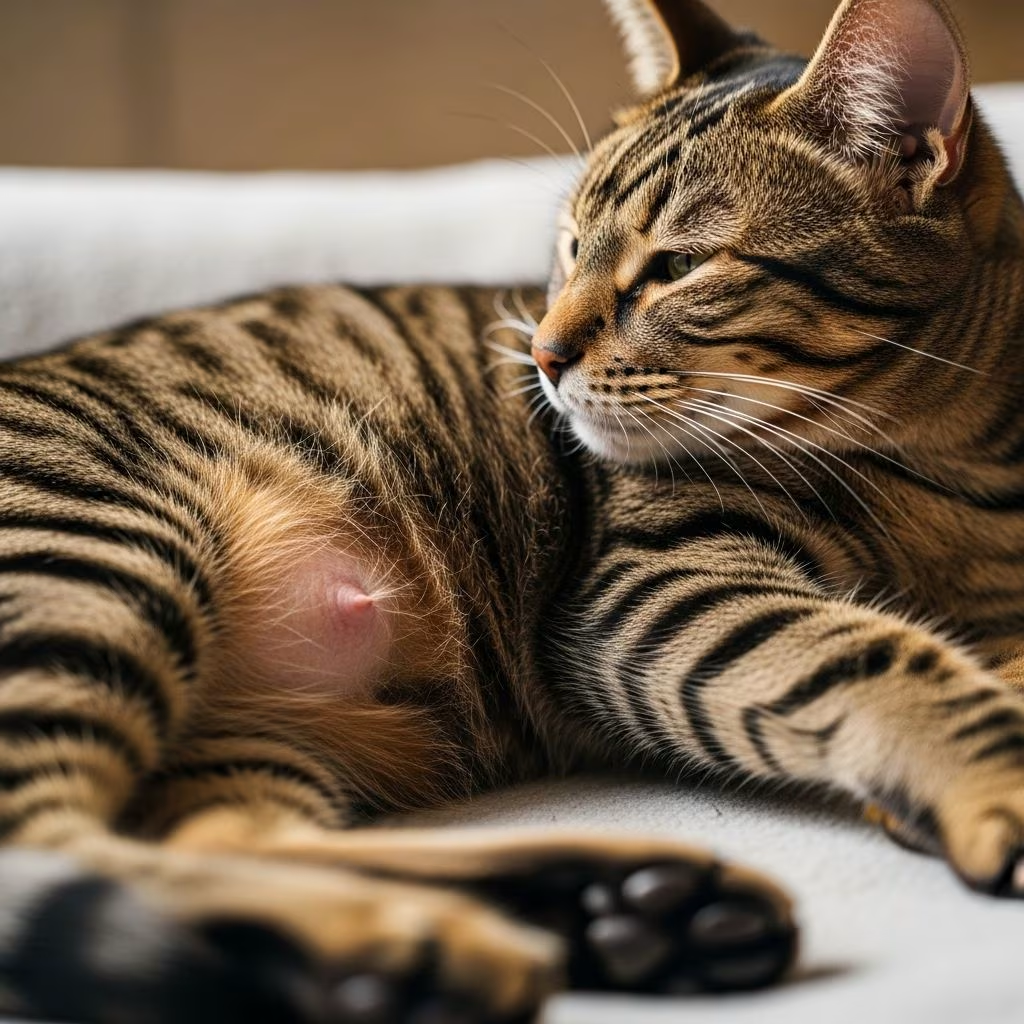
Feline mammary hypertrophy, also referred to as mammary hyperplasia or fibroadenomatous hyperplasia, represents a non-cancerous overgrowth of mammary tissue in cats, primarily driven by hormonal influences, particularly progesterone. This condition manifests as sudden enlargement of one or more mammary glands and is most prevalent in young, intact females but can affect cats of any age, sex, or reproductive status under certain circumstances. Understanding this disorder is crucial for timely intervention, as it can mimic more serious pathologies like cancer, which is alarmingly common in feline mammary cases.
Understanding the Hormonal Roots of the Condition
The primary driver of feline mammary hypertrophy is elevated progesterone levels, which stimulate excessive proliferation of mammary duct epithelium and surrounding stromal tissues. This hormonal surge can originate endogenously from natural estrous cycles, false pregnancies, or actual gestation, or exogenously from progestogen medications administered for behavioral control or contraception.
Two distinct pathological patterns emerge: lobular hyperplasia, involving glandular lobules, and fibroepithelial hyperplasia, characterized by ductal and connective tissue expansion. These changes lead to benign masses without invasive behavior, distinguishing them from malignant tumors. Progestins like megestrol acetate, historically used in cats, have been implicated in numerous cases, prompting a shift away from such treatments due to this risk.
- Endogenous triggers: Post-estrus in cycling queens, prolonged diestrus, or mid-gestation phases.
- Exogenous factors: Long-term progestin therapy in intact or neutered cats.
- Post-neutering occurrences: Possibly involving growth hormone or prolactin interplay.
While the exact mechanisms remain under study, progesterone’s role in promoting fibroglandular development is well-established across veterinary literature.
Who Is at Risk? Prevalence and Demographics
This condition transcends breed lines, affecting domestic shorthairs and purebreds alike with no predisposition noted. It predominantly strikes young females in their first few heat cycles, typically between 6 months and 2 years old, but reports document cases in cats up to 14 years.
Males, especially neutered ones on hormone therapies, and pregnant or pseudopregnant queens are also susceptible. Epidemiological data indicate rapid onset post-ovulation or drug administration, with multi-gland involvement common—often all ten mammary glands in severe instances.
| Risk Group | Key Factors | Prevalence Notes |
|---|---|---|
| Young intact females | Post-estrus cycling | Most common |
| Pregnant queens | Gestational hormones | Frequent, resolves post-partum |
| Neutered males/females | Progestin exposure | Drug-induced |
| Aged intact cats | Prolonged exposure | Less common |
Environmental contributors like obesity or toxin exposure may exacerbate risks, though evidence is anecdotal.
Recognizing the Signs: What to Watch For
Owners often notice palpable, firm masses in the mammary chain along the cat’s ventral abdomen. Enlargement develops acutely—within days to weeks—ranging from pea-sized nodules to masses exceeding 15 cm, causing discomfort, reluctance to move, or ventral dragging.
Skin over the glands may stretch thin, ulcerate from friction, or necrose in chronic cases, leading to secondary infections. Unlike lactation, no milk production occurs, and systemic signs like fever are absent unless complicated. Bilateral or multilateral involvement heightens suspicion.
- Primary symptom: Sudden, asymmetric or symmetric gland swelling.
- Advanced signs: Ulceration, erythema, pain on palpation.
- Behavioral cues: Lethargy, anorexia, gait abnormalities.
Early detection is vital, as 80-90% of feline mammary masses are malignant, necessitating prompt veterinary evaluation.
Diagnostic Approaches for Accurate Identification
Diagnosis hinges on history (recent heat, medications), signalment (young intact female), and physical exam revealing non-painful, proliferative masses without pus or fever.
Fine-needle aspiration or biopsy is imperative to rule out neoplasia, revealing hyperplastic ducts in edematous stroma without atypia or mitoses indicative of cancer. Imaging like ultrasound delineates mass architecture, while cytology excludes mastitis or adenocarcinoma.
Differentials include:
- Mammary adenocarcinoma (invasive, older cats).
- Mastitis (inflammatory, purulent).
- Adenoma or sarcoma (rare benign/malignant).
Hormone assays may confirm progesterone elevation, guiding therapy.
Treatment Strategies: From Conservative to Surgical
Many cases regress spontaneously as progesterone wanes—within 4-8 weeks post-estrus or drug cessation—making watchful waiting viable for mild, intact females.
For persistent or symptomatic hypertrophy:
- Ovariohysterectomy (OVH): Gold standard for intact cats, eliminating ovarian progesterone source; rapid resolution follows.
- Antiprogestins: Drugs like mifepristone or aglepristone block receptors, inducing involution without surgery; effective in neutered or male cases.
- Supportive care: Analgesics, antibiotics for ulcers, prolactin inhibitors if implicated.
Mastectomy is reserved for non-responsive, ulcerated, or diagnostically uncertain masses. Prognosis is excellent post-intervention, with recurrence rare sans hormonal trigger.
Preventive Measures and Long-Term Management
Early spaying before first estrus drastically reduces incidence by averting progesterone surges. Avoid progestin-based medications; opt for alternatives like GnRH analogs for behavioral issues.
Maintain ideal body weight, minimize toxin exposure (pesticides), and conduct routine abdominal palpations. Annual vet checks facilitate early detection.
- Spay by 4-6 months.
- Decline progestogen prescriptions.
- Monitor for heat cycle changes.
Frequently Asked Questions (FAQs)
Is feline mammary hypertrophy cancerous?
No, it is a benign, reversible overgrowth, but biopsy is essential to exclude malignancy, given high cancer rates in cat mammary masses.
Will my cat need surgery?
Not always; many resolve naturally or with medication. OVH is recommended for intact females to prevent recurrence and other diseases.
How quickly does it progress?
Onset is rapid, doubling in size over 1-2 weeks, but regression can follow hormone normalization.
Can males get this?
Yes, particularly neutered males on progestins.
What if it’s ulcerated?
Seek immediate care for infection control and targeted therapy.
Prognosis and Owner Education
With appropriate management, full recovery is the norm, underscoring the importance of hormonal source removal. Educate owners on spaying benefits, which also mitigate pyometra and neoplasia risks. Vigilance ensures optimal feline health.
References
- Mammary Hypertrophy in Cats — Merck Veterinary Manual. 2023. https://www.merckvetmanual.com/reproductive-system/reproductive-diseases-of-the-female-small-animal/mammary-hypertrophy-in-cats
- Feline Mammary Hyperplasia: An Overview — PetCareRx. 2023. https://www.petcarerx.com/article/feline-mammary-hyperplasia-an-overview/6528
- Mammary fibroadenomatous hyperplasia in a young cat — PMC (PubMed Central). 2002-07-01. https://pmc.ncbi.nlm.nih.gov/articles/PMC340082/
- Cat diagnosed with mammary gland fibroadenomatous hyperplasia — Texas A&M Veterinary Medical Diagnostic Laboratory. 2023. https://tvmdl.tamu.edu/case-studies/cat-diagnosed-with-mammary-gland-fibroadenomatous-hyperplasia/
- Mammary Gland Enlargement in Cats — PetMD. 2023. https://www.petmd.com/cat/conditions/endocrine/c_ct_mammary_gland_hyperplasia
- Feline Mammary Hyperplasia — UC Davis Health Topics. 2023. https://healthtopics.vetmed.ucdavis.edu/health-topics/feline-mammary-hyperplasia



