

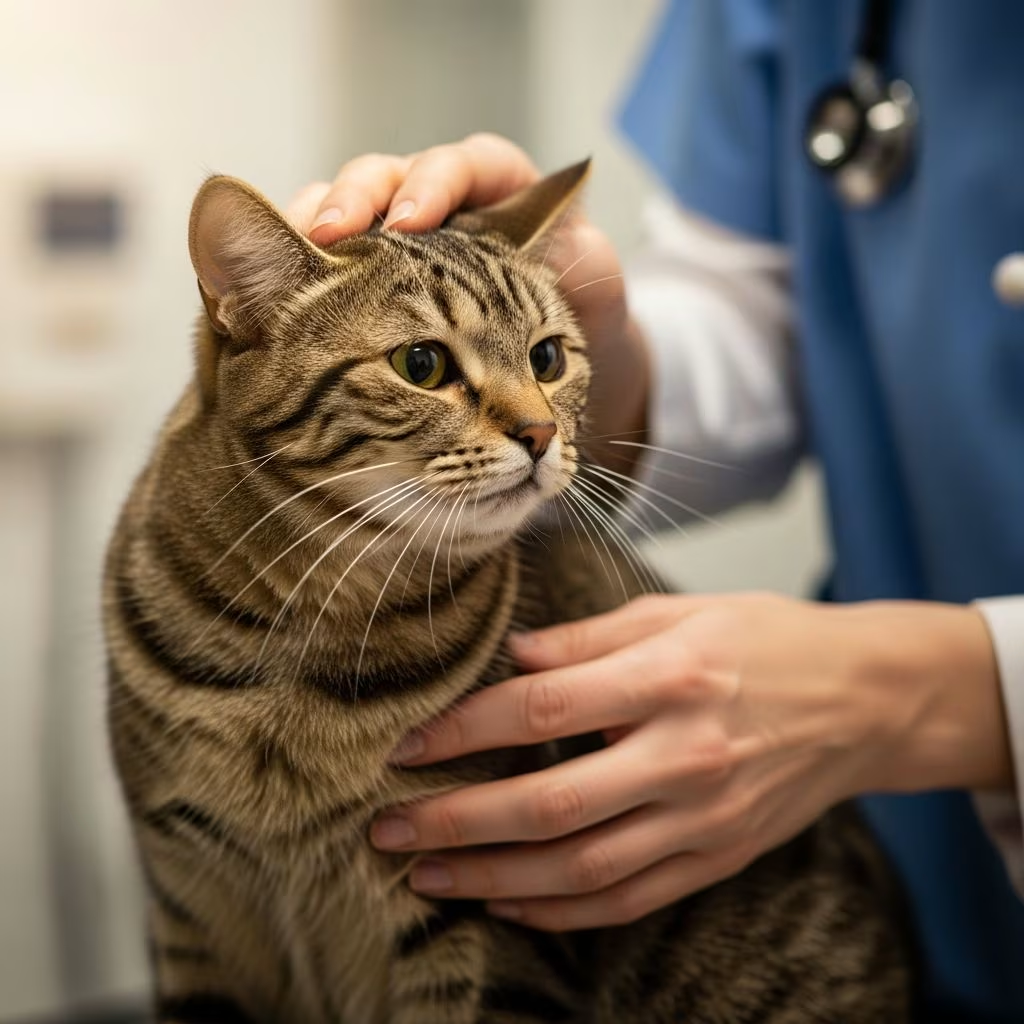
Mammary gland tumors represent a significant health concern in the feline population, accounting for approximately 17% of all feline neoplasms. The distinction between feline and canine mammary disease is profound, with cats exhibiting substantially higher rates of malignancy. Unlike dogs, where roughly 50% of mammary masses demonstrate benign characteristics, the overwhelming majority of feline mammary tumors exhibit aggressive biological behavior. This fundamental difference necessitates a thorough understanding of presentation, diagnostic protocols, and therapeutic approaches tailored specifically to feline patients.
Prevalence and Malignancy Rates in Cats
The epidemiology of feline mammary disease presents a concerning clinical picture. Between 80% and 95% of mammary tumors identified in cats demonstrate malignant histopathology, with some sources citing rates as high as 85-90% of cases presenting as adenocarcinomas. This substantially exceeds malignancy rates observed in canine patients, making early detection and intervention paramount in feline populations. The malignant-to-benign ratio in cats approximates at least 4:1, meaning veterinarians must approach any identified mammary mass with consideration of potentially aggressive neoplastic disease.
When benign tumors do occur in cats, fibroadenoma represents the most frequently encountered histological type. Simple adenomas and duct papillomas remain exceptionally rare presentations. The biological behavior of feline mammary masses demonstrates a propensity for rapid growth, with most masses remaining undetected until they exceed 2 centimeters in diameter—a size threshold already associated with advanced disease progression.
Pathological Origins and Cellular Classification
Feline mammary neoplasms derive exclusively from glandular epithelial tissue, technically classifying all tumors as adenomas or adenocarcinomas. The terminology used in clinical practice often refers to adenocarcinomas simply as “carcinomas,” though this represents a slight linguistic simplification of the precise histological designation. These growths originate within the epithelial tissue underlying individual nipples and possess considerable potential for dissemination to distant anatomical sites.
The adenocarcinomas that dominate feline mammary disease eventually spread to lymph nodes, lungs, pleura, liver, adrenal glands, kidneys, and other organ systems. Approximately 50% of cats with diagnosed feline mammary tumors will demonstrate regional lymph node involvement at the time of diagnosis, while distant metastasis occurs with sufficient frequency to warrant thorough staging protocols in all suspected cases.
Risk Factors and Preventive Strategies
Hormonal fluctuations, specifically variations in estrogen and progesterone, appear to influence mammary tumor development in cats. This understanding has led to evidence-based preventive recommendations focusing on early ovariohysterectomy (spaying). Cats spayed before six months of age demonstrate a 91% risk reduction for subsequent mammary tumor development. Even delayed spaying between seven and twelve months of age provides an 86% risk reduction, demonstrating the substantial protective benefit of this intervention across different age windows. The implications for feline population health management are significant, as spaying represents an accessible preventive strategy with proven efficacy.
Clinical Presentation and Physical Examination Findings
Mammary masses present with variable physical characteristics that cannot reliably predict underlying histopathology. Some masses appear discrete and mobile within surrounding tissue, while others demonstrate firm attachment to underlying structures. Ulceration of the overlying skin or cyst formation may accompany tumor development. Regional lymph nodes, particularly axillary and inguinal nodes, may become visibly or palpably enlarged secondary to metastatic involvement.
The presence of ulceration carries particularly negative prognostic implications. When the overlying tissues remain intact without ulceration, survival outcomes demonstrate improved longevity compared to ulcerated lesions. Gross appearance alone cannot reliably distinguish tumor grade, emphasizing the necessity for histopathological evaluation in all cases.
Diagnostic Methodology and Confirmation Protocols
When a mammary mass is identified through physical palpation, confirmation of neoplastic origin requires definitive tissue diagnosis. Two primary approaches exist for obtaining diagnostic material: fine needle aspiration (FNA) followed by cytological examination, or direct tissue biopsy for histopathological analysis.
In feline patients, FNA and cytology prove particularly valuable given the high prevalence of malignancy. Unlike canine patients where benign masses are common and cytology interpretation presents challenges, the predominance of feline malignancy makes FNA cytology a reliable diagnostic tool. However, histopathological examination remains superior for determining tumor grade and identifying specific cellular characteristics that influence prognosis and treatment planning.
Complete staging must precede surgical intervention. This comprehensive approach includes:
- Palpation and aspiration of draining lymph nodes (particularly axillary and inguinal nodes)
- Hematologic and biochemical laboratory testing
- Urinalysis to detect concurrent disease in elderly cats
- Thoracic imaging via radiography or CT to assess lung involvement
- Abdominal ultrasonography to evaluate for metastatic disease
This multifaceted staging approach ensures clinicians identify disease beyond the primary mammary glands and regional lymph nodes, preventing unrealistic owner expectations and inappropriate surgical planning.
Tumor Staging and Grading Systems
The TNM (Tumor, Node, Metastasis) staging system, adapted from World Health Organization guidelines, provides standardized communication among veterinary professionals and researchers. This system categorizes feline mammary tumors based on three primary parameters:
| Stage | Primary Tumor Diameter | Regional Lymph Node Status | Distant Metastasis |
|---|---|---|---|
| I | Less than 2 cm | Negative | Negative |
| II | 2-3 cm | Negative | Negative |
| III | Greater than 3 cm | Any involvement | Negative |
| IV | Any size | Any status | Present |
Primary tumor diameter provides substantial prognostic value. Larger tumors exceeding 3 centimeters demonstrate worse prognosis compared to smaller lesions. Lymph node involvement automatically designates stage III disease regardless of primary tumor size, and any evidence of distant metastasis constitutes stage IV disease.
Histological grading employs the Elston and Ellis grading system, evaluating tissue differentiation, nuclear pleomorphism, and mitotic count. Higher tumor grades correlate strongly with poorer prognosis. Cats diagnosed with grade III adenocarcinomas exhibit significantly shortened median survival times compared to those with grade I tumors, making this determination crucial for prognostic counseling.
Lymphatic Drainage Patterns and Metastatic Pathways
Understanding feline mammary lymphatic anatomy proves essential for surgical planning and staging interpretation. The lymphatic drainage patterns of feline mammary glands differ from canine anatomy and create specific patterns of regional involvement. The axillary and inguinal lymph nodes represent the primary sites of regional metastasis in approximately 80% of affected cats. Notably, the sternal lymph node becomes involved in approximately 30% of cases, and involvement of multiple axillary lymph nodes occurs in 58-75% of cats when lymphangiography is performed. Single inguinal lymph node involvement predominates in 84-94% of cats.
This anatomy dictates that complete surgical excision must encompass all known drainage pathways to achieve optimal disease control.
Surgical Treatment Options and Prognostic Outcomes
Surgical resection remains the mainstay of mammary tumor treatment. The extent of surgical intervention directly influences disease-free intervals and overall survival times. Tumor cells readily spread beyond the primary site, necessitating complete excision incorporating en bloc resection with appropriate margins and removal of involved fascia.
The radical bilateral mastectomy with removal of affected or suspected lymph nodes provides the most favorable prognosis. This procedure involves en bloc resection with lateral margins of 2-3 centimeters and removal of fascia in areas of potential recurrence beneath the primary mass. Current recommendations favor completing the entire procedure in a single operation rather than staging unilateral procedures four weeks apart.
Comparative surgical outcomes demonstrate the profound impact of surgical approach:
| Surgical Approach | Disease-Free Interval (months) | Median Survival (months) | Recurrence Rate |
|---|---|---|---|
| Radical Bilateral Mastectomy | 18-30 | 37 | 20% |
| Unilateral Mastectomy | 10-18 | 15.5 | 47% |
| Regional/Partial Resection | 7 | Variable | 70% |
Incomplete or narrow margins carry the highest recurrence risk. Local resection without comprehensive gland removal associates with 70% recurrence rates or development of new metastatic lesions in regional lymph nodes. Radical bilateral mastectomy provides protective effects against post-surgical disease progression by removing both mammary glands and involved lymph nodes.
Additional Prognostic Factors and Histopathological Considerations
Beyond surgical approach, multiple factors influence prognosis and survival outcomes. Vascular and lymphatic invasion noted on histopathological examination serves as a potential indicator of post-operative metastasis even when pre-operative staging failed to detect distant disease. This finding carries worse prognostic implications.
Tumor histological type influences survival duration. Tubulopapillary adenocarcinomas demonstrate longer survival times compared to anaplastic adenocarcinomas, the most aggressive histological variant. When multiple adverse prognostic factors coexist—such as anaplastic adenocarcinoma with evidence of vascular or lymphatic invasion—the prognosis becomes substantially grimmer.
Adjunctive Therapies and Medical Management
For cats presenting with adverse prognostic indicators, metronomic chemotherapy using low doses of cyclophosphamide administered continuously over extended periods may help modulate tumor behavior. This approach differs fundamentally from conventional chemotherapy targeting acute disease reduction.
Multi-agent chemotherapy demonstrates limited effectiveness for managing macroscopic metastatic disease, with response rates of only 20-30% and duration typically exceeding three months. Consequently, surgery remains the primary curative treatment modality, with chemotherapy reserved for selected cases with specific prognostic profiles.
Key Clinical Takeaways
The control of feline mammary neoplasia hinges upon two fundamentally modifiable factors: early detection and surgical approach selection. Unlike many prognostic variables outside clinician control, early identification of disease and implementation of radical bilateral surgical resection represent evidence-based interventions with proven impact on survival outcomes.
Thorough staging prior to surgery prevents unrealistic owner expectations and inappropriate surgical planning. The high prevalence of regional and distant metastasis at presentation necessitates comprehensive imaging and lymph node evaluation before committing to definitive surgical intervention. Early detection combined with radical surgical management offers the most promising approach to improving survival duration and quality of life in affected feline patients.
References
- Clinical approach to mammary tumours in felines — Animal Cancer Trust Charity. 2025-05-24. https://www.animalcancertrustcharity.co.uk/shared/images/content/bus_56279/pdf/Feline_Mammary_Masses_24_May_2025.pdf
- Optimal Treatment for Feline Mammary Tumors — Clinician’s Brief. https://www.cliniciansbrief.com/article/optimal-treatment-feline-mammary-tumors
- Mammary Tumors in Cats – Reproductive System — Merck Veterinary Manual. https://www.merckvetmanual.com/reproductive-system/mammary-tumors-in-cats/mammary-tumors-in-cats
- Mammary Tumours in the Cat: Size matters, so early detection matters — PMC National Center for Biotechnology Information. https://pmc.ncbi.nlm.nih.gov/articles/PMC10816587/
- Mammary Tumors — Cornell University College of Veterinary Medicine, Cornell Feline Health Center. https://www.vet.cornell.edu/departments-centers-and-institutes/cornell-feline-health-center/health-information/feline-health-topics/mammary-tumors
- Mammary Tumors in Cats — VCA Animal Hospitals. https://vcahospitals.com/know-your-pet/mammary-tumors-in-cats



