

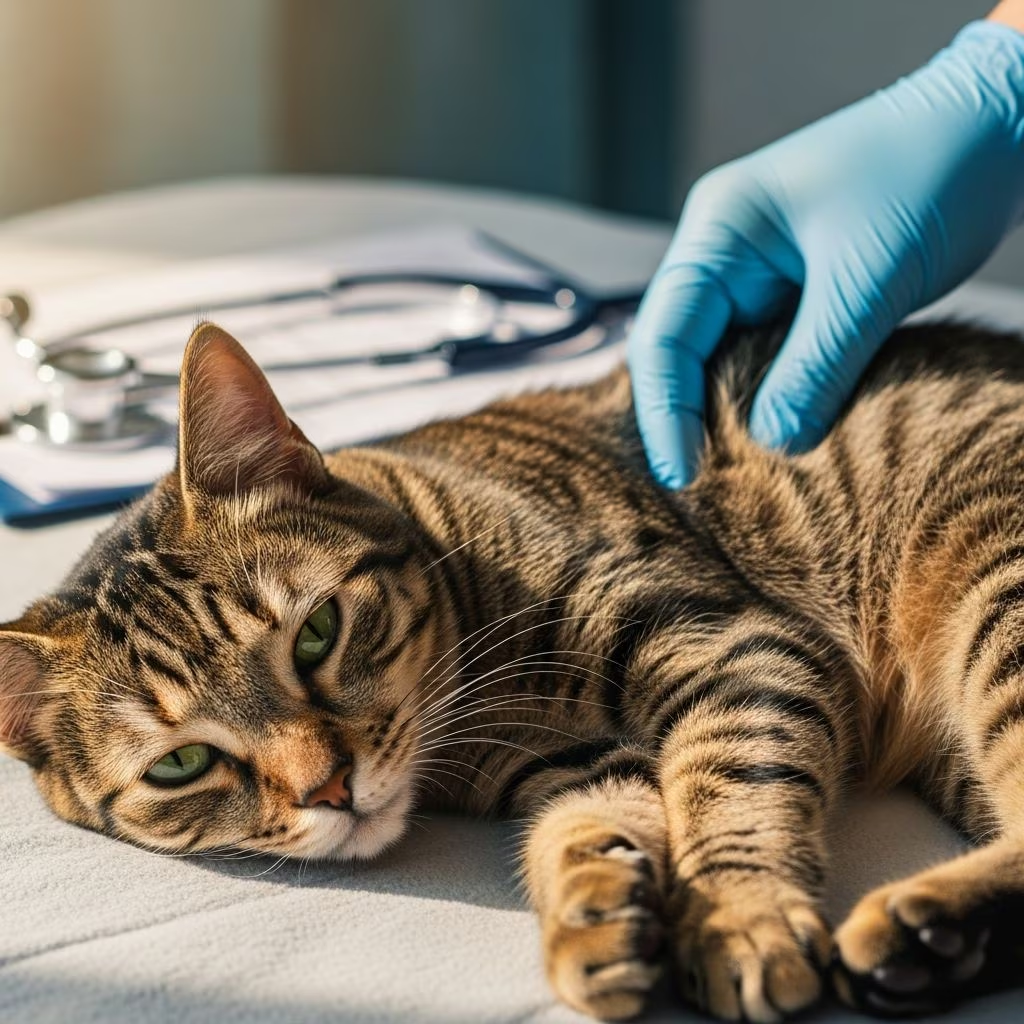
Mammary cancer represents one of the most significant health challenges facing female cats today. As the third most common tumor type in felines, this condition affects thousands of cats annually and can profoundly impact their quality of life if left undetected or untreated. Unlike many other feline health conditions that owners can easily spot, mammary tumors often develop silently in their early stages, making awareness and regular home examinations crucial for early intervention. Understanding the characteristics of this disease, recognizing warning signs, and knowing when to seek veterinary care can make a substantial difference in treatment outcomes and your cat’s long-term prognosis.
The Prevalence and Malignancy Rate of Feline Mammary Tumors
One of the most sobering facts about cat mammary cancer is its overwhelmingly malignant nature. Approximately 85 to 90 percent of mammary tumors in cats are malignant, meaning they possess the potential to spread throughout the body and cause systemic complications. This stark contrast with dogs, where roughly 50 percent of mammary tumors remain benign, underscores why vigilance is essential for cat owners. The prevalence of malignant tumors places feline mammary cancer among the most serious oncological concerns in veterinary medicine.
The specific types of malignant tumors that develop most frequently in cats are adenocarcinomas, which originate in the epithelial tissue comprising the gland structures beneath each nipple. These carcinomas account for approximately 80 percent of all feline mammary malignancies, with several common subtypes identified by veterinary pathologists: simple tubular carcinomas, tubulopapillary carcinomas, and solid carcinomas. Less frequently encountered but still concerning variants include sarcomas, squamous cell carcinomas, and mucinous carcinomas. The aggressive inflammatory adenocarcinoma subtype represents a particularly dangerous variant, distinguishable by a lump that feels warm or hot to the touch, along with redness and potential ulceration of the affected area.
Anatomical Distribution and Multiple Tumor Development
Understanding the anatomical location of mammary tissue helps owners perform effective home examinations. Cats possess eight mammary glands arranged symmetrically along their ventral surface—four glands on each side extending from the chest region down toward the groin area. These glands can be felt as chains of tissue running along the underside of the body. Importantly, mammary tumors do not show site or side predilection, meaning any of these glands can be equally affected.
A particularly concerning aspect of feline mammary cancer is the high frequency of multiple tumor development. Multiple mammary gland involvement occurs in more than half of all cases, and cats frequently develop different tumor types across various glands. This multifocal presentation increases the complexity of treatment planning and emphasizes the need for thorough examination of all mammary tissue during veterinary evaluation.
Risk Factors and Hormonal Connection
While the precise etiology of feline mammary cancer remains incompletely understood, hormonal factors play a significant role in disease development. Un-spayed cats face a dramatically elevated risk, with unspayed females demonstrating a seven-fold higher likelihood of developing mammary cancer compared to their spayed counterparts. This dramatic difference highlights the protective effect of spaying and underscores why early spay procedures represent one of the most effective preventive strategies available to cat owners.
The hormonal connection relates to estrogen and progesterone receptors present on tumor cells. While these receptors appear in approximately 70 percent of canine mammary tumors, they are found in only about 10 percent of feline tumors. Interestingly, benign tumors in cats more frequently express progesterone receptors, whereas malignant tumors tend to lose hormonal dependence during their progression, suggesting that feline mammary cancers may develop through somewhat different biological pathways than canine tumors.
Importantly, genetic predisposition has not yet been identified as a contributing factor in feline mammary cancer development. Similarly, environmental carcinogens, sunlight exposure, viral infections, and vaccine injections—factors implicated in other feline cancers—do not appear relevant to mammary tumor formation.
Recognizing Early Warning Signs
Early detection depends entirely on owner vigilance, as cats in the initial disease stages typically show no obvious clinical signs. Small tumors in their earliest phases are not painful, cannot easily be felt, and produce no obvious symptoms. This silent progression underscores why regular, systematic home examinations represent the most valuable tool for detecting mammary cancer before it advances.
The most visible sign owners typically notice is a lump or multiple lumps developing on the underside of the abdomen. However, lumps alone can have various causes, and proper evaluation requires understanding what characteristics suggest cancer versus benign conditions. Malignant tumors typically demonstrate certain distinguishing features:
- Firm texture resembling BB pellets when palpated
- Adherence to overlying skin
- Rapid increase in size
- Ulceration or bleeding from the affected area
- Warmth or heat emanating from the lesion, particularly in inflammatory carcinoma subtypes
- Redness and inflammation surrounding the gland
- Discharge from nipples, which may be tan to yellow in color
As disease progresses and tumors enlarge, the skin may stretch excessively and become ulcerated, prompting cats to lick the affected area—another sign owners may notice. In some cases, lymph nodes enlarge if cancer spreads, particularly the axillary nodes located under or behind the front legs and inguinal nodes in the groin region.
Systemic Signs Indicating Advanced Disease
When mammary cancer metastasizes to distant organs, cats develop additional clinical signs reflecting systemic involvement. Weight loss occurs as cancer cells compete with healthy tissue for nutrients, regardless of whether the cat maintains a normal appetite. Lethargy and reduced appetite frequently accompany metastatic disease. Gastrointestinal disturbances including vomiting and diarrhea may emerge.
Respiratory symptoms develop if cancer spreads to the lungs or pleura surrounding lung tissue. Affected cats may display rapid or shallow breathing, or difficulty breathing, sometimes caused by pleural effusion—accumulation of fluid in the chest cavity. In severe cases, lameness or limb swelling can occur if tumors spread to bone tissue.
Performing Effective Home Examinations
Veterinarians recommend weekly home examinations as the most practical approach to early tumor detection. The optimal time to perform these examinations is during casual petting or belly scratching sessions, when cats are relaxed and receptive to touch. Systematic palpation involves running hands along both chains of mammary tissue from the thoracic region down through the inguinal area, feeling carefully for any differences in symmetry between sides.
Each gland should be gently palpated individually while assessing for several abnormalities: swelling, firmness or hardness, nodules, discharge from the nipple, ulceration, abnormal warmth, or any signs of discomfort. Visual inspection of each nipple should also be performed, looking for signs of redness, swelling, or any fluid discharge. Any suspicious findings warrant immediate veterinary evaluation, as early professional assessment can identify whether tissue changes represent normal variation, benign conditions, or concerning pathology.
Differential Diagnosis Considerations
Not all breast tissue abnormalities represent cancer. Several conditions can mimic mammary tumors and must be differentiated through professional examination. Mastitis, a bacterial infection of mammary tissue, can present with swelling and discharge. Skin tumors unrelated to mammary glands may develop in the breast region. Inguinal hernias can create palpable masses in the groin area. In cats specifically, enlarged inguinal fat pads commonly create masses resembling tumors, and foreign bodies like BB pellets can feel surprisingly similar to tumor nodules on palpation. Professional veterinary evaluation with appropriate diagnostic testing is essential for accurate differentiation.
Diagnostic Approach and Staging
When veterinarians discover a suspicious mammary mass during physical examination, they pursue comprehensive diagnostic evaluation. Physical examination findings suggestive of malignancy include masses that are firmly adhered to skin or underlying tissue, ulcerated, painful, swollen, or rapidly increasing in size. Veterinarians may discover masses incidentally during routine wellness examinations or when owners report findings during history taking.
Complete diagnostic workup typically includes imaging studies to assess whether cancer has metastasized. Chest radiographs evaluate for lung involvement, particularly important given the frequency of pulmonary metastasis in feline mammary cancer. Additional bloodwork and imaging may be indicated based on clinical presentation. Histopathological examination through biopsy or surgical removal followed by pathology analysis provides definitive diagnosis and helps guide treatment decisions.
Treatment Options and Prognosis
Surgical removal remains the primary treatment for localized mammary tumors. The extent of surgery depends on the number of affected glands and the degree of skin involvement. When cancer involves multiple glands on one chain, entire chain removal may be recommended. Complete surgical excision, when achievable, offers the best chance for long-term disease control.
Because approximately 85 percent of feline mammary tumors are malignant adenocarcinomas with significant metastatic potential, chemotherapy may be recommended following surgery to address potential micrometastases. The aggressiveness of malignant feline mammary tumors necessitates comprehensive treatment approaches extending beyond surgery alone.
Prevention Through Spaying
The most effective prevention strategy for feline mammary cancer is early spaying. Unspayed cats face seven times the risk of developing mammary tumors compared to spayed cats. Spaying performed before the first heat cycle provides maximum protection, though spaying at any age still significantly reduces risk compared to remaining intact. This simple, safe surgical procedure offers profound protective benefits and simultaneously prevents numerous other reproductive health concerns, making it an essential component of feline preventive health care.
References
- Mammary Cancer in Dogs and Cats: What Every Pet Owner Should Know — Morris Animal Foundation. https://www.morrisanimalfoundation.org/article/mammary-cancer-in-dogs-and-cats
- Breast Cancer In Cats — PetCure Oncology. https://petcureoncology.com/mammary-tumors-in-cats/
- Feline Mammary Tumors — NC State Veterinary Hospital, College of Veterinary Medicine. https://hospital.cvm.ncsu.edu/services/small-animals/cancer-oncology/oncology/medical-oncology-feline-mammary-tumors/
- Mammary Tumors – Feline — Veterinary Society of Surgical Oncology (VSSO). https://vsso.org/mammary-tumors-feline
- Mammary Cancer (Breast Tumor) in Cats — Long Beach Animal Hospital. https://lbah.com/feline/mammary-cancer/
- Mammary Tumors — Cornell University College of Veterinary Medicine, Feline Health Center. https://www.vet.cornell.edu/departments-centers-and-institutes/cornell-feline-health-center/health-information/feline-health-topics/mammary-tumors
- Mammary Tumors in Cats – Reproductive System — Merck Veterinary Manual. https://www.merckvetmanual.com/reproductive-system/mammary-tumors-in-cats/mammary-tumors-in-cats



