

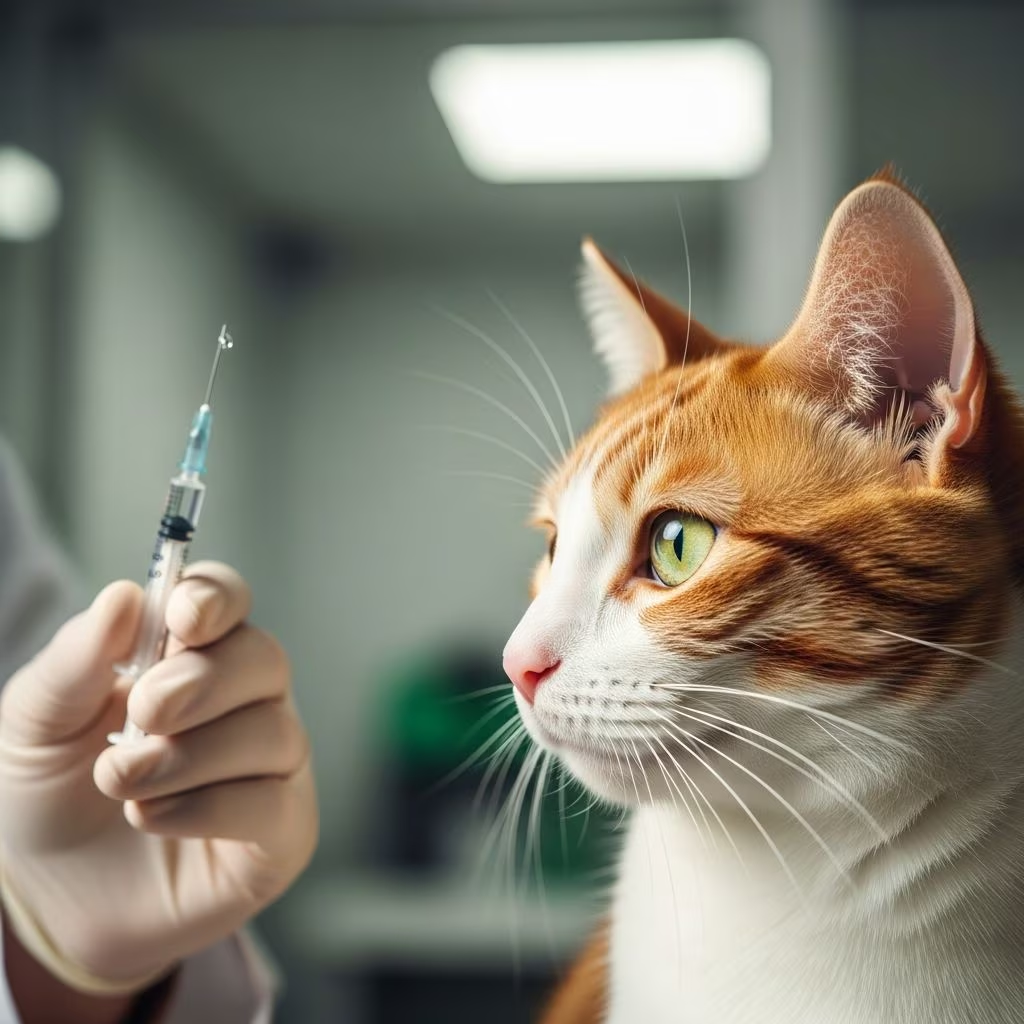
Feline Leukemia Virus Vaccination: Protecting Your Cat’s Health
Feline Leukemia Virus (FeLV) is one of the most serious infectious diseases affecting cats worldwide. Unlike many other viral infections, there is no treatment to eliminate FeLV from a cat’s body once infection occurs, and the disease is ultimately fatal. This reality underscores the critical importance of prevention through vaccination. The FeLV vaccine represents one of the most important tools available to veterinarians and cat owners for protecting feline companions from this devastating disease. Understanding the vaccination process, schedule, and effectiveness can help you make informed decisions about your cat’s healthcare.
Understanding Feline Leukemia Virus
Feline Leukemia Virus is a retrovirus that affects cats of all ages, though it is particularly dangerous in kittens and young cats. The virus attacks the immune system and bone marrow, leading to anemia, immunosuppression, and various cancers. Cats with FeLV typically experience a significantly shortened lifespan and suffer from numerous health complications throughout their lives. The virus is transmitted through saliva, urine, feces, and other bodily fluids, making it highly contagious, especially among cats that live together or have outdoor access.
Because FeLV is so serious and incurable, prevention is the only effective strategy. Vaccination provides the best opportunity to protect your cat from this life-threatening disease and ensure a longer, healthier life.
FeLV Vaccination Schedule for Kittens
The initial vaccination series is crucial for establishing strong immunity in young cats. For kittens, the FeLV vaccine should be administered according to a specific schedule to maximize effectiveness:
- First dose: Administered at 8-9 weeks of age
- Second dose: Administered 3-4 weeks after the first dose
- Third dose: Administered 1 year after the second dose
This three-dose initial series ensures that kittens develop strong, lasting immunity even if maternal antibodies interfere with early vaccinations. The spacing between doses is important because it allows the immune system to fully respond to the vaccine. Two doses administered one month apart are necessary to provide strong, lasting immunity, though this immunity will naturally decline over time, requiring periodic revaccination.
Vaccination Guidelines for Adult Cats
The approach to FeLV vaccination in adult cats depends significantly on their lifestyle and risk of exposure. The American Association of Feline Practitioners (AAFP) and other veterinary organizations recommend tailoring the vaccination strategy to individual cats rather than applying a one-size-fits-all approach.
Core vs. Non-Core Vaccination Status
For adult cats, FeLV vaccine classification depends on their age and lifestyle:
- Kittens under 1 year: FeLV vaccine is considered a core vaccine, meaning it is recommended for all cats in this age group regardless of lifestyle
- Adult cats over 1 year: FeLV vaccine is classified as non-core for low-risk indoor cats, meaning vaccination decisions should be made on an individual basis
This distinction recognizes that not all adult cats face the same risk of FeLV exposure. Indoor cats with no contact with outdoor cats have minimal risk, while cats with outdoor access or those living in multi-cat households have significantly higher risk.
Risk Assessment and Recommendations
Your veterinarian will evaluate your adult cat’s specific circumstances to determine the appropriate vaccination strategy. Factors considered include:
- Whether the cat spends time outdoors
- Contact with other cats of unknown FeLV status
- Living situation and household composition
- Geographic location and local disease prevalence
Cats at high risk, such as those with outdoor access or indoor cats that might be exposed to cats with unknown FeLV status, should be vaccinated. Adult cats at low risk—those confined indoors with no contact with potentially infected cats—may require less frequent vaccination or may not require revaccination at all, depending on their prior vaccination history and current immunity levels.
Revaccination Schedules
After the initial vaccination series is complete, the frequency of revaccination depends on the cat’s risk level and the vaccine product used:
- High-risk cats: Annual revaccination is recommended
- Low-risk cats: Revaccination every 2-3 years may be appropriate
- Minimal-risk cats: May not require revaccination after the initial series
Some FeLV vaccine products have demonstrated immunity lasting up to two years, which can reduce the vaccination frequency needed for lower-risk cats. Your veterinarian will advise you about the recommended revaccination schedule based on your specific cat’s lifestyle and risk factors. It is important to maintain regular veterinary care to ensure your cat receives appropriate booster vaccinations as needed.
Pre-Vaccination Testing
Before administering FeLV vaccine to any cat, especially adult cats, veterinarians typically recommend testing to determine the cat’s current FeLV status. Pre-vaccination testing is important because:
- Cats should be screened for FeLV antigenemia to avoid vaccinating already infected cats
- Testing ideally includes screening for both antigen and provirus
- Vaccination provides no benefit to cats already infected with FeLV
- Early detection of FeLV infection allows for appropriate management and monitoring
Blood tests have been developed to detect the presence of FeLV in a cat’s blood with high reliability. These tests are generally very accurate, though false positive results can rarely occur. In some situations, it may be necessary to confirm infection by repeating blood testing or using different types of testing to ensure accuracy.
How Effective is the FeLV Vaccine?
The FeLV vaccine is highly effective at preventing disease and has significantly contributed to decreased FeLV prevalence in cat populations. Research demonstrates that unvaccinated cats with bite wounds are 7.5 times more likely to be infected with FeLV than vaccinated cats with similar bite wounds. This statistic clearly demonstrates the protective benefit of vaccination.
Current scientific evidence indicates that FeLV vaccines prevent antigenemia and progressive infection in most vaccinated cats, although they do not prevent proviral integration in all cases. In practical terms, vaccinated cats appear to be well-protected from FeLV-associated disease and the related shortened lifespan that typically accompanies infection. Vaccinated cats that do come into contact with the virus are much less likely to develop clinical disease compared to unvaccinated cats.
Vaccine Safety and Potential Side Effects
FeLV vaccines are generally very safe, with excellent safety profiles supported by millions of doses administered. However, as with any vaccine, some side effects can occasionally occur. Most reactions are mild and transient.
Common and Mild Side Effects
Cats may occasionally experience mild reactions at the vaccination site or mild systemic signs, including soreness at the injection site, mild fever, or temporary lethargy. These signs typically resolve within 24-48 hours without intervention.
Injection Site Sarcoma (FISS)
The most serious potential adverse event associated with FeLV vaccination is the rare development of a feline injection site sarcoma (FISS). This is a malignant tumor that can develop at the vaccination site weeks to months after injection. While FISS is rare, it is a serious concern. To minimize this risk, the American Association of Feline Practitioners recommends that FeLV vaccines be administered as distal as possible in the left hind leg, with the distal tail as an alternative location. This approach allows for easier surgical removal if a sarcoma does develop.
If a lump develops at the vaccine site, the AAFP recommends following the 3-2-1 rule for monitoring:
- Perform a biopsy if the mass is present 3 months after vaccination
- Perform a biopsy if the mass is larger than 2 centimeters in diameter
- Perform a biopsy if the mass is increasing in size 1 month after vaccination
This guideline helps ensure that any concerning lesions are identified and evaluated promptly.
Vaccine Types Available
Several FeLV vaccine options are available on the market, offering different formulations and protection durations. Non-adjuvanted vaccines are generally preferred due to their association with lower rates of injection site complications compared to adjuvanted products. Different vaccine products may offer varying durations of immunity, with some providing protection for up to two years after vaccination. Your veterinarian can recommend the most appropriate vaccine product for your cat based on individual circumstances and risk factors.
Testing for FeLV Infection
Special blood tests have been developed to detect the presence of FeLV virus in a cat’s blood. In general, these tests are very reliable and provide quick results that help veterinarians make appropriate management decisions. These tests can identify infected cats early, allowing for proper medical care and preventing transmission to other cats in the household.
For cats with ambiguous or concerning test results, confirmation may be necessary through repeated blood testing or alternative testing methods to ensure diagnostic accuracy and appropriate treatment planning.
Making Vaccination Decisions for Your Cat
Based on recommendations from the Feline Veterinary Medical Association (FelineVMA), current research, and expert opinion, FeLV vaccination is recommended for all kittens. For adult cats, vaccination decisions should be individualized based on lifestyle and risk of exposure. Your veterinarian is the best resource for evaluating your specific cat’s circumstances and determining the most appropriate vaccination strategy.
Although FeLV vaccine is not considered a core vaccine in adult indoor cats living in FeLV-negative households, it is highly recommended for cats that spend any time outdoors or might encounter cats with unknown FeLV status. The serious nature of FeLV infection and the lack of any effective treatment make prevention through vaccination a logical choice for many cats.
Frequently Asked Questions About FeLV Vaccination
Q: At what age should my kitten receive the FeLV vaccine?
A: The FeLV vaccine should begin at 8-9 weeks of age, with a second dose administered 3-4 weeks later, followed by a third dose at one year of age. This schedule establishes strong immunity in your kitten.
Q: Do indoor cats need FeLV vaccination?
A: Indoor cats living in FeLV-negative, single-cat households have minimal risk and may not require vaccination after the initial kitten series. However, indoor cats that might encounter other cats or those in multi-cat households should discuss vaccination with their veterinarian.
Q: How often does my adult cat need FeLV booster vaccinations?
A: The frequency depends on your cat’s risk level. High-risk cats need annual boosters, low-risk cats may need boosters every 2-3 years, and minimal-risk cats may not need regular boosters. Your veterinarian will provide specific recommendations for your cat.
Q: Can the FeLV vaccine cause cancer?
A: While injection site sarcoma is a rare potential side effect, the benefits of FeLV vaccination far outweigh this small risk. Modern vaccination protocols and careful injection site selection minimize this already-rare complication.
Q: Should I test my cat before FeLV vaccination?
A: Yes, pre-vaccination testing is recommended, especially for adult cats, to ensure your cat is not already infected with FeLV. Vaccination provides no benefit to infected cats and testing allows for early detection and appropriate management.
Q: What should I do if I find a lump at my cat’s vaccination site?
A: Monitor the lump carefully. If it is present after three months, larger than 2 cm, or growing one month after vaccination, contact your veterinarian for evaluation and possible biopsy.
Q: Is the FeLV vaccine 100% effective?
A: No vaccine is 100% effective, but FeLV vaccination is highly protective, reducing disease risk by approximately 85-90%. Vaccinated cats that encounter the virus are much less likely to develop clinical disease compared to unvaccinated cats.
Conclusion
Feline Leukemia Virus vaccination represents one of the most important preventive measures you can take for your cat’s health. Given that FeLV infection is incurable and ultimately fatal, prevention through vaccination is far superior to dealing with the consequences of infection. By following appropriate vaccination schedules, ensuring pre-vaccination testing when indicated, and maintaining regular veterinary care, you can provide your cat with excellent protection against this serious disease. Work closely with your veterinarian to develop a vaccination plan appropriate for your cat’s individual lifestyle, risk factors, and health status.
References
- Feline Leukemia Virus Vaccination — VCA Animal Hospitals. 2024. https://vcahospitals.com/know-your-pet/feline-leukemia-virus-vaccination
- Feline Leukemia Virus Vaccination — Today’s Veterinary Practice. 2024. https://todaysveterinarypractice.com/preventive-medicine/feline-leukemia-virus-vaccination/
- Vaccination Guidelines for Dogs and Cats — UC Davis School of Veterinary Medicine. 2024. https://healthtopics.vetmed.ucdavis.edu/health-topics/feline/vaccination-guidelines-dogs-and-cats
- GUIDELINE for Feline Leukaemia Virus Infection — ABCD Cats & Vets. 2024. https://www.abcdcatsvets.org/guideline-for-feline-leukaemia-virus-infection/
- Feline Vaccines: Benefits and Risks — Cornell Feline Health Center. 2024. https://www.vet.cornell.edu/departments-centers-and-institutes/cornell-feline-health-center/health-information/feline-health-topics/feline-vaccines-benefits-and-risks
- Prevention and Control of Feline Leukemia Virus — Merck Veterinary Manual. 2024. https://www.merckvetmanual.com/multimedia/table/prevention-and-control-of-feline-leukemia-virus



