

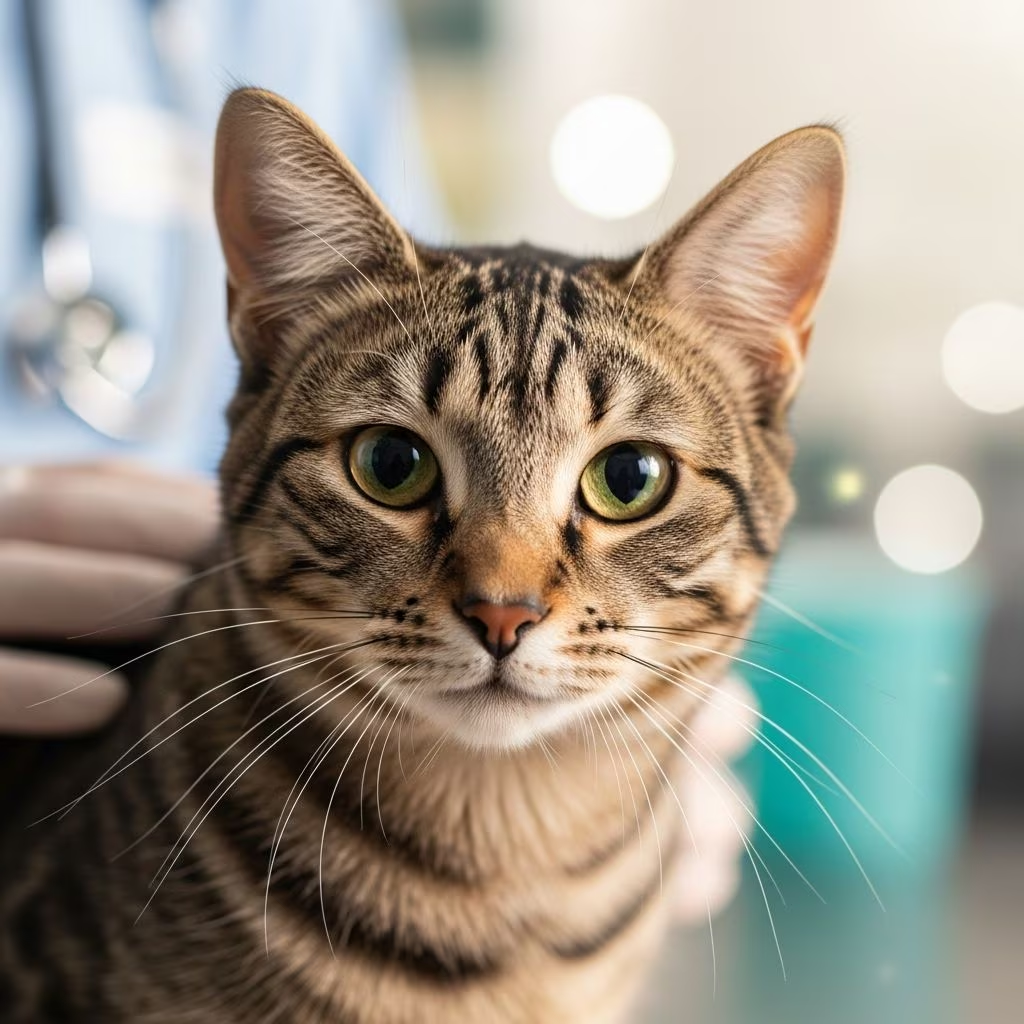
Understanding Feline Leukemia Virus Vaccination
Feline leukemia virus (FeLV) is one of the most significant infectious diseases affecting cats worldwide. This retrovirus attacks the immune system and can lead to various fatal conditions including anemia, tumors, and immunosuppression. Since there is no treatment to eliminate the FeLV virus from the body and the disease is ultimately fatal, preventing FeLV infection through vaccination is highly recommended. Vaccination remains the most effective preventive measure available to protect cats from this devastating disease.
The development of effective FeLV vaccines has significantly contributed to reducing disease prevalence in cat populations. Studies demonstrate that unvaccinated cats with bite wounds are 7.5 times more likely to be infected with FeLV than vaccinated cats with bite wounds, clearly illustrating the protective benefits of vaccination. Understanding the importance of FeLV vaccination and how to implement proper vaccination protocols is essential for every cat owner.
How FeLV Vaccines Work
FeLV vaccines have been specially developed so they do not cause the disease itself. The vaccines work by stimulating the cat’s immune system to recognize and fight against the virus if exposure occurs. Based on current research and studies, FeLV vaccines appear to prevent antigenemia and progressive infection, although they do not prevent proviral integration at the cellular level.
In general, vaccinated cats appear to be protected from FeLV-associated disease and the related shortened lifespan. The vaccines contain antigens that train the immune system to mount a rapid and effective response when the virus is encountered. This protective mechanism has proven highly effective in preventing the development of clinical disease in vaccinated animals, even when exposed to the virus.
Types of FeLV Vaccines Available
Several types of FeLV vaccines are available on the market, each with different compositions and delivery methods. The main categories include:
- Adjuvanted inactivated whole virus vaccine: These vaccines contain the entire FeLV virus that has been inactivated or killed, along with an adjuvant to enhance immune response.
- Recombinant subunit vaccine: These vaccines contain specific viral components rather than the whole virus, providing targeted immune stimulation.
- Genetically engineered subunit recombinant canarypox vector vaccine: This advanced vaccine uses a vector system to deliver FeLV antigens to the immune system.
Published vaccine efficacy trials are typically funded by manufacturers, and it is important to note that challenge testing protocols vary widely among different studies. Your veterinarian can recommend the most appropriate vaccine type based on your cat’s specific health status and lifestyle.
FeLV Vaccination Schedule and Recommendations
Proper vaccination timing is critical to ensure strong, lasting immunity. The American Association of Feline Practitioners (AAFP) provides specific recommendations for both kittens and adult cats based on their risk levels.
Kitten Vaccination Protocol
For kittens and at-risk adult cats, the AAFP recommends that the FeLV vaccine initially be administered as two doses given three to four weeks apart, starting at eight weeks of age, then as a single dose one year later. This initial series is necessary to provide strong, lasting immunity. Even with this comprehensive initial vaccination, immunity will decline over time and periodic revaccination will be necessary.
Adult Cat Vaccination Guidelines
For adult cats, vaccination recommendations depend on lifestyle and risk factors:
- High-risk cats: Should be revaccinated annually (unless product licensure indicates a longer interval)
- Low-risk cats: May be vaccinated every two to three years
- Minimal-risk cats: Do not need to be revaccinated
Feline leukemia vaccines are considered core vaccines for kittens and non-core vaccines for adult cats. This means that each cat’s health status, lifestyle, environment, and risk factors should be evaluated annually to determine if the cat should be vaccinated against FeLV.
Risk Assessment for Vaccination
Your veterinarian will consider several factors when determining your cat’s FeLV vaccination needs:
- Whether the cat spends time outdoors or indoors
- Exposure to other cats with unknown FeLV status
- Plans to introduce new cats to the household
- Current health status and immune function
- Geographic location and local FeLV prevalence
Testing for FeLV Infection
Before vaccination, it is recommended that cats be tested for existing FeLV infection. Special blood tests have been developed to detect the presence of the virus in a cat’s blood. In general, these tests are very reliable, although rarely, a false positive result can occur. In some situations, it may be necessary to confirm infection by repeating blood testing or through different types of testing methods.
Testing should be performed in the following situations:
- At time of acquisition of a new cat
- Before initial vaccination against FeLV
- After exposure to an infected cat
- When the cat is clinically ill
- Before introducing a new cat to an existing environment
- To diagnose potential FeLV shedders in a multicat environment
Safety Profile of FeLV Vaccines
FeLV vaccines have an excellent safety record when properly administered. You are unlikely to see any adverse effects apart from some mild sluggish behavior a day or two after the vaccine is given. A very few cats may have a mild allergic reaction, but such reactions are rare.
Common Mild Reactions
Most vaccine reactions occur almost immediately following injection and your veterinarian will provide appropriate treatment. Mild reactions may include temporary lethargy, decreased appetite, or mild fever. These reactions typically resolve within 24 to 48 hours and do not indicate a serious problem.
Serious Adverse Events
The most serious adverse event associated with FeLV vaccination is the development of a feline injection-site sarcoma (FISS) at the vaccination site. Because of this concern, the AAFP recommends that FeLV vaccines be administered distal to the left stifle (knee), with the distal tail being an alternative location. This strategic placement allows for easier monitoring and, if necessary, removal of any suspicious masses.
Monitoring for Injection-Site Reactions
If a lump develops at the vaccine site, the AAFP recommends following the 3-2-1 rule for monitoring and potential intervention. This rule states that a biopsy of any mass should be performed if the mass is present three months after vaccination, is larger than two centimeters in diameter, or is increasing in size one month after vaccination.
When to Contact Your Veterinarian
If you are concerned that your cat is experiencing an abnormal reaction in the hours or days following any vaccination, contact your veterinarian immediately. While serious reactions are uncommon, prompt veterinary attention can address any complications quickly. Signs of concern include severe lethargy, difficulty breathing, vomiting, diarrhea, or excessive swelling at the injection site.
Revaccination Schedules and Booster Shots
In the initial vaccination series, two doses of vaccine are administered one month apart, which is necessary to provide strong, lasting immunity. Even so, this immunity will decline over time and periodic revaccination will be necessary. Your veterinarian will advise you about the recommended revaccination schedule based on your cat’s lifestyle and needs.
Revaccination frequency depends on multiple factors including your cat’s risk of exposure, overall health status, and the specific vaccine product used. Some vaccines may provide longer-lasting immunity than others, so it is important to discuss your cat’s specific vaccination schedule with your veterinarian at each annual wellness visit.
FeLV Vaccination for Different Lifestyles
The decision to vaccinate should be individualized based on your cat’s specific circumstances. Although the FeLV vaccine is not considered a core vaccine in adult indoor cats, it is highly recommended for cats that spend time outdoors. Indoor cats with no exposure to other cats may have minimal risk, while cats that go outside or live in multicat households face significantly higher risk.
| Lifestyle Category | Risk Level | Vaccination Recommendation |
|---|---|---|
| Indoor only, single cat | Minimal | Not required; discuss with veterinarian |
| Indoor only, multicat household | Low to Moderate | Consider vaccination; annual assessment recommended |
| Outdoor access | High | Strongly recommended; annual revaccination advised |
| Free-roaming outdoor | Very High | Essential; annual revaccination required |
Discussion with Your Veterinarian
Your veterinarian can discuss the pros and cons of vaccinating your cat against FeLV based on her specific lifestyle and risk of exposure. This conversation should include consideration of your cat’s age, health status, likelihood of exposure to infected cats, and your household situation. Based on recommendations by the Feline Veterinary Medical Association (FelineVMA), current research and expert opinion recommend FeLV vaccination for all kittens, and then on an as-needed basis for adult cats.
Frequently Asked Questions About FeLV Vaccination
Q: Is FeLV vaccination safe for all cats?
A: FeLV vaccines are generally safe for most cats. However, specific health conditions may warrant discussion with your veterinarian. Pregnant cats and those with certain medical conditions should be evaluated individually before vaccination.
Q: Can a vaccinated cat still get FeLV?
A: While vaccination provides strong protection, no vaccine is 100 percent effective. Vaccinated cats have significantly reduced risk of infection compared to unvaccinated cats. Unvaccinated cats with bite wounds are 7.5 times more likely to develop FeLV infection than vaccinated cats with similar wounds.
Q: How long does FeLV vaccine immunity last?
A: Immunity from the initial vaccination series declines over time. The duration depends on the individual cat and vaccine type, but regular revaccination boosters are necessary to maintain protection. Your veterinarian will recommend appropriate booster schedules.
Q: What should I do if my cat has a reaction to the vaccine?
A: Most reactions are mild and resolve within 24 to 48 hours. Contact your veterinarian if you notice severe reactions, difficulty breathing, or swelling. If a lump develops at the injection site, monitor it and report any growth or persistence to your veterinarian.
Q: Can indoor cats get FeLV?
A: Yes, indoor cats can contract FeLV if exposed to infected cats, even briefly. This can occur through bite wounds, contact with infected bodily fluids, or if an infected cat is brought into the home. Vaccination is still recommended for many indoor cats.
Q: Do kittens born to vaccinated mothers need vaccination?
A: Yes, kittens should still receive the full vaccination series starting at eight weeks of age. Maternal antibodies may interfere with early vaccination, which is why the series includes multiple doses spaced appropriately.
Conclusion
FeLV vaccination represents one of the most important preventive health measures you can provide for your cat. Since the disease is ultimately fatal and no treatment exists to eliminate the virus from the body, vaccination is the best defense against this serious infection. By working with your veterinarian to develop an appropriate vaccination plan based on your cat’s individual risk factors, lifestyle, and health status, you can provide optimal protection against feline leukemia virus and help ensure a long, healthy life for your feline companion.
References
- Feline Leukemia Virus Vaccination — VCA Animal Hospitals. 2024. https://vcahospitals.com/know-your-pet/feline-leukemia-virus-vaccination
- Feline Leukemia Virus Vaccination — Today’s Veterinary Practice. 2024. https://todaysveterinarypractice.com/preventive-medicine/feline-leukemia-virus-vaccination/
- Vaccination Guidelines for Dogs and Cats — UC Davis School of Veterinary Medicine. 2024. https://healthtopics.vetmed.ucdavis.edu/health-topics/feline/vaccination-guidelines-dogs-and-cats
- Feline Vaccines: Benefits and Risks — Cornell Feline Health Center, College of Veterinary Medicine. 2024. https://www.vet.cornell.edu/departments-centers-and-institutes/cornell-feline-health-center/health-information/feline-health-topics/feline-vaccines-benefits-and-risks
- Prevention and Control of Feline Leukemia Virus — Merck Veterinary Manual. 2024. https://www.merckvetmanual.com/multimedia/table/prevention-and-control-of-feline-leukemia-virus
- 2020 AAHA/AAFP Feline Vaccination Guidelines — American Animal Hospital Association and American Association of Feline Practitioners. 2020. https://www.aaha.org/guidelines/feline-vaccination-guidelines/



