

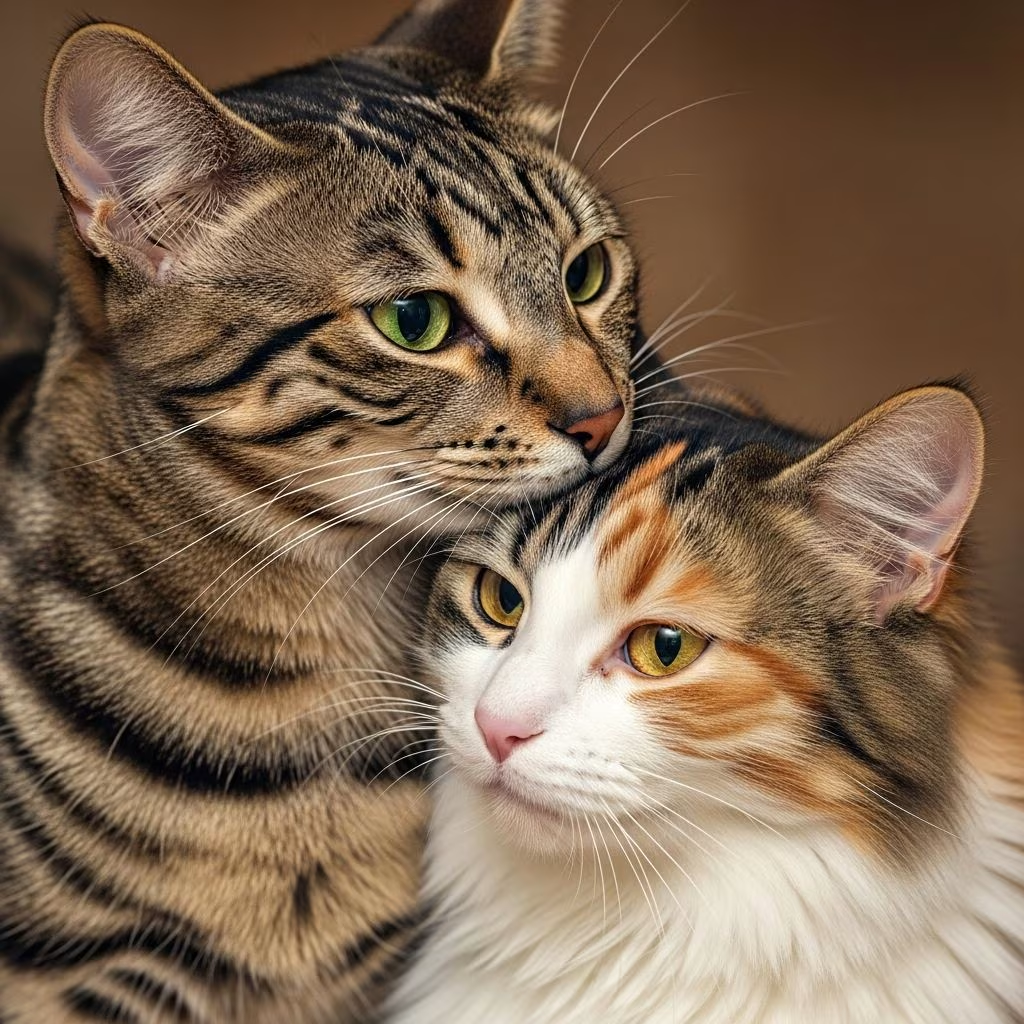
Feline leukemia virus (FeLV) spreads primarily through direct cat-to-cat contact via saliva, posing significant risks in multi-cat environments or outdoor settings. This retrovirus affects cats exclusively and requires prolonged exposure for transmission, with the virus surviving only briefly outside the host.12
Understanding FeLV Biology and Initial Infection
FeLV belongs to the gammaretrovirus family, first identified in 1964, and targets domestic cats as well as some wild felines. Upon entry, typically through the oropharynx mucosa, the virus replicates in local lymphatic tissues like tonsils and lymph nodes, leading to primary viremia via infected lymphocytes and monocytes. It then reaches the bone marrow, causing secondary viremia in susceptible cats.3
The virus exists in subgroups: FeLV-A, naturally transmitted and foundational for others; FeLV-B, arising from recombination and linked to lymphoma; and FeLV-C, from mutations causing severe anemia by interfering with erythroid maturation. Immunity to FeLV-A offers broad protection against these variants.3
Primary Transmission Pathways
Saliva is the chief vector, shed in high quantities by progressively infected cats. Common spread occurs during mutual grooming, shared food and water bowls, or litter box use, especially in prolonged interactions.14
- Grooming and social bonding: Cats licking each other exchange saliva directly.
- Aggressive bites: Deep wounds introduce virus-laden saliva into the bloodstream.
- Shared resources: Bowls and litter trays facilitate lower-level exposure over time.
- Mating: Close physical contact increases risk for intact males.
Blood transfusions pose a rare but critical risk; donors must undergo provirus testing beyond antigen checks.3 The virus’s fragility limits environmental persistence to hours, inactivated by disinfectants and dry conditions.6
Maternal and Vertical Transmission
Queens transmit FeLV to kittens in utero via placenta, during birth, or through milk and nursing licks. Infected litters may experience fetal resorption, abortion, or early death, though survivors often become progressively infected. Even antigen-negative queens can pass it via milk. Test all kittens individually; isolate positives while confirming litter status.37
Kittens face heightened vulnerability due to immature immunity, with maternal transmission likely the largest infection source overall.5
Infection Outcomes in Exposed Cats
Not all exposures lead to persistent infection. Cats mount varied responses:
| Infection Type | Description | Contagiousness | Disease Risk |
|---|---|---|---|
| Abortive | Immune system clears virus rapidly from blood. | None | Low |
| Regressive | Virus enters bone marrow/organs but is suppressed; 30-40% of cases. | Low, unless immunosuppression reactivates. | Moderate, potential later disease |
| Progressive | Persistent viremia in blood/organs; 30-40% of cases. | High, continuous shedding. | High, FeLV-related illnesses |
Progressive cases drive most transmission, with regressive cats surviving longer but carrying latent risks. Symptoms may emerge months or years post-infection.24
Risk Factors for Exposure and Infection
- Age: Kittens most susceptible; adults have partial protection.
- Lifestyle: Outdoor, unvaccinated cats in high-prevalence areas or multi-cat homes (≥5 cats).
- Demographics: Non-pedigree, intact males at higher risk.
- Environment: Shelters, catteries, or roaming strays amplify exposure.
Prevalence varies; one study in Rio de Janeiro found 11.52% in sampled cats.8
Diagnostic Approaches for FeLV
Screen with antigen tests detecting viral proteins in blood, saliva, or tears. Positive results warrant confirmation via PCR for provirus, especially in regressive cases where antigen fades. Kittens under 6 months may yield false positives from maternal antibodies; retest after weaning. Annual screening advised for at-risk cats.36
Vaccination and Preventive Strategies
FeLV vaccines target FeLV-A, providing cross-protection. Ideal for outdoor or high-risk cats, though not 100% effective. Core protocol: two initial doses 3-4 weeks apart, then boosters. Vaccinate residents before introducing positives.3
Prevention pillars:
- Keep cats indoors to avoid strays.
- Test new cats before integration; quarantine 4-6 weeks.
- Avoid breeding FeLV+ queens.
- Disinfect surfaces; separate litter/food for positives.
- Spay/neuter to curb roaming and fights.
Managing Multi-Cat Households with FeLV
Housing FeLV+ and negative cats demands caution. Vaccinate negatives, monitor closely, and minimize saliva exchange. Some manage successfully with hygiene and space, but separation is safest. Consult vets for tailored plans; positives can live normal lifespans with care.6
Health Impacts of FeLV Infection
Progressive infections suppress immunity, leading to anemia, lymphoma, secondary infections, and reproductive issues. Regressive carriers risk reactivation under stress. Early detection improves quality of life via supportive care.15
Common Myths and Facts
- Myth: FeLV spreads casually like a cold. Fact: Requires prolonged contact.
- Myth: Transmissible to humans/dogs. Fact: Cats only.12
- Myth: All positives die quickly. Fact: Variable outcomes; many live years.
Frequently Asked Questions (FAQs)
Is FeLV curable?
No cure exists, but management controls symptoms and supports immunity.
How long can FeLV survive outside a cat?
Only hours; easily killed by soap, bleach, or drying.4
Should I vaccinate indoor cats?
Consider if new cats join or escape risk exists.
Can FeLV+ cats be symptom-free?
Yes, carriers shed virus asymptomatically.2
What’s the best test for FeLV?
Combine antigen ELISA with PCR for accuracy.
Long-Term Outlook and Research Directions
While FeLV remains a top infectious killer in cats, vaccination and testing have reduced prevalence. Ongoing research explores antiviral therapies and improved diagnostics. Owners play key roles through vigilance and hygiene. By understanding transmission dynamics, cat guardians can foster safer homes, potentially eradicating risks in controlled settings.
References
- Feline Leukemia Virus (FeLV) – PetMD — PetMD. 2023. https://www.petmd.com/cat/conditions/infectious-parasitic/feline-leukemia-virus-felv
- Facts About Feline Leukemia Virus – Healthy Cats – WebMD — WebMD. 2023. https://www.webmd.com/pets/cats/facts-about-feline-leukemia-virus
- GUIDELINE for Feline Leukaemia Virus Infection – ABCD cats & vets — ABCD cats & vets. 2023. https://www.abcdcatsvets.org/guideline-for-feline-leukaemia-virus-infection/
- Feline Leukemia Virus Disease Complex – VCA Animal Hospitals — VCA Animal Hospitals. 2023. https://vcahospitals.com/know-your-pet/feline-leukemia-virus-disease-complex
- Feline Leukemia Virus (FeLV) – Cat Owners – Merck Veterinary Manual — Merck Veterinary Manual. 2023. https://www.merckvetmanual.com/cat-owners/disorders-affecting-multiple-body-systems-of-cats/feline-leukemia-virus-felv
- Feline Leukemia Virus (FeLV) FAQs – San Francisco SPCA — San Francisco SPCA. 2023. https://www.sfspca.org/resource/feline-leukemia-virus-felv-faqs/
- Feline Leukemia Virus (FeLV): What you need to know — Animal Humane Society. 2023. https://www.animalhumanesociety.org/resource/feline-leukemia-virus-felv-what-you-need-know
- Prevalence of feline leukemia virus infection in domestic cats in Rio… — PMC. 2024. https://pmc.ncbi.nlm.nih.gov/articles/PMC11104189/



