

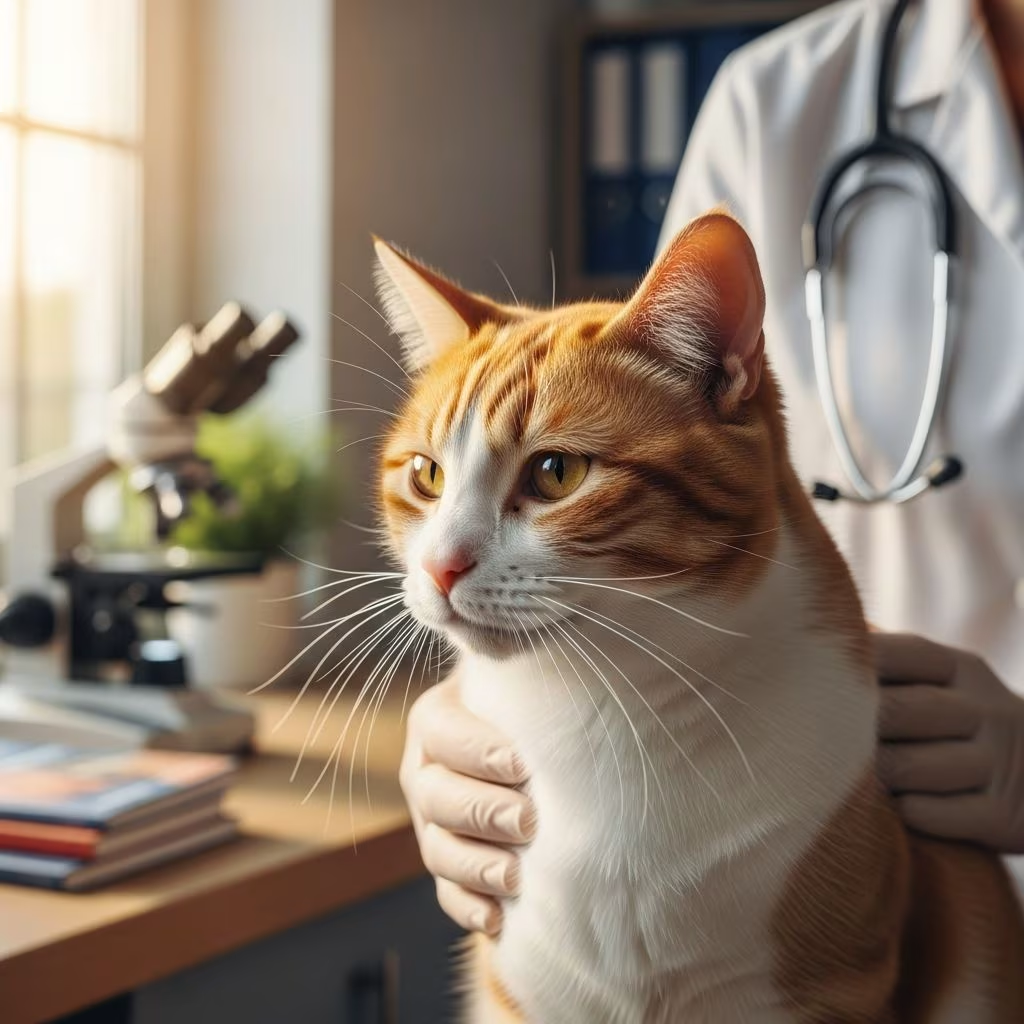
Feline leukemia virus (FeLV) represents one of the most significant infectious health threats facing domestic cats worldwide. Despite advances in veterinary medicine, this retroviral infection continues to affect countless felines each year, making it essential for cat owners to understand its nature, transmission, and management. Unlike human leukemia, which is a purely cancerous condition, feline leukemia is caused by a retrovirus similar in structure to HIV in humans, fundamentally affecting how the disease develops and progresses within an infected animal.
The Nature of Feline Leukemia Virus
FeLV is a gammaretrovirus that was first identified in 1964 and has since become one of the most common infectious causes of disease in cats globally. The virus is capable of infecting a wide range of tissues throughout the feline body, including bone marrow, salivary glands, the gastrointestinal tract, and respiratory epithelium. This broad tissue tropism explains why FeLV-infected cats often experience multiple health complications simultaneously.
The virus exists in several distinct subgroups, each with different characteristics and disease-causing potential. FeLV-A is the subgroup that occurs naturally and is necessary for replication of other variants. FeLV-B, which arises through recombination between FeLV-A and endogenous feline sequences, is particularly associated with increased cancer risk in infected cats. FeLV-C, derived from point mutations in FeLV-A, is strongly linked to severe anemia. Understanding these variants helps veterinarians predict disease progression and anticipate which complications an infected cat may develop.
How Feline Leukemia Spreads Between Cats
One of the most critical aspects of FeLV management is understanding its transmission routes. The virus spreads primarily through close social contact between cats, with saliva and nasal secretions serving as the primary transmission vectors. This means that seemingly innocent interactions between cats can result in viral transmission.
The specific routes of transmission include:
- Shared food and water dishes
- Mutual grooming behaviors
- Use of the same litter box
- Bite wounds sustained during fights
- Contact with infected bodily fluids including feces, urine, and milk
- Mother-to-kitten transmission during pregnancy or nursing
- Blood transfusions from untested donors
Importantly, FeLV is not contagious to humans, dogs, or other non-feline species, affecting only domestic and certain wild cat species. Cats that spend time outdoors or live in multi-cat households face substantially higher infection risks, as do young kittens whose immune systems are still developing.
The Progression of FeLV Infection
The outcome of FeLV infection is determined by a complex interaction between the virus and the cat’s immune system, particularly during the critical first twelve weeks following exposure. Not all infected cats develop the same disease course, and understanding these different outcomes is essential for managing FeLV-positive cats appropriately.
Abortive Infection: In the best-case scenario, a cat’s immune system successfully prevents the virus from integrating into the host’s DNA, effectively clearing the infection before persistent viraemia develops. These cats may never show clinical signs and cannot transmit the virus to other animals.
Regressive Infection: Some cats experience a transient viraemia that their immune system eventually controls, with the virus becoming integrated into host cells as provirus. These cats may remain latently infected for extended periods, with the potential for viral reactivation during times of stress or immunosuppression.
Progressive Infection: This represents the most severe outcome, characterized by persistent viraemia and continuous viral shedding. Cats with progressive FeLV infection develop a range of FeLV-associated diseases and complications throughout their lives.
Focal Infection: In rare cases, FeLV becomes sequestered within specific tissues rather than spreading systemically, also known as atypical infection.
Clinical Signs and Associated Health Complications
FeLV adversely affects feline health in multiple ways, making clinical presentation highly variable. The virus is responsible for the most common cause of cancer in cats and frequently triggers various blood disorders. Cats with FeLV may not display obvious symptoms initially, but as the infection progresses, numerous health issues emerge.
Common clinical manifestations include:
- Persistent fever and lethargy
- Loss of appetite and weight loss
- Pale or jaundiced gums and mucous membranes
- Enlarged lymph nodes
- Skin infections and poor coat quality
- Respiratory infections and nasal discharge
- Gastrointestinal disturbances
- Anemia and bleeding disorders
- Various cancers, particularly lymphoma
Because FeLV suppresses immune function, infected cats become susceptible to secondary infections that may cause additional complications. Early detection through routine testing remains crucial since some symptoms may be subtle or initially absent.
Diagnostic Testing and Confirmation
Veterinary professionals recommend testing for FeLV in specific circumstances to enable early detection and appropriate management. Testing should occur when cats are first acquired, before vaccination, following potential exposure or bite wounds from cats of unknown status, and annually if the cat lives with FeLV-positive or unknown-status cats.
Two primary testing methodologies are available to detect FeLV infection:
ELISA (Enzyme-Linked Immunosorbent Assay): This test can be performed directly in veterinary clinics and detects viral antigen during both primary and secondary stages of viraemia. ELISA testing is rapid, accessible, and appropriate for initial screening.
IFA (Indirect Immunofluorescent Antibody Assay): This more specialized test must be sent to a diagnostic laboratory and detects secondary viraemia only. The majority of cats testing positive on IFA remain persistently infected for life.
When a cat tests positive, veterinarians may recommend confirmation testing through laboratory analysis, along with additional diagnostics such as complete blood count, blood chemistries, and radiographs to assess the extent of viral spread and guide treatment planning. PCR testing can also detect proviral DNA, providing additional diagnostic confirmation.
Treatment Approaches and Management Strategies
While no cure currently exists for FeLV, aggressive management of clinical signs and secondary infections can significantly improve quality of life for infected cats. Treatment protocols should begin promptly upon diagnosis, as early intervention often yields better outcomes.
Management considerations include:
- Maintaining cats indoors to prevent transmission and reexposure to pathogens
- Neutering all infected cats to prevent breeding and vertical transmission
- Vaccinating against common pathogens using inactivated vaccines to prevent secondary infections
- Implementing semiannual physical examinations focusing on lymph nodes, skin, and dental health
- Conducting routine fecal testing, complete blood counts, biochemical analysis, and urinalysis
- Aggressively treating secondary infections when they develop
- Monitoring for early signs of disease complications
FeLV-positive cats often respond well to treatment of concurrent conditions, but the underlying immunosuppression requires vigilant monitoring and proactive care.
Vaccination and Prevention Strategies
Prevention through vaccination represents the most effective strategy for protecting cats from FeLV infection. Vaccination guidelines recommend that all at-risk cats receive FeLV vaccines starting at 8-9 weeks of age, with a second dose administered at 12 weeks. Veterinarians recommend FeLV vaccination for all kittens, even those living exclusively indoors, due to their inherent vulnerability to infection.
Important considerations for FeLV vaccination include:
- Pre-vaccination testing is essential to ensure cats are not already infected, as vaccines provide no benefit to FeLV-positive cats
- Cats should be screened for both FeLV antigen and provirus before vaccination to avoid vaccinating already-infected animals
- The vaccine will not cause positive results on FeLV tests
- No vaccine is 100 percent effective, so prevention of exposure remains important even for vaccinated cats
- Annual revaccination may be recommended for adult cats with outdoor access
- High-risk cats including non-pedigree cats, intact males, outdoor cats, and those living in multi-cat environments should be vaccinated
When selecting blood donors for feline transfusions, donor cats must be tested for FeLV provirus, as antigen testing alone is insufficient to ensure safety.
Living with an FeLV-Positive Cat
A diagnosis of FeLV does not mean the end of a cat’s life, though it does require significant lifestyle modifications and dedicated care. Indoor confinement becomes mandatory to prevent transmission to other cats and to reduce exposure to secondary pathogens that could further compromise health.
Household management considerations include:
- Keeping FeLV-positive cats completely indoors
- Separating infected cats from uninfected household cats when possible
- Using separate litter boxes, food dishes, and water bowls
- Practicing rigorous sanitation protocols
- Maintaining regular veterinary monitoring and bloodwork
- Providing environmental enrichment appropriate for indoor cats
- Ensuring adequate nutrition to support immune function
With appropriate care and management, FeLV-positive cats can live comfortably for extended periods, though their lifespan may be reduced compared to uninfected cats.
Frequently Asked Questions About Feline Leukemia
Can my indoor cat contract FeLV?
Yes. While outdoor cats face higher risk, indoor cats can contract FeLV if exposed to infected cats or contaminated materials. Vaccination is recommended even for indoor-only cats.
How long do FeLV-positive cats typically live?
Survival duration varies considerably depending on the infection course, overall health, and quality of care. Some cats live several years with appropriate management, though their lifespan may be reduced.
Is FeLV contagious to humans?
No. FeLV is not contagious to humans, dogs, or other non-feline species.
Should I test my cat for FeLV before vaccination?
Yes. Pre-vaccination testing ensures that cats are not already infected, as the vaccine provides no benefit to FeLV-positive animals.
Can an FeLV-positive cat and an uninfected cat live together?
This requires careful management, including separation of living areas, food and water bowls, and litter boxes. Vaccination of the uninfected cat is essential, though absolute separation is preferable.
Conclusion: Taking Action Against Feline Leukemia
Feline leukemia virus remains a significant health threat to cats worldwide, but understanding transmission routes, recognizing clinical signs, and implementing preventive measures can substantially reduce infection risk. Regular testing, appropriate vaccination, and diligent management of infected cats form the foundation of effective FeLV control. By working closely with veterinary professionals and maintaining vigilant health monitoring, cat owners can protect their feline companions from this serious disease and provide compassionate care to those already infected.
References
- GUIDELINE for Feline Leukaemia Virus Infection — ABCD cats & vets. 2024. https://www.abcdcatsvets.org/guideline-for-feline-leukaemia-virus-infection/
- A Cat Owner’s Guide to Feline Leukemia Virus (FeLV) — Diamond Pet Foods. 2024. https://www.diamondpet.com/blog/health/cat-owners-guide-to-feline-leukemia/
- FeLV and FIV Client Guide — Zoetis. https://www.zoetisus.com/content/_assets/docs/PDFs/ZPN/Client-Guide-to-FeLV-and-FIV-DIA-00395.pdf
- Feline Leukemia Virus Brochure — Cornell Feline Health Center, Cornell University College of Veterinary Medicine. https://www.vet.cornell.edu/departments-centers-and-institutes/cornell-feline-health-center/health-information/feline-health-topics/feline-leukemia-virus-brochure
- Feline Leukemia Virus Disease — Merck Veterinary Manual. https://www.merckvetmanual.com/infectious-diseases/feline-leukemia-virus/feline-leukemia-virus-disease
- A Guide to Feline Leukemia for Cat Owners — Camden Animal Hospital. https://camdenanimalhosp.com/a-guide-to-feline-leukemia-for-cat-owners/
- Feline Leukaemia: ABCD Guidelines on Prevention and Management — ABCD Guidelines, PubMed Central. https://pmc.ncbi.nlm.nih.gov/articles/PMC7172531/



