
Feline Leukemia Virus (FeLV): Causes, Symptoms & Treatment
Complete guide to FeLV in cats: transmission, diagnosis, prevention, and management strategies.
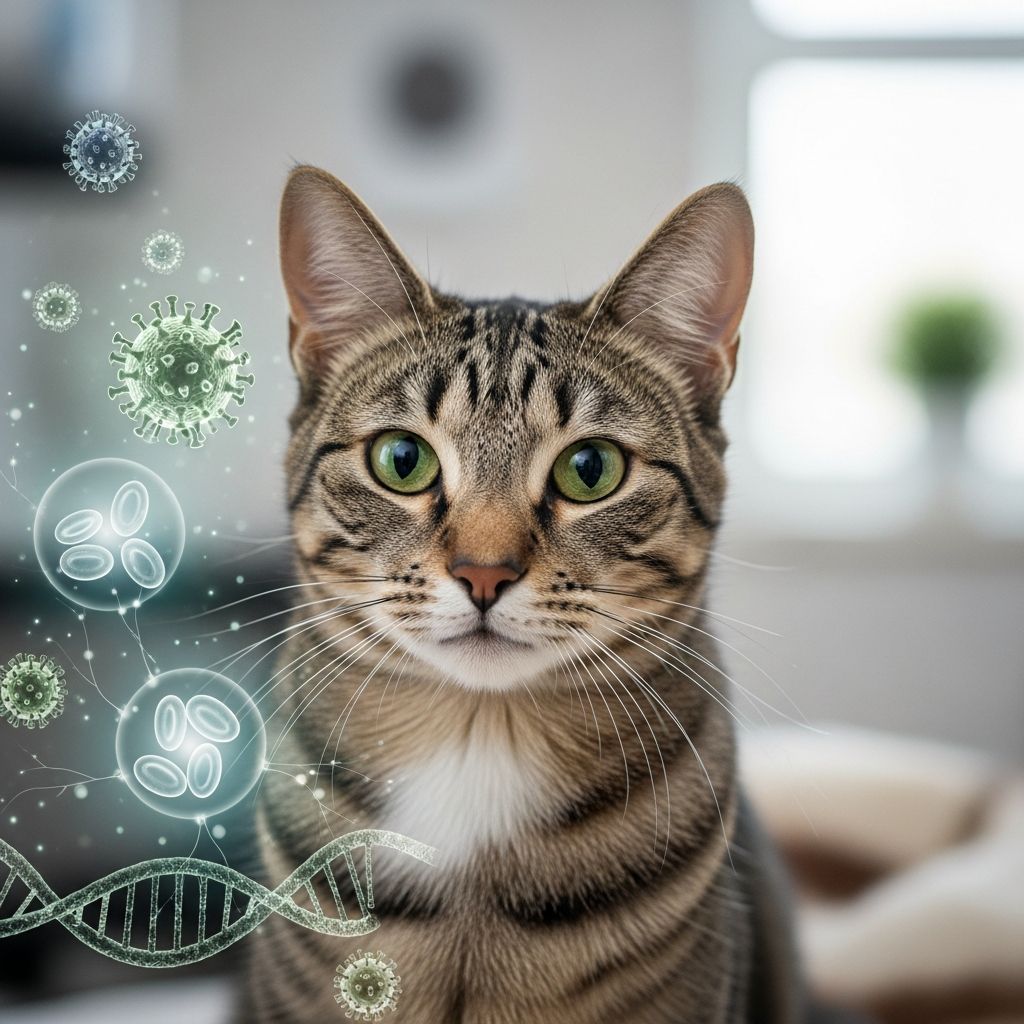
Understanding Feline Leukemia Virus (FeLV)
Feline leukemia virus (FeLV) is a significant threat to cat health worldwide and represents one of the most common infectious causes of disease in domestic cats globally. This gammaretrovirus was first identified in 1964 and has remained a major concern for cat owners and veterinarians. FeLV is a fragile, enveloped virus that primarily affects the immune system and can lead to various secondary conditions, making it one of the leading causes of cancer in cats and various blood disorders. Understanding this virus is essential for cat owners who want to protect their feline companions from potential infection and manage the condition should their cat become infected.
How FeLV is Transmitted
Feline leukemia virus spreads among cats through several transmission routes, with some being more significant than others in terms of disease transmission.
Primary Transmission Methods
The virus is most commonly shed in saliva, making direct contact the primary concern for transmission. The most likely modes of horizontal transmission include oronasal contact with infectious saliva or urine, mutual grooming, and shared litter trays and food dishes. Because FeLV requires prolonged, intimate contact between cats for transmission and a relatively high infectious dose for oronasal transmission, cats living in close contact with infected animals face the greatest risk. Bite wounds represent a less common source of horizontal transmission, though studies show that FeLV infection was diagnosed in 9% of cats undergoing treatment for bite wounds—approximately three times the rate for cats in general.
Vertical Transmission
FeLV can also be transmitted from mother to kitten through multiple routes. Transplacental transmission occurs in utero, and infected milk can transmit the virus during nursing. Additionally, transmission can occur during the birth process itself. These vertical transmission routes mean that kittens born to infected queens face significant risk of infection during early life.
Other Transmission Routes
Blood transfusion represents another important transmission route, which is why donors must be tested for FeLV provirus before any transfusion procedure. Less common sources of virus shedding include nasal secretions, urine, and feces, though tears and feces may contain virus but are not considered clinically important in disease transmission or diagnostic detection.
Risk Factors for FeLV Infection
Certain cats face higher risk of FeLV infection based on their lifestyle, genetics, and living conditions. Non-pedigree cats, intact males, outdoor cats, and cats living in multi-cat environments with five or more cats face elevated risk. Cats from high-prevalence areas and unvaccinated cats are also at greater risk. Understanding these risk factors helps cat owners identify whether their feline companions need additional protection through vaccination and testing protocols.
Pathogenesis and Disease Progression
Virus-Host Interaction
The outcome of FeLV infection is determined by a dynamic interaction between the virus and the cat’s immune system. This balance is particularly critical during the early stages of infection, typically within the first twelve weeks after exposure. The battle between viral replication and immune response can shift over time, especially if the cat’s immune system is compromised by factors such as immunosuppression or concurrent infections.
How the Virus Spreads
Initially, FeLV infects the mucosa of the oropharynx and replicates in nearby lymphatic tissues such as the tonsils and local lymph nodes. From there, FeLV spreads throughout the body via infected lymphocytes and monocytes, leading to primary viraemia. As infection progresses, the virus reaches the bone marrow, infecting rapidly dividing precursor cells and initiating secondary viraemia. FeLV can infect a wide range of tissues, including bone marrow, salivary glands, gastrointestinal tract, and respiratory epithelium.
Types of FeLV Infection
FeLV infection follows one of four main disease courses, each with different implications for the cat’s long-term health:
- Abortive infection: The cat’s immune response prevents provirus integration and viraemia, effectively eliminating the infection.
- Regressive infection: This may include transient viraemia, where FeLV is integrated into the host’s cell as provirus and can be reactivated if the cat undergoes stress.
- Progressive infection: Cats show persistent viraemia and shedding with subsequent FeLV-associated disease development.
- Focal infection: Rare cases where FeLV is sequestered to certain tissues, also called atypical infection.
FeLV Subgroups and Variants
FeLV exists in multiple subgroups, each with distinct characteristics and disease associations. FeLV-A is the only naturally transmitted form and is usually necessary for replication of FeLV-B, FeLV-C, and FeSV. Effective immunity against FeLV-A protects against all subgroups, as the other subgroups arise through recombination and mutations within FeLV-A-infected cats.
FeLV-B arises through recombination between FeLV-A and endogenous FeLV sequences and is associated with increased risk of lymphoma, though it is not naturally transmitted unless co-infected with FeLV-A. FeLV-C develops from point mutations in FeLV-A and is strongly linked to non-regenerative anaemia due to viral interference with the haem transporter receptor FLVCR. FeLV-D is a rare recombinant form involving FeLV-A and an endogenous feline gammaretrovirus with uncertain infectivity and pathogenicity. FeLV-T is a mutation-derived variant causing severe immunosuppression by targeting T lymphocytes and represents an experimental variant with unknown field occurrence.
Clinical Signs and Health Complications
FeLV infection can cause a variety of clinical signs depending on the infection type and individual immune response. Infected cats often develop secondary infections due to immunocompromise, and conditions such as anaemia, lymphoma, and immunosuppression are common complications associated with different FeLV subgroups. The virus adversely affects the cat’s body in many ways and is recognized as the most common cause of cancer in cats.
Cats with FeLV require regular veterinary monitoring for these conditions and should receive early and aggressive treatment for infections or illnesses, as immunocompromised cats may not respond as robustly to standard treatment protocols. Without proper management, FeLV can be fatal, with studies indicating that up to 90% of infected cats may die within four years.
Diagnosis of FeLV Infection
Testing Recommendations
Testing for FeLV infection is recommended when cats are first acquired, before vaccination against FeLV, and if there has been potential exposure or bite wound from a cat of unknown or positive retroviral status. Testing is also recommended annually if the cat lives in a household with FeLV-positive cats or cats of unknown status, before blood donation, and if the cat has outdoor access.
Diagnostic Methods
Most testing begins in clinic with a point-of-care (POC) ELISA or rapid immunomigration (RIM) FeLV tests. These tests detect soluble FeLV antigen as early as 30 days after exposure and have shown good sensitivity and specificity, ranging from 85%–100% in clinical studies. Diagnostic tests can detect mainly p27 capsid antigen through ELISA or point-of-care tests, provirus through PCR, or less frequently viral RNA through reverse-transcriptase PCR. From a diagnostic and preventative perspective, FeLV-A testing remains the primary screening tool.
Pre-Vaccination Testing
Cats should be screened for FeLV antigenaemia and ideally also provirus before vaccination to avoid vaccinating already infected cats, as vaccination provides no benefit to infected animals. Blood transfusion donors must be tested for FeLV provirus, as antigen testing alone is insufficient for this critical procedure.
Treatment and Management
Currently, there is no cure for feline leukemia virus, making prevention the cornerstone of FeLV management. However, treatments are available that help minimize the secondary effects of the virus and manage complications effectively. These supportive treatments can include medication for secondary infections, diet recommendations tailored to the cat’s condition, anti-inflammatory or immune-enhancing drugs, and parasite control measures.
Physical examinations should be performed semiannually, along with routine fecal testing, complete blood count (CBC), serum biochemical analysis, and urinalysis. All infected cats should be neutered or spayed and must remain indoors to prevent transmission to other cats. Owners should be advised to watch for clinical signs of FeLV-related disease, particularly secondary infections, as these can develop quickly in immunocompromised animals.
FeLV Vaccination and Prevention
Vaccination Protocol
Vaccination against FeLV is one of the best ways to prevent infection and is safe and effective. The American Association of Feline Practitioners (AAFP) 2020 Feline Retrovirus Management Guidelines recommend that all kittens receive the two-dose FeLV vaccination as a component of the routine initial vaccination series. Vaccination typically begins at 8–9 weeks of age, with a second dose at 12 weeks. A booster vaccination should be given 1 year later. For adult cats, annual revaccination after maturity would depend on the cat’s risk of FeLV exposure.
Risk-Based Vaccination
The adult cat’s risk of exposure to FeLV-positive cats should be determined annually, and vaccines should be used only for those cats at risk. The FeLV vaccine is generally recommended for kittens starting their initial vaccine series, adult cats that go outdoors, and cats in multi-cat homes where outdoor exposure is possible. All at-risk cats should be vaccinated.
Vaccination Safety Considerations
Vaccines for FeLV have been associated with development of sarcomas at the vaccination site, although the risk of tumor development is very low. According to the 2013 AAFP Feline Vaccination Panel Advisory Report, administration of the vaccine distal to the stifle joint in the left hind limb is recommended to decrease morbidity and mortality related to these rare but very aggressive injection site sarcomas.
Prevention Beyond Vaccination
Additional methods to minimize FeLV risk include avoiding allowing cats to roam freely outdoors and testing and isolating new cats before introducing them to existing pets. Annual FeLV testing is especially important for at-risk cats. Owners should also be cautious about blood transfusions and ensure donors are properly tested and screened for FeLV.
Living with FeLV-Positive Cats
While FeLV infection is serious, many FeLV-positive cats can live comfortable lives with proper management and veterinary care. These cats often respond well to treatment for secondary infections and other illnesses despite their immunocompromised status. The key to quality of life for infected cats is early detection of problems, aggressive treatment, good nutrition, parasite control, and a stress-free indoor environment. Cats that have contracted FeLV need to remain indoors and should be neutered or spayed to prevent transmission and reduce additional health risks.
Frequently Asked Questions
Q: Can FeLV be transmitted to humans?
A: No, FeLV cannot be transmitted to humans. This virus is specific to cats and some wild felines and does not pose any risk to human health.
Q: How long can FeLV survive outside the cat’s body?
A: Because FeLV is a fragile, enveloped virus, it does not survive long outside the cat’s body. Transmission typically requires direct contact between cats or sharing of food and water dishes under specific conditions.
Q: Can an indoor cat get FeLV?
A: While indoor cats have lower risk of FeLV exposure, they can still contract the virus if exposed to infected cats or contaminated items. New cats should always be tested before introduction to existing pets.
Q: Is there a cure for FeLV?
A: Currently, there is no cure for FeLV. However, supportive care and treatment of secondary infections can help infected cats maintain quality of life.
Q: How often should my cat be tested for FeLV?
A: Kittens and newly acquired cats should be screened for FeLV. Cats with outdoor access or living in multi-cat households should be tested annually. Cats exposed to infected animals should be tested immediately and retested after 12 weeks.
References
- Guideline for Feline Leukaemia Virus Infection — ABCD Cats & Vets. 2024. https://www.abcdcatsvets.org/guideline-for-feline-leukaemia-virus-infection/
- Feline Leukemia Virus Disease — Merck Veterinary Manual. 2024. https://www.merckvetmanual.com/infectious-diseases/feline-leukemia-virus/feline-leukemia-virus-disease
- FeLV and FIV Client Guide — Zoetis. 2024. https://www.zoetisus.com/content/_assets/docs/PDFs/ZPN/Client-Guide-to-FeLV-and-FIV-DIA-00395.pdf
- A Guide to Feline Leukemia for Cat Owners — Camden Animal Hospital. 2024. https://camdenanimalhosp.com/a-guide-to-feline-leukemia-for-cat-owners/
- Feline Leukemia Virus Brochure — Cornell Feline Health Center, College of Veterinary Medicine, Cornell University. 2024. https://www.vet.cornell.edu/departments-centers-and-institutes/cornell-feline-health-center/health-information/feline-health-topics/feline-leukemia-virus-brochure
- FIV, FeLV, and Feline Heartworm Clinical Reference Guide — IDEXX Laboratories. 2024. https://www.idexx.com/files/feline-triple-infectious-disease-clinical-reference-guide-en-na.pdf
- 2025 Guide to Feline Leukemia Virus: Prevention & Care — Live Oak Veterinary Hospital. 2024. https://liveoakvet.com/2024/07/15/feline-leukemia/
Similar Articles








Read full bio of Sneha Tete




