

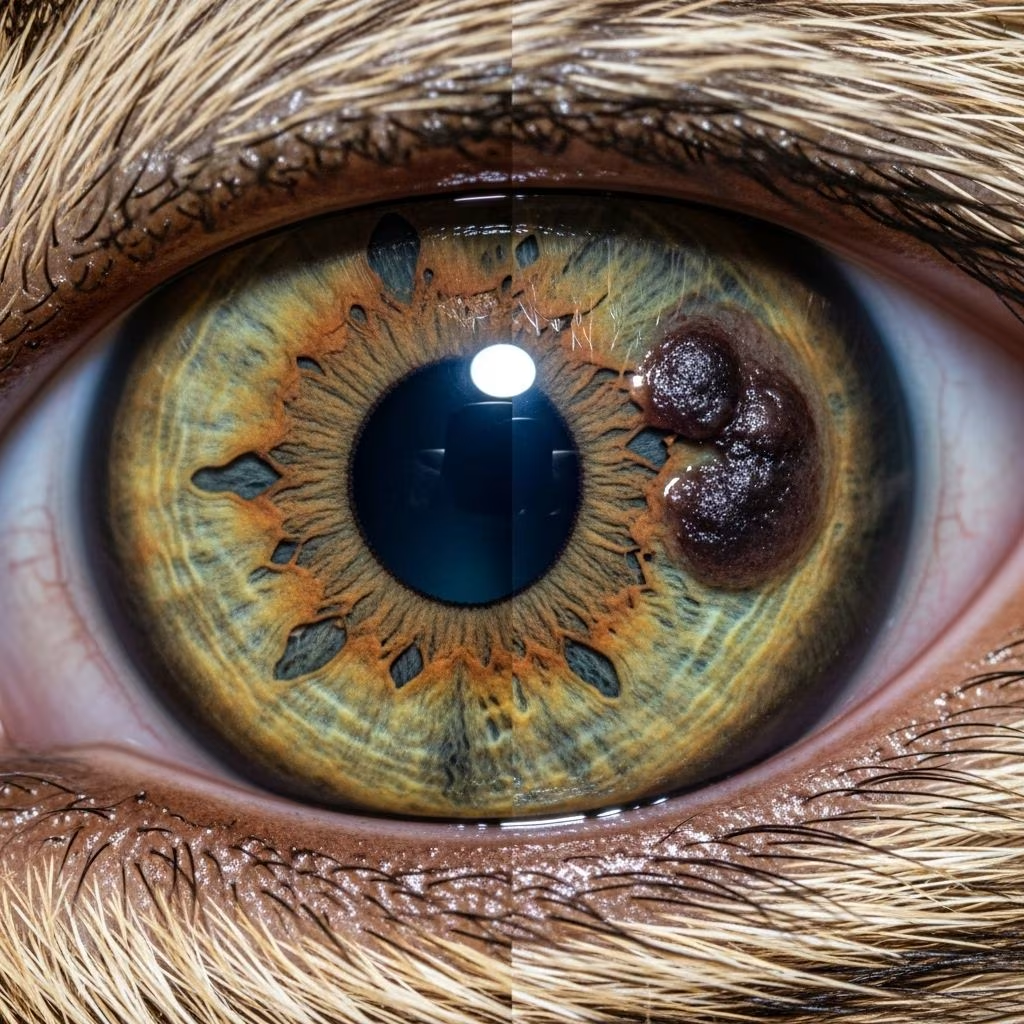
Pigmentation changes affecting the iris of cats represent one of the most challenging diagnostic scenarios in feline ophthalmology. Pet owners frequently notice dark spots or patches appearing on their cat’s eye, prompting concern about what these changes might indicate. The complexity arises because iris pigmentation can range from a completely harmless, stable condition to a progressive, sight-threatening malignancy. Understanding the distinction between these conditions, along with appropriate monitoring strategies, is essential for maintaining feline ocular health.
Understanding Iris Structure and Pigmentation Basics
The iris is the colored portion of the eye that surrounds the pupil and controls light entry into the eye. It contains specialized pigmented cells called melanocytes that determine a cat’s eye color, which can range from yellow or amber to hazel, green, or blue depending on the individual. When melanocytes function normally, they maintain consistent pigmentation throughout the cat’s life. However, when these cells begin behaving abnormally, pigmentation changes become apparent.
Melanocytes are responsible for producing melanin, the pigment that gives color to various tissues in the body. In the iris, these cells typically remain stable and organized. When the normal balance is disrupted, either through benign multiplication or malignant transformation, visible changes occur on the iris surface that can be detected by owners or veterinarians during examination.
Distinguishing Benign Melanosis from Malignant Conditions
Iris melanosis represents a benign proliferation of melanocytes on the iris surface, characterized by an increase in dark pigmentation without the aggressive cellular behavior associated with cancer. In this condition, melanocytes multiply excessively but retain their normal organization and do not invade surrounding tissues in an uncontrolled manner. The appearance typically involves flat, smooth patches of brown or black pigmentation distributed across the iris.
In contrast, feline diffuse iris melanoma (FDIM) is a malignant clonal expansion of melanocytes that grow in an uncontrolled and disorganized fashion. Unlike benign melanosis, melanoma involves aberrant cellular growth that can spread to adjacent ocular structures and potentially metastasize to distant organs. The terminology can be misleading, as some melanomas present focally rather than diffusely across the iris surface.
Clinical Presentation and Visual Characteristics
Cats with iris melanosis typically present with dark spots or patches appearing on the iris that can usually be visualized without specialized examination equipment. These pigmented lesions may be referred to informally as “iris freckles” when small or “iris nevi” when larger. The appearance is generally noticed by attentive owners who observe changes in their cat’s eye color or the development of abnormal markings on the iris.
The presentation of melanosis is characterized by several specific features:
- Flat pigmentation without raised or thickened tissue
- Heterogeneously dispersed pigment that appears lighter in color
- Smooth surface without irregularities
- Variable size ranging from small spots to larger patches
- Typically affecting one eye, though bilateral involvement can occur
Progressive iris melanosis may demonstrate further darkening and coalescing of hyperpigmented areas over time. As pigmentation becomes more extensive, the iris appearance changes dramatically. When darker, thicker, more homogeneous areas develop, indicating potential focal melanoma within a background of melanosis, clinical examination alone becomes insufficient for definitive diagnosis.
Warning Signs of Malignant Transformation
Veterinarians and pet owners should recognize specific clinical indicators that suggest possible progression from benign melanosis to malignant melanoma:
- Changes to iris surface texture—transitioning from smooth to rough or irregular
- Thickening or growth of pigmented areas
- Spreading of pigment into other ocular structures or expanding across larger iris areas
- Development of dyscoria, characterized by uneven or distorted pupil shape
- Secondary uveitis, indicating inflammation of the iris
- Raised pigmentation with a velvety appearance
- Rapid rate of progression
- Extension of pigment into the iridocorneal drainage angle
- Presence of free-floating pigmented cells within the anterior chamber
The progression pattern itself provides important diagnostic information. Rapid changes are more concerning than gradual, stable pigmentation. Lesions that initially appear consistent with melanosis but demonstrate growth, surface irregularities, or associated inflammation warrant heightened suspicion for melanoma development.
Diagnostic Challenges in Feline Ophthalmology
The fundamental diagnostic challenge in evaluating iris hyperpigmentation stems from the inability to definitively distinguish benign melanosis from early-stage melanoma through clinical examination alone. While certain features raise concern for malignancy, only histopathological examination following eye removal or biopsy can provide absolute confirmation.
This diagnostic uncertainty creates a difficult clinical situation for veterinarians and pet owners. An examiner’s clinical opinion represents the best judgment available at the time, but this opinion is, at best, a clinical suspicion rather than a definitive diagnosis. Owners must understand that growth of the lesion or conversion to melanoma may occur at any time, even when initial assessment suggests benign disease.
Advanced imaging techniques may provide additional information, but they cannot replace histopathology for definitive diagnosis. The decision to pursue enucleation (removal of the affected eye) must balance the small but real risk of undetected malignancy against the invasiveness of surgical treatment for a potentially benign condition.
Secondary Complications and Ocular Health
Beyond the primary concern of malignant transformation, iris pigmentation changes can lead to secondary ocular complications that threaten vision and cause discomfort. When pigmented tissue accumulates and spreads, it can obstruct the iridocorneal angle—the drainage mechanism through which intraocular fluid normally exits the eye.
When this drainage system becomes compromised, fluid accumulates within the eye, causing elevated intraocular pressure, a condition known as glaucoma. Secondary glaucoma is extremely painful, described as similar to a migraine in severity, and can lead to blindness if untreated. The presence of glaucoma indicates more extensive invasion of melanoma into ocular tissues and associated inflammation.
Additional potential complications include retinal detachment resulting from increased pressure and pigment dispersion into the anterior chamber. These complications may develop independently or in combination, further complicating the clinical picture and management approach.
Age and Population Characteristics
Iris melanosis is commonly encountered in cats and is most frequently observed in middle-aged felines. However, all cats across various age groups can develop this condition. Importantly, there is no breed predisposition identified for iris melanosis, meaning both purebred and mixed-breed cats are equally susceptible.
The prevalence of iris pigmentation changes in the cat population suggests that many cats develop benign melanosis without progression to malignancy. This epidemiological pattern has important implications for management strategies, as interventionist approaches must be weighed against the benign nature of most cases.
Monitoring Protocols and Long-term Management
For cats diagnosed with iris melanosis or suspected iris hyperpigmentation, consistent monitoring represents the cornerstone of management. Home monitoring by attentive owners provides valuable longitudinal data about pigmentation stability or progression.
Comprehensive monitoring should include:
- Regular visual inspection of the affected eye by the owner, noting any changes in pigmentation darkness or extent
- Observation of pigment surface characteristics—whether areas remain flat or develop raised appearance
- Assessment of pupil symmetry and shape
- Monitoring for signs of ocular discomfort such as squinting, excessive tearing, or behavioral changes
- Professional ophthalmologic examination at intervals recommended by the veterinarian
- Photography of the affected eye for comparison with future examinations
The frequency of professional examinations should be individualized based on the initial clinical assessment and any observed changes. Cats demonstrating rapid progression or concerning features may require more frequent evaluation, while stable lesions may warrant less frequent monitoring once baseline characteristics are established.
Treatment Considerations and Surgical Options
Benign iris melanosis does not require medical treatment, as no medication can reverse or halt the pigmentation process. However, management decisions become more complex when malignancy is suspected or when secondary complications develop.
If FDIM is suspected, comprehensive metastasis screening is recommended, including bloodwork and thoracic imaging to assess whether malignant cells have spread to distant sites. This information is crucial for prognostic discussions with pet owners and treatment planning.
Enucleation—surgical removal of the affected eye—represents the definitive treatment for FDIM, particularly when vision is compromised or the eye is painful from secondary glaucoma. Historical data suggested that cats with glaucoma secondary to intraocular melanoma had higher risks of metastatic disease and shorter survival times. However, more recent research from 2016 indicates that glaucoma presence alone does not increase metastasis risk, though enucleation of glaucomatous eyes with FDIM is still recommended.
The decision to recommend enucleation must consider the individual cat’s overall health status, quality of life, comfort level, and owner preferences regarding treatment intensity.
Frequently Asked Questions
Can iris melanosis be prevented in cats?
There is no known prevention strategy for iris melanosis, as the underlying cause of melanocyte overgrowth remains unknown. Genetic and age-related factors may predispose certain cats to this condition.
Is iris melanosis painful?
Uncomplicated iris melanosis itself is not painful. However, if secondary glaucoma develops from pigment obstruction of the drainage angle, significant pain may result.
How often should a cat with iris melanosis be examined?
Examination frequency should be determined by the veterinary ophthalmologist based on initial findings. Stable lesions may require examination every 6-12 months, while rapidly progressive changes may warrant more frequent evaluation.
Can both eyes be affected?
While iris melanosis typically affects one eye, bilateral involvement is possible in some cats. Each eye should be monitored independently.
What is the prognosis for cats with iris melanosis?
Prognosis depends on whether the condition remains benign or transforms to melanoma. Many cats with benign melanosis live normal lifespans with stable pigmentation changes.
The Importance of Professional Ophthalmologic Evaluation
While home monitoring provides valuable information about stability or progression, professional evaluation by a veterinarian experienced with feline eye disease remains essential. The ophthalmologist can assess subtle features invisible to owners, perform specialized tests, and provide expert clinical judgment regarding the likelihood of benign versus malignant disease.
Pet owners should maintain open communication with their veterinary team about any observed changes and express concerns about their cat’s eye health. This collaborative approach ensures the best possible outcomes for cats with iris pigmentation changes.
References
- Feline Iris Hyperpigmentation — MSPCA-Angell Animal Medical Center. June 2023. https://www.mspca.org/angell_services/feline-iris-hyperpigmentation/
- Iris Melanosis in Cats: Causes, Symptoms, and Treatment — Cats.com. https://cats.com/iris-melanosis-in-cats
- Feline iris melanosis — Colorado State University, Veterinary Teaching Hospital. https://vetmedbiosci.colostate.edu/vth/services/ophthalmology/feline-iris-melanosis/
- Iris Melanosis in Cats – BluePearl Pet Hospital — BluePearl Pet Hospital. https://bluepearlvet.com/medical-articles-for-pet-owners/feline-iris-melanosis/
- Iris Melanosis / Melanoma — Eye Specialists for Animals. https://www.eyespecialistsforanimals.com/patient-resources/common-animal-eye-conditions/conditions/iris-melanosis-melanoma



