

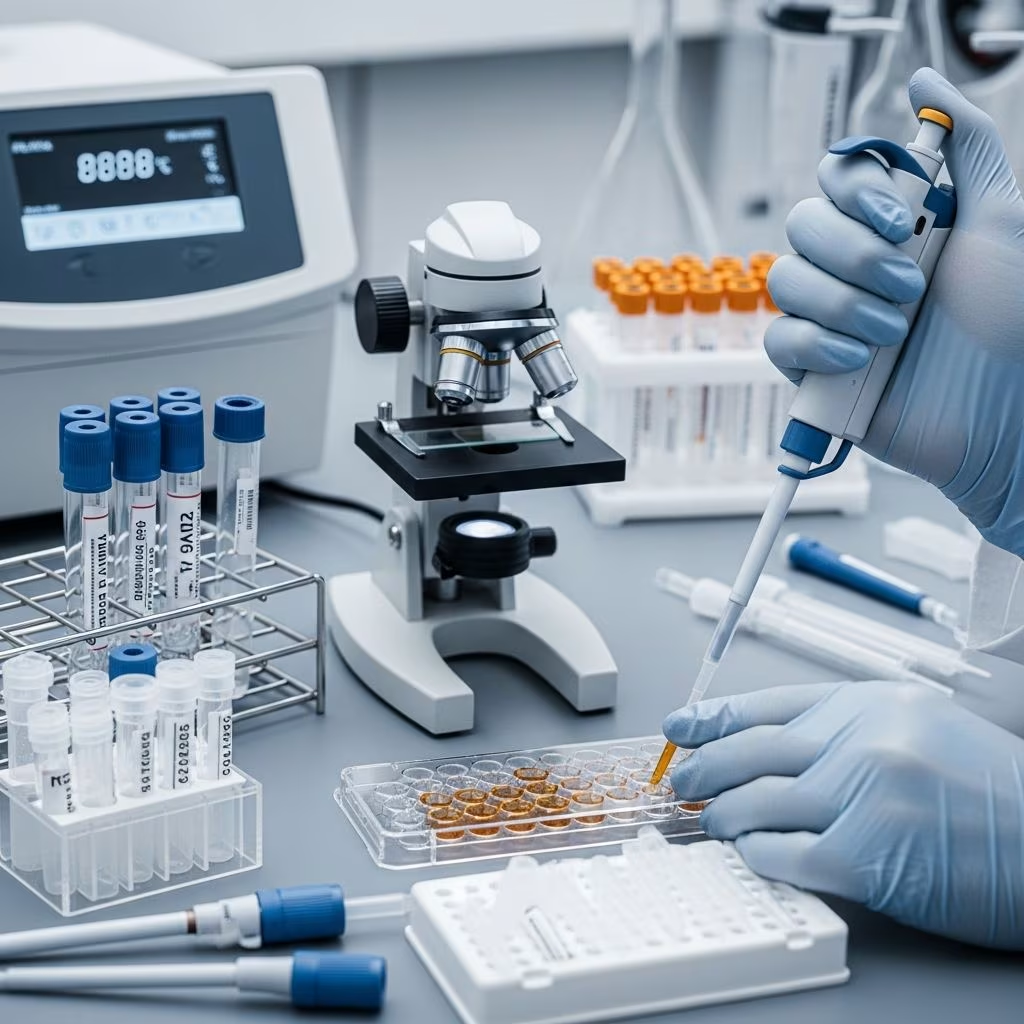
Understanding Feline Infectious Peritonitis Testing
Feline infectious peritonitis (FIP) is a serious and often fatal disease in cats caused by a mutation of the feline coronavirus. One of the most challenging aspects of managing FIP is the difficulty in obtaining a definitive diagnosis. FIP testing is somewhat problematic because there is no single blood test that can confirm the disease with complete certainty. Instead, a working diagnosis of FIP is typically made based on the cat’s clinical history and supportive laboratory data. Understanding the various testing options available and their limitations is essential for cat owners and veterinary professionals alike.
The Challenge of FIP Diagnosis
Diagnosing feline infectious peritonitis presents unique challenges in veterinary medicine. The disease can present in multiple forms with varying clinical signs, making it difficult to distinguish from other conditions. Many diagnostic tests can suggest FIP is present, but none are completely reliable when used alone. This is why veterinarians must use a multimodal approach, combining multiple diagnostic tools and clinical observations to build what is often called a “diagnostic wall” of evidence. The combination of clinical signs, laboratory findings, imaging results, and test outcomes helps veterinarians reach a working diagnosis when FIP is suspected.
Blood Tests for FIP Detection
Routine blood testing may reveal several findings that suggest FIP, though none are diagnostic on their own. Blood tests can indicate evidence of kidney or liver damage, as the FIP coronavirus can invade many different tissues throughout the body. Protein levels in the blood are often increased due to the inflammatory nature of FIP. A complete blood count (CBC) and chemistry panel may show abnormalities such as anemia, elevated liver enzymes, or kidney dysfunction.
One important blood test involves measuring coronavirus antibody titers. However, coronavirus antibody testing alone cannot confirm FIP because many healthy cats or cats with other coronavirus infections will test positive for antibodies. The presence of antibodies simply indicates prior exposure to feline coronavirus (FCoV), not necessarily the mutated strain that causes FIP. Antibody titers must be interpreted carefully in combination with clinical signs and other diagnostic findings. The combination of increased protein levels, other blood abnormalities, and clinical signs adds extra evidence to support an FIP diagnosis, but blood testing alone cannot definitively confirm the disease.
Imaging Studies
Diagnostic imaging plays an important role in evaluating cats suspected of having FIP. Radiographs (X-rays) and ultrasound can reveal fluid accumulation within the abdomen (ascites) or chest (pleural effusion), which is a common finding in FIP cases. Thoracic radiography is usually quite diagnostic for pleural effusion and can help confirm that fluid is present in body cavities.
Advanced imaging techniques such as MRI or CT scans may be particularly useful in cases involving neurological signs, as FIP can affect the nervous system. These advanced imaging methods can help characterize the extent of disease and rule out other differential diagnoses that might explain the cat’s symptoms. However, imaging alone cannot definitively diagnose FIP; it can only support the clinical suspicion and help assess the severity of disease.
Fluid Analysis and Effusion Testing
When fluid is present in the body cavities, analysis of this fluid can provide valuable diagnostic information. Veterinarians may use a small needle to take fluid samples from the abdomen, chest, or spinal cord area to check for the presence of coronavirus and abnormal cells. Effusion analysis is one of the most helpful diagnostic tools when fluid is present.
Several testing methods can be performed on body cavity fluids. The Rivalta’s test is a simple, quick, and inexpensive diagnostic tool for examining effusions. It is a valuable method to help rule out FIP when the result is negative. Immunofluorescence antibody testing (IFAT) can detect coronavirus antibodies in effusion samples and has shown good diagnostic accuracy in certain situations. More recently, antigen detection tests in macrophages of body cavity effusions have shown increased specificity for FIP diagnosis compared to traditional antibody testing.
Fine Needle Aspirate Sampling
In cases where body cavity effusion is not present, a veterinarian may perform a fine needle aspirate (FNA) procedure. This involves using a small needle to gently obtain a sample of cells from affected tissues or organs, such as the liver, kidney, or lymph nodes. The cells obtained can then be examined for evidence of coronavirus infection. Fine needle aspirates can be particularly useful when a cat has clinical signs of FIP but does not have obvious fluid accumulation in the body cavities. These samples can provide direct evidence of viral involvement in specific organs.
Histopathology: The Gold Standard
Histopathological examination is considered the gold standard for FIP diagnosis. This involves examining tissue samples under a microscope to look for characteristic changes associated with FIP. Immunohistochemistry (IHC), which uses special staining techniques to detect the FIP virus in tissue samples, has shown excellent sensitivity of 97-100% in cats with confirmed FIP and specificity up to 100% to exclude FIP in cats with other diseases.
Unfortunately, histopathology is most commonly performed on tissue samples obtained after a cat’s death, as obtaining tissue biopsies from living cats can be challenging and carries certain risks. However, it remains the most definitive diagnostic method. In some cases where a cat has severely affected organs or tissue masses visible on imaging, a biopsy may be performed during life to attempt a definitive diagnosis.
Advanced Molecular Testing
Molecular diagnostic techniques, such as PCR (polymerase chain reaction) testing, can detect feline coronavirus genetic material in various samples. These tests are particularly useful because they can differentiate between the intestinal form of coronavirus (which does not cause FIP) and the systemic form found in FIP. PCR tests detect viral RNA, and for FIP diagnosis, the detection of viral genetic material outside of the intestinal tract is most indicative of FIP, since active viral replication in circulating mononuclear cells is typical of FIP, whereas non-FIP coronavirus strains replicate primarily in the intestinal tract.
Real-time PCR tests represent an advancement in FIP diagnosis, allowing for detection of the pathogenic FIPV biotype and enabling more definitive diagnosis or exclusion of FIP. These molecular tests can be performed on various sample types including blood, effusions, and tissue samples. The advantage of molecular testing is that it can detect the virus directly rather than relying on antibody detection, which can be present in cats that do not have FIP.
Interpreting Test Results
It is important to understand that individual test results must be interpreted in context with all other clinical and laboratory findings. A single positive test does not necessarily confirm FIP, and a single negative test does not rule it out. For example, a positive coronavirus antibody titer indicates exposure to coronavirus but does not prove the cat has FIP. Similarly, certain antigen detection tests in effusions can occasionally produce false positive results in cats with other conditions.
Veterinarians must consider the complete clinical picture, including the cat’s age, signalment, history of symptoms, physical examination findings, and all laboratory and imaging results. The combination of findings creates a body of evidence that supports or refutes an FIP diagnosis. This is why diagnosis of FIP requires a multimodal approach rather than reliance on any single test.
Testing Considerations and Limitations
Several factors affect the reliability of FIP testing. The type of sample submitted can influence test results, as different testing methods have varying sensitivity and specificity depending on whether blood, effusion, tissue, or other samples are used. The presence or absence of body cavity effusion affects which tests are most useful. Cats with neurological forms of FIP may require different testing approaches than cats with the more common effusive form.
The stage of disease can also affect test results. Early in infection, certain markers may not be detectable, while later stages may show different patterns. Additionally, some cats may have concurrent diseases that complicate the diagnostic picture. The inflammatory nature of FIP means that many laboratory abnormalities seen in FIP can also occur with other conditions.
Diagnostic Algorithm for Suspected FIP
When FIP is suspected based on clinical signs, the typical diagnostic approach begins with a complete physical examination followed by routine blood work and imaging studies. If effusion is present, fluid analysis should be performed as this provides valuable diagnostic information. If effusion is not present but FIP is still suspected, fine needle aspirates from affected organs or tissues may be collected. Molecular testing and specialized antigen or antibody detection tests can provide additional supporting evidence.
The combination of clinical history, physical examination findings, laboratory abnormalities, imaging results, and specialized test results helps veterinarians build a diagnosis of FIP. In many cases, a presumptive or working diagnosis is made rather than a confirmed diagnosis, as obtaining a definitive histopathological diagnosis in a living cat can be challenging.
Frequently Asked Questions About FIP Testing
Q: Is there a single blood test that can definitively diagnose FIP?
A: No, there is currently no single blood test that definitively confirms FIP. Diagnosis requires a combination of clinical signs, physical examination findings, laboratory results, imaging, and specialized tests.
Q: What does a positive coronavirus antibody test mean?
A: A positive coronavirus antibody test indicates that a cat has been exposed to feline coronavirus at some point, but it does not confirm that the cat has FIP or will develop FIP. Many cats with positive antibody tests never develop FIP.
Q: Can FIP be diagnosed without body cavity fluid?
A: Yes, FIP can be suspected and diagnosed through clinical signs, blood work, imaging, fine needle aspirates, and molecular testing even when body cavity fluid is not present. However, fluid analysis is helpful when effusion is present.
Q: How accurate is histopathology for FIP diagnosis?
A: Histopathology with immunohistochemistry staining is the most accurate diagnostic method for FIP, with sensitivity and specificity rates exceeding 95% when used to examine appropriate tissue samples.
Q: What should I do if my cat is suspected of having FIP?
A: Consult with your veterinarian immediately. Work together to perform appropriate diagnostic testing, discuss findings, and explore treatment options. Early consultation and testing can help guide management decisions.
References
- New Diagnostic Option for Feline Infectious Peritonitis — Kansas State Veterinary Diagnostic Laboratory. 2024-01. https://www.ksvdl.org/resources/news/diagnostic_insights/january2024/new-FIP-option.html
- How Veterinarians Diagnose Feline Infectious Peritonitis — PetMD. 2024. https://www.petmd.com/cat/conditions/infectious-parasitic/feline-infectious-peritonitis
- Diagnosis of Feline Infectious Peritonitis: A Review of the Current Diagnostic Modalities — PMC National Center for Biotechnology Information. 2020. https://pmc.ncbi.nlm.nih.gov/articles/PMC6893704/
- Feline Infectious Peritonitis — Merck Veterinary Manual. 2024. https://www.merckvetmanual.com/infectious-diseases/feline-infectious-peritonitis/feline-infectious-peritonitis
- Feline Infectious Peritonitis Virus — Auburn University College of Veterinary Medicine. 2024. https://www.vetmed.auburn.edu/academic-departments/dept-of-pathobiology/diagnostic-services/molecular-diagnostics/feline-infectious-peritonitis-virus/
- 2022 AAFP/EveryCat Feline Infectious Peritonitis Diagnosis and Management Guidelines — American Association of Feline Practitioners. 2022. https://journals.sagepub.com/doi/10.1177/1098612X221118761
- Feline Infectious Peritonitis — Cornell University College of Veterinary Medicine. 2024. https://www.vet.cornell.edu/departments-centers-and-institutes/cornell-feline-health-center/health-information/feline-health-topics/feline-infectious-peritonitis



