

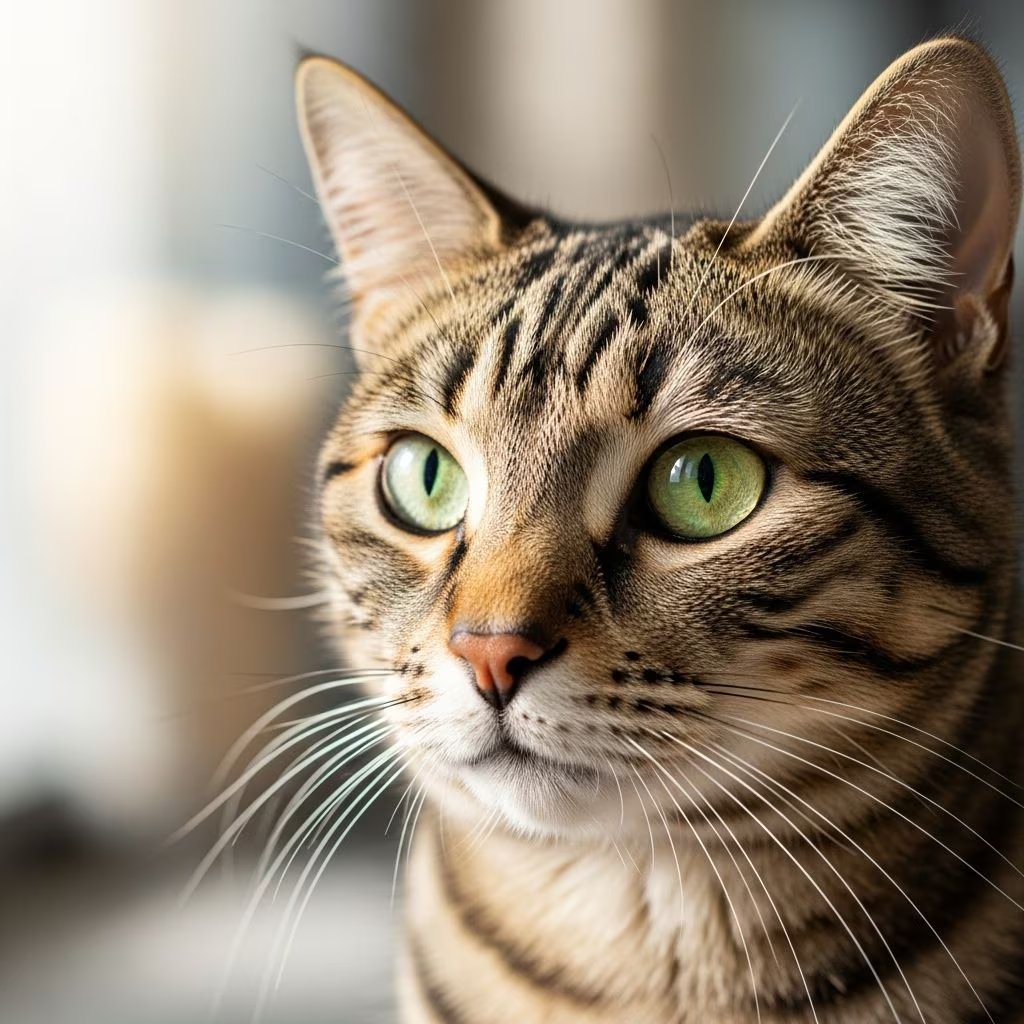
Feline Infectious Peritonitis (FIP) represents one of the most challenging and fatal diseases affecting domestic cats worldwide. Triggered by a mutation in the common feline coronavirus, this condition provokes a destructive immune response that leads to widespread inflammation and organ damage. While previously considered almost universally lethal, recent therapeutic breakthroughs offer hope for affected cats. This article delves into the complexities of FIP, equipping cat owners with vital knowledge on recognition, management, and prevention.
Understanding the Origins of FIP
The root cause of FIP lies in feline coronavirus (FCoV), a ubiquitous virus primarily residing in the intestines of cats without causing harm in most cases. This benign form, known as feline enteric coronavirus, spreads through fecal-oral transmission, especially in multi-cat environments like catteries or shelters. In a small percentage of cats—roughly 5-10%—the virus undergoes a genetic mutation, transforming into the virulent feline infectious peritonitis virus (FIPV).
This mutation enables the virus to infect macrophages, immune cells that travel throughout the body, disseminating infection to multiple organs. Factors influencing mutation include the cat’s age (young cats under two years are most vulnerable), stress, genetic predisposition, and high viral loads from crowded living conditions. Unlike its human coronavirus relatives, FIPV does not transmit between cats; each case arises independently from mutation within the host.
Forms of FIP: Wet vs. Dry Manifestations
FIP manifests in two primary forms—effusive (wet) and noneffusive (dry)—though mixed presentations occur. The form depends on the immune response and sites of inflammation.
Wet FIP: The Effusive Crisis
Wet FIP is characterized by fluid accumulation in body cavities, particularly the abdomen (ascites) and chest (pleural effusion). This leads to a pot-bellied appearance, labored breathing, and rapid deterioration. Fluid is typically viscous and yellowish, resulting from damaged blood vessels leaking plasma proteins. Cats often succumb within days to weeks without intervention due to respiratory compromise and organ compression.
Dry FIP: Subtle and Systemic
Dry FIP lacks significant effusion but causes granulomatous inflammation in organs like the eyes, brain, kidneys, liver, and intestines. Progression is slower, with symptoms emerging over weeks to months, complicating early detection. Neurological or ocular involvement signals advanced disease, often with poor prognosis prior to new treatments.
| Feature | Wet FIP | Dry FIP |
|---|---|---|
| Primary Signs | Abdominal distension, breathing difficulty | Ocular changes, neurological deficits |
| Fluid Buildup | Yes (abdomen/chest) | No or minimal |
| Progression Speed | Rapid (days-weeks) | Slower (weeks-months) |
| Common Organs Affected | Peritoneal/pleural cavities | CNS, eyes, kidneys, liver |
Recognizing Early Warning Signs
Initial FIP symptoms are nonspecific, mimicking other illnesses: persistent fever unresponsive to antibiotics, anorexia, weight loss, lethargy, and diarrhea. These may persist for weeks before form-specific signs appear.
- For Wet FIP: Progressive abdominal swelling, dyspnea, muffled heart sounds.
- For Dry FIP: Uveitis (eye inflammation), retinal detachment leading to blindness, ataxia, seizures, behavioral changes.
- Mixed or Ocular/Neurological: Jaundice, enlarged lymph nodes, renal failure indicators like increased thirst.
Owners should monitor young cats in high-risk settings closely. Any combination of fever, weight loss, and fluid buildup warrants immediate veterinary attention.
Diagnostic Approaches for Confirmation
Diagnosing FIP remains challenging due to overlapping symptoms with feline leukemia, toxoplasmosis, or lymphoma. No single test is definitive; veterinarians rely on a multimodal strategy.
- Clinical History and Exam: Assessing risk factors, persistent fever, and effusion.
- Abdominocentesis/Thoracocentesis: Analyzing fluid for high protein content (>3.5 g/dL), low cellularity, and FCoV antigen via PCR.
- Bloodwork: Hyperglobulinemia, low albumin:globulin ratio, elevated bilirubin.
- Imaging: Ultrasound revealing thickened intestines or nodules; radiography for effusions.
- Advanced Tests: RT-PCR on fluids/tissues for FIPV mutation markers, immunofluorescence for viral antigen in macrophages.
Biopsy provides gold-standard confirmation but is invasive. Recent genetic assays distinguishing FCoV from FIPV improve accuracy.
Evolving Treatment Landscape
Historically, FIP was fatal, with supportive care (fluids, nutrition, anti-inflammatories) merely palliative. Remission rates were under 5%. Transformative antiviral therapies now alter this narrative.
The nucleoside analog GS-441524 (remdesivir prodrug) inhibits viral replication, achieving remission in 80-95% of cases when administered early (84 days orally or injectably). Availability expanded in the US via compounding post-FDA trials. Molnupiravir shows promise in resistant cases.
Treatment protocols demand strict adherence: daily injections initially, monitoring via qPCR for viral load. Relapse risks persist if shortened. Costs range $2,000-$5,000 USD, but survival justifies investment.
Prevention Strategies for Cat Owners
Eradicating FCoV is impractical given its prevalence (up to 90% in multi-cat homes). Focus on risk reduction:
- Minimize household cat density; quarantine newcomers 4-6 weeks.
- Litter box hygiene: daily scooping, disinfectants effective against coronaviruses.
- Stress reduction: stable environments, gradual introductions.
- Vaccination: FIP vaccines offer partial protection but aren’t fully effective; discuss with vets.
- Breeding practices: Test for FCoV shedding, avoid high-risk matings.
Living with FIP: Supportive Care and Prognosis
During treatment, provide a quiet space, appetite stimulants, and subcutaneous fluids. Nutritional support via high-calorie diets combats cachexia. Emotional support for owners is crucial given the ordeal.
With antivirals, long-term survival exceeds 90% in compliant cases; untreated, it’s fatal within months. Post-remission monitoring includes serial bloodwork and PCR.
Frequently Asked Questions (FAQs)
Is FIP contagious to other cats or humans?
No, FIP itself isn’t directly contagious; only the precursor FCoV spreads, and mutation occurs individually.
Can older cats get FIP?
Primarily young cats (<2 years), but any age is possible, especially stressed adults.
How soon after FCoV exposure does FIP develop?
Weeks to years; incubation varies widely.
Is there a cure for FIP?
Antivirals like GS-441524 induce remission in most cases, considered curative if completed fully.
What breeds are prone to FIP?
Purebreds like Bengals, Ragdolls show higher risk due to genetics.
Key Takeaways for Cat Owners
Early vigilance saves lives. Consult veterinarians promptly for nonspecific signs in at-risk cats. Advances in therapy turn FIP from death sentence to manageable condition, emphasizing proactive care.
References
- Signs, Diagnosis, and Treatment of FIP in Cats — PetMD. 2023. https://www.petmd.com/cat/conditions/infectious-parasitic/feline-infectious-peritonitis
- What Is Feline Infectious Peritonitis (FIP)? Symptoms and … — GoodRx. 2024. https://www.goodrx.com/pet-health/cat/feline-infectious-peritonitis-causes-symptoms-treatment
- Feline Infectious Peritonitis (FIP) – Cat Owners — Merck Veterinary Manual. 2025. https://www.merckvetmanual.com/cat-owners/disorders-affecting-multiple-body-systems-of-cats/feline-infectious-peritonitis-fip
- Feline Infectious Peritonitis — Cornell University College of Veterinary Medicine. 2024. https://www.vet.cornell.edu/departments-centers-and-institutes/cornell-feline-health-center/health-information/feline-health-topics/feline-infectious-peritonitis
- FELINE INFECTIOUS PERITONITIS — PMC – PubMed Central. 2020-02-28. https://pmc.ncbi.nlm.nih.gov/articles/PMC7152141/



