

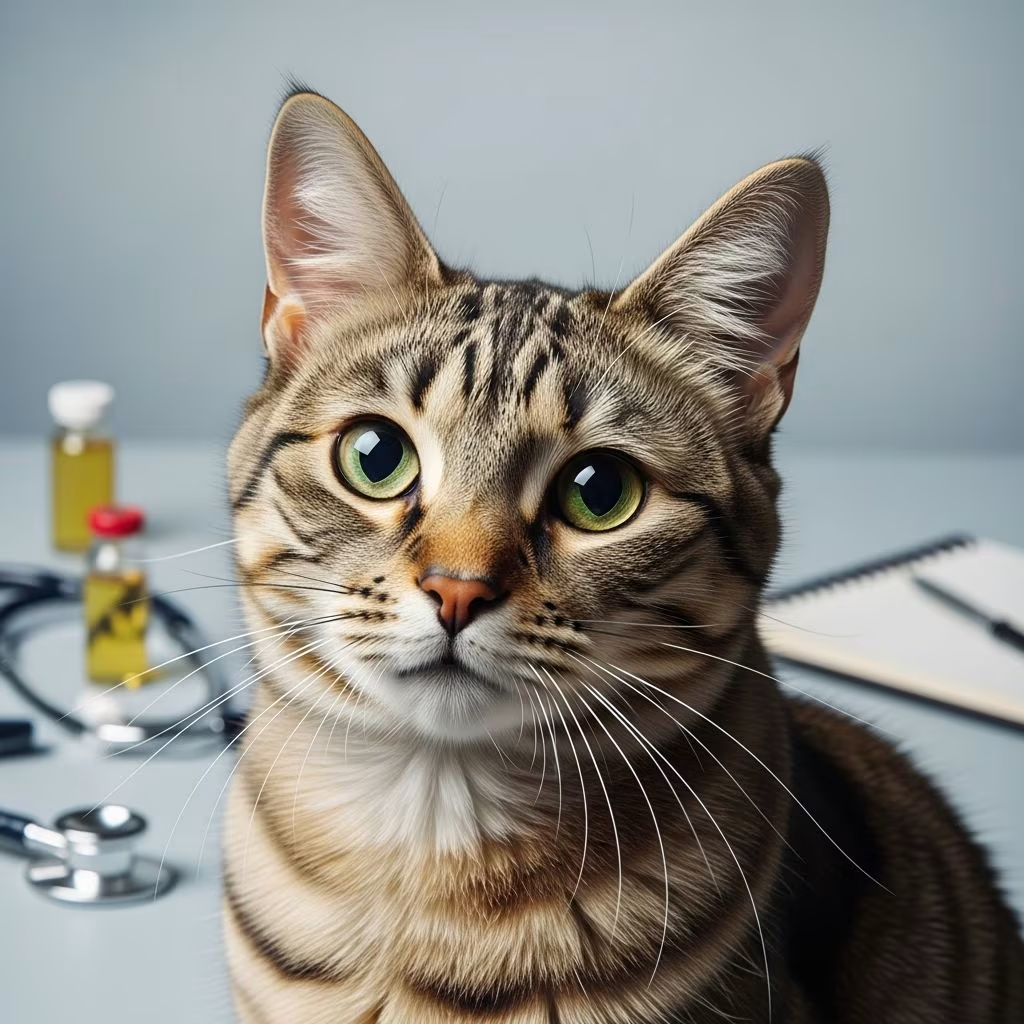
Feline hyperthyroidism is a prevalent endocrine disorder in senior cats, characterized by excessive thyroid hormone production that accelerates metabolism and leads to various health issues.
Understanding the Thyroid’s Role in Cats
The thyroid glands, located near the cat’s throat, produce hormones thyroxine (T4) and triiodothyronine (T3) that regulate metabolism, heart rate, body temperature, and digestion. In hyperthyroidism, these glands become overactive, flooding the body with hormones and disrupting normal functions.
This condition primarily affects cats over 10 years old, with most cases involving benign growths like nodular hyperplasia in one or both glands. Rarely, thyroid carcinoma causes the issue, occurring in less than 5% of cases.
Common Indicators of Thyroid Overactivity
Cats with hyperthyroidism often display noticeable behavioral and physical changes. Key symptoms include:
- Weight loss despite a ravenous appetite, as the body burns calories at an accelerated rate.
- Increased thirst and urination, leading to more frequent litter box visits.
- Hyperactivity, restlessness, or vocalization, with some cats becoming unusually aggressive or anxious.
- Vomiting, diarrhea, or poor coat condition due to digestive upset and neglect of grooming.
- Rapid breathing, heart rate changes, or muscle weakness in advanced stages.
Not all cats show every sign; some may only exhibit mild increases in appetite or activity. Untreated, it can progress to heart failure or kidney damage.
Diagnostic Approaches for Confirmation
Veterinarians start with a physical exam, feeling for enlarged thyroid glands. Blood tests measure T4 and T3 levels; elevated totals confirm hyperthyroidism, though mild cases may need free T4 or TSH tests for accuracy.
Additional checks include kidney function, liver enzymes, and heart evaluations via ECG or ultrasound, as hyperthyroidism masks concurrent diseases. Urinalysis helps assess hydration and kidney health.
| Test | Purpose | Typical Findings |
|---|---|---|
| Total T4 | Screens for overproduction | Elevated >4.0 μg/dL |
| Free T4 | Confirms mild cases | Higher in hyperthyroid cats |
| Complete Blood Count | Checks for anemia/stress | Mild changes common |
| Kidney Panel | Assesses concurrent issues | Monitors filtration rate |
Management Strategies Overview
Treatment aims to normalize hormone levels, with options varying by cat’s age, health, and owner preferences. Choices include lifelong medication, dietary control, surgical removal, or a single radioactive injection.
Pharmacological Control with Antithyroid Drugs
Methimazole (e.g., Felimazole, FDA-approved) inhibits hormone synthesis, available as oral tablets or transdermal gel. It reduces T4 levels within 2-3 weeks but requires lifelong use and bi-monthly blood monitoring.
Side effects affect 18% of cats, including vomiting, facial itching, appetite loss, or rare blood disorders/hepatopathy. Dosage adjustments prevent over-suppression, which can unmask kidney disease.
Iodine-Restricted Nutrition Plans
Prescription diets like Hill’s y/d limit iodine, essential for hormone production, effectively managing mild cases if fed exclusively.
Challenges arise in multi-cat homes or with finicky eaters, as non-compliance reduces efficacy. Not suitable with methimazole or for severe hyperthyroidism.
Surgical Intervention: Thyroidectomy
Removing enlarged glands offers a cure, ideal for unilateral disease. Bilateral surgery risks parathyroid damage, causing low calcium levels.
Declining popularity due to anesthesia risks in seniors, postoperative complications like voice changes or Horner’s syndrome, and availability of safer alternatives.
Radioactive Iodine Therapy: Gold Standard
I-131 injection targets overactive cells via natural iodine uptake, achieving >95% cure rate with one dose. Non-invasive, outpatient in specialized facilities, with cats isolated briefly for radiation safety.
Minimal side effects; treats bilateral disease effectively. Contraindicated in severe kidney/heart disease without stabilization. Post-treatment, hormone levels normalize in 1-3 months.
Selecting the Best Treatment Path
Decisions factor cat’s overall health, owner commitment, cost, and facility access. Radioiodine excels for efficacy and convenience; medication suits short-term or unstable patients.
- Medication: Affordable initial, ongoing monitoring.
- Diet: Non-invasive, multi-cat limitations.
- Surgery: Curative but risky.
- I-131: Optimal long-term, higher upfront cost.
Combination approaches or switching may be needed; regular vet follow-ups essential.
Potential Complications and Monitoring
Treatment can reveal masked conditions like chronic kidney disease, as hyperthyroidism boosts filtration rates. Heart remodeling reverses slowly post-therapy.
Owners monitor weight, appetite, litter habits, and activity. Annual bloodwork tracks thyroid, kidney, and liver function.
Lifestyle Adjustments for Affected Cats
Provide quiet resting spots, easy litter access, and palatable low-iodine food if prescribed. Stress reduction aids management; pheromone diffusers help anxious cats.
Regular grooming supports coat health; weight management prevents obesity post-treatment.
FAQs on Feline Hyperthyroidism
What age groups are most at risk?
Senior cats over 10 years, with peak incidence at 12-15 years.
Can hyperthyroidism be prevented?
No definitive prevention; environmental factors may contribute, but early detection is key.
How long does recovery take after I-131?
Clinical improvement in days; full normalization in 1-3 months.
Is treatment expensive?
Varies: medication $50-100/month, I-131 $1500-2500 one-time.
What if my cat refuses pills?
Transdermal methimazole or diet/I-131 alternatives available.
Prognosis with Timely Intervention
Early treatment restores quality life, extending lifespan by years. Untreated cats face heart/kidney failure; cured cats live normally.
References
- Hyperthyroidism in Cats | Animal Health Topics — UC Davis School of Veterinary Medicine. 2023. https://healthtopics.vetmed.ucdavis.edu/health-topics/feline/hyperthyroidism-cats
- Diagnosis and management of feline hyperthyroidism — PMC – NIH. 2020-07-01. https://pmc.ncbi.nlm.nih.gov/articles/PMC7337209/
- What Utah Cat Owners Need to Know About Feline Hyperthyroidism — CATT Veterinary Services. 2023. https://www.catt.vet/blog/what-utah-cat-owners-need-to-know-about-feline-hyperthyroidism
- Feline Hyperthyroid Treatment Information — University of Missouri Veterinary Health Center. 2023. https://vhc.missouri.edu/small-animal-hospital/small-animal-internal-medicine/diseases-and-treatments/feline-hyperthyroid-treatment-information/
- Hyperthyroidism in Cats: Causes & Treatments — Monterey Hana Animal Hospital. 2023-04-30. https://www.mtyonahanimalhospital.com/site/blog/2023/04/30/hyperthyroidism-cats-causes-treatments
- Hyperthyroidism in Cats — Cornell University College of Veterinary Medicine. 2023. https://www.vet.cornell.edu/departments-centers-and-institutes/cornell-feline-health-center/health-information/feline-health-topics/hyperthyroidism-cats



