

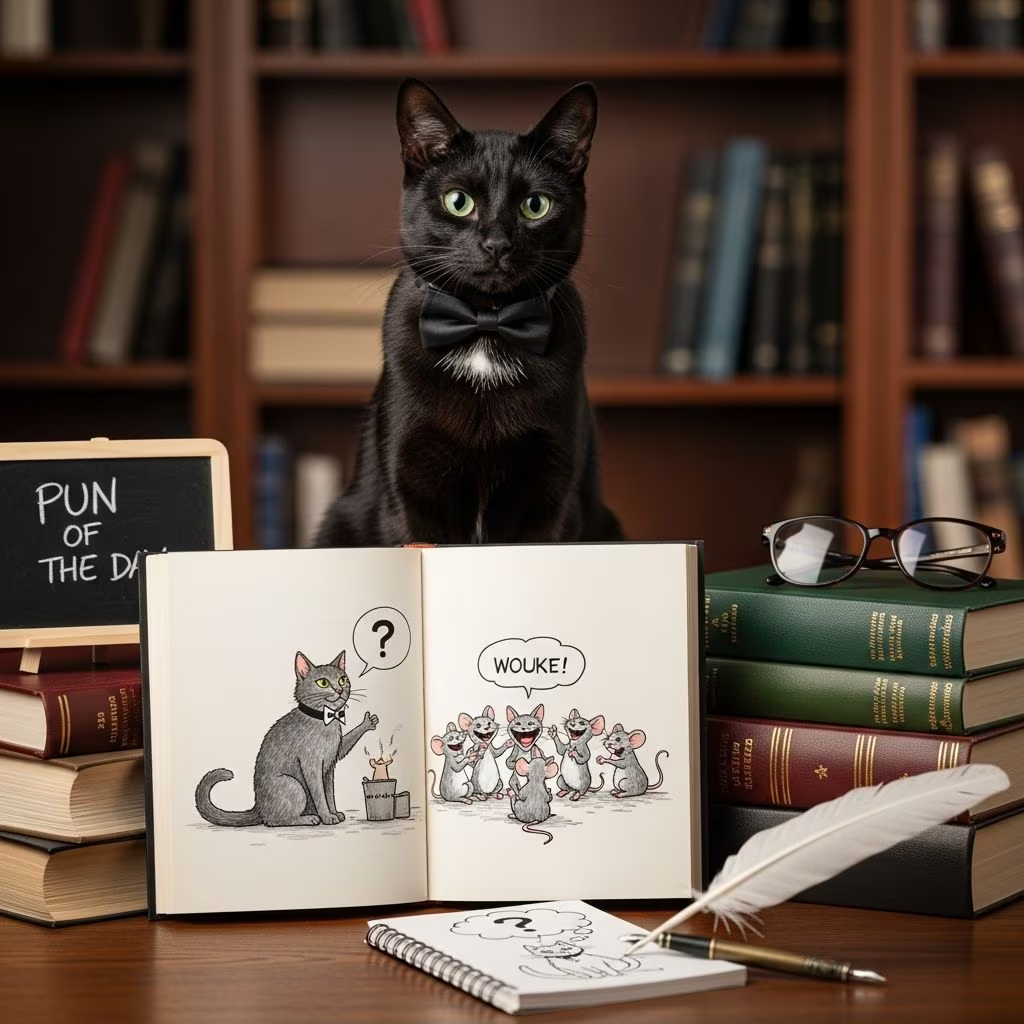
Cats have long inspired creativity and joy in human culture, and their quirky behaviors and independent nature make them perfect subjects for comedy. Whether through puns, observational humor, or clever wordplay, cat-themed jokes have become a beloved form of entertainment for pet enthusiasts and comedy lovers alike. Understanding the appeal of cat humor requires us to examine how feline characteristics translate into comedic gold.
The Psychology Behind Why Cats Are Funny
Cats possess several inherent qualities that naturally lend themselves to humor. Their aloof demeanor, mysterious nature, and unpredictable antics create endless opportunities for comedic observations. Unlike dogs, which are often portrayed as eager to please, cats are frequently depicted as indifferent overlords of their households, a dynamic that resonates with many pet owners who experience this dynamic daily.
The appeal of cat humor stems largely from the relatability factor. Cat owners recognize their pets in jokes about ignoring humans, knocking things over deliberately, or treating their owners as servants rather than caregivers. This incongruence between how we perceive cats and how they actually behave creates the fertile ground necessary for comedic material to flourish.
Additionally, cats’ silent, graceful movements and expressive faces make them ideal subjects for physical comedy and visual gags. Their ability to contort their bodies, their intense stares, and their dramatic reactions to everyday situations provide comedians with rich material to work with.
Understanding Common Cat Pun Categories
Cat puns operate on multiple linguistic levels, utilizing the unique characteristics of feline vocabulary and behavior patterns. These wordplay mechanisms fall into several distinct categories:
- Sound-Based Puns: Leveraging the vocal sounds cats make, such as meows, purrs, and hisses, to create double meanings
- Name Puns: Playing on famous cat names or human names adapted with feline references
- Behavioral Puns: Using cat behaviors and habits as the foundation for wordplay
- Pop Culture Adaptations: Transforming well-known phrases, movie titles, and song names with cat-themed variations
- Food and Treat Puns: Creating jokes around common cat foods and treats
- Anatomical Puns: Making wordplay based on physical cat features like whiskers, paws, and tails
Why Wordplay Works With Feline Themes
The English language provides numerous opportunities for cat-related wordplay due to the multiple meanings of words and the phonetic similarities between cat-related terms and other commonly used words. The word “cat” itself, along with cat-related vocabulary, naturally creates opportunities for puns that appeal to a broad audience.
Effective cat puns typically work on two levels: they make immediate sense to anyone familiar with cats, and they contain a linguistic twist that triggers recognition of the wordplay. This dual appeal makes cat puns particularly shareable, as they can be appreciated by both serious feline enthusiasts and casual pet lovers.
The Role of Cat Behavior in Comedic Material
Cat behavior provides an endless repository of comedic observations. Understanding actual cat psychology enhances the humor value of jokes and puns, as the comedy often stems from exaggerating or highlighting real behavioral traits. Several behaviors consistently appear in cat-related comedy:
Territorial Ownership and Independence: Cats’ strong sense of territory and their independent nature inspire jokes about cats viewing their humans as staff members. A confident cat actively owns its environment with a relaxed posture, which contrasts amusingly with the human desire for companionship.
Sleeping Habits: Cats sleep approximately 15 hours per day, spending roughly 70% of their lives in slumber. This behavior inspires humor about lazy cats and their dedication to napping, making them relatable to humans seeking rest.
Knocking Objects Over: Cats’ inherent curiosity leads them to knock things over, a behavior that stems from their exploratory nature. This seemingly destructive tendency has inspired countless jokes about cats intentionally causing chaos.
Vocal Communication: Cats employ meowing, chirping, hissing, and other vocalizations to communicate, creating opportunities for jokes about selective listening and demanding behavior.
Predatory Instincts: Despite domestication, cats retain their hunting instincts, which provides material for jokes about their deadly nature as miniature hunters.
Creating Your Own Cat Humor
Crafting original cat jokes and puns requires understanding both the mechanics of wordplay and genuine feline characteristics. Consider these approaches:
- Observe your own cat’s specific quirks and behaviors, then translate these observations into comedic narratives
- Identify phonetic similarities between cat-related words and common phrases
- Exaggerate real behavioral tendencies to humorous extremes
- Combine multiple cat traits into single jokes for layered humor
- Adapt existing jokes from other domains by substituting feline references
- Play with the contrast between cats’ perceived independence and actual social flexibility
Cat Humor in Popular Culture and Social Media
The internet has amplified cat humor exponentially, with social media platforms dedicated entirely to cat jokes, memes, and videos showcasing feline antics. Meme culture has democratized cat humor, allowing any cat owner to create and share content featuring their pets. The prevalence of cat-related content on platforms like Instagram, TikTok, and Twitter demonstrates the universal appeal of feline comedy.
Cats have become cultural icons in comedy, from classic cartoon characters to contemporary viral sensations. Their consistent presence in entertainment reflects their unique position as beloved pets that inspire affection while simultaneously frustrating their owners through independent behavior and selective affection.
The Social Function of Cat Humor
Sharing cat jokes and puns serves important social functions. Cat humor creates community among pet lovers, providing a common language through which people can bond over shared experiences of cat ownership. Inside jokes about specific behavioral patterns create a sense of belonging within cat enthusiast communities.
Additionally, cat humor allows people to process the sometimes frustrating aspects of cat ownership in a lighthearted manner. Rather than viewing destructive or aloof behavior as negative, humor reframes these traits as endearing quirks that make cats entertaining companions.
Research indicates that cat social behavior is more flexible than commonly believed, with individual preferences varying significantly. This variability provides rich material for humor, as cats display such different personalities and behavioral styles.
Different Types of Cat Jokes
| Joke Type | Description | Example Category |
|---|---|---|
| Puns | Wordplay utilizing phonetic or semantic similarities | Sound and language-based |
| Observational | Comments on actual cat behaviors and owner experiences | Behavioral and relational |
| Visual | Gags based on cats’ physical appearance or actions | Physical comedy |
| Dark Humor | Jokes about cats’ predatory nature and detachment | Personality-based |
| Situational | Humor based on common scenarios between cats and owners | Daily life interactions |
Frequently Asked Questions About Cat Humor
Why are cat puns so popular?
Cat puns resonate because they combine wordplay mechanics with universal experiences of cat ownership. The popularity of cats as pets means that cat-related humor has a broad audience ready to appreciate feline-themed comedy.
Can cat humor help with pet training and bonding?
While humor itself doesn’t directly train cats, understanding cat behavior deeply enough to appreciate cat humor can improve your relationship with your pet. When you recognize why cats behave certain ways, you can respond with patience rather than frustration, strengthening your bond.
Are there cultural differences in cat humor?
Yes, cat humor varies across cultures based on different relationships with cats and different languages. However, the universal appeal of cats as entertainment subjects means that cat humor transcends many cultural boundaries.
How can I incorporate cat humor into my daily life?
Share cat jokes with fellow pet owners, follow cat humor accounts on social media, and observe your own cat’s behaviors for opportunities to appreciate the humor in their everyday antics.
The Lasting Appeal of Feline Comedy
Cat humor endures because it taps into fundamental human experiences and emotions. Cats inspire both genuine affection and humorous exasperation in their owners, creating a dynamic that naturally generates comedic material. As long as cats continue to charm and frustrate their humans with their independent nature and quirky behaviors, cat jokes and puns will remain beloved forms of entertainment.
The humor found in feline-themed content celebrates what makes cats unique: their confidence, their mysterious nature, their selective affection, and their ability to make even mundane household activities seem dramatic and entertaining. Whether through cleverly crafted puns or simple observational jokes, cat humor serves as a testament to the special place these animals occupy in human culture and our hearts.
References
- Inside the Feline Mind: Understanding Cat Psychology — Supertails. 2026. https://supertails.com/blogs/expert-led-blogs/inside-the-feline-mind-understanding-cat-psychology
- Decoding Common Cat Behavior — MedVet Blog. https://www.medvet.com/cat-behaviors/
- Common misconceptions about the social behavior of domestic cats — National Center for Biotechnology Information (NCBI). 2024. https://pmc.ncbi.nlm.nih.gov/articles/PMC10841747/
- Understanding Cat Behavior — PAWS Chicago. https://www.pawschicago.org/news-resources/all-about-cats/understanding-cat-behavior
- 20 Cat Facts That’ll Blow Your Kitty-Crazed Mind — Sugar River Animal Hospital. https://www.sugarriveranimalhospital.com/services/cats/blog/20-cat-facts-thatll-blow-your-kitty-crazed-mind
- 15 Important Facts About Cats — Psychology Today. 2022-09. https://www.psychologytoday.com/us/blog/the-red-light-district/202209/15-important-facts-about-cats



