

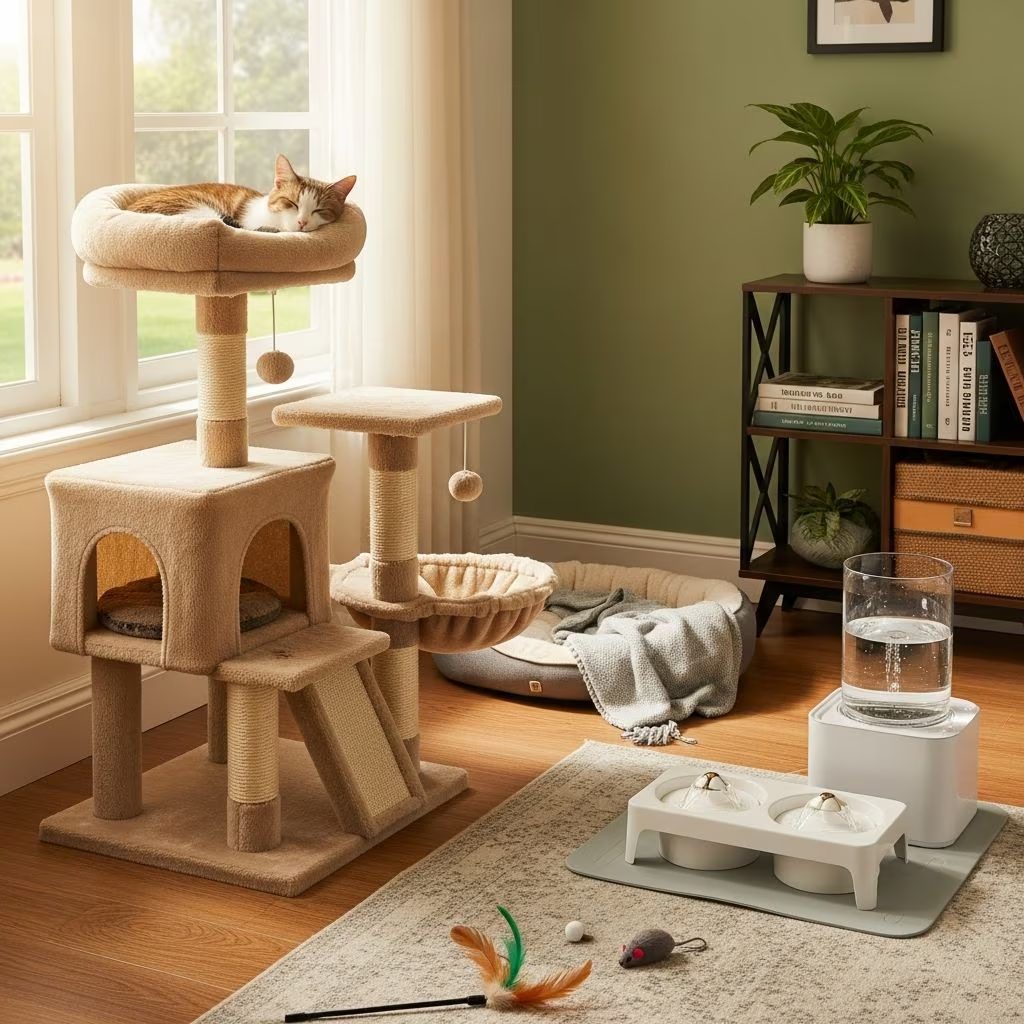
Your home is your cat’s entire world. Unlike humans who can venture out to work, social gatherings, or explore new environments regularly, indoor cats spend most or all of their lives within the confines of your residence. This reality underscores the critical importance of designing a space that addresses both the physical and psychological needs of your feline family member. A thoughtfully designed home environment directly impacts your cat’s stress levels, behavioral health, and overall quality of life.
Cats are territorial animals by nature, establishing security through familiar scents, predictable routines, and spaces they can control. Research demonstrates that cats require specific environmental elements to feel safe and content, including multiple resource stations, vertical territory, and hiding spaces where they can retreat when overwhelmed. When these needs are met, cats exhibit fewer behavioral problems, maintain better physical health, and develop stronger bonds with their human companions.
Understanding Your Cat’s Need for Territorial Control
The foundation of feline comfort begins with understanding that cats are inherently territorial creatures with evolutionary survival instincts deeply ingrained in their behavior. Unlike dogs, who evolved as pack animals and naturally look to others for social structure, cats developed as solitary hunters who establish security through control of their personal space. This fundamental difference shapes how cats perceive and interact with their home environment.
When cats feel they have control over their territory and can predict their environment, stress hormones decrease and confidence increases. Your role as a pet owner involves creating an environment where your cat feels ownership and agency. This means providing spaces they can claim as their own, allowing them to determine when and how they interact with family members, and maintaining consistency in daily routines.
Cats are acutely sensitive to environmental changes. They notice shifts in furniture placement, new household items, and alterations to daily schedules, often responding with anxiety or behavioral changes. By recognizing this sensitivity and planning modifications carefully, you can minimize stress and help your cat maintain their sense of security even when adjustments become necessary.
Designing Vertical Territory: The Multi-Level Approach
One of the most overlooked elements in creating a cat-friendly home is the vertical dimension. Cats naturally seek elevated positions where they can observe their environment, hunt from above, and escape when they feel threatened. A flat, horizontal-only living space significantly limits your cat’s ability to practice natural behaviors and feel secure.
Implementing vertical territory transforms your home into a three-dimensional playground that addresses multiple feline needs simultaneously:
- Cat trees and climbing structures provide legitimate spaces for climbing and scratching, redirecting these natural behaviors away from furniture
- Wall-mounted shelves create pathways across rooms and allow cats to survey their domain from elevated vantage points
- Window perches position cats near windows for bird watching and natural light exposure, providing mental stimulation and entertainment
- Furniture arrangement can be optimized to create natural climbing routes using existing pieces like bookshelves or entertainment centers
Research on feline behavior indicates that cats spending time in elevated positions exhibit lower stress levels and greater confidence. Vertical territory particularly benefits indoor-only cats who cannot roam outdoors. By providing climbing opportunities and perches, you give your cat agency in choosing different vantage points throughout the day, which helps satisfy their natural exploratory instincts despite physical confinement indoors.
When selecting vertical structures, prioritize stability and safety. Wobbly cat trees create anxiety rather than security. Ensure climbing surfaces are sturdy, provide multiple landing spots at varying heights, and position structures away from hazards like electrical cords or breakable items.
Strategic Resource Placement and Multiple Stations
A critical mistake many cat owners make is concentrating all resources—food, water, litter boxes, and resting areas—in a single location. This setup forces cats into stressful situations where they may encounter family members or other household pets while meeting basic needs. Multiple resource stations throughout your home allow cats to access necessities without feeling trapped or vulnerable.
The ideal resource distribution follows these principles:
- Separate feeding and elimination zones: Cats naturally avoid eliminating near where they eat. Place litter boxes in locations distant from food and water bowls
- Multiple litter box locations: The general guideline recommends one litter box per cat plus one additional box. Distribute these throughout your home, particularly on different floor levels
- Distributed water sources: Cats prefer water separated from food. Consider placing water bowls in multiple locations and providing a water fountain, which many cats find more appealing
- Rest areas in different zones: Provide comfortable beds in quiet corners, near windows, and in central areas so your cat can choose their resting spot based on their mood
This distributed approach respects your cat’s need for choice and control. Research demonstrates that cats exhibit lower stress behaviors when they have multiple options for accessing essential resources, reducing territorial conflicts and anxiety-related problems.
Creating Safe Zones and Hiding Opportunities
Contrary to the assumption that a cat constantly hiding indicates a problem, providing adequate hiding spaces is essential for feline comfort. Cats use hiding spaces not as signs of unhappiness but as necessary refuges where they can decompress, observe without being observed, and feel secure. Multiple hiding options throughout your home give your cat the autonomy to retreat when overwhelmed or stressed.
Effective hiding options include:
- Commercial cat caves or enclosed beds that provide den-like security
- Cardboard boxes placed in corners, under furniture, or on shelves—many cats find these particularly appealing
- Under-bed spaces where cats can retreat while remaining aware of household activity
- Closet shelves or storage areas that provide cool, quiet refuge
- Paper bags (with handles removed for safety) that many cats enjoy exploring and hiding within
The availability of hiding spaces becomes particularly important when introducing new family members, other pets, or experiencing household changes. Cats with adequate hiding options adapt to environmental stressors more successfully because they maintain a sense of control and security even during transitions. Rather than forcing interaction during stressful periods, respecting your cat’s need to hide and gradually emerge builds trust and strengthens your relationship long-term.
Environmental Enrichment for Mental Stimulation
Cats are naturally inquisitive, active animals attuned to their environment’s sensory stimuli. Indoor-only cats can experience boredom and under-stimulation when their environment remains static and unchanging. Environmental enrichment—the intentional introduction of novel stimuli and opportunities for natural behaviors—prevents boredom-related problems like excessive meowing, destructive scratching, or aggression.
Comprehensive enrichment strategies address multiple sensory and behavioral needs:
| Enrichment Category | Examples | Benefits |
|---|---|---|
| Visual Stimulation | Window access, bird feeders outside, cat videos | Engages predatory instincts safely, provides entertainment |
| Tactile Exploration | Scratching posts, climbing structures, texture variety | Satisfies natural scratching behavior, marks territory safely |
| Hunting and Play | Interactive wand toys, puzzle feeders, food-dispensing toys | Practices predatory skills, provides exercise and mental challenge |
| Olfactory Interest | Cat-safe plants, catnip toys, scent-based enrichment | Engages powerful sense of smell, encourages exploration |
| Social Interaction | Scheduled playtime, training sessions, interactive games | Strengthens human-cat bond, provides mental engagement |
Research on indoor cat behavior shows that cats with enriched environments demonstrate more confident behavior, better weight management, and fewer behavioral problems compared to cats in sparse environments. Rotating toys, introducing new elements occasionally, and varying play patterns keep your cat mentally engaged and physically active.
Establishing and Maintaining Consistent Routines
While enrichment and variety are important, consistency and predictability are equally essential for feline comfort. Cats thrive on routine, knowing approximately when feeding occurs, when playtime happens, and when quiet periods begin. This predictability allows cats to feel secure and reduces stress-related behaviors.
Implementing a consistent daily schedule should include:
- Regular feeding times rather than free-feeding, which provides structure and helps monitor appetite changes
- Scheduled play sessions that give your cat something to anticipate and work toward
- Consistent sleep patterns where your cat knows when active household periods end and quiet time begins
- Regular grooming and interaction sessions that build predictability into your relationship
- Maintenance schedules for litter box cleaning and food/water refresh that happen at consistent times
Cats are acutely aware of even small changes in household routines. Major disruptions—like schedule changes, new family members, or moving—warrant extra attention to maintaining what routines you can control. Even when external circumstances change, maintaining consistent feeding, play, and interaction times provides anchors of stability that help your cat navigate transitions.
Optimizing Litter Box Management and Placement
The litter box represents far more than a simple elimination station in your cat’s world. It’s a vulnerable moment where cats cannot easily defend themselves, making litter box placement and management critical to their sense of security. Many behavioral problems stem from litter box-related stress or avoidance rather than medical issues.
Proper litter box management encompasses:
- Placement in quiet, low-traffic areas away from family activity and other pets
- Location separate from food and water, respecting cats’ natural aversion to eliminating near eating areas
- Adequate size—the box should be 1.5 times your cat’s length
- Low-sided boxes for senior cats and higher sides for younger cats to prevent splashing
- Frequent cleaning to prevent odor accumulation that makes boxes unappealing
- Litter type consistency unless transitioning gradually to a new litter
The psychological aspect of litter box placement often gets overlooked. A box in a high-traffic area or near loud appliances creates stress during elimination. Conversely, boxes in quiet, accessible locations with easy escape routes encourage regular use and reduce litter box avoidance. If your cat begins eliminating outside the litter box, environmental stress and box placement should be among your first diagnostic considerations.
Lighting, Temperature, and Sensory Comfort
Cats have different sensory preferences than humans, and accommodating these needs improves their overall comfort. Natural light exposure regulates circadian rhythms and provides psychological benefits, yet many cats also need dim, cool spaces for rest and recovery.
Optimize sensory comfort through:
- Natural light access without forcing direct sun exposure, as some cats prefer shadier areas
- Dim resting spaces that provide cool refuges, particularly important for cats prone to heat stress
- Temperature variation allowing cats to find comfortable spots at different household temperatures
- Reduced noise levels in rest areas, as loud environments create chronic low-level stress
- Air quality management avoiding strong scents, smoke, or airborne irritants that stress sensitive cats
Many cats seek out cool tile floors or bathroom areas during warm periods. Rather than restricting access, respecting these preferences and providing cool resting options supports your cat’s thermal comfort and stress management.
Managing Transitions and Environmental Changes
Despite your best efforts to maintain stability, life brings inevitable changes—moves to new homes, new family members, changes in work schedules, or other disruptions. Understanding how to manage these transitions minimizes stress and behavioral problems.
When significant changes occur:
- Introduce changes gradually when possible, allowing your cat time to process modifications
- Maintain familiar items like bedding, toys, and furnishings that carry your cat’s scent and provide comfort
- Increase environmental enrichment to provide mental stimulation and coping outlets during stressful periods
- Preserve routine elements you can control, such as feeding times and play schedules
- Provide extra hiding spaces where your cat can retreat and decompress
Research on cat adjustment to new homes indicates that cats require 2-4 weeks minimum for adjustment, with some sensitive individuals needing up to 8 weeks to fully acclimate. This extended timeline reflects the genuine psychological stress relocation creates. Patience and environmental design substantially impact how quickly your cat readjusts to major changes.
Frequently Asked Questions About Cat Home Comfort
Q: How can I tell if my cat is stressed by their home environment?
A: Stress indicators include excessive hiding, reduced appetite, litter box avoidance, over-grooming, aggression, or excessive vocalization. If these behaviors appear suddenly, evaluate recent environmental changes, resource availability, and enrichment levels. Consulting your veterinarian helps rule out medical causes before assuming behavioral stress.
Q: Should I worry if my cat hides frequently?
A: Hiding is a normal, healthy coping mechanism that allows cats to feel secure while processing their environment. Frequent hiding becomes concerning only if accompanied by other stress indicators or if your cat refuses to eat or use the litter box. Otherwise, respecting your cat’s need to hide builds trust and supports their emotional well-being.
Q: How many litter boxes do I really need?
A: The standard guideline recommends one litter box per cat plus one additional box. For a two-cat household, you’d ideally have three boxes distributed throughout your home. This prevents competition and gives each cat reliable access to elimination spaces.
Q: What’s the best way to introduce my cat to a new home?
A: Start by confining your cat to a single well-equipped “safe room” containing all necessary resources. Allow 2-4 weeks for acclimation before gradually opening access to other areas. Keep your cat’s bedding, toys, and familiar items nearby. This gradual approach significantly reduces adjustment stress and behavioral problems.
Q: Can I improve my cat’s environment on a budget?
A: Absolutely. Cardboard boxes, paper bags, window perches, and DIY climbing structures cost very little. Free enrichment includes bird watching, controlled access to safe outdoor spaces via catios or leash training, and interactive play with simple toys like crumpled paper or string.
Conclusion: Creating Your Cat’s Personal Sanctuary
Designing a home where your cat feels genuinely at home extends far beyond providing basic food and shelter. It requires understanding feline psychology, respecting territorial instincts, and implementing thoughtful environmental design that addresses physical, psychological, and behavioral needs. A well-designed feline environment reduces stress, prevents behavioral problems, and creates the foundation for a deeper, more satisfying relationship with your cat.
The investment you make in environmental enrichment, resource distribution, and stress reduction pays dividends in your cat’s health, happiness, and behavior. By viewing your home through your cat’s eyes and making intentional design choices, you transform it from simply where your cat lives into a true sanctuary where they thrive.
References
- Home Sweet Home: The Impact of Lifestyle on a Cat’s Approach to Problem-Solving — National Center for Biotechnology Information (NCBI). 2023. https://pmc.ncbi.nlm.nih.gov/articles/PMC10451177/
- Helping Your Cat Adjust to a New Home or Space — The Refined Feline. https://www.therefinedfeline.com/helping-your-cat-adjust-to-a-new-home-or-space/
- New Home Adjustment Period — Hawaiian Humane Society. 2020. https://www.hawaiianhumane.org/wp-content/uploads/2020/12/Feline-Behavior-Resources-New-Home-Adjustment-Period.pdf
- How to Create a Cat-Friendly Home — GeniusVets. https://www.geniusvets.com/pet-care/learn/cats/cat-preventive-care/blog/how-create-cat-friendly-home
- Preparing Your Cat for a Change in the Family — PAWS Chicago. https://www.pawschicago.org/news-resources/all-about-cats/preparing-your-cat-for-a-change-in-the-family
- Cat Behavior and Litter Box Management Tips — Cat Care Society. https://www.catcaresociety.org/cat-behavior-and-litter-box-management-tips/



