
Feline Heartworm Disease: Essential Guide For Cat Owners
Understand the risks, signs, diagnosis, and prevention of heartworm in cats to keep your feline companion safe from this serious threat.
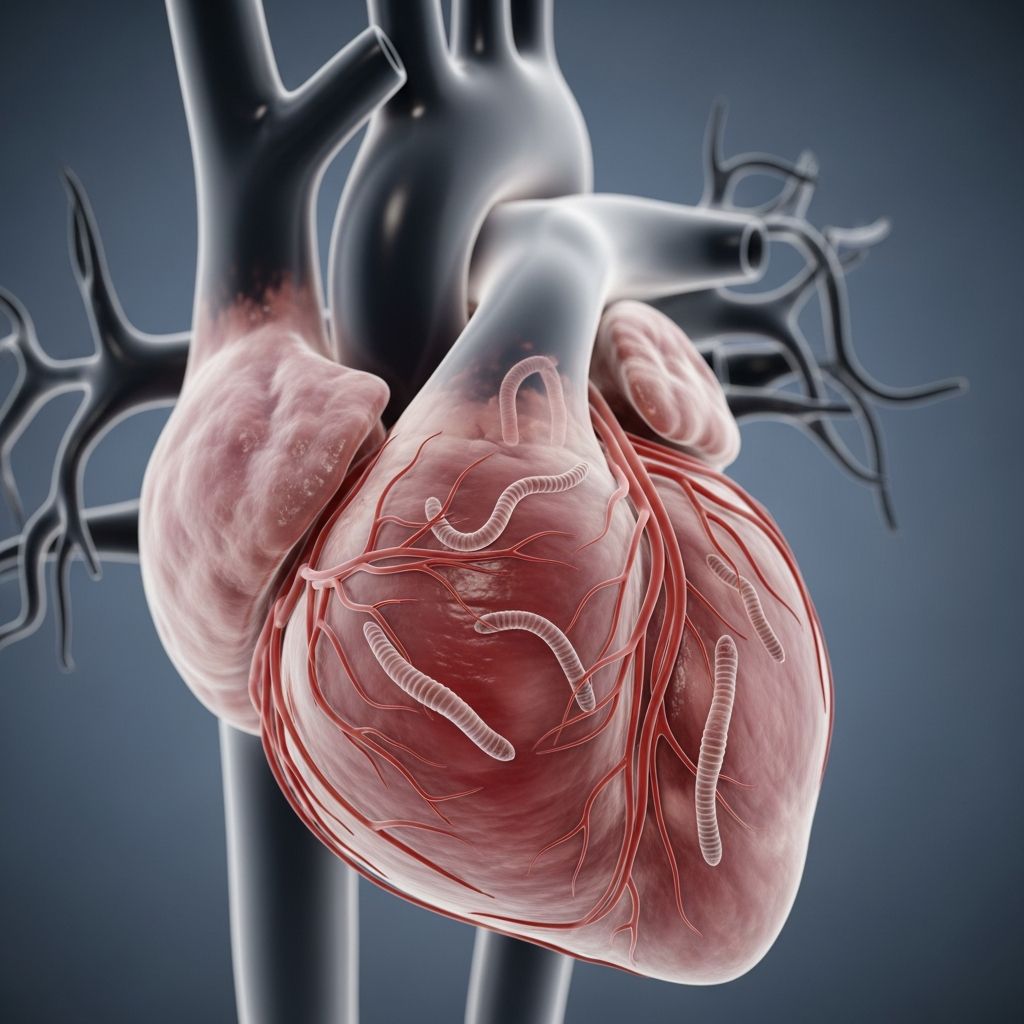
Heartworm disease affects cats through mosquito bites carrying parasitic worms that invade the heart and lungs, leading to potentially fatal complications even in indoor pets. Unlike dogs, cats often harbor fewer worms, but the impact can be severe due to their smaller vascular system and strong immune responses.
The Nature of Heartworm Parasites in Cats
Heartworms, scientifically known as Dirofilaria immitis, are thread-like nematodes transmitted exclusively by infected mosquitoes. When a mosquito feeds on an infected animal, it ingests microfilariae, the larval stage, which develop within the insect into infective third-stage larvae (L3) over 10-14 days. These larvae enter a cat’s skin via the mosquito’s bite and migrate through tissues for about 3-4 months before reaching the pulmonary arteries.
In cats, maturation to adults takes 7-8 months, longer than the 6 months in dogs. Adult worms, up to 12 inches long, reside in the heart, lungs, and associated vessels. Cats rarely produce microfilariae, present in only about 20% of cases and inconsistently, making the disease harder to detect. Worms live 2-3 years in cats versus 5-7 in dogs, but even one or two can cause significant harm.
How Cats Contract Heartworm Infection
Any cat, indoor or outdoor, faces risk in mosquito-prone areas. Infective larvae enter through bite wounds and molt several times: L3 to L4 in tissues, then to juveniles entering blood vessels. Many immature worms die en route, triggering inflammation known as Heartworm-Associated Respiratory Disease (HARD).
- Mosquito bites deposit L3 larvae on skin.
- Larvae migrate to pulmonary arteries in 70-90 days.
- Immature worms provoke lung inflammation 3-4 months post-bite.
- Adults produce microfilariae rarely after 7 months.
Geographic prevalence varies; warmer regions see higher rates, but climate change expands mosquito habitats, increasing risks nationwide.
Recognizing Symptoms of Heartworm in Cats
Symptoms often mimic asthma or bronchitis, delaying diagnosis. Cats may appear healthy until worms die, releasing toxins and emboli that inflame lungs acutely.
| Stage | Common Signs | Potential Severity |
|---|---|---|
| Immature Worms (HARD) | Coughing, rapid breathing, exercise intolerance | Mild to moderate respiratory distress |
| Adult Worms | Vomiting, diarrhea, weight loss, ataxia | Neurologic issues, seizures |
| Worm Death (Stage 2) | Open-mouth breathing, collapse, hemoptysis | Sudden death from thromboembolism |
Asymptomatic cases occur, especially with low worm burdens, but lung damage persists. Sudden death strikes without warning, even in single-worm infections.
Diagnostic Approaches for Feline Heartworm
Diagnosis challenges stem from low worm numbers and rare microfilariae. Vets combine serology, imaging, and clinical evaluation.
- Antigen Test: Detects adult female worm proteins; often negative in cats.
- Antibody Test: Identifies exposure to larvae; more sensitive for early detection.
- Imaging: Chest X-rays show pulmonary patterns; echocardiography visualizes worms.
- Microfilariae Search: Knott’s test or filtration; low yield.
Test annually or before preventives, retesting 6 months after lapses. Radiographs assess lung severity independently of serology.
Treatment Challenges and Options
No FDA-approved adulticidal drugs exist for cats due to risks of worm death causing fatal emboli. Management focuses on supportive care and monitoring.
- Supportive Therapy: Prednisolone reduces inflammation; oxygen, fluids for distress.
- Surgical Removal: Rare, ultrasound-guided for visible worms; high complication risk.
- Monitoring: X-rays every 6-12 months; some infections self-resolve with residual damage.
Avoid melarsomine (dog treatment) in cats. Prognosis varies: mild HARD cases recover, but chronic lung disease or worm death often proves fatal.
Prevention: The Best Defense Against Heartworm
Year-round preventives kill larvae before maturity. Consult vets for cat-safe options like topical moxidectin or oral ivermectin-based products. American Heartworm Society recommends “Think 12”: monthly prevention and annual testing.
- Start preventives anytime; test 6-7 months later if history unknown.
- Missed doses? Resume immediately, retest after 6 months.
- Indoor cats need protection too; mosquitoes enter homes.
Environmental controls like screens and repellents aid but don’t replace meds.
Understanding HARD: The Key Complication
HARD arises from dying immature worms, causing eosinophilic pneumonia, vascular damage, and fibrosis. Symptoms: cough, dyspnea, lethargy. Distinguish from asthma via testing. Even cleared infections leave permanent scarring, risking chronic respiratory issues.
Heartworm vs. Other Feline Respiratory Conditions
Overlap with asthma, bronchitis, or pneumonia confounds diagnosis.
| Condition | Key Differentiators |
|---|---|
| Feline Asthma | Wheezing, responds to bronchodilators; antibody negative. |
| Bronchitis | Chronic cough; no antigen/antibody positivity. |
| Heartworm (HARD) | Positive serology, radiographic vascular changes. |
Combined antigen-antibody testing clarifies.
Long-Term Management for Infected Cats
Positive cats require lifelong monitoring: serial imaging, serology every 6-12 months. Low-dose steroids manage mild symptoms. Avoid stressors triggering crises. Many stabilize but carry permanent lung changes.
FAQs on Feline Heartworm Disease
Can indoor cats get heartworms?
Yes, mosquitoes access homes through screens or doors. All cats in endemic areas need prevention.
How often should I test my cat?
Annually, plus before starting preventives or after misses. Use both antigen and antibody tests.
Is heartworm preventable in kittens?
Start monthly preventives at 8 weeks; safe and effective.
What if prevention lapses?
Restart immediately; retest 6 months later as larvae need 7 months to detect.
Does heartworm affect cat behavior?
Regional Risks and Veterinary Recommendations
Prevalence highest in southern U.S., but rising everywhere. Vets tailor plans per location and lifestyle. Integrate with flea/tick control for comprehensive care.
References
- The Facts about Heartworm Disease — U.S. Food and Drug Administration. 2023. https://www.fda.gov/animal-veterinary/animal-health-literacy/keep-worms-out-your-pets-heart-facts-about-heartworm-disease
- Heartworms in Cats — American Heartworm Society. 2023. https://www.heartwormsociety.org/heartworms-in-cats
- Heartworm Disease in Cats: Symptoms, Treatment, and Prevention — PetMD (reviewed by Dr. Lauren Jones). 2024. https://www.petmd.com/cat/conditions/infectious-parasitic/c_ct_heartworm_disease
- Heartworm in Cats — Cornell University College of Veterinary Medicine. 2023. https://www.vet.cornell.edu/departments-centers-and-institutes/cornell-feline-health-center/health-information/feline-health-topics/heartworm-cats
- Prevention, Diagnosis, and Management of Heartworm Infection in Cats — American Heartworm Society. 2014 (updated guidelines referenced in 2023 sources). https://heartwormsociety.org/images/pdf/2014-AHS-Feline-Guidelines.pdf
- Heartworm Disease — American Veterinary Medical Association. 2024. https://www.avma.org/resources-tools/pet-owners/petcare/heartworm-disease








Read full bio of medha deb




