

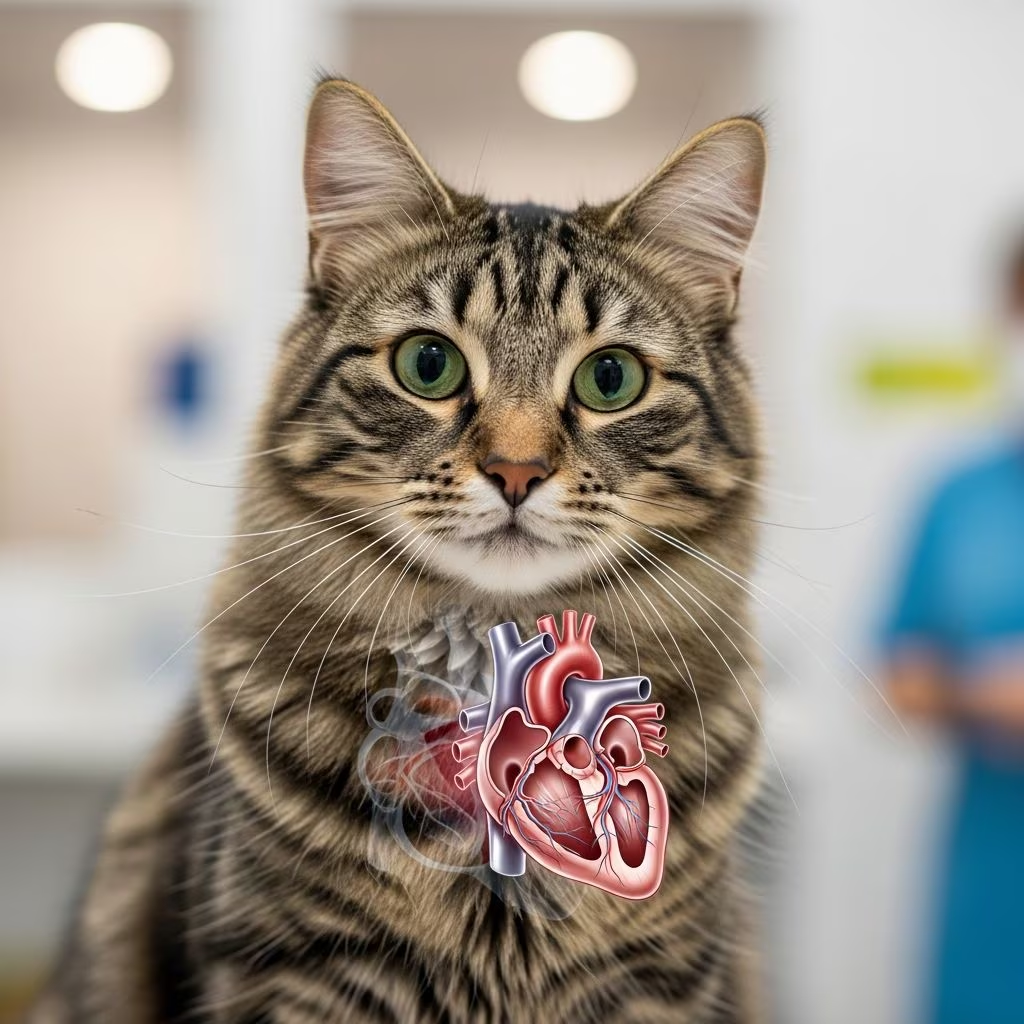
Heart disease affects many cats, often silently until advanced stages. This guide covers essential knowledge on types, detection, management, and prevention to help cat owners support their pets’ cardiac health.
Understanding Cardiac Conditions in Cats
Cats can develop various heart issues that impair the organ’s ability to pump blood effectively. Unlike dogs, feline heart problems frequently go unnoticed because cats mask symptoms well. Primary cardiomyopathies dominate, where the heart muscle itself is diseased, alongside valve defects, rhythm disturbances, and birth-related anomalies. Acquired forms develop over time due to age, nutrition, or secondary factors like hyperthyroidism, while congenital ones appear from birth.
Statistics show cardiomyopathies as the leading cardiac issue in adult cats, with hypertrophic forms being predominant. Early awareness enables better outcomes through timely veterinary intervention.
Primary Types of Feline Heart Disorders
- Hypertrophic Cardiomyopathy (HCM): The heart’s walls thicken abnormally, hindering relaxation and filling. This is the most frequent type, often leading to atrial enlargement and clot risks.
- Restrictive Cardiomyopathy (RCM): Heart muscle stiffens, restricting blood inflow. Atrial dilation is typical, contributing to fluid buildup and thromboembolism.
- Dilated Cardiomyopathy (DCM): Rare today due to taurine-fortified diets, but involves chamber dilation and weakened contractions. Nutritional deficiencies historically caused it.
- Arrhythmogenic Right Ventricular Cardiomyopathy (ARVC): Affects the right ventricle with fibrofatty changes, causing irregular beats.
- Congenital Defects: Include valve malformations, septal holes, or vessel anomalies like patent ductus arteriosus (PDA), present since birth.
Other contributors include myocarditis from infections, myocardial infarcts from clots, and systemic issues like anemia or hypertension mimicking or exacerbating heart strain.
Recognizing Warning Signs
Cats rarely show overt symptoms early on, but subtle changes signal trouble. Watch for:
- Lethargy or reduced activity levels.
- Labored or rapid breathing, especially at rest (over 30-40 breaths per minute while sleeping).
- Loss of appetite, weight loss, or vomiting.
- Coughing, though uncommon in cats.
- Sudden hindlimb paralysis from aortic thromboembolism (ATE), a clot blocking blood flow—painful and an emergency.
- Fainting, weakness, or collapse during exertion.
Physical exam findings like heart murmurs (turbulent flow sounds), gallop rhythms (extra beats), weak pulses, or pale gums raise suspicion. Sudden fluid in lungs or chest (CHF) presents as open-mouth breathing or low energy.
Diagnostic Approaches for Accurate Assessment
Veterinarians start with history and gentle physical exams to avoid stressing the cat, which worsens heart strain. Key steps include:
- Auscultation and Pulses: Detect murmurs, arrhythmias, gallops; assess femoral pulse strength.
- Imaging: Chest X-rays reveal heart enlargement, lung edema, or pleural fluid. Focused ultrasound (point-of-care) quickly checks left atrial size.
- ECG/Holter Monitoring: Identifies rhythm issues over 24-48 hours.
- Echocardiography: Gold standard; visualizes structure, measures wall thickness, chamber sizes (e.g., LA/Ao ratio >1.5 indicates enlargement), and function.
- Biomarkers: NT-proBNP blood tests confirm cardiac stress; elevated levels support heart involvement without full imaging.
- Screening Tests: Bloodwork rules out hyperthyroidism, anemia, kidney issues; blood pressure checks hypertension.
For subclinical cases, annual exams catch silent disease via murmurs or biomarkers. In crises, prioritize stabilizing before advanced tests.
Treatment Strategies by Condition Type
Tailored therapies aim to manage symptoms, prevent complications, and improve quality of life. No cure exists for most cardiomyopathies, but control is possible.
| Condition | Key Treatments | Notes |
|---|---|---|
| HCM | ACE-inhibitors (e.g., enalapril), beta-blockers (atenolol), diuretics (furosemide), anti-clot (clopidogrel), pimobendan | Avoid high doses if systolic anterior motion (SAM) present. |
| RCM | Diuretics, ACE-inhibitors, clopidogrel; thoracocentesis for fluid | Focus on fluid and clot prevention. |
| DCM | Taurine supplements, ACE-inhibitors, diuretics, pimobendan | Early nutrition fixes often reverse it. |
| Congenital | Surgery (PDA closure), medications for valves | Some correctable with intervention. |
| Arrhythmias | Anti-arrhythmics, pacemakers for blocks | Monitor for progression. |
Acute CHF requires hospitalization: oxygen therapy, IV diuretics, sedation. Long-term, low-stress environments aid management.
Prognosis and Long-Term Outlook
Outcomes vary widely. Asymptomatic cats with HCM may live normally for years with monitoring. Symptomatic CHF shortens life to months-2 years; ATE clots have 40-60% fatality, with recurrence risks. RCM medians 1-2 years; DCM improves with taurine. Surgical congenital fixes can be curative. Regular echoes every 6-12 months track progression.
Home Care and Monitoring Essentials
Owners play a crucial role post-diagnosis:
- Daily Checks: Count sleeping respiratory rate (<30 normal); log activity, appetite, breathing.
- Diet: Low-sodium, taurine-rich prescription foods; maintain ideal weight.
- Exercise: Gentle play; avoid stress or overexertion.
- Med Adherence: Precise dosing; watch for side effects like lethargy.
- Emergency Plan: Furosemide rescue doses (vet-prescribed, 1-2 mg/kg q12h); rush to ER for collapse, dyspnea, paralysis.
Rechecks every 1-3 months initially, then 3-6 for stable cases. Apps track vitals effectively.
Prevention and Risk Reduction Tactics
While genetics play a role, lifestyle mitigates risks:
- Annual vet visits with auscultation for all cats over 1 year.
- Balanced commercial diets prevent taurine deficiency.
- Control weight; obesity strains the heart.
- Manage comorbidities: thyroid, hypertension, dental health.
- Screen breeds prone to HCM (Maine Coon, Ragdoll) via echo/genetics.
Early detection via biomarkers in at-risk cats prolongs life.
Frequently Asked Questions (FAQs)
What causes most feline heart diseases?
Primarily cardiomyopathies from unknown genetic/inflammatory triggers; secondary to hyperthyroidism or nutrition.
Is a heart murmur always serious?
Not always, but in adults, it warrants echo to rule out structural disease.
Can cats live long with heart disease?
Yes, many asymptomatic cats thrive for years; symptomatic ones need vigilant care.
How do I know if my cat has fluid in lungs?
Rapid shallow breaths, reluctance to lie down; vet confirms via X-ray/ultrasound.
Are there breeds at higher risk?
Yes, Maine Coons, Persians, Ragdolls for HCM; genetic testing available.
References
- Feline Heart Disease: Comprehensive Vet Guide 2025 — Askavet. 2025. https://askavet.com/blogs/news/feline-heart-disease-comprehensive-vet-guide-2025-%F0%9F%90%B1%F0%9F%92%93
- The Approach to Cases of Feline CHF: A Summary for Veterinarians — Improve International. 2023. https://improveinternational.com/us/clinical-library/the-approach-to-cases-of-feline-chf-a-summary-for-veterinarians
- Protecting Your Pet’s Heart: A Guide to Heart Disease in Dogs and Cats — Southern Arizona Veterinary. 2024. https://southernazvets.com/protecting-your-pets-heart-a-guide-to-heart-disease-in-dogs-and-cats/
- Diagnosis: Heart Disease — Cornell University College of Veterinary Medicine. 2023. https://www.vet.cornell.edu/departments-centers-and-institutes/cornell-feline-health-center/health-information/feline-health-topics/diagnosis-heart-disease
- The Feline Cardiomyopathies: 1. General concepts — PMC (PubMed Central). 2021-12-01. https://pmc.ncbi.nlm.nih.gov/articles/PMC8723176/



