

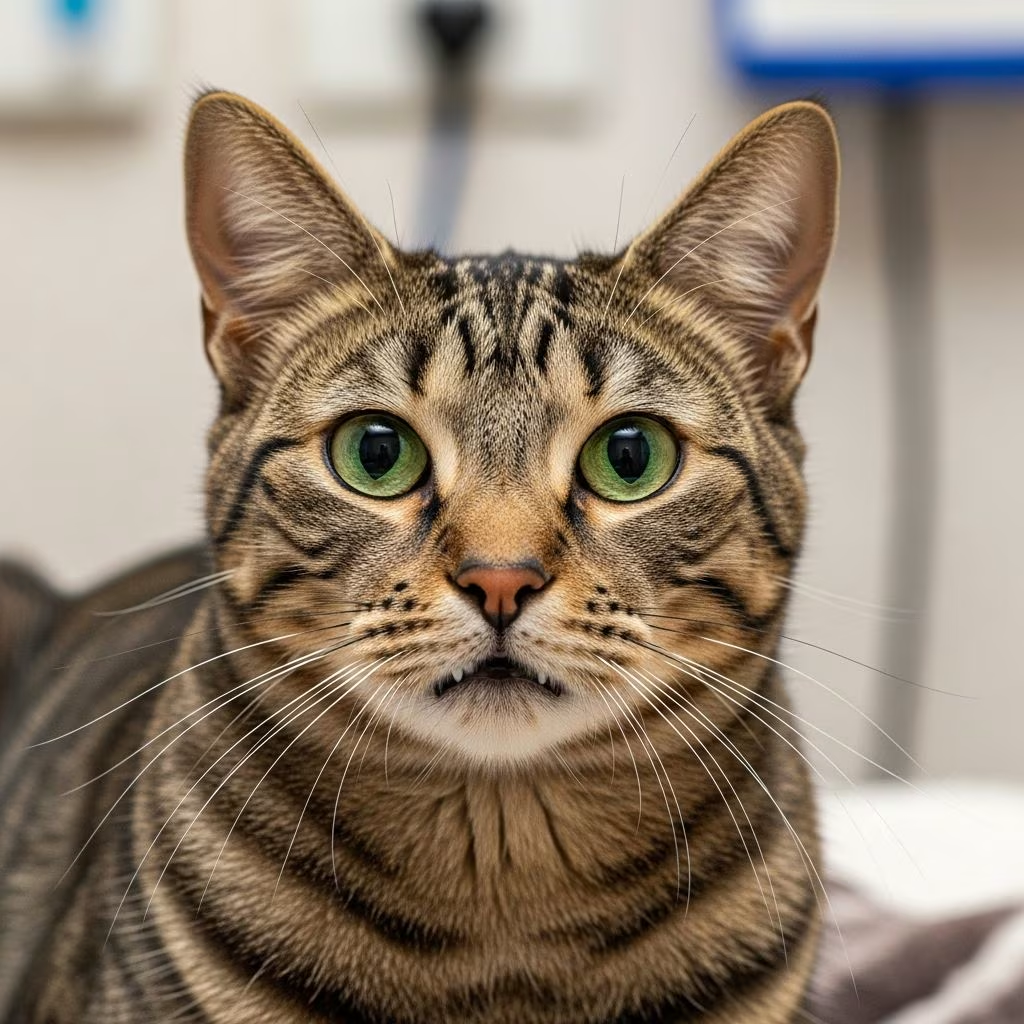
Pet owners who understand their cat’s baseline health measurements gain a significant advantage in recognizing potential illness before it becomes serious. Unlike humans, cats have evolved as expert concealers of discomfort, often hiding symptoms until a condition reaches an advanced stage. By familiarizing yourself with what constitutes normal physiological parameters for felines, you can catch deviations that might indicate underlying medical concerns. This knowledge transforms you into an informed advocate for your cat’s wellbeing, enabling proactive communication with veterinary professionals.
Understanding the Core Components of Feline Health Assessment
Veterinarians rely on a standardized framework known as TPR—temperature, pulse or heart rate, and respiration—to evaluate your cat’s baseline health status during clinical examinations. These three measurements form the foundation of any wellness assessment, whether your cat is visiting for routine checkups or emergency care. Beyond these primary indicators, other assessments including capillary refill time, mucous membrane appearance, and hydration status provide a comprehensive picture of your cat’s physiological condition. Understanding each component allows you to perform basic health checks at home and communicate more effectively with your veterinary team.
Thermal Regulation: What Your Cat’s Temperature Reveals
A cat’s internal temperature naturally runs higher than that of humans, reflecting their evolutionary adaptation as carnivorous hunters with elevated metabolic demands. The normal feline body temperature ranges from 100°F to 102.5°F (37.8°C to 39.1°C). This narrow range is remarkably consistent across healthy adult cats, though individual variation does occur. Several factors can influence temperature readings, including stress from the examination itself, environmental conditions, time of day, and the cat’s activity level immediately preceding measurement.
Taking your cat’s temperature accurately requires a rectal thermometer, as this method provides the most reliable reading. Digital thermometers deliver results quickly and are generally easier to read than analog versions. While ear thermometers exist for convenience, they often produce less accurate readings in felines compared to rectal measurement. If your cat’s temperature falls below 100°F or exceeds 102.5°F, this deviation warrants veterinary consultation, as it may signal fever, hypothermia, or other systemic concerns.
Cardiovascular Function: Interpreting Heart Rate and Pulse
A cat’s cardiovascular system operates at a notably faster rate than humans’, with normal resting heart rates substantially elevated compared to our own baseline measurements. The typical feline heart rate ranges between 140 to 220 beats per minute (bpm) at rest. Some sources identify a slightly lower resting baseline of 100 to 140 bpm, though higher rates are more consistently reported in clinical literature. This variation depends on whether the cat was truly at rest, experienced recent excitement or stress, or had undergone recent physical activity.
To assess your cat’s heart rate at home, locate the point where the left elbow touches the chest—approximately at the fifth rib—and place your hand firmly over this area. Alternatively, you can palpate the femoral artery on the inner thigh by gently pressing your middle and index fingers high on the inside of either hind leg where it meets the body wall. Once you feel the regular pulse rhythm, count the beats for 15 seconds and multiply by four to calculate the beats per minute. A healthy pulse should feel regular and strong without irregular skips or extra beats.
Significant deviations from your cat’s established baseline heart rate may indicate cardiac disease, systemic illness, pain, stress response, or other medical conditions requiring professional evaluation. Cats that have been recently active or excited will naturally display elevated heart rates, so measurements taken during calm, rested states provide the most accurate baseline data. Monitoring your cat’s resting heart rate over time allows you to recognize abnormal patterns specific to your individual pet.
Respiratory Function: Breathing Patterns and Rate Assessment
Feline respiratory rates vary depending on the cat’s activity level and stress state, but a healthy resting cat typically breathes between 20 to 30 times per minute. Some clinical references extend this range to 15 to 30 breaths per minute, recognizing individual variation among cats. These measurements specifically refer to resting respiratory rates; active or stressed cats will naturally display faster breathing. Elevated ambient temperature and anxiety can significantly increase respiration rates, so obtaining measurements during calm moments provides the most meaningful data.
To count your cat’s respiratory rate, observe the rise and fall of their chest or back as they breathe, or gently place your hand near their nostrils to feel their breath. Count the breaths for 15 seconds and multiply by four, just as you would with heart rate calculations. Normal feline breathing should appear effortless and quiet, without panting, coughing, wheezing, or visible signs of respiratory distress. Any deviation from this pattern—including shallow breathing, labored breathing sounds, or apparent respiratory difficulty—warrants immediate veterinary attention, as these changes can indicate respiratory infections, allergies, heart conditions, or other serious concerns.
Perfusion Assessment: Capillary Refill Time and Circulation
Capillary refill time measures how quickly blood returns to the gums after gentle pressure, with normal values under two seconds. This assessment indicates whether your cat’s circulation is adequate for delivering oxygen-rich blood to peripheral tissues. To check capillary refill time, gently press on your cat’s gum tissue with your thumb or finger, causing the tissue to blanch or turn pale. Release the pressure and observe how quickly the normal pink color returns. If color returns within two seconds, circulation is normal. Delayed return to pink coloration may suggest shock, dehydration, or cardiovascular compromise requiring immediate veterinary care.
Mucous membrane color provides additional clues about your cat’s circulatory status. Healthy feline gums and inner lip tissue should appear bright pink and moist. Pale or whitish gums may indicate poor circulation or anemia, while reddish or inflamed gums suggest oral disease or systemic illness. Dry or tacky gum tissue often signals dehydration, a common concern in cats with various medical conditions. Combined evaluation of capillary refill time and mucous membrane appearance provides a fuller picture of your cat’s perfusion status.
Hydration Status: Assessing Fluid Balance Through Physical Examination
Beyond the primary vital signs, evaluating your cat’s hydration status provides important health information. A simple skin turgor test assesses hydration by gently tenting the skin. Pinch a small section of skin on your cat’s neck or shoulder and gently lift it upward. In well-hydrated cats, the skin should snap immediately back against the body when released. Skin that remains slightly tented or returns slowly to normal position suggests dehydration, a condition requiring veterinary assessment and potential intervention.
Mucous membrane moisture complements the skin turgor evaluation. Healthy cats should have moist gums and inner lip tissue, while dry or sticky gums indicate dehydration. Combined with capillary refill time assessment, these observations provide a reliable framework for evaluating your cat’s fluid status and identifying potential concerns before they become critical.
Establishing Your Individual Cat’s Baseline Measurements
While veterinary references provide standard ranges for healthy cats, recognizing that each feline has individual variation within normal limits is crucial. Some cats naturally maintain heart rates at the lower end of the normal range, while others consistently run at the higher end. Similarly, respiratory rates and body temperature can vary slightly among individual cats while remaining entirely normal. The most valuable approach involves establishing your specific cat’s baseline measurements during a wellness visit, then monitoring for changes relative to that personal standard rather than only comparing to population averages.
Request that your veterinarian record your cat’s baseline vital signs during routine checkups. This documented baseline becomes your reference point for identifying abnormalities. If your cat’s typical heart rate is 160 bpm and you later observe 210 bpm, that change from baseline may be more clinically significant than the reading alone might suggest, even though 210 bpm falls within the normal reference range.
Recognizing Signs of Illness Through Vital Sign Changes
Deviations from your cat’s established baseline vital signs often represent the earliest indicator that something is amiss. Changes in temperature, pulse rate, or respiration rate could signal illness, pain, stress, or other medical concerns. Additionally, physical examination findings including changes in gum color, delayed capillary refill time, changes in breathing sounds, or difficulty breathing warrant professional evaluation. Cats experiencing pain or illness frequently display behavioral changes alongside vital sign alterations, including unusual aggression, decreased grooming, altered eating or drinking patterns, and lethargy.
Because cats naturally conceal signs of illness, subtle changes in vital signs may represent your earliest warning system. Increased heart rate paired with reduced appetite, or slightly elevated temperature combined with decreased activity, may indicate infection or systemic disease. Professional veterinary assessment becomes essential when multiple parameters show abnormal trends, even if individual findings might be explained by stress or excitement.
When to Seek Immediate Veterinary Attention
Certain vital sign findings warrant emergency veterinary care rather than routine appointments. Seek immediate attention if your cat displays any of the following: temperature below 99°F or above 103°F, heart rate consistently below 100 bpm or above 250 bpm, respiratory rate exceeding 40 breaths per minute or displaying labored breathing, capillary refill time exceeding two seconds, pale or white gums, or visible signs of respiratory distress. These findings may indicate shock, severe infection, heart disease, or other life-threatening conditions requiring urgent intervention.
Additionally, any dramatic change from your cat’s established baseline warrants professional evaluation, particularly when multiple vital signs shift simultaneously. Cats presenting with abnormal vital signs combined with behavioral changes, reduced appetite, vomiting, or diarrhea need veterinary assessment to determine the underlying cause and appropriate treatment.
Practical Tips for Home Vital Sign Monitoring
Successfully monitoring your cat’s vital signs at home requires patience, practice, and proper technique. Begin by taking measurements during calm moments when your cat is at rest, not immediately after play or excitement. Creating a consistent routine—such as measuring vitals at the same time each day—helps establish baseline data. Record all measurements in a notebook or digital file, noting the date, time, your cat’s activity level, and any observations about their behavior or appearance.
Practice locating your cat’s pulse and feeling their heartbeat before you need to perform an assessment during a health concern. Familiarity with normal findings makes abnormal findings more obvious. If your cat becomes stressed or uncooperative during measurement attempts, stop the process and consult your veterinarian. Never attempt procedures that cannot be performed safely, especially rectal temperature measurement in an uncooperative or aggressive cat.
The Role of Veterinary Expertise in Vital Sign Interpretation
While home monitoring provides valuable baseline data and helps you recognize changes from normal, veterinary professionals possess training and equipment for comprehensive assessment that exceeds home capabilities. Blood pressure measurement, advanced cardiovascular assessment, and diagnostic imaging provide information that vital signs alone cannot reveal. Your veterinarian can determine whether observed vital sign changes represent normal variation, stress response, or genuine pathology requiring intervention.
Regular wellness examinations allow veterinarians to establish baseline vital signs, identify trends over time, and correlate vital sign findings with physical examination results and diagnostic testing. This comprehensive approach catches disease in earlier stages when treatment is often more effective and less costly than managing advanced conditions.
Frequently Asked Questions About Feline Vital Signs
What is considered a fever in cats?
Feline fever is typically defined as body temperature exceeding 102.5°F (39.1°C), though some sources consider 103°F as the fever threshold. Temperatures between 100°F and 102.5°F represent the normal range. Any temperature above 103°F warrants veterinary evaluation, as fever indicates infection, inflammation, or other systemic disease.
Why is my cat’s heart rate higher than the normal range?
Elevated heart rate can result from stress, recent activity, excitement, pain, fear associated with the veterinary visit, or underlying medical conditions such as hyperthyroidism, heart disease, or infection. If your cat’s heart rate remains elevated during calm, rested periods and differs significantly from their established baseline, professional evaluation is warranted.
Can I use a human thermometer to check my cat’s temperature?
Digital thermometers designed for humans can be used for cats, though thermometers specifically designed for pets may be easier to use. Rectal thermometers provide the most accurate temperature measurement, and digital versions deliver results quickly. Forehead, ear, or oral measurements are less reliable for cats.
How often should I monitor my cat’s vital signs?
Healthy cats don’t require routine home vital sign monitoring unless you notice behavioral or physical changes suggesting illness. Establishing baseline measurements during a wellness visit provides reference data. Cats with chronic conditions may benefit from regular monitoring as directed by your veterinarian.
What does it mean if my cat has a slow heart rate?
A persistently slow heart rate (below 100 bpm) may indicate cardiac disease, hypothyroidism, or other medical conditions and warrants veterinary evaluation. While some individual variation exists, consistently low heart rates differ from the typical feline baseline.
Summary: Empowering Yourself Through Vital Sign Knowledge
Understanding your cat’s vital signs transforms you from a passive observer into an active participant in your feline companion’s healthcare. By learning normal ranges, establishing individual baselines, and recognizing deviations, you gain the ability to detect early warning signs of illness. This knowledge, combined with regular veterinary care, creates a comprehensive health monitoring system that catches problems before they become critical. Your cat’s wellbeing depends on collaborative effort between informed home observation and professional veterinary expertise, with vital sign monitoring serving as the bridge connecting these essential components of feline healthcare.
References
- Normal Vital Signs — California Veterinary Emergency Team. June 2024. https://cvet.vetmed.ucdavis.edu/sites/g/files/dgvnsk13661/files/inline-files/CVET%20Vital%20Signs%2006_2024.pdf
- What’s a Normal Cat Temperature, Heart and Breathing Rate? — Red Cross. https://www.redcross.org/take-a-class/resources/learn-pet-first-aid/cat/normal-temperature-heart-breathing-rate
- Emergency 1: Feline Vital Signs — CatHelp-Online. https://www.cathelp-online.com/emergency/vitals.php
- Understanding Your Pet’s Vital Signs During a Checkup — The Animal Hospital. https://www.theanimalhospital.net/understanding-your-pets-vital-signs-during-a-checkup/
- Cat health checklist: What is your cat’s normal? — Vetster. https://vetster.com/en/wellness/cat-health-checklist-what-is-your-cat-s-normal
- Understanding the Vital Signs of Cats: A Comprehensive Guide — The International Cat Association (TICA). https://tica.org/blogs/understanding-the-vital-signs-of-cats-a-comprehensive-guide/



