

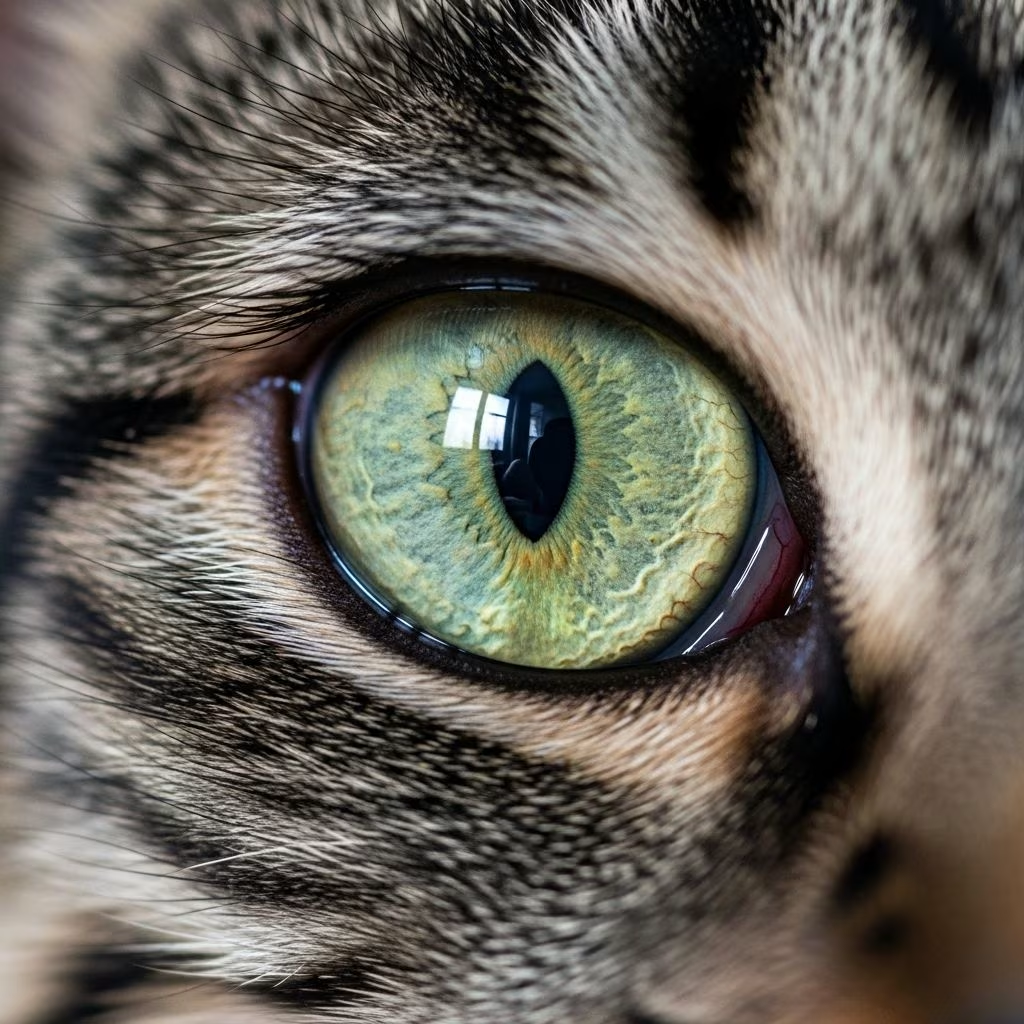
Glaucoma represents one of the most serious ophthalmic conditions affecting cats today, yet it remains frequently overlooked by pet owners and sometimes even delayed in diagnosis by veterinary professionals. Unlike in dogs, where glaucoma presents with more obvious clinical manifestations, feline glaucoma develops insidiously with subtle signs that many cat owners fail to recognize as indicators of pain and vision loss. The condition involves elevated intraocular pressure that damages the optic nerve and retina, potentially leading to permanent blindness if left untreated. Understanding this condition is essential for any cat owner seeking to protect their pet’s vision and quality of life.
What Is Feline Glaucoma and How Does It Develop?
Glaucoma in cats occurs when fluid pressure inside the eye becomes abnormally elevated, damaging the delicate structures responsible for vision. The eye naturally produces a clear fluid called aqueous humor that maintains eye shape and provides nutrients to internal structures. In healthy cats, this fluid continuously circulates through the eye and drains through specialized tissues in a process that maintains normal intraocular pressure (IOP) between 10-25 mmHg, with an ideal range of 10-15 mmHg. When drainage pathways become blocked or the eye produces excessive fluid, pressure accumulates and compresses the optic nerve, leading to irreversible damage.
The progressive nature of glaucoma means that early intervention significantly improves outcomes. However, cats are particularly vulnerable to delayed diagnosis because they often hide pain and discomfort more effectively than dogs. Many cat owners notice behavioral changes—such as increased sleeping, reduced activity, or subtle personality shifts—only after veterinary treatment reduces eye pressure, revealing that their pet had been experiencing considerable discomfort all along.
Primary versus Secondary Glaucoma: Understanding the Two Forms
Veterinary ophthalmologists classify feline glaucoma into two distinct categories based on the presence or absence of underlying disease. This distinction is crucial because it directly impacts treatment strategy and prognosis.
Primary glaucoma occurs without any identifiable underlying ocular disease and results from inherent abnormalities in the eye’s drainage system. This form is relatively uncommon in cats, accounting for only 2-5% of feline glaucoma cases, and appears to have genetic predisposition in specific breeds including Siamese and Burmese cats. Primary glaucoma typically manifests as a progressive condition that may eventually affect both eyes.
Secondary glaucoma represents 95-98% of feline glaucoma cases and develops as a consequence of another underlying eye disease or systemic condition. This form is more common in adult cats and may present as either unilateral (affecting one eye) or bilateral involvement. Understanding the underlying cause becomes paramount in secondary glaucoma because treating the primary condition may help control glaucoma or prevent its progression.
Primary Causes and Risk Factors in Cats
Identifying the root cause of glaucoma in individual cats presents a clinical challenge but is essential for developing appropriate treatment protocols. The causes vary significantly and may involve inflammatory, structural, or neoplastic processes.
Intraocular inflammation (uveitis) stands as the single most frequently identified cause of glaucoma in cats. Chronic inflammation of the eye’s internal tissues can obstruct aqueous humor drainage through multiple mechanisms. The underlying causes of uveitis in cats are diverse and may include:
- Feline immunodeficiency virus (FIV) infection
- Feline leukemia virus (FeLV) infection
- Feline infectious peritonitis (FIP)
- Toxoplasmosis
- Idiopathic lymphoplasmacytic uveitis
Intraocular neoplasia (cancer within the eye) represents another significant cause, with diffuse iris melanoma being particularly common in cats. These tumors can obstruct drainage pathways or create neovascular glaucoma through abnormal blood vessel formation.
Additional causes include anterior lens luxation (displacement), hyphema (blood in the anterior chamber from trauma or bleeding disorders), congenital anomalies affecting drainage structures, ocular trauma, and previous eye surgery. In some cases, multiple causative factors may coexist, complicating diagnosis and treatment planning.
Recognizing Clinical Signs and Symptoms
The challenge with feline glaucoma lies in its subtle presentation compared to canine glaucoma. Cats often do not exhibit obvious blepharospasm (eyelid spasm) or photophobia (light sensitivity) that might prompt emergency veterinary care. Instead, clinical signs may be so gradual and mild that owners attribute behavioral changes to normal aging or personality variation.
Observable physical signs include:
- Dilated pupils that do not respond to light (mydriasis)
- Cloudy or hazy appearance of the cornea due to corneal edema
- Visible redness or injection of the sclera and episcleral vessels
- Excessive tearing or watery discharge from the affected eye
- Obvious swelling or bulging of the eyeball
- Behavioral changes such as reduced appetite or decreased activity
- Reluctance to be touched around the head or affected eye
- Changes in sleeping patterns or increased rest
Advanced glaucoma may result in iris discoloration, iris bombe (bulging of the iris), or prolapse of the third eyelid. Veterinary examination often reveals findings including shallow anterior chamber, aqueous flare (suspended inflammatory particles), cataracts or lens opacity, optic disc cupping or atrophy, retinal degeneration, and abnormal retinal blood vessel appearance.
The insidious nature of feline glaucoma means that by the time diagnosis occurs, considerable optic nerve damage may have already transpired. Regular eye examinations, particularly for cats with known risk factors or underlying eye disease, are essential for early detection.
Diagnostic Procedures and Assessment
Accurate diagnosis requires tonometry to measure intraocular pressure. Veterinarians may utilize several tonometer types, with applanation tonometry (Tonopen) and rebound tonometry (TonoVet) being preferred methods for feline patients. Normal feline IOP ranges from 10-25 mmHg, with ideal maintenance pressure between 10-15 mmHg. Pressures exceeding 25 mmHg warrant investigation, while sustained pressures above 30 mmHg indicate significant elevation requiring aggressive intervention.
Beyond pressure measurement, comprehensive ophthalmic examination including slit lamp biomicroscopy, gonioscopy, and indirect ophthalmoscopy helps identify structural abnormalities and underlying disease. Additional diagnostic testing may be necessary to identify secondary causes, such as anterior chamber paracentesis for cytology if uveitis or malignancy is suspected, or imaging studies including ultrasound or magnetic resonance imaging to evaluate for intraocular masses.
Medical Management Strategies
For many cats, particularly those with secondary glaucoma related to treatable underlying conditions, medical therapy represents the initial treatment approach. However, the chronic nature of many feline eye conditions and cats’ notorious resistance to frequent topical medication application create compliance challenges for owners.
Carbonic anhydrase inhibitors constitute the primary medication class for glaucoma management in cats. These drugs work by reducing aqueous humor production. Dorzolamide (Trusopt) is administered topically two to three times daily and represents the mainstay of ongoing glaucoma therapy in feline patients. In severe cases or when topical therapy proves insufficient, systemic carbonic anhydrase inhibitors may be prescribed, though these carry greater risk of systemic side effects.
Additional anti-glaucoma medications may be considered based on the individual case:
- Prostaglandin analogs that increase uveoscleral outflow
- Beta-blockers reducing aqueous humor production
- Alpha-adrenergic agonists affecting both production and drainage
- Osmotic agents for acute pressure elevation
Anti-inflammatory therapy is essential when glaucoma stems from uveitis or other inflammatory processes. Topical corticosteroids address intraocular inflammation, while systemic anti-inflammatory therapy using corticosteroids or nonsteroidal anti-inflammatory drugs (NSAIDs) may be indicated depending on the underlying cause and overall health status. Treating the primary inflammatory disease remains critical because medical glaucoma therapy alone rarely succeeds without addressing the underlying inflammation.
Pain management deserves particular attention because glaucoma is profoundly painful, comparable to severe migraine headache in humans. However, oral analgesics alone cannot control pain associated with severely elevated IOP; pressure reduction is fundamental. Supplemental analgesia through systemic medications may provide additional comfort.
One critical consideration involves avoiding medications that increase IOP. Mydriatic drugs (atropine, cyclopentolate, tropicamide) and certain NSAIDs that decrease aqueous outflow should generally be avoided in glaucomatous eyes.
Surgical and Advanced Treatment Options
When medical therapy fails to adequately control intraocular pressure or when the eye retains vision potential, surgical intervention becomes necessary. Treatment selection depends on whether the eye is visual, whether glaucoma is expected to respond to IOP control, and underlying causation.
Lensectomy (lens removal) represents the preferred surgical treatment for anterior lens luxation causing glaucoma, as removing the displaced lens eliminates the mechanical obstruction to drainage pathways. Success depends on prompt referral for surgical evaluation and execution before extensive irreversible optic nerve damage occurs.
Treatment of underlying causes through surgery becomes appropriate when identifiable conditions are surgically correctable. For example, intraocular neoplasia may require enucleation (eye removal), while some causes of uveitis-induced glaucoma may benefit from specific interventions targeting the primary disease.
Enucleation (complete eye removal) represents an important option for pain relief in eyes with severe, uncontrollable glaucoma. This procedure is particularly indicated for blind eyes with IOP persistently exceeding 30 mmHg despite maximal medical therapy, or for any eye with IOP exceeding 50 mmHg refractory to all treatments. While removal of the eye may seem drastic to owners, cats adapt remarkably well to monovision, and elimination of pain provides substantial quality of life improvement. The procedure also becomes indicated when intraocular neoplasia is present, as malignancy may spread if not surgically removed.
Managing Underlying Conditions
Success in treating secondary glaucoma hinges on simultaneously addressing the primary disease. When uveitis causes glaucoma, anti-inflammatory therapy becomes paramount. Determining the etiology of uveitis—whether infectious (FIV, FeLV, FIP, toxoplasmosis), traumatic, or idiopathic—guides systemic treatment approaches. Some cases respond well to topical and systemic corticosteroids alone, while others require specific antimicrobial or immunosuppressive therapy based on identified underlying infection.
When lymphoma or other systemic conditions cause secondary glaucoma, systemic chemotherapy or other disease-specific treatments may need to accompany glaucoma management. The comprehensive approach recognizing interconnected eye and systemic health optimizes outcomes.
Prognosis and Long-Term Management
The prognosis for feline glaucoma depends critically on several factors: whether glaucoma is primary or secondary, the underlying cause, how advanced the condition was at diagnosis, how well the underlying disease can be controlled, and owner compliance with ongoing treatment protocols. Eyes diagnosed and treated early while vision remains have the best prognosis for vision preservation. Conversely, eyes presenting with advanced disease and significant optic nerve damage may progress to blindness despite treatment.
Long-term management in cats with controlled glaucoma requires ongoing monitoring, regular IOP checks, consistent medication administration, and treatment of underlying conditions. Owner education about subtle signs of pain and pressure elevation is essential, as is realistic discussion of expected outcomes and potential need for surgical intervention.
When to Seek Veterinary Emergency Care
Cats presenting with acute onset of dilated pupils, significant eye pain, corneal cloudiness, or obvious eye bulging require immediate veterinary evaluation. Acute glaucoma represents an ophthalmic emergency, and delays in treatment can result in permanent vision loss within hours to days. Even apparently minor symptoms warrant evaluation by a veterinarian familiar with feline ophthalmology, as early intervention significantly improves outcomes.
Summary: Protecting Your Cat’s Vision
Feline glaucoma remains a serious threat to vision and comfort in affected cats, yet many cases are preventable through early detection and appropriate treatment. Regular eye examinations, particularly for cats with identified risk factors, enable early identification of pressure elevation before significant optic nerve damage occurs. Should glaucoma be diagnosed, modern treatment options—including medical therapy, surgery, and pain management—offer reasonable prospects for maintaining comfort and vision in many cases. Understanding that cats often hide pain effectively until treatment brings relief should encourage owners to pursue aggressive management when glaucoma is diagnosed. Working closely with a veterinarian experienced in feline ophthalmology ensures that affected cats receive comprehensive, individualized care optimizing both vision preservation and quality of life.
References
- Feline Glaucoma: Causes, Symptoms, Treatment — Indiana Animal Eye Clinic. Accessed 2026. https://indyanimaleyeclinic.com/veterinary-ophthalmology-publications/feline-glaucoma-causes-symptoms-treatment/
- Feline Glaucoma – A Comprehensive Review — PubMed Central / National Center for Biotechnology Information. https://pmc.ncbi.nlm.nih.gov/articles/PMC3348181/
- Feline Glaucoma — Animal Eye Care Australia. Accessed 2026. https://www.animaleyecare.com.au/advice-sheet/feline-glaucoma/
- Glaucoma in Cats — VCA Animal Hospitals. Accessed 2026. https://vcahospitals.com/know-your-pet/glaucoma-in-cats
- Glaucoma in Cats — PetMD. Accessed 2026. https://www.petmd.com/cat/conditions/eyes/c_ct_glaucoma
- Glaucoma in Cats – Cat Owners — Merck Veterinary Manual. Accessed 2026. https://www.merckvetmanual.com/cat-owners/eye-disorders-of-cats/glaucoma-in-cats



